
I fell in love with Sicily so hard, I’ve now written almost 20 articles about it. And I’m still not done, which should tell you something!
I struggle to find the words to describe this place I have come to love. The many layers of history, the conquests, the absorption of traditions and languages and people from across the Mediterranean and beyond leaves me in awe. It’s the crossroads of the ancient world: Greek temples, Roman mosaics, Norman cathedrals, Baroque hill towns, Arab-influenced architecture, and food that makes you happily abandon your entire sad, sad, low-carb life. All of it stacked on a volcanic island the size of a small country, surrounded by sea so blue it looks like someone jacked up the saturation on their iPhone settings.
If you’re looking for 2 weeks in Sicily, with an itinerary that actually helps you experience all of that without rushing, this is it.
This is a complete 2 week Sicily itinerary designed as a road trip loop around the island. It covers both the iconic highlights and the less visited history-rich places, with a route that makes geographic sense, minimizes backtracking, and moves naturally from east to west.

Every stop in this itinerary is somewhere I’ve been. This isn’t a copy-paste route, it’s built from multiple trips to Sicily, refined into what I truly think is the best way to experience the island in 14 days, if you are as captivated by its history and charm as I am.
It’s especially designed for:
- Travelers who love history, and archaeology
- People who want a structured plan, but without feeling rushed
- Road trippers who want a logical, efficient route
- And yes, those traveling with a dog (we do this with our French bulldog, Helga, and she loves Sicily too!)
If you only have one week, I’ve written separate itineraries for both Eastern Sicily and Western Sicily. But if you can carve out two weeks, this full loop is one of the most rewarding road trips in Europe.
If you really want the whole island experience, two weeks is the minimum I’d recommend for seeing both halves of the island properly. One week is enough for the east or the west, but I’d definitely recommend not trying to do it all in a week.
This is the itinerary I’d give you as a friend.
Before You Start: The Essentials
You Definitely Need a Car
There is no version of this particular itinerary that works without a car.
Sicily isn’t a place where you can easily “connect the dots” by train or bus. The most interesting places like ancient ruins, hill towns, and coastal viewpoints, are connected by winding roads, not efficient rail or bus lines. If you want to follow this route, you’ll need the flexibility of driving.
I’ve written a full guide to Driving in Sicily: Best Rental Car and Travel Tips that will answer all your questions before you pick up the keys. You’ll be driving like a pro in no time because although the thought of driving in Sicily makes some people nervous, it’s mostly a mindset. It’s a mix of confidence, improvisation, and a few unspoken rules. But once you adjust (which won’t take long), it becomes part of the experience, part of the fun, and the key to unlocking some incredible places you’d never see otherwise.
For Sicily, we always book through DiscoverCars because they have the best selection, comparative and transparent pricing, 24/7 English help, and they’ve never let us down.
Fly Into Catania, Out of Palermo (Or the Reverse)
This itinerary is designed as a one-way loop: fly into one airport and out of the other. This eliminates backtracking, maximizes your time, and means every day is forward motion. Catania and Palermo are roughly 260 kilometers apart by road, and trying to loop back to your starting airport at the end of two weeks costs you most of a day you could be spending doing something more fun than driving to the airport.
“Open-jaw” flights with two airports sometimes cost a little more. In my experience, it’s worth every euro.
However, if you’re locked into a single airport because of dog-friendly airline schedules, budget, or other constraints, you can fly in and out of either airport. You’ll drive the full loop instead of a line. It adds driving time but you won’t lose anything essential.
Which Direction Should You Drive?
I recommend flying into Catania and doing the east side first, then the west. Here’s my reasoning:
Eastern Sicily is a bit more polished, the infrastructure is better, the tourist economy is well-oiled, the sites are world-famous and well-signed in English. I think it’s an easier entry point for the first days of a trip when you’re still getting your bearings. The west, by contrast, is quieter, more rural and windswept, and less geared for tourism than the bustling east. It’s best enjoyed when you’ve already found your road trip groove. Ending in Palermo also means your final days include one of the most beautiful, fascinating and complicated cities in Italy (and one of my absolute favorite places in the world), which is a great way to finish your epic Sicilian road trip.
That said, the itinerary also works in reverse – West to East – if your flights dictate that.
Best Time of Year to Follow This Sicily Itinerary
The ideal months:
- Late April → June
- Mid-September → October
You’ll get:
- Warm weather without extreme heat
- Manageable crowds
- Much better conditions for exploring archaeological sites
- Beach days are still a thing
July and August are extremely hot, and many of the best archaeological sites have very little shade. Winter is quieter and mild, but some sites have reduced hours or close.
How This 2 Week Sicily Itinerary is Structured
This itinerary is designed to balance depth, variety, pacing, and minimal hotel changes.
Instead of moving every night, you’ll use two main bases per week. This will let you explore an area more deeply without constantly packing and unpacking, and figuring out what to do with your stuff between checking out of one hotel and waiting for check-in time at another.
Week 1 — Eastern Sicily
Catania → Savoca → Taormina → Syracuse / Ortigia → Noto → Villa Romana del Casale
Week 2 — Western Sicily
Sciacca → Selinunte → Scala dei Turchi → Valley of the Temples → Marsala → Trapani Salt Pans → Palermo → Segesta
This creates a natural loop that:
- Minimizes driving fatigue
- Maximizes time at key sites
- Balances famous landmarks with hidden gems
- Provides a great variety of experiences and accomodations
Week One: Eastern Sicily
Day 1 of Your Sicily Itinerary: Arrive Catania → Savoca
Driving time: ~1 hour (Catania → Savoca)
Time needed today: Easy arrival + half-day exploration
If you have full control over your flights, the ideal version of this Sicily itinerary starts with a morning arrival into Catania, a relaxed lunch, and then a short drive northeast to Savoca.
But realistically, most people will be arriving tired, navigating a new airport, and figuring out Sicilian driving for the first time. So here’s the real advice:
Don’t overpack this day with too much to do.
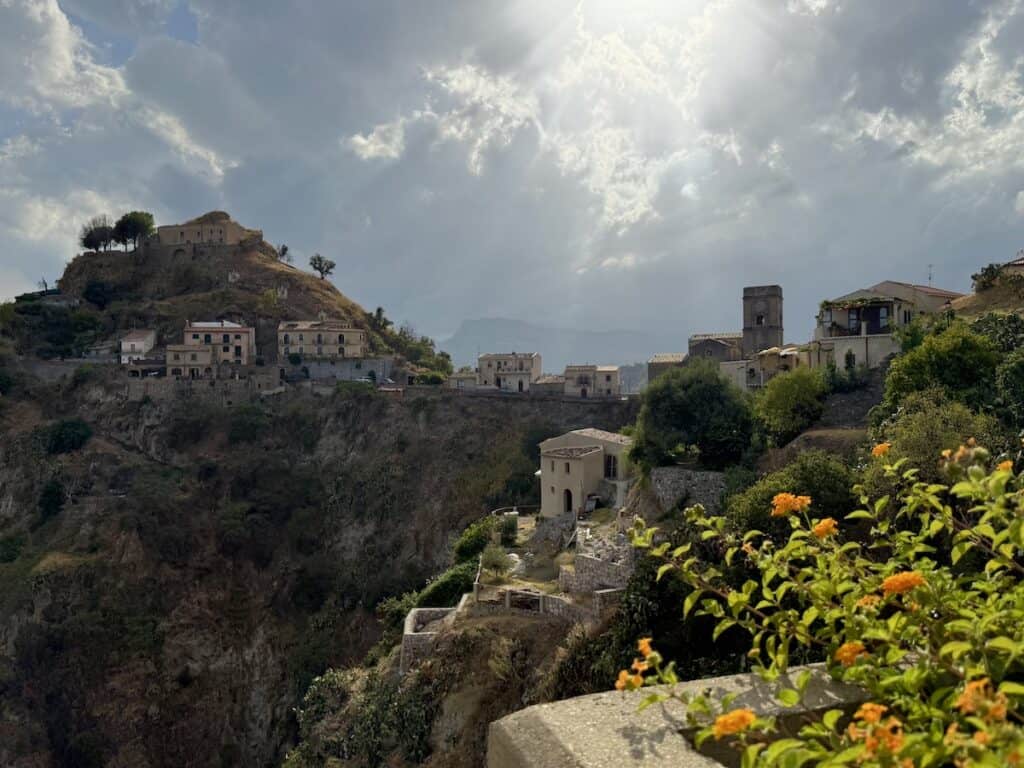
You can stay in Catania and explore, or for an immediate relaxed evening, Savoca is the perfect soft landing. This beautiful, surreal little hill town will prime you for the next 2 weeks of exploration. If you envision a perfect small Sicilian town in your mind, overlooking rolling hills and deep blue sea, you’ll imagine Savoca, and there’s a reason for that!
Savoca is where Francis Ford Coppola filmed several Sicilian scenes from his epic movie The Godfather: Michael Corleone’s courtship of his ill-fated first wife Apollonia, the wedding at the church on the hill, and the legendary scene at Bar Vitelli where he asks Apollonia’s father for permission to court her.
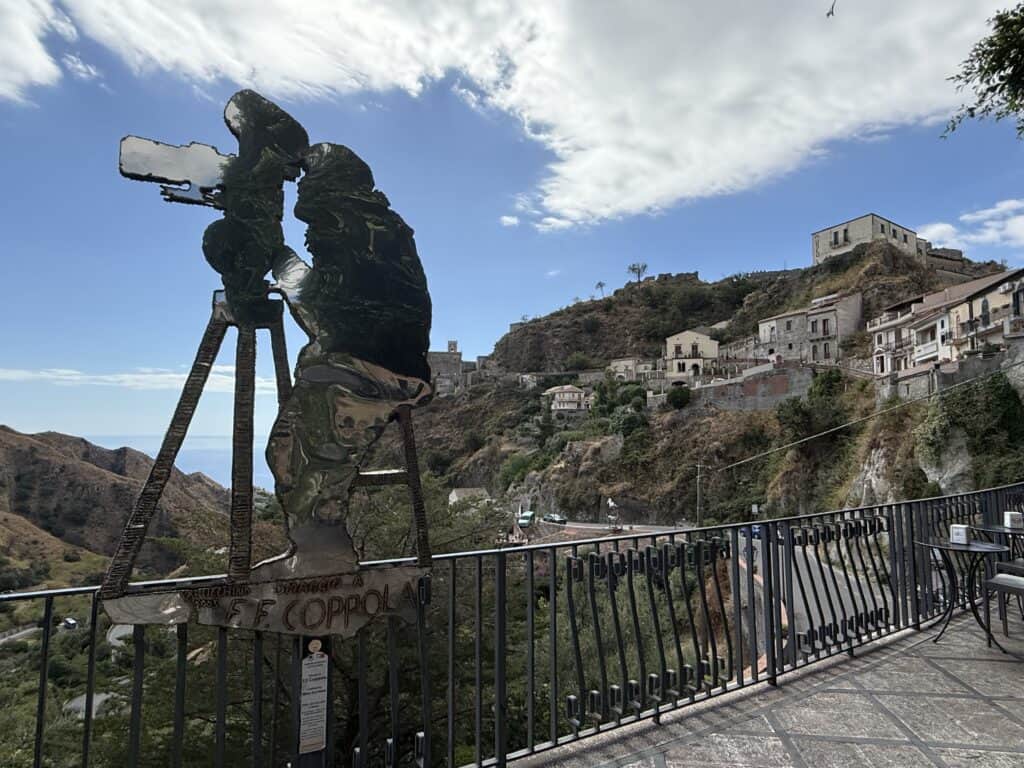
The town has embraced this connection with real warmth and enthusiasm. There’s even a metal sculpture that pays tribute to Coppola in the main piazza, and the gift shops sell local products alongside hilariously kitschy Godfather souvenirs without it ever feeling cynical.
Even if you’re not interested in the Godfather, remember, Hollylwood had professional scouts scouring the island for the most epically cinematic places and they picked Savoca for its beauty, Sicilian soul, and stunning landscapes.
Take the small open shuttle from the base of the hill where the Francis Ford Coppola statue is up to the Norman-era church (where the wedding was filmed). You could walk, but our shuttle driver regaled us with tales of the mafia, took our picture, and even whistled the theme song of the Godfather to set the mood.
One of the side chapels inside the church has been set up with a screen playing some of the family-friendly scenes from the movie on a loop alongside informational placards. I’m telling you, this town has adopted the identity.
What to do:
- Wander the main street and small piazzas
- Stop at the famous Bar Vitelli for a drink or dinner (make reservations in advance or book a stay in one of their absolutely stunning rooms)
- Take the shuttle or walk up to the hilltop church
- Visit the Convento dei Cappuccini, another beautiful church with a hidden secret – there are 17th century mummies in the crypt, all decked out in their finest garb. Photography is prohibited here, and you’ll have to schedule your trip to the crypt part.
- Pause often and just enjoy the magic. The views are part of the experience.
You don’t need a checklist here. Give it 2–3 hours max, then settle in for the evening.
Where to stay:
We stayed at Borgo San Rocco, a beautiful property that I can’t recommend highly enough. They take direct bookings through their own website.
They are locally owned, dog-friendly, and exceptional. Our room had a huge private terrace overlooking the hills, the town, and the Ionian Sea.
The restaurant is outstanding as well. They make their own bread in wood-burning ovens, use local organic produce, and produce desserts and jams entirely from scratch. We ate there twice and would have eaten there every night if we’d stayed longer. Highly recommended and genuinely special.
We’ve stayed in hundreds of hotels, and most get forgotten. Not this one. We still talk about it and wish we had a teleporter.
If they are full, or you’re looking for other options in the area, the map above shows other available accommodations in Savoca, including Bar Vitelli Suites!
Day 2: Forza d’Agrò + Taormina
Driving time: ~25 min Savoca to Forza d’Agrò→ + ~30 min Forza d’Agrò to Taormina
Time needed today: Full day
On the way south, make a short detour to Forza d’Agrò (about 20 minutes away). This happens to be another Godfather filming location, and another breathtaking Sicilian town – scenes from both the original film and Part II were shot here. It feels like a different world.
It’s a beautiful, barely-visited hill village where we wandered for an hour with no map and no plan, turning corners and taking pictures and feeling like we’d stumbled into a set that also happened to have real people living in it.
The Norman castle at the top of the hill is currently inaccessible (which we discovered after a hot hike up) but the village itself is absolutely enchanting and more than worth the stop.
Stone streets, quiet squares, old churches, panoramic views, and that feeling of discovering somewhere that hasn’t been polished for tourism, which is an increasingly rare and wonderful thing.
It’s not about checking off a list of sights here, it’s about slowing down and letting yourself get lost for a bit.
Give yourself 45–60 minutes, explore, and just enjoy the atmosphere. Then head to Taormina.
Taormina is definitely touristy. I’m not going to pretend otherwise. BUT it’s also extraordinarily beautiful, and once you’re standing on the Corso Umberto with the Ionian Sea and Mount Etna both visible at once, you understand immediately why humans have been building things on this hilltop for three thousand years, and why it attracts and enchants so many visitors.
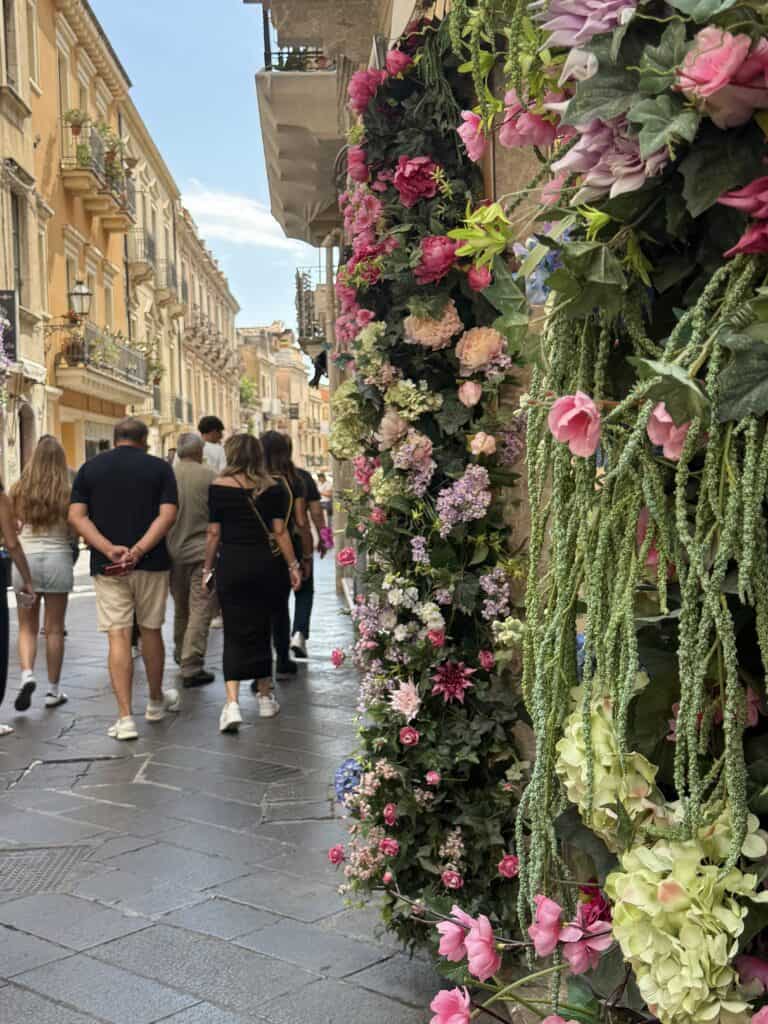

Here’s my best advice for Taormina: Try to make this day on a weekday, accept any crowds, and focus on what makes it so special.
Walk the Corso, wander into the show-stopping main piazza, and then stop in Largo Santa Caterina, a small square that turns out to be one of the most archaeologically interesting spots on the island: the Church of Santa Caterina (built in the 1600s, in Baroque style) sits on top of a Roman Odeon, which sits on the foundations of a Greek temple probably dedicated to Aphrodite. Before any of that, it was the ancient Greek agora. Three civilizations stacked up in one small square. Restoration work in the 1970s exposed Greek-Roman walls and cobblestones which are left visible inside the church. I love when discoveries like this are incorporated into the “new” building so the full history of the place can be seen and enjoyed.

The main event, though, is the Greek Theater of Taormina at the end of the Corso. I’ve written a full dedicated guide to it. It is the second-largest ancient theater in Sicily, has a cavea 109 meters in diameter, and the original structure dates to the 3rd century BC, all with Mt. Etna as a backdrop. Fourteen euros for adults, and free for kids under 18. It’ll make your eyes sparkle.
Schedule yourself 1-1.5 hours here.
By this time you’ll be hungry. Find a spot with a beautiful view and just enjoy. If you’re in a pizza and wine mood, I recommend Ristorante Taormina Pizzeria with its 180 degree view overlooking the deep blue sea. But honestly there are restaurants everywhere and one looks better than the next.
When you’ve had your fill of wandering Taormina, head back (with your shopping haul) to Savoca for dinner, wine on the balcony, and an evening dip in the pool.
Day 3 of Your Sicily Itinerary: Cyclops Rocks → Brucoli (Base Change)
Driving time: ~1 hr 15 min total (Savoca → Aci Trezza → Brucoli)
Time needed today: Half-day travel + relaxed afternoon
Today is your first transition day, but it’s definitely not just some throwaway travel day.
You’ll leave the northern hill towns behind and start moving south toward your second eastern Sicily base, Brucoli. On the way, you’ll stop at one of the most mythologically awesome landscapes on the entire island.
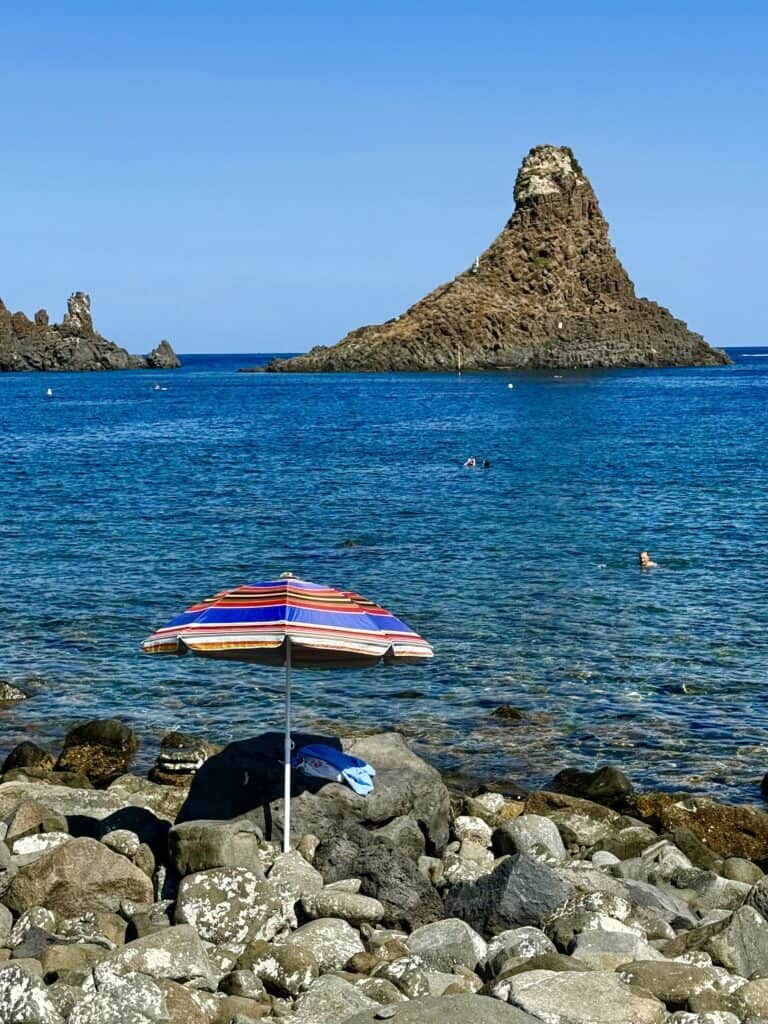
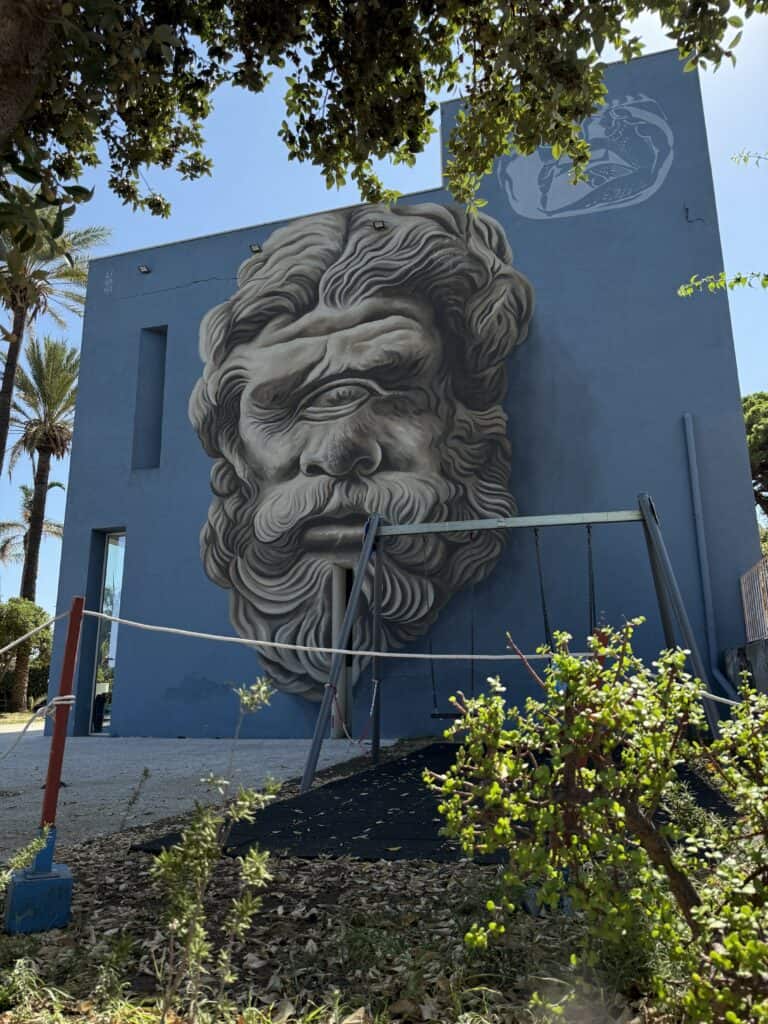
The Faraglioni dei Ciclopi are jagged black volcanic pillars, rising out of the Ionian Sea. They are dramatic, surreal, and part of one of the most well-known Greek myths!
If you’ve ever read Homer’s Odyssey, or seen the movie, this is where the recently-blinded cyclops Polyphemus hurled massive stones at Odysseus and his crew of fleeing ships after they had escaped their capture. Standing here, looking at these formations, it’s not hard to see that story come to life (although these rocks are significantly larger than the one in the movie)!
People swim here in summer, lounge on the rocks, or kayak around the stacks, but even if you’re just passing through, it’s worth pulling over for a little while and just imagining the story unfolding in front of you. There’s even a mural of polyphemus near the beach.
Time needed: 30–60 minutes (or longer if you want to swim)
Tip: Bring a snack or coffee and take a short break here. It’s a great reset between drives.
Drive to Your Base: Brucoli
From Aci Trezza, continue south to Brucoli, which will be your base for the next few days.
This is meant to be a stop where you can change gears and recharge. It may seem like an odd choice because Brucoli itself doesn’t have much in the way of sightseeing. What it does have is an incredible resort property with everything you could possibly need to relax and unwind after 2 days of exploring the hill towns and ruins, and also close enough to some incredible day trips.
Where to Stay: Mangia Resort (Brucoli)
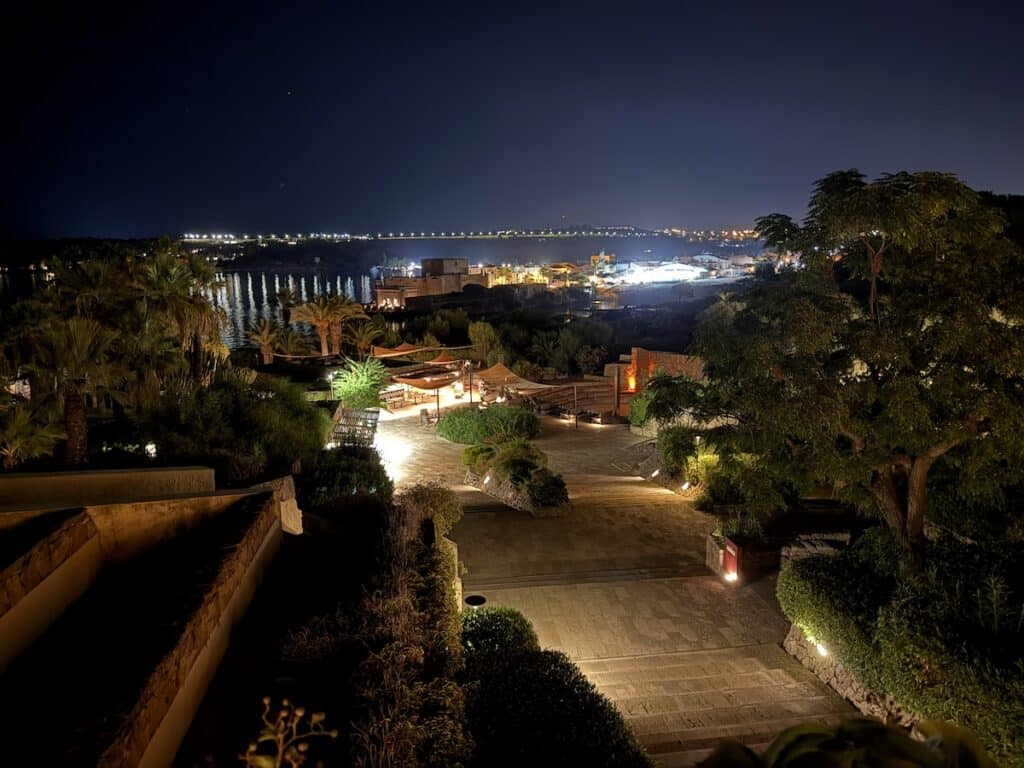
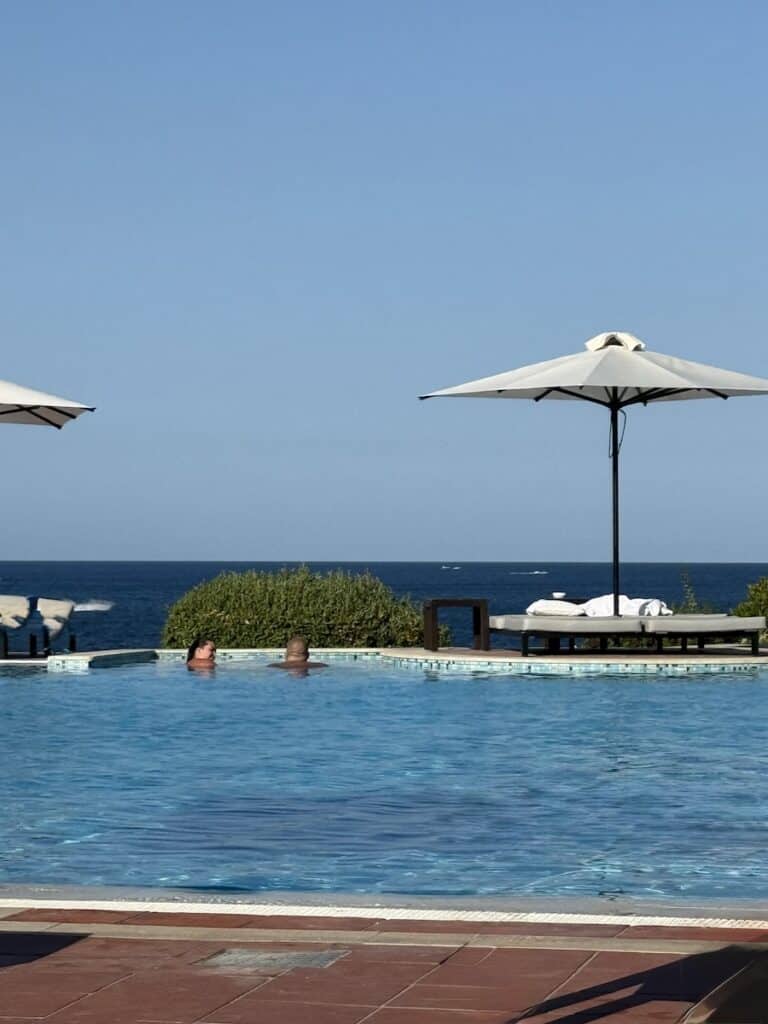
Mangia Resort Brucoli is a full-service coastal property with:
- A large oceanfront pool
- Ocean swimming access
- Five restaurants
- Sunset aperitivo
- A gargantuan and excellent breakfast spread
- Easy access to Syracuse and Noto
- All kinds of other services we didn’t even have time for
It’s the kind of place where you can relax between heavier sightseeing days, which matters more than you’d expect on a two-week trip.
🐾 Traveling with a dog: The Mangia Resort accommodated Helga without issue. There were several other small dogs there too, all living their best lives.
🏖️ Check availability, and book your stay at gorgeous Mangia Resort Brucoli
Day 4: Ortigia and Syracuse
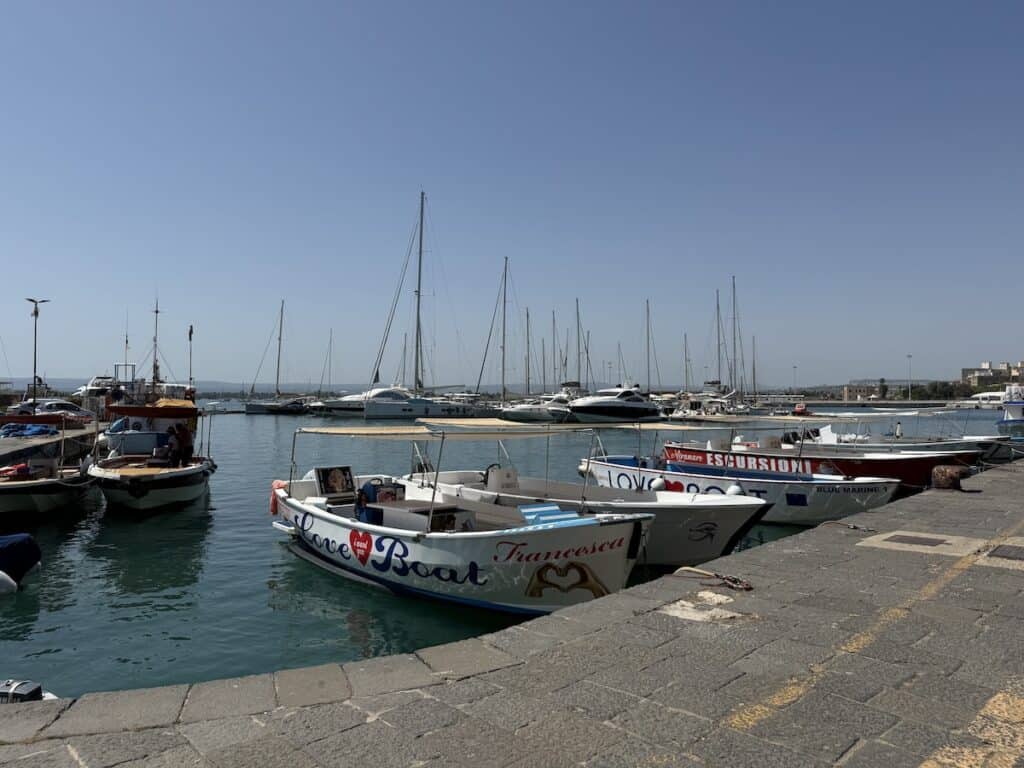
Ortigia is the ancient island heart of Syracuse, and it’s a full day. Start at the morning market, which is brilliant and local and exactly the right amount of chaotic Sicilian energy. Then follow your instincts through a neighborhood so historically dense it’s almost disorienting.
Key stops not to miss: the Temple of Apollo, one of the oldest Doric temples in Sicily [full guide to the Temple of Apollo]; the Cathedral of Syracuse, which was built directly around the original columns of a Greek Temple of Athena. You walk into a Baroque church and suddenly find yourself standing between 2,500-year-old columns that were already ancient when the church was constructed around them; and the Paolo Orsi Archaeological Museum (on the mainland), one of the finest and most vast archaeological museums in Italy. Wander the harbor. Find the statue of Archimedes, Syracuse’s most illustrious son. Have a long lunch somewhere overlooking the water with an Aperol Spritz. Take a boat trip available for booking right in the harbor.
For more details on Syracuse and Ortigia, read my One Day in Syracuse guide.
Day 5: Syracuse Archaeological Park

Book a guided tour. <<< I cannot stress this enough. The Syracuse Archaeological Park is one of the great archaeological sites in the Mediterranean world, and a good guide turns it from a collection of impressive ruins into a living story you’ll remember for years. Mine was one of the best organized tours I’ve taken anywhere, and I still remember every story… but I won’t ruin it for you!
🏛️ This is the tour we took, and I would absolutely take it again, it was that good.
What you’ll see: a Roman amphitheater; the largest sacrificial altar in the ancient Greek world (200 meters long and makes you feel tiny); early Christian tombs cut directly into rock; the Ear of Dionysius, a cave with acoustic properties so incredible that the tyrant Dionysius allegedly used it to eavesdrop on political prisoners; and the Greek theater where Aeschylus premiered plays and Plato attended performances. It literally gave me goosebumps.
On the way out, you’ll pass what’s labeled the “Tomb of Archimedes.” Except that it’s not the tomb of Archimedes. It’s a Roman columbarium (a collective burial chamber) built several centuries after Archimedes died in 212 BC. What is historically documented is that Cicero, serving as a Roman magistrate in Sicily in 75 BC, discovered that the Syracusans had no idea where the tomb was, and they denied it even existed! Cicero eventually found it himself, buried under brambles near the Agrigentine Gate, identified it by the carved sphere and cylinder Archimedes had requested as his epitaph (representing what he considered his greatest mathematical proof), and had it cleared off.
Then it fell back into neglect, and is lost to time. Its precise location has never been confirmed. The well-photographed “tomb” tourists visit today is, most archaeologists agree, a cool Roman monument, but with no real connection to the man.
[Full guide to the Syracuse Archaeological Park]
Head back to the resort and spend the afternoon lazing by the pool, sipping cocktails, and deciding which restaurant you’ll enjoy that night.
Day 6: Villa Romana del Tellaro → Noto

Villa Romana del Tellaro wasn’t on my original itinerary at all. I happened to see it on Google Maps the night before and added it on a whim. It was one of the best decisions of the trip! This late Roman villa contains stunning floor mosaics of hunt scenes, mythological figures, and even animals wading through rippled water. And it’s quiet in a way that the bigger sites never are. We had the place almost entirely to ourselves with sunshine, olive groves, and sea breeze. The backstory is compelling too. It’s a perfect warm-up for Villa Romana del Casale coming up tomorrow. [Full guide to Villa Romana del Tellaro].

From Tellaro, head to Noto for the afternoon and evening. Sicily’s great Baroque showpiece town is everything you’ve heard: the Cathedral, the Town Hall, the painted steps of Via Corrado Nicolaci, the Porta Reale, the palace. Climb the Cathedral steps, turn around, and just take it all in.
Caffè Sicilia is famous and deservedly so. The granita here is a genuine experience. We loaded up with a smorgasbord of sweet treats and didn’t regret it for a second. And for dinner, Modica di San Giovanni Cantina delivers local seafood specialties and traditional pasta in a setting below the famous Baroque balconies in Noto, and deserves a long, slow evening.
[Is Noto worth visiting? Yes. Here’s the full guide.]
Day 7: Villa Romana del Casale
Save this for last in the east, because Villa Romana del Casale is the crescendo. This 4th-century Roman imperial villa near Piazza Armerina contains the most extensive and best-preserved Roman floor mosaics in the world. Room after room after room of them: hunting scenes, mythological narratives, the famous “bikini girls” mosaic of competing female athletes in two-piece garments that look startlingly contemporary. I kept thinking it was going to end. It kept not ending.

I’m a huge mosaic nerd, and not since we visited Ravenna and its famous mosaics was I this excited and blown away by the incredible craftsmanship and enormity of scale of these ancient works of art.
I really felt like I’d just popped in to visit an important Roman family and was wandering their villa. You could almost see the ghosts, and imagine how life unfolded in this glorious place where the whole building was art.
Give yourself a minimum of two and a half hours, ideally more. Read the room-by-room guide to Villa Romana del Casale before you go – it will transform your visit.
After the villa, drive west toward your new base of Sciacca on the coast. This is the transition day between the two halves of the island.
You’ll drive for a little over two hours. Stopping in Agrigento is a good spot for a break and a bite if you need one. And you’ll be back there in a couple days for The Valley of the Temples.
Week Two: Western Sicily
Day 8: Drive West → Sciacca
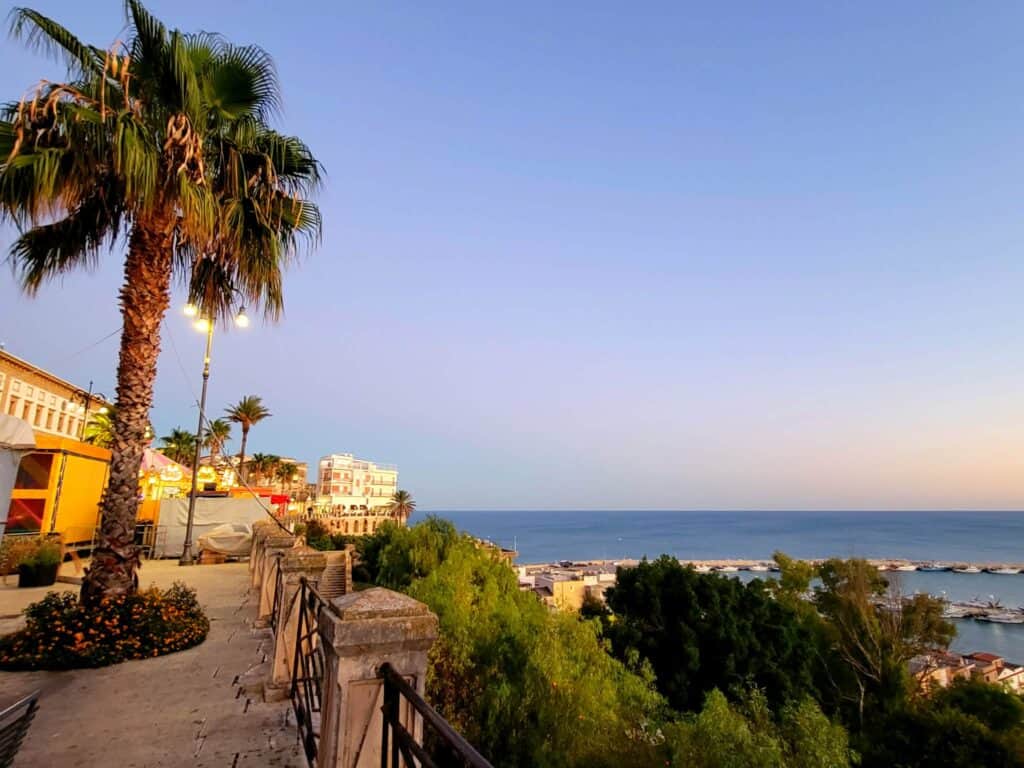
Sciacca [pronounced shiAH-kah] was a complete blind guess when I chose it as my western base. It turned out to be the best travel surprise I’ve had in years. And it’s going to be the perfect spot to unwind after the drive.
Sciacca is a working Sicilian coastal town, not curated for tourists, not putting on a show, just genuinely itself. It smells like the sea and the fish frying nearby, and the blooming jasmine. The old town climbs the hill above the port with hills and painted steps. There’s a good restaurant scene, a ceramic tradition, ancient churches, a carnival that’s considered among the best in Sicily, and enough beauty in the streets that you’ll keep stopping to photograph things you can’t quite explain.
Use Sciacca as your base for Days 8–11. You will not need to move your bags once. And did I mention an amazing vintage cocktail bar? That we visited almost every night?
For full details on Sciacca and the western week, see the Western Sicily Itinerary.
We stayed at the absolutely adorable and locally owned Garibaldi Relais. Staff was delightful, our balcony overlooked the street and restaurants, breakfast goodies were fresh and delicious, and they welcomed Helga. It really did feel like you were visiting family, and nothing like a large impersonal hotel stay.
Day 9: Selinunte

Selinunte is the largest archaeological park in Europe and one of the most undervisited major sites on the island. Most tourists are elsewhere, which I will never understand. You, presumably, are not most tourists.
The site was once a powerful Greek colony destroyed by Carthage in 409 BC and never rebuilt, which means what you’re walking through is a genuine ancient ruin, not a restoration. The scale is extraordinary: massive temple platforms, collapsed columns lying exactly where they fell, the sense that you’ve arrived somewhere that the modern world simply hasn’t gotten around to tidying up yet. A couple of the temples have been partially re-erected to give you a sense of the original height and grandeur. The rest requires wandering, discovery, and imagination.
And the best thing about Selinunte? No ropes, no gates, no barriers. You can climb the temple steps, wander the old residential areas and really immerse yourself in the history.
[Full guide to Selinunte Archaeological Park]
Day 10: Scala dei Turchi → Valley of the Temples
Two of western Sicily’s greatest hits, and best done together.
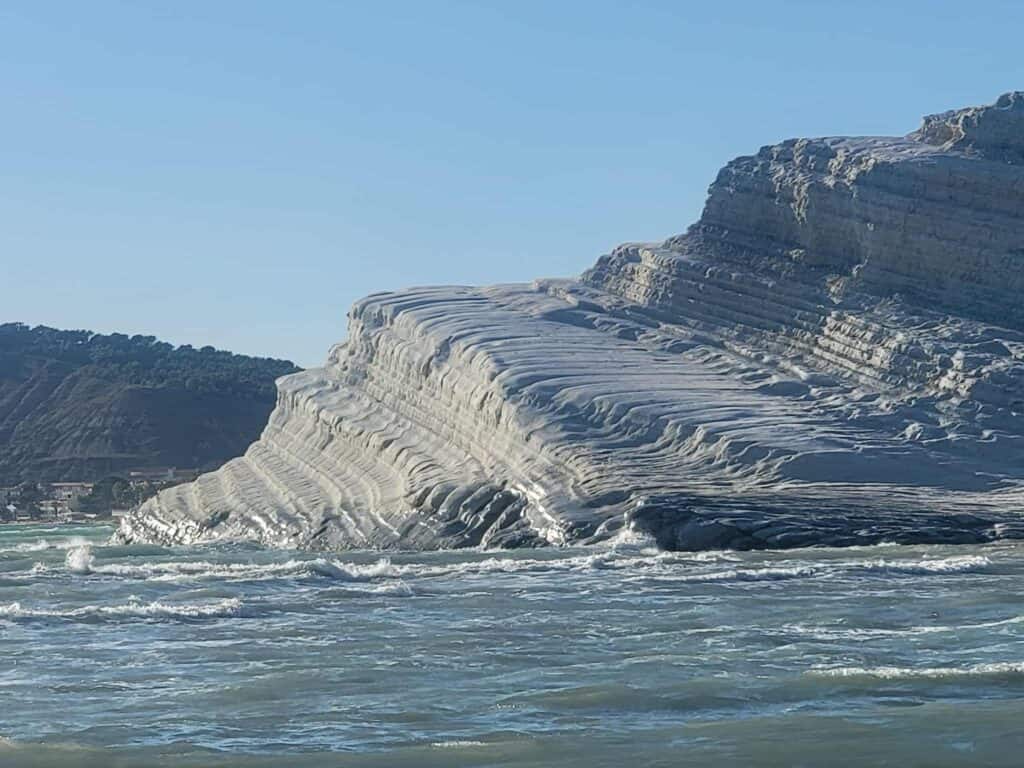
Scala dei Turchi (the Turkish Steps) is a geological formation of brilliant white marl rock that sweeps in natural terraces down to the sea, and it’s one of the most visually breathtaking coastlines in Sicily, and genuinely unlike anything else I’ve seen in Europe. Go early. The light is better, and the crowds are thinner.
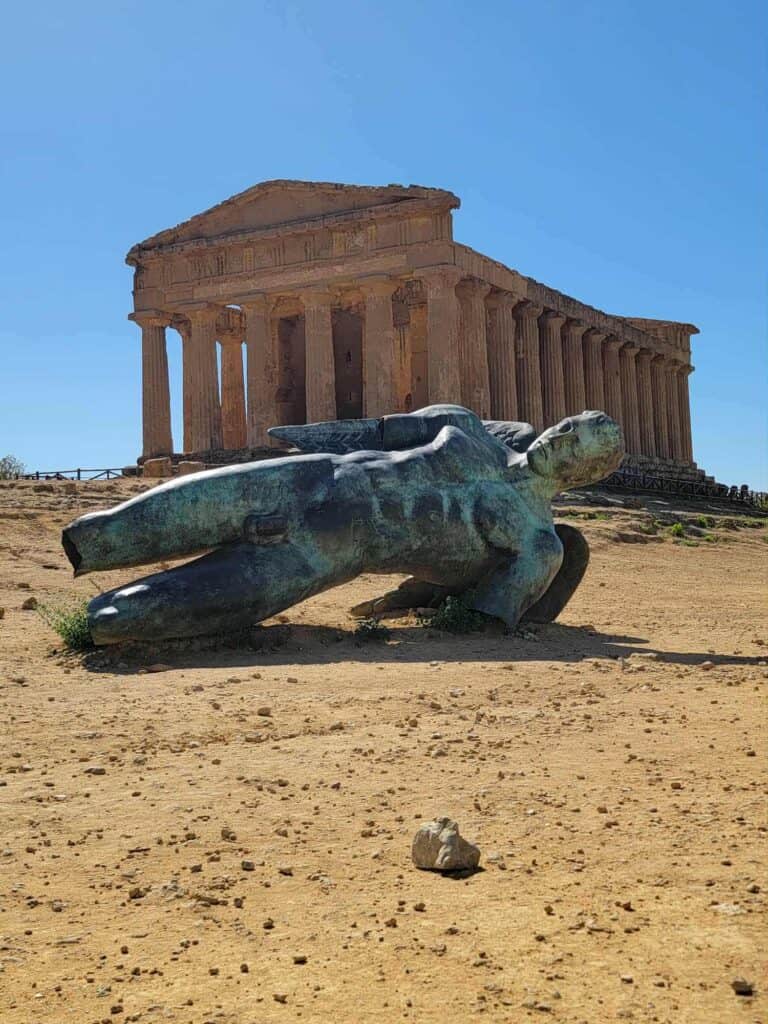
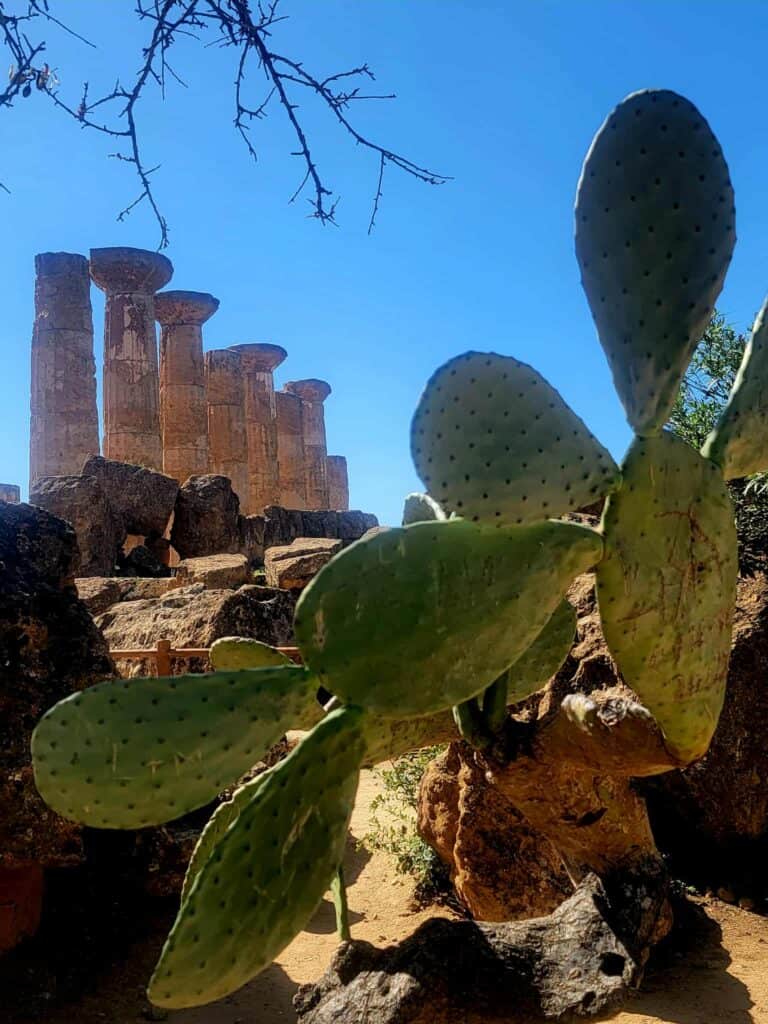
The Valley of the Temples in Agrigento is, without exaggeration, one of the great ancient sites of the world, and the most visited site in Sicily. A ridge of Doric temples overlooking the sea, built by Greek colonists in the 5th century BC, some of them extraordinarily intact. The Temple of Concordia is among the best-preserved Greek temples anywhere on earth.
[Full guide to The Valley of the Temples]
You can get tickets on site, or reserve in advance with an audioguide app to avoid lines.
Day 11: Marsala
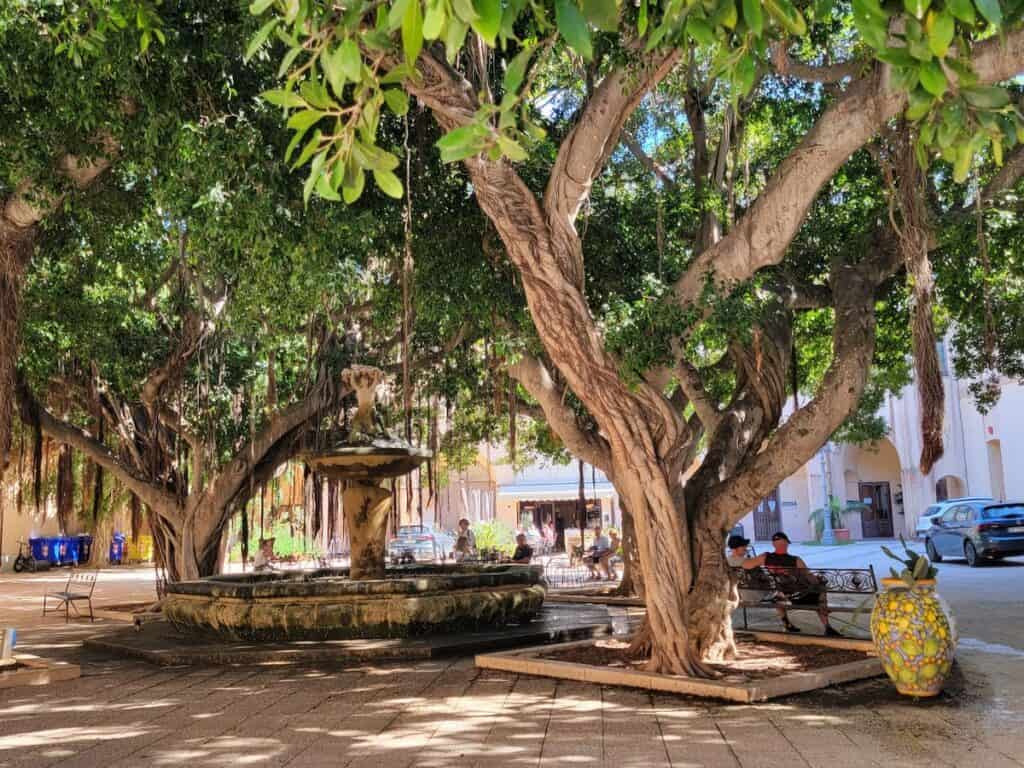
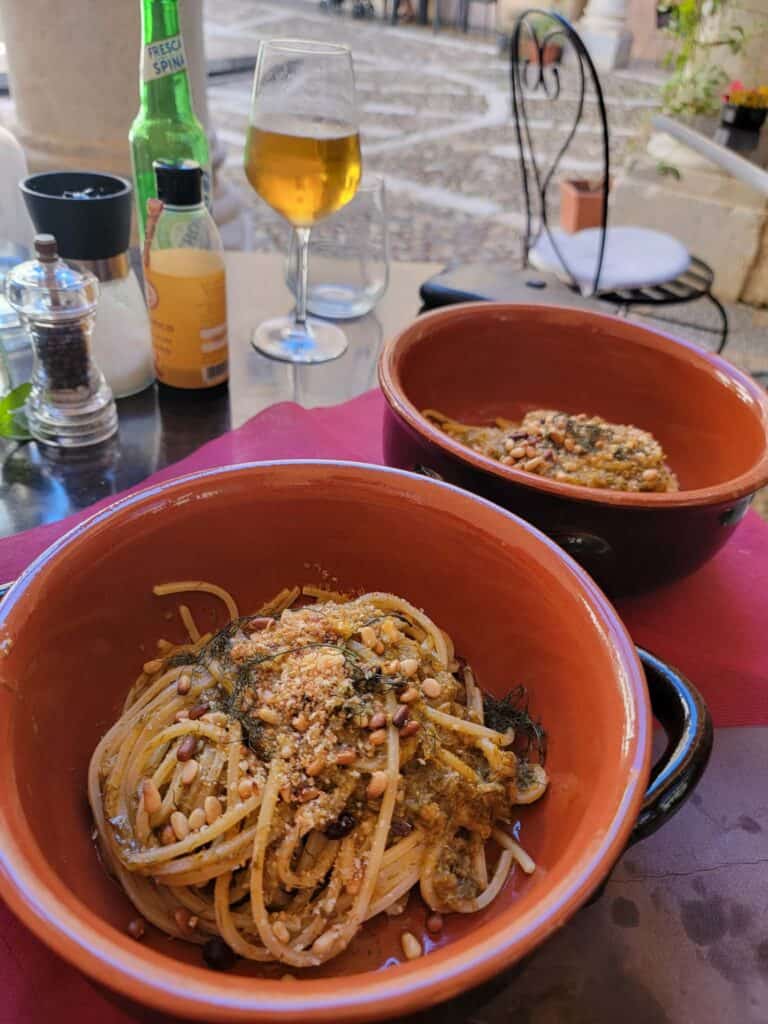
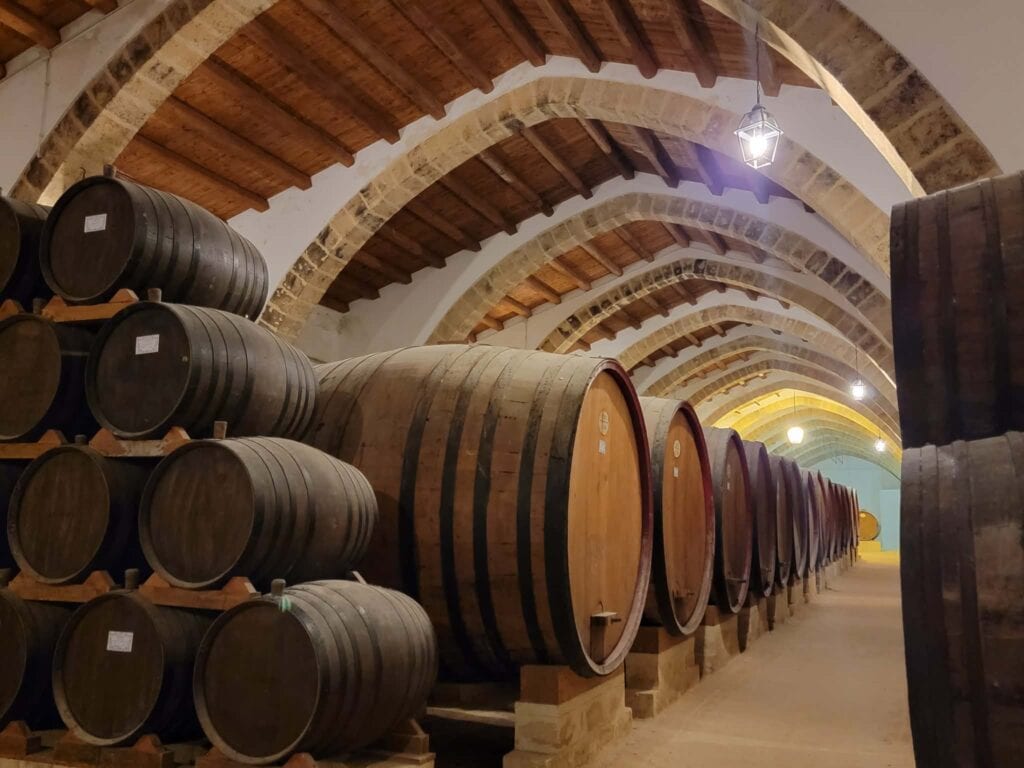
Marsala is not just a wine that goes great with chicken, it’s a genuinely lovely coastal town with a fascinating history, a Phoenician island just offshore, and a wine culture that deserves a tour. Visit the town center, take a boat out to the island of Mozia if the timing works, and do a proper Marsala wine tasting at one of the historic producers.
We absolutely loved our tour of the famous Florio winery. The guide was extremely knowledgeable, the winery itself was historic, and there was a tasting of three wines with food pairings at the end.
We’ve put Marsala on our list of places to return to, because one day was just enough to get a taste, and to know we wanted more.
Day 12: Trapani Salt Pans → Palermo

You will bid a sad farewell to Sciacca, and head north. The drive from Sciacca to Palermo passes through the Trapani salt pans, a landscape of windmills, shallow water, and light that turns pink and gold at certain hours. The windmills are centuries-old working structures. The salt has been harvested here since Phoenician times. Stop, walk, and if you are a photographer, you’ll end up spending some time here. There are also tours available if the timing works.
🦩 Take a tour of the Trapani salt pans and spot flamingos! 🦩
Then: Palermo. The Sicilian capital is chaotic and magnificent. Arab-Norman architecture, Baroque churches, street food culture that is its own art form, markets that have been operating for a thousand years. I’ve written a full One Day in Palermo Guide, but with two days here you can breathe and enjoy at your own pace.

Where to stay (Palermo): The Mercure Palermo Centro is reliable, central, and dog-friendly. They provided a dog bed and bowls for Helga without being asked, and the breakfast includes a stuff-your-own-cannoli station that is, I maintain, the correct way to begin a day in Sicily.
✅ Check rates and availability at the comfortable centrally-located
Mercure Palermo Centro
🐾 Traveling with a dog: Palermo’s streets are walkable with a dog. Most of the major churches and museums don’t allow dogs inside, so plan accordingly with some tag-team sightseeing, or dog snoozing in the hotel time.
Day 13: Palermo + Palatine Chapel
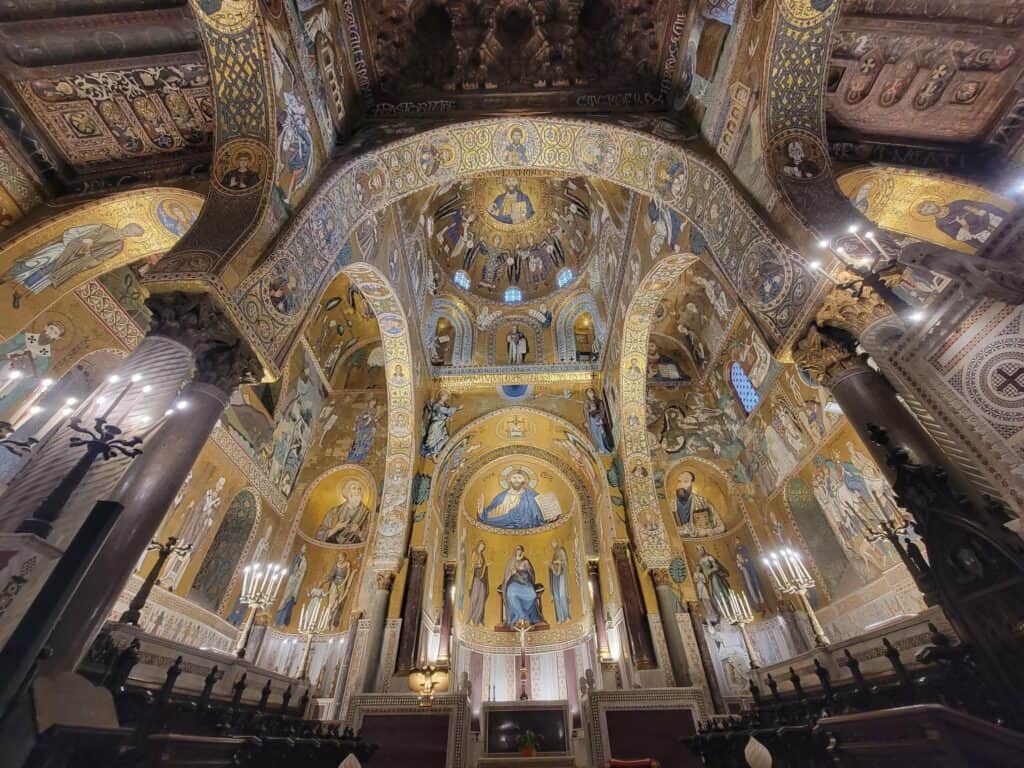
Spend your day in Palermo wisely. The Palatine Chapel inside the Norman Palace is the non-negotiable site to see – a 12th-century private royal chapel covered floor to ceiling in Byzantine gold mosaics so spectacular that people go quiet when they walk in. It’s one of the finest interiors in Italy, and I’m aware that is a sentence with considerable competition.
You can buy tickets direct from the official website, on site at the palace, or take a guided tour.
From there, explore with your heart: the Palermo Cathedral, the Ballarò market, the Vucciria, the Teatro Massimo (largest opera house in Italy), the Arab-Norman street layers of the centro storico, puppet theaters, museums, harborside pizza. Palermo is the kind of place that won’t disappoint you, even without a plan. It’s a treasure box, filled to the brim.
I cover all the best things to do in Palermo in my One Day in Palermo guide.
Day 14: Segesta → Departure from Palermo

Save Segesta for your last morning. There you’ll find a near-perfectly preserved Doric temple standing alone on a hillside with views across a valley to the sea, built by the ancient Elymian people in the 5th century BC, but never finished. Archaeologists believe the columns were never fluted, the roof never completed. Nobody knows why construction stopped. The amphitheater at the top of the hill is stunning and still stages performances in summer.
Segesta is one of the most haunting and beautiful places I’ve been in Sicily, and it’s the right note to end on: a mystery, a ruin, a sweeping view, Mediterranean breezes, and mostly all yours.
You can buy tickets and an audioguide to the Segesta Archaeoloical Park in advance to save waiting in line.
Then: Palermo airport, flight home, and several weeks of telling everyone you know that they need to go to Sicily!
Have Less Than Two Weeks?
One week: Pick a side and go deep. Eastern Sicily or Western Sicily each makes a complete, satisfying trip on its own. Don’t try to do both in seven days because you’ll spend too much time in the car, rushing around, and do neither justice.
Practical Information
Getting Around
A rental car is the only realistic option for this route. Check out everything you need to know about driving in Sicily, including how to interpret the rules of the road, what to do about parking, and where to find the best rental deals in Sicily via DiscoverCars.
Where to Stay: Our Home Bases
- Savoca (East, Days 1–2): Borgo San Rocco: locally owned, dog-friendly, outstanding restaurant, sea views. One of the best hotels we’ve stayed in across multiple Sicily trips.
- Brucoli (East, Days 3–6): Mangia Resort: full resort amenities, ocean pool, beach access, great for decompressing between heavy history days.
- Sciacca (West, Days 8–11): Garibaldi Relais is super cute and locally owned in a great spot. Use Sciacca as a base; you won’t need to move for four days.
- Palermo (West, Days 12–14): Mercure Palermo Centro is reliable, comfortable, central, dog-friendly with good breakfast.
Traveling with a Dog in Sicily
Sicily is definitely workable with a dog, and in some places genuinely wonderful. A few realities:
Most (but not all) archaeological sites do not allow dogs inside, so be sure you check for current policies.
Sicily can get very hot in the summer, so always bring water, allow shade time, get a car and a hotel room with air conditioning, and consider letting your fuzzy companion have some nap time at the hotel.
Make sure your dog is vaccinated for Leishmaniasis which is transmitted by sand flies (not fleas).
Dog-friendly accommodation requires research and advance booking. The places I’ve listed above were all genuinely welcoming. The Borgo San Rocco in Savoca was exceptional, not merely tolerant but actively delighted. The Mercure Palermo provided a dog bed and bowls unprompted. I always use Booking.com and click on the “pet-friendly” filter to find hotels.
The dog-friendly airline question is real. If you’re flying from within Europe with a small dog in the cabin, Volotea is our airline of choice for Sicily. They serve both Palermo and Catania, and allow your dog and carrier to weigh up to 10kg, which is 2kg more than the vast majority of European airlines. They do have flights only on certain days of the week, so check their schedule and current pet policies before booking as these can change.
For more on traveling Sicily and broader Europe with a dog, see the full section about Traveling in Europe with Your Dog.
FAQ
When is the Best Time to Visit Sicily?
May–June and September–October. July–August is hot and crowded. Winter is mild but some sites reduce hours.
How Many Days Do You Need in Sicily?
- 2 weeks in Sicily: The full loop as described takes two weeks. Both halves, breathing room, no feeling of rushing. But you’ll still want to come back!
- 10 days in Sicily: Do the full east week plus Palermo and Segesta. Cut Marsala, abbreviate Sciacca. Or pick and choose what interests you, but keep in mind the driving distances.
- 7 days in Sicily: Choose east or west. See the dedicated weekly guides above for perfect 7 day Sicily itineraries!
Is Sicily good for a road trip?
Sicily is genuinely excellent for a road trip! There is so much to see that’s off the beaten path, places you’ll just want to stop and take a picture, roads leading tantalizingly up a hill, spontaneous beach stops. All this coupled with a mediocre at best public transport system, and road tripping is truly the best way to see the island.
What is the best base in Sicily?
With no car – Palermo. In the East – Catania for a city, Savoca for true Sicilian charm, and Brucoli for an all-out resort reset. In the West – Sciacca for authentic Sicily that feels undiscovered, with Marsala, and Agrigento being worthy runners up.
Can you do Sicily with a dog?
Traveling to Sicily with a dog is doable! Volotea Airlines, and other European Airlines fly dogs in cabin which is how we travel with our frenchie. Make sure all the paperwork is in order, and all mandatory vaccines and health requirements are met PLUS a Leishmaniasis vaccine protocol which may not be on your radar.
There are plenty of dog-friendly hotels in Sicily, and Italians love dogs and allow them in many stores and restaurants.
Quick Tips
- Book Bar Vitelli in Savoca in advance for weekends and high season
- Book a guided tour at Syracuse Archaeological Park. If you do only one guided tour, this is the one
- The Cyclops Rocks at Aci Trezza are worth a stop even if you only have 30 minutes; bring a picnic if you have more
- Caffè Sicilia in Noto: go hungry for granita and pastries, not just a quick espresso
- Villa Romana del Casale needs at least 2.5 hours, and read the room-by-room guide first
- The Trapani salt pans photograph best in late afternoon light
- At Selinunte, give yourself more time than you think you need
The Full Sicily Content Library
Everything I’ve written about Sicily, organized for your planning:
Overview & Planning
- The Best Archaeological Sites in Sicily: East to West
- Driving in Sicily: Best Rental Car & Travel Tips
- Where to Stay in Western Sicily
- Where to Stay in Eastern Sicily
Eastern Sicily
- Eastern Sicily Itinerary: One Perfect Week
- One Day in Syracuse Sicily
- Syracuse Archaeological Park: Full Guide
- The Temple of Apollo in Syracuse
- Paolo Orsi Archaeological Museum, Syracuse
- The Greek Theater of Taormina
- Villa Romana del Tellaro: Sicily’s Hidden Gem
- Villa Romana del Casale Mosaics: Room by Room Guide
- Things to Do in Noto: Sicily’s Baroque Hidden Gem
Western Sicily
