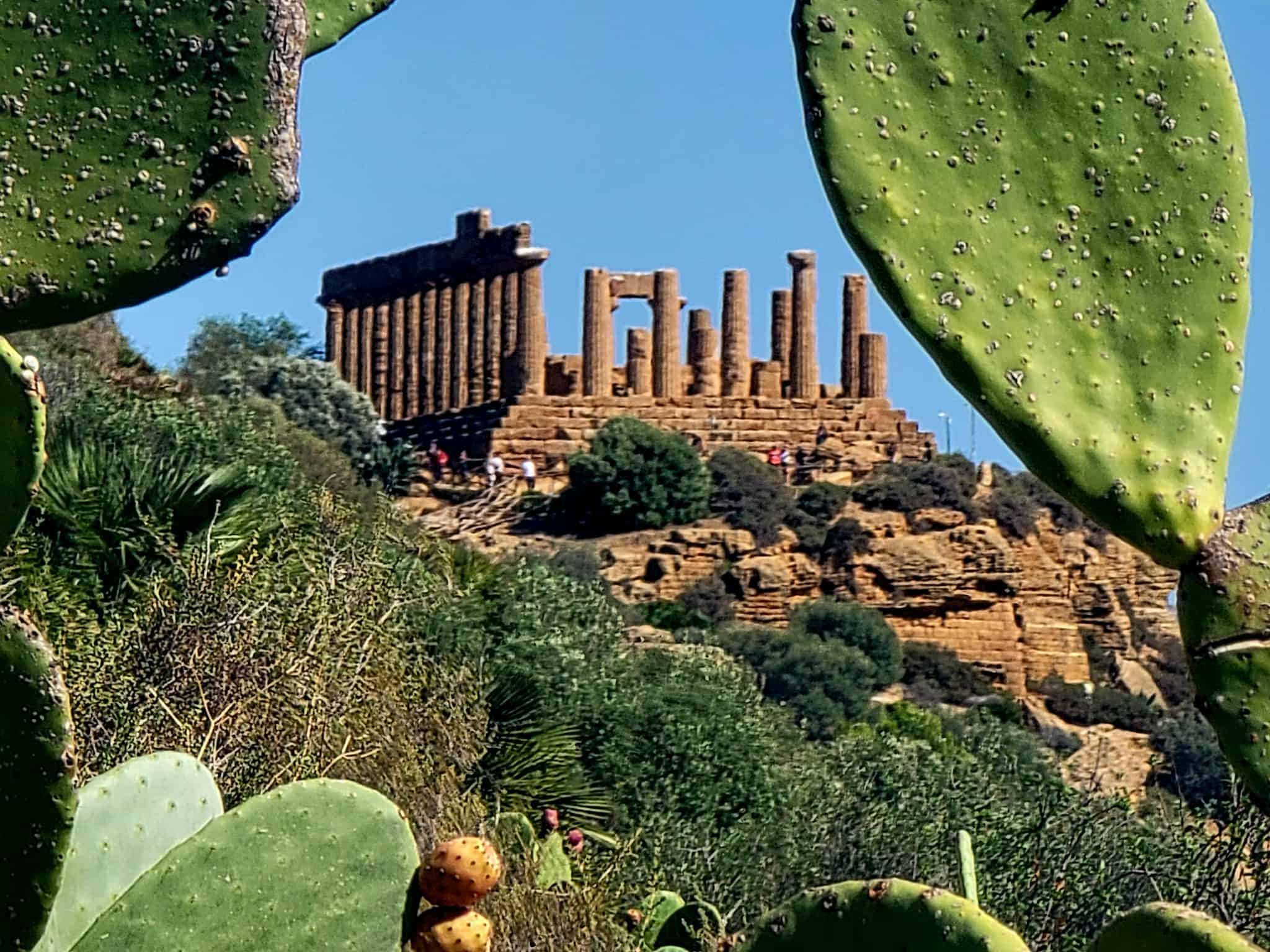
If you’re wondering whether the Valley of the Temples in Sicily deserves a spot on your itinerary, the short answer is yes, absolutely! This UNESCO World Heritage site is not only one of the best-preserved collections of ancient Greek temples outside of Greece, but also one of the most evocative historical landscapes I’ve ever walked through.
I visited the Valley of the Temples on a 10-day Western Sicily road trip, and it quickly became one of the most incredible and unforgettable ancient sites I’ve explored.
As a history lover, I was mesmerized, moving from temple to temple, imagining life in the ancient Greek city of Akragas and later under Roman and Christian influence. It was like stepping back 2,500 years into ancient Greece without leaving Sicily. By the end of the day I was dusty, sun-baked, and completely in love with the place. I’d rank it as one of the highlights of all my travels in Sicily.
In this Valley of the Temples Sicily travel guide, I’ll show you everything you need to plan your visit to the Valley of the Temples: the best entrance and parking, practical tips for walking the site (especially if you’re bringing a dog), what not to miss inside the archaeological park, and even where to stay nearby – from a lux resort overlooking the ruins, to a painfully charming hidden-gem town.
This is one of the highlights of my Western Sicily itinerary, where I show exactly how to schedule your visit → Our Western Sicily Itinerary: 1 Perfect Week
➡️ Quick Facts About the Valley of the Temples
- Location: Agrigento, Sicily
- Founded: 6th century BC as the Greek city of Akragas
- UNESCO World Heritage Site since 1997
- Opening hours: 8:30am – 7:00pm. There are sunset tours in English daily at 6pm which last about 2 hours.
- Tickets: You can buy your tickets on site, or save time and purchase online
- Guided Tours: There’s a feast of highly-rated tours available as day trips from Palermo, from Catania, and from Cefalu. There are also private tours, half-day, and full day Sicily archaeology adventures!
PLAN YOUR TRIP TO VALLEY OF THE TEMPLES
👉 Top-rated Valley of the Temples guided tour
🚗 Rent a car with DiscoverCars for your Sicily road trip
🏨 Where to stay nearby, from temple view balconies at Villa Athena to charming stays in Sciacca up the coast
A Short History of Akragas
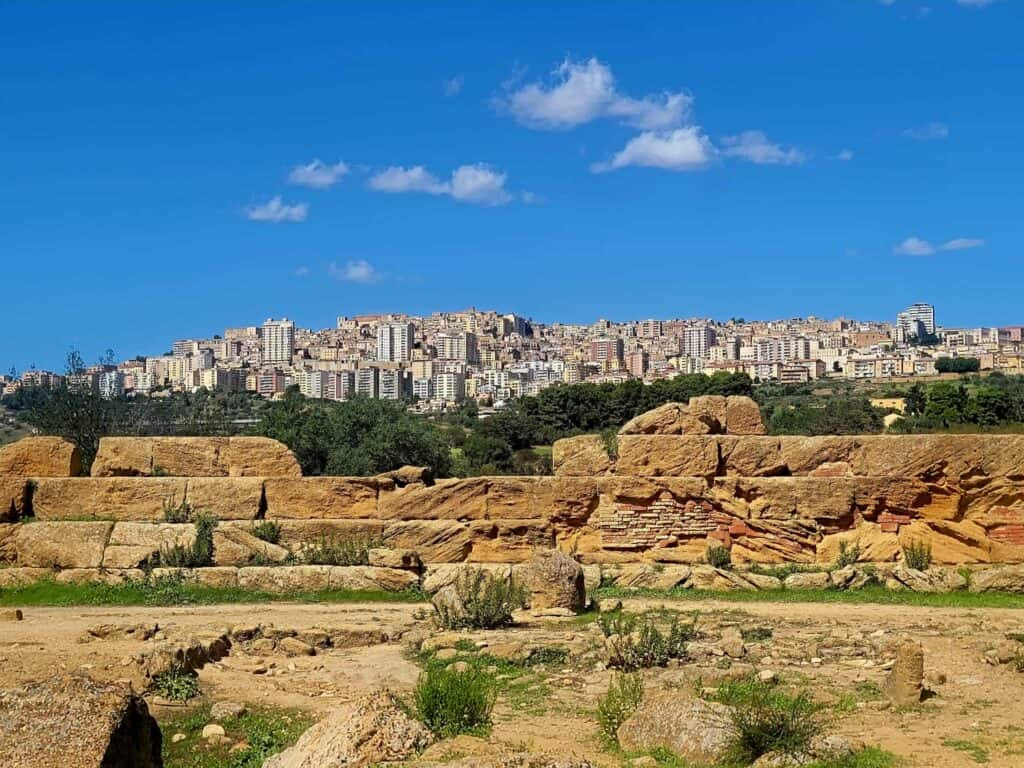
In the 6th century BC by Greek settlers from other parts of Magna Graecia (the larger Greek world) settled here for its prime location, with fertile land looking over the Mediterranean. It became one of the wealthiest and most influential cities in the ancient Greek world.
🏺 The Greeks of Magna Graecia
Akragas flourished under Greek rule, becoming a center of culture, philosophy, and trade. The city was famed for its temples, theaters, and sophisticated urban planning, rivaling even Athens in its grandeur! You’ll believe it when you see it. I admit to being absolutely stunned by its size and obvious wealth. Today, these are some of the greatest Greek ruins in Sicily.
🏛️ Roman Rule in Agrigento
By the 3rd century BC, Akragas had come under Roman control following the Punic Wars. The Romans admired Greek art, architecture and culture, so many of the temples continued to be maintained under Roman rule. Eventually some of the temples were repurposed for civic or governmental use, and the city’s layout was slightly changed to fit Roman urban standards.
🕊️ Early Christian Influence
Eventually with the decline of the Western Roman Empire, Christianity spread across Sicily, reaching Akragas by the late 4th or early 5th century AD. Many of the old Greek temples were abandoned or partially converted into Christian churches, while others fell into ruin, the stones being mined from the sites as building materials for churches and other buildings.
Walking through the Valley of the Temples is an incredible and emotional historical experience. The layers of history are so clearly present in this one place. I had to stop periodically just to catch my breath and appreciate all that we are still able to see today.
What to See in the Valley of the Temples in Sicily
The Agrigento Archaeological Museum (Museo Archeologico Regionale di Agrigento)
Allow 1-2 hours
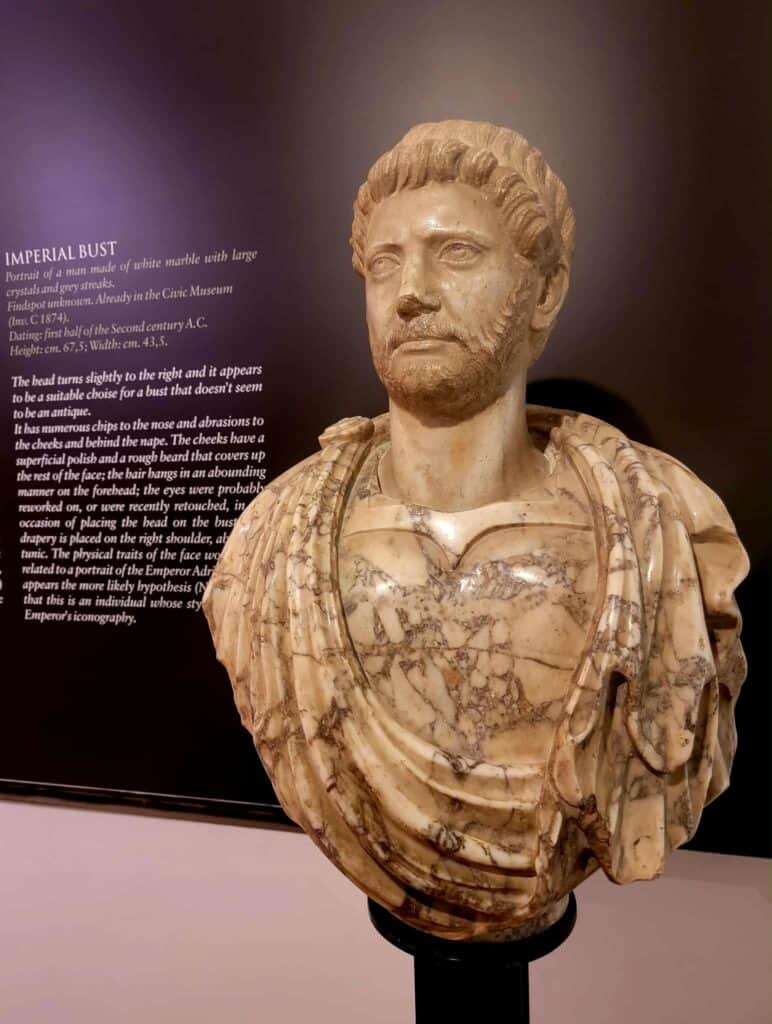
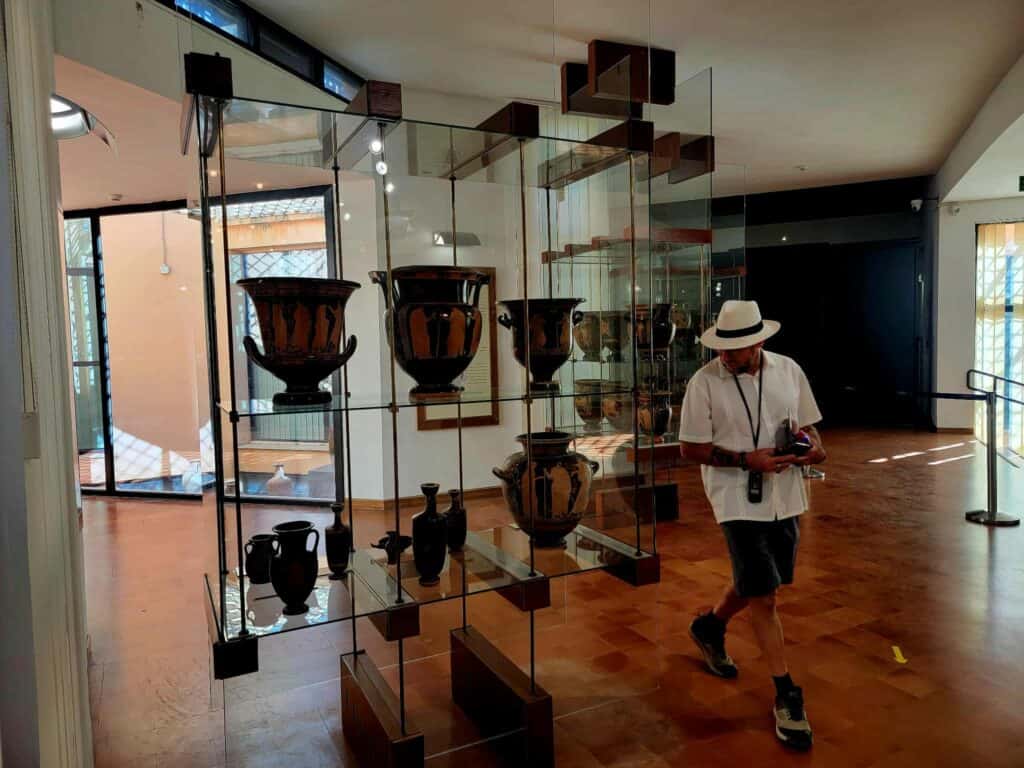
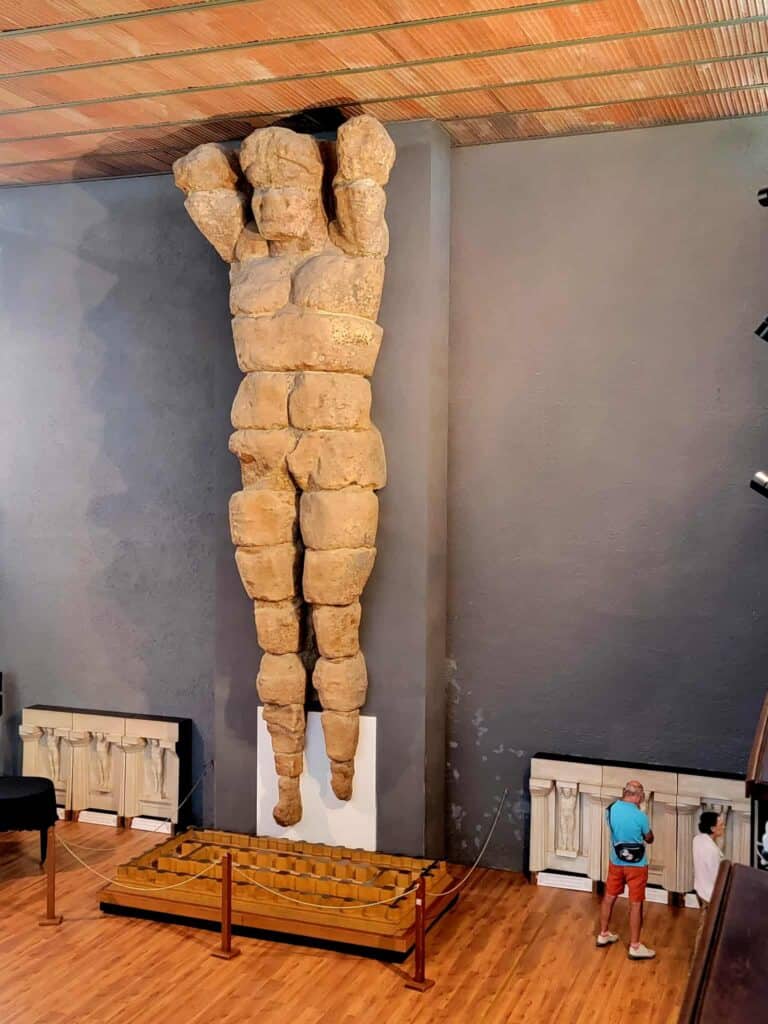
I strongly recommend if time allows to budget an hour or two for this incredible museum. We chose to do the museum first to get an idea of the incredible array of objects found in the area, and to develop an appreciation and understanding for how the Greeks, Romans, and Early Christians who inhabited this area lived.
Because of the museum visit, I could imagine the people living there as we walked around the site – the mosaic floors, incredible amphoras and jewelry, their celebrations and rituals, and just using the common household goods of daily life and work. It really added a whole dimension I otherwise wouldn’t have seen.
But you could certainly get a feel for the terrain and history first, and visit the museum afterwards. Either way your experience will be greatly enhanced!
Temple of Dioscuri (Temple of Castor and Pollux)
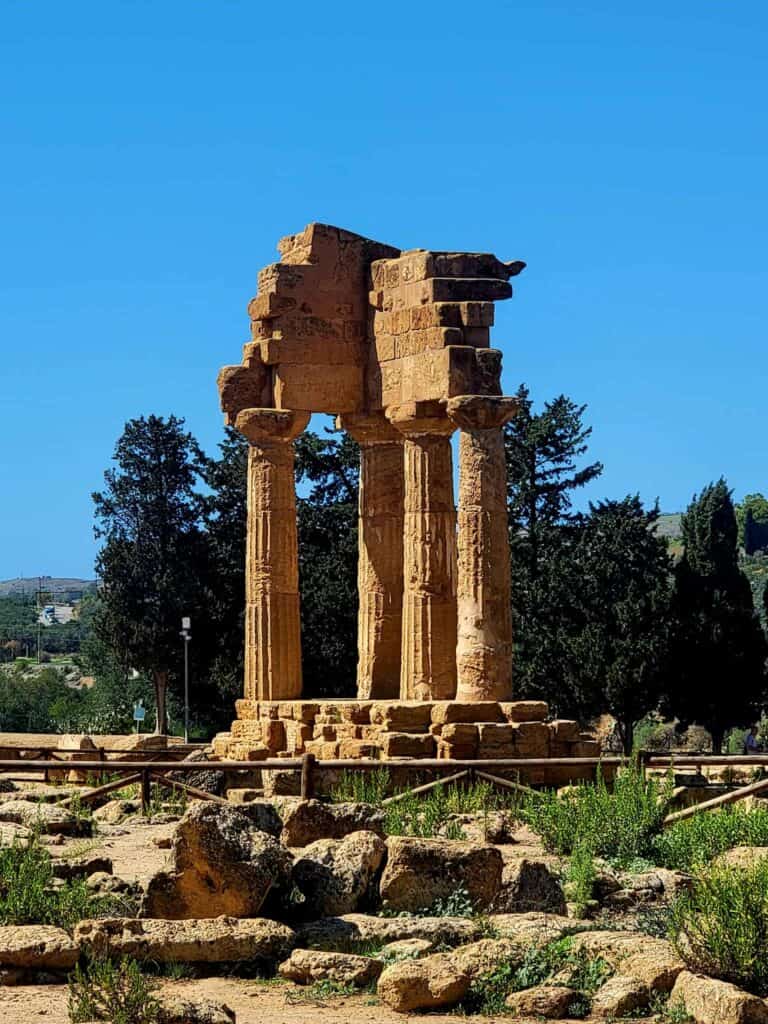
This is one of the first areas you’ll see if you enter, like we did, at Porto V (one of the two entrances). Only four columns remain of this small Doric temple, but it has become one of the valley’s most photographed landmarks. I spent a lot of time taking photos here because it was very dramatic but also because it was the first view of the ruins in the park and I was already blown away.
Originally built in the 5th century BC it was later reconstructed in the 19th century, and it has come to symbolize the city of Agrigento itself. You’ll see its silhouetted image repurposed everywhere. Even though it is largely ruined, it still makes it an iconic landmark.
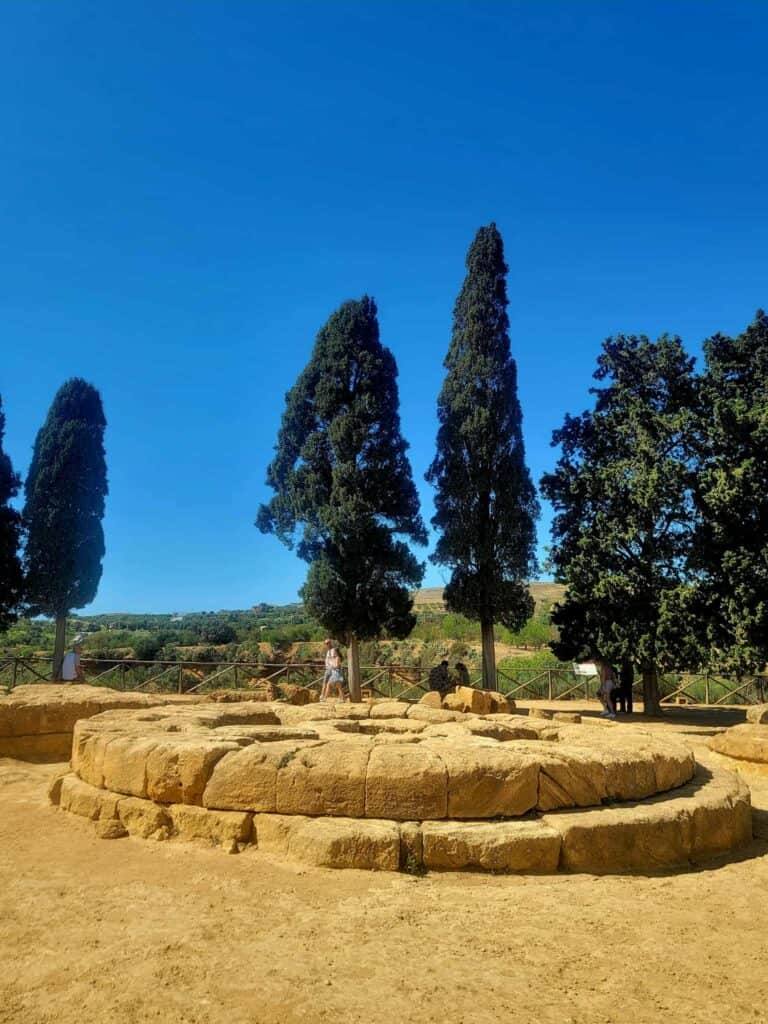
Temple of Olympian Zeus (Templio di Zeus Olympios/Jupiter)
The Temple of Olympian Zeus is overwhelming in its sheer scale. Today it lies mostly in ruins, with massive stone blocks scattered across the ground. Walking among them, I felt teeny – like I was inside the skeleton of a giant. The colossal telamons (stone figures used as supports) are nearly eight meters tall, and even lying on the ground they dwarf you instantly.
Historians believe the temple was never actually fully completed, but its plan says everything about the wealth and power of Akragas in its prime. I couldn’t help but think of the people who honed and then hauled these enormous stones into place 2,500 years ago, and the wild celebrations that would have undoubtedly taken place had the temple ever been finished.
This isn’t the “pretty” postcard temple, but it was one of the most humbling. I left with a deeper appreciation for the scale of this ancient city.
If you book a guided tour, this is one of those spots where the guide’s storytelling will make the ruins come alive, and it’s worth considering if you want to grasp the full meaning behind the gargantuan rubble.
👉 Book your Valley of the Temples tour before it sells out!
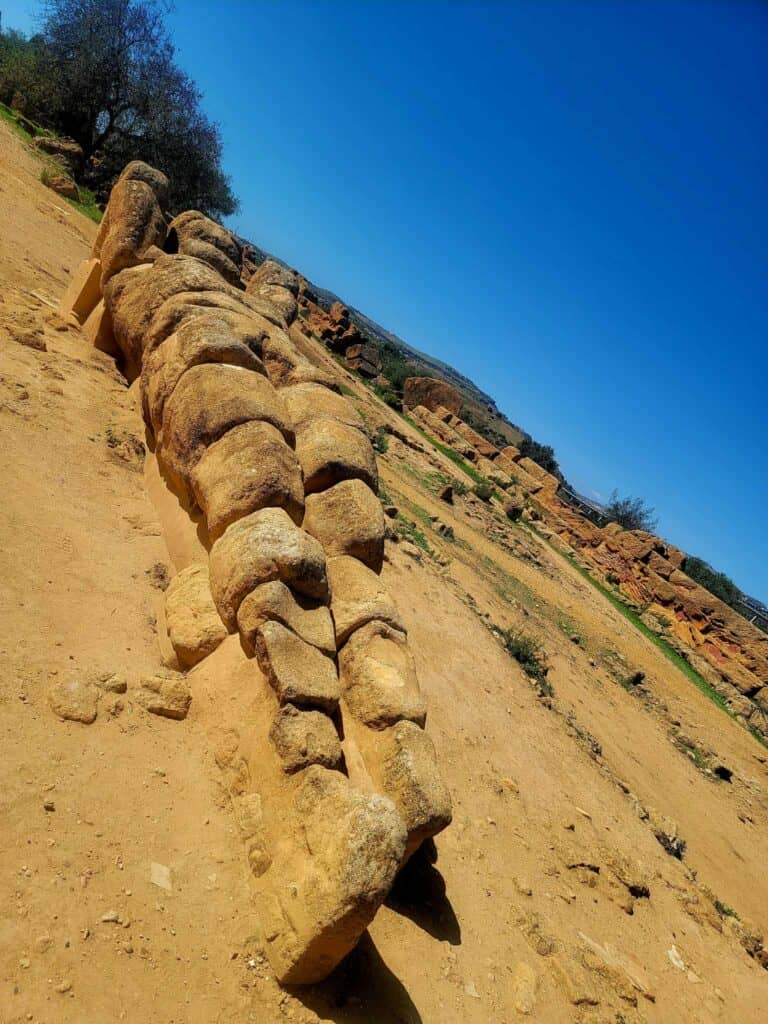
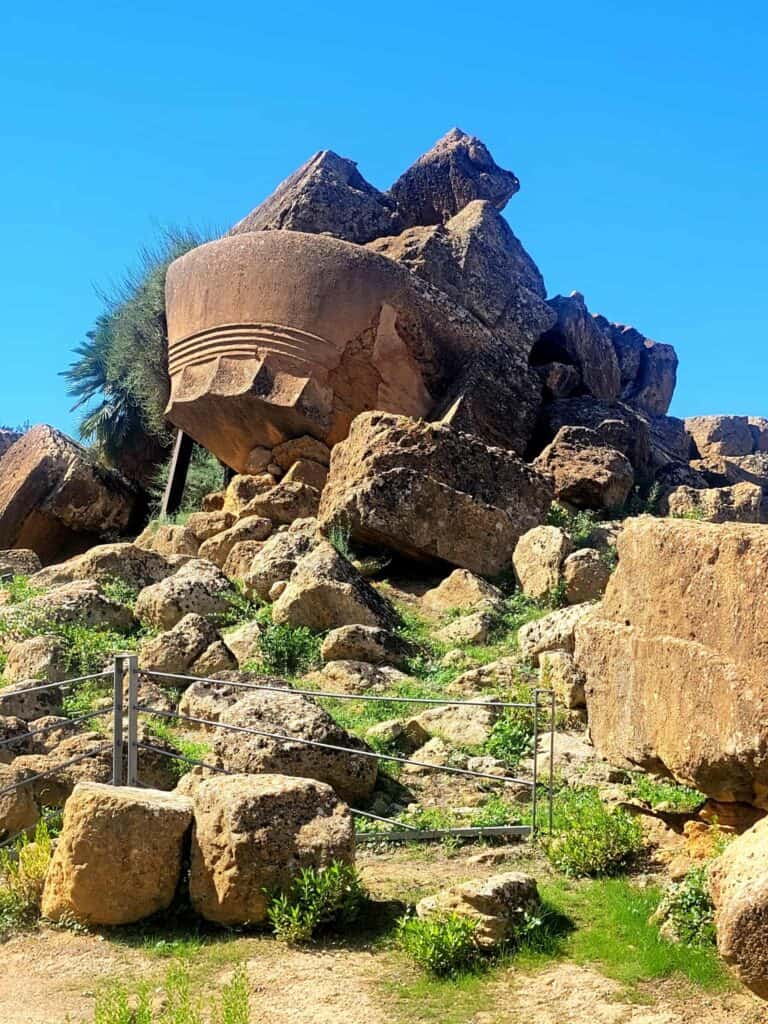
Temple of Hercules
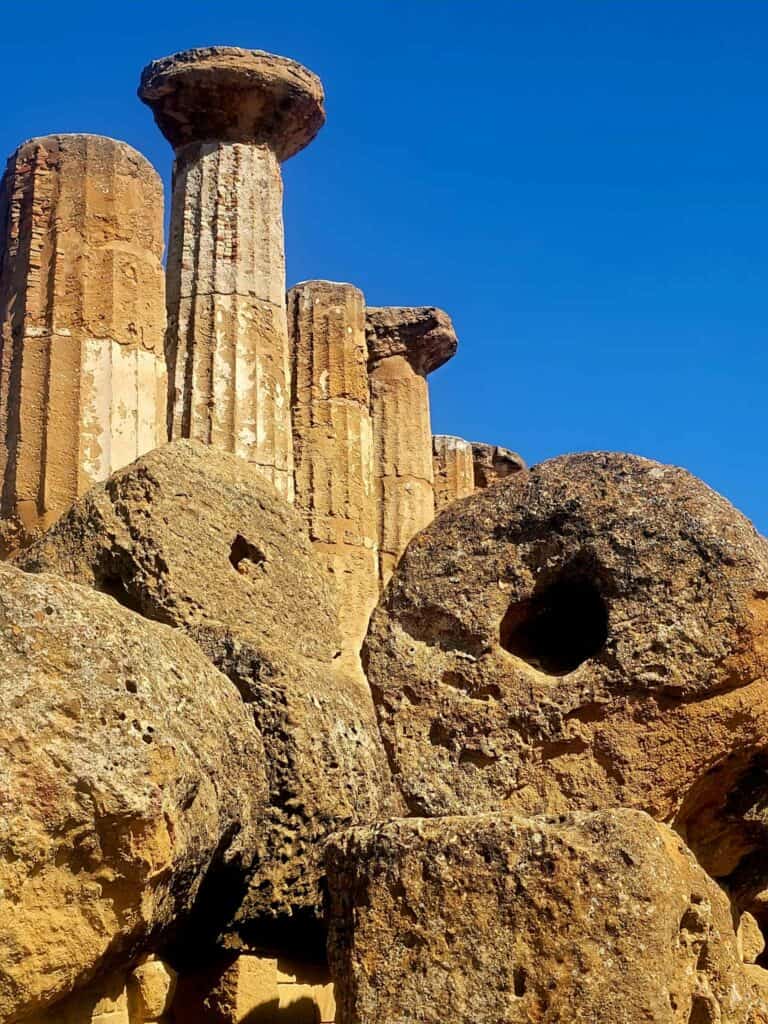
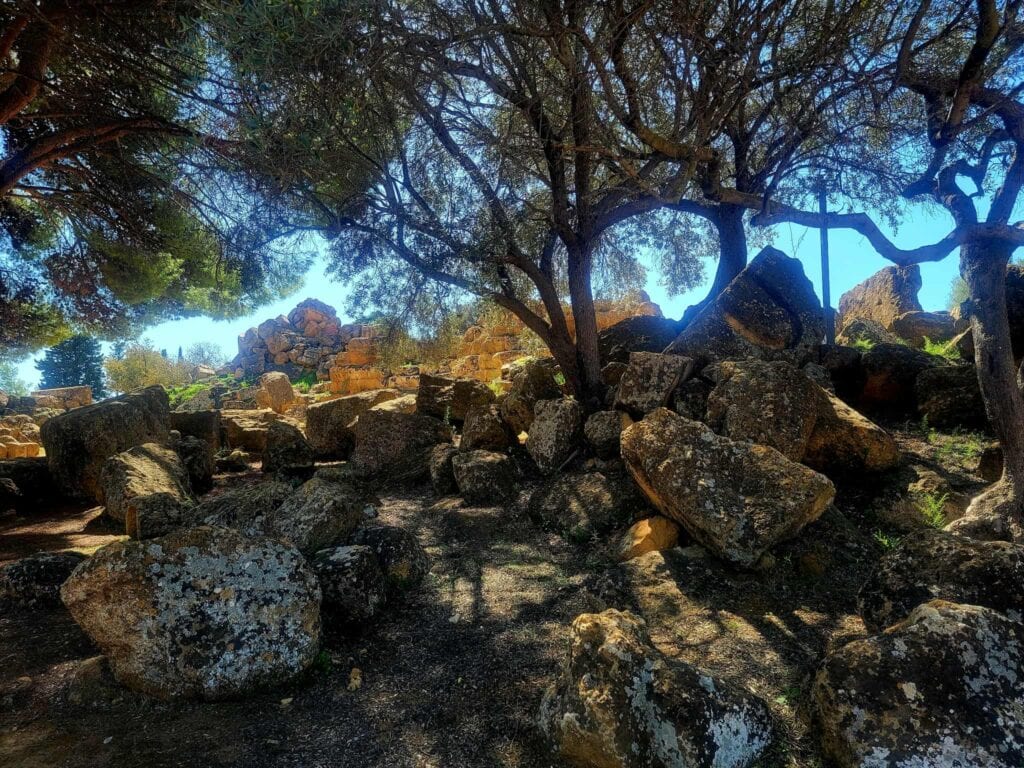
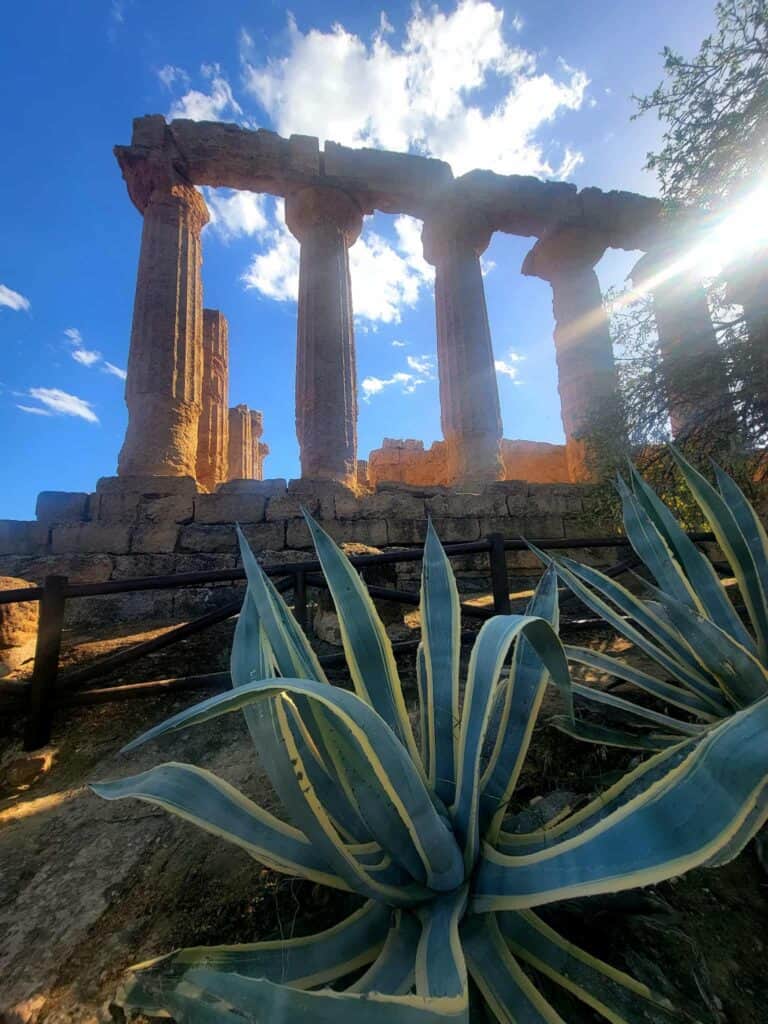
The Temple of Heracles, which is the oldest in the valley (constructed in the late 6th century BC) was revered in ancient times. Only 8 columns remain today, but I could squint and picture what this epic temple must have been. Even the massive rubble seems… Herculean.
Cicero wrote about a statue of Hercules which was once housed inside the temple that was so beloved that local residents guarded it at night, yet somehow it was still looted by the corrupt Roman governor Verres.
“Among the temples of Sicily, the Temple of Hercules at Agrigentum was held in special reverence. It contained a statue of Hercules, renowned and beloved by the people. Yet Verres, showing his customary audacity, seized the statue in the dead of night, despite the vigilance of the citizens, and carried it away to enrich himself.”
– Cicero
There are a few nice shady spots near this temple, and we took advantage of that to sit on the massive stones, hydrate, and enjoy the breeze in the shade of the ancient olive trees.
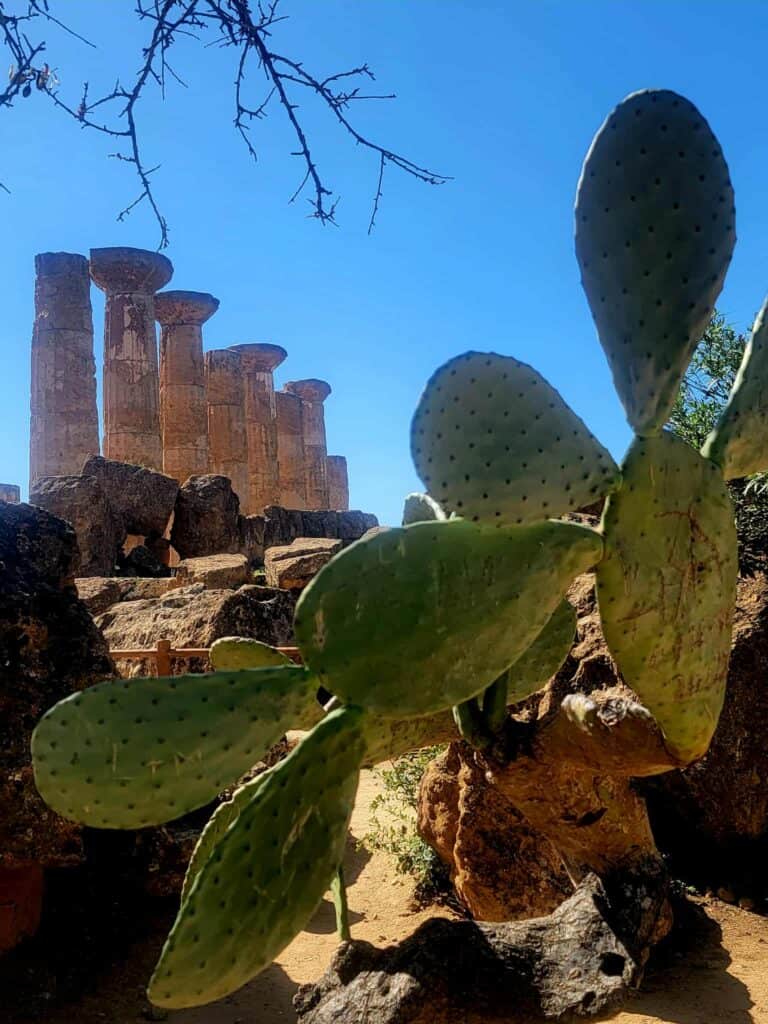
Temple of Concordia
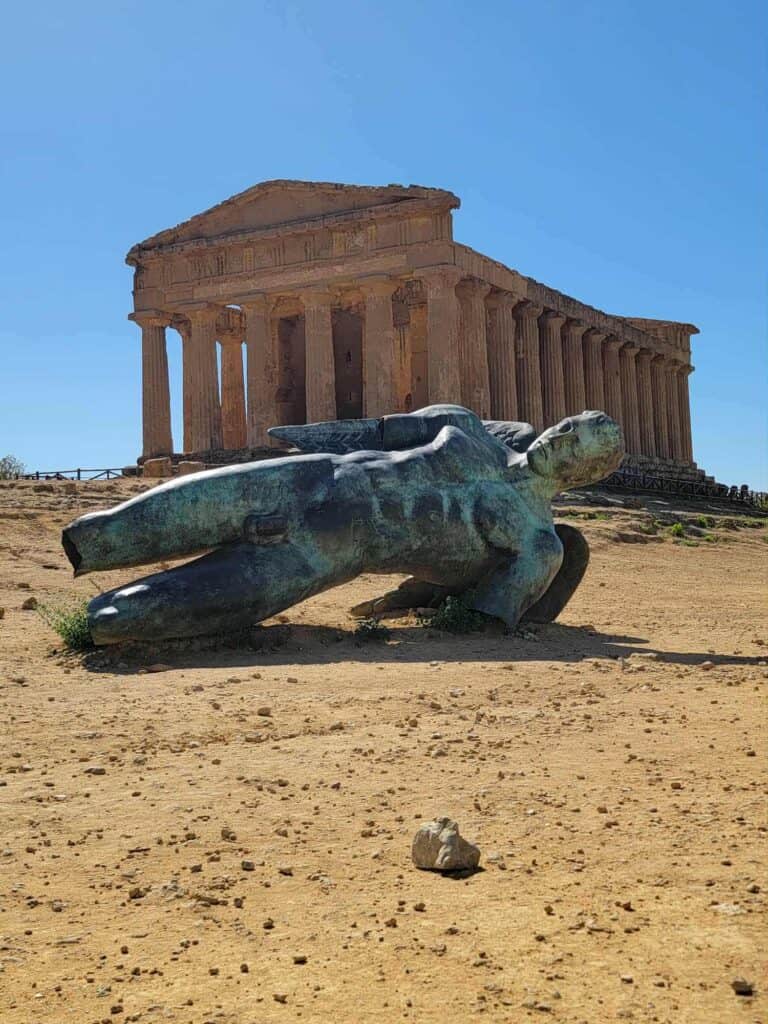
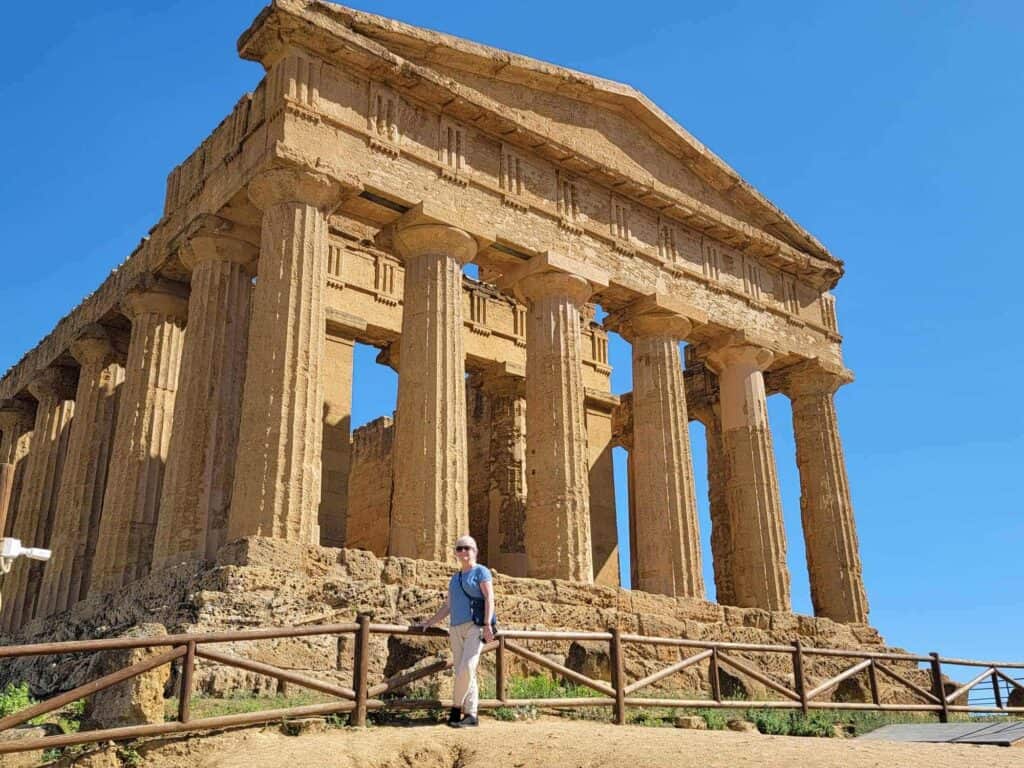
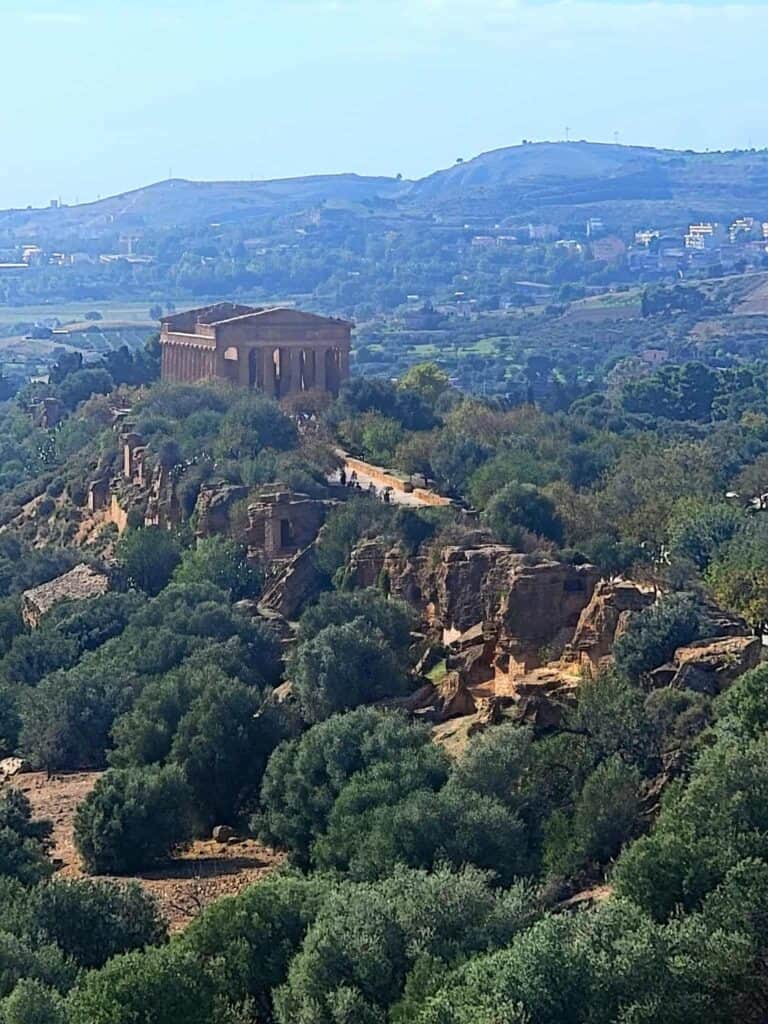
This is the best preserved temple in the complex, and one of the finest in the entire Greek world. The other sites will have primed you for the experience. This temple is absolutely stunning and is the real showpiece of the Archaeological Park.
Nothing quite prepares you for seeing it in person. Walking up to its amazingly preserved colonnade, I had the same goosebumps I usually get when stepping into a grand cathedral. Built in the 5th century BC, it survived because it was converted into a Christian basilica and remained in use.
For me, this was the moment the Valley felt really alive. Standing there in the spot where the Greeks, the Romans, and the Early Christians had all stood before with the same sense of awe was indescribable. This one is really the crown jewel of Sicilian temples.
If you’re a history lover, this temple is the ultimate reason the Valley of the Temples in Sicily is worth visiting. It’s the site that will stay etched in your mind.
📸 This temple always has a bit of a crowd around it, and it’s easy to see why. If you are a photographer who wants the perfect “alone at the Temple” shot, get there when the park opens and bee-line it before people arrive.
Byzantine Christian Tombs & Necropolis Walk
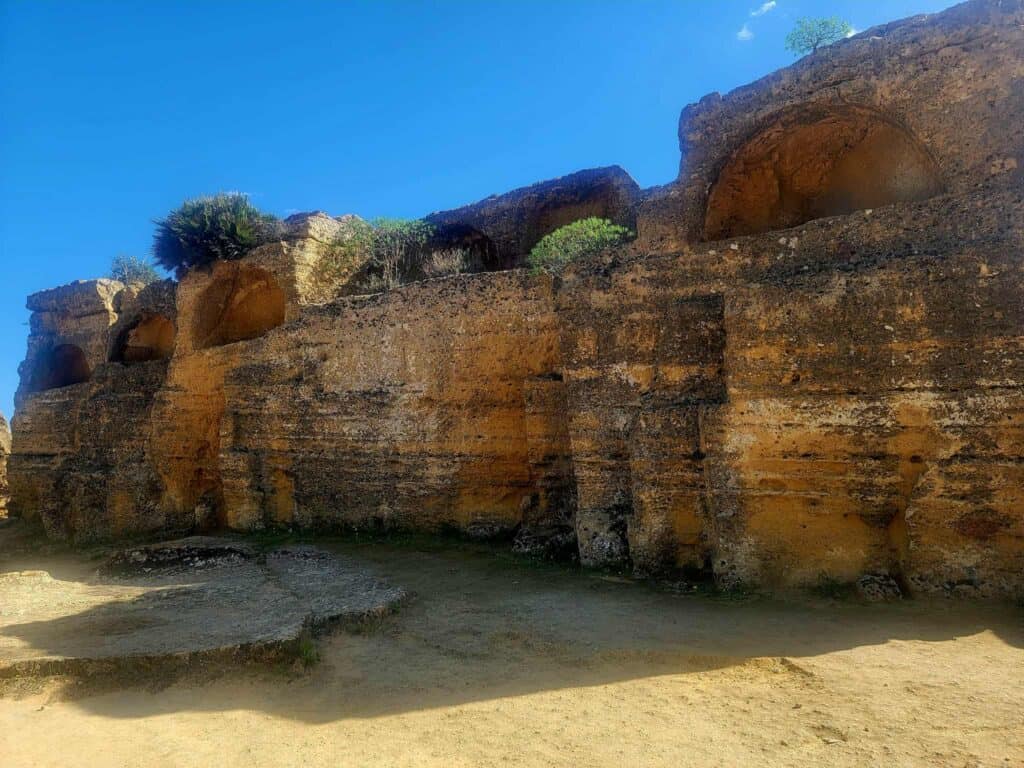
The necropolis walk was one of the most unexpected parts of the Valley of the Temples for me. After the massive grand temples, suddenly you’re among early Byzantine Christian tombs – rock-cut caves that feel quiet, small, and almost intimate compared to the sweeping scale of the ruins.
We slowed down here. The tombs, combined with the olive trees lining the path, made this section contemplative. It was a different kind of history, not about political power and enormous temples, but just about everyday life and death, and ordinary people.
Practically speaking, this is also one of the shadier and cooler stretches of the walk, which was a welcome relief after hours in the Sicilian sun. We sat for a while and caught some beautiful views over the valley.
If you’re visiting with a dog, this is one of the areas where they can rest comfortably out of the direct heat.
I visited The Valley of the Temples as part of a larger loop through beautiful western Sicily → Our Western Sicily Itinerary: 1 Perfect Week
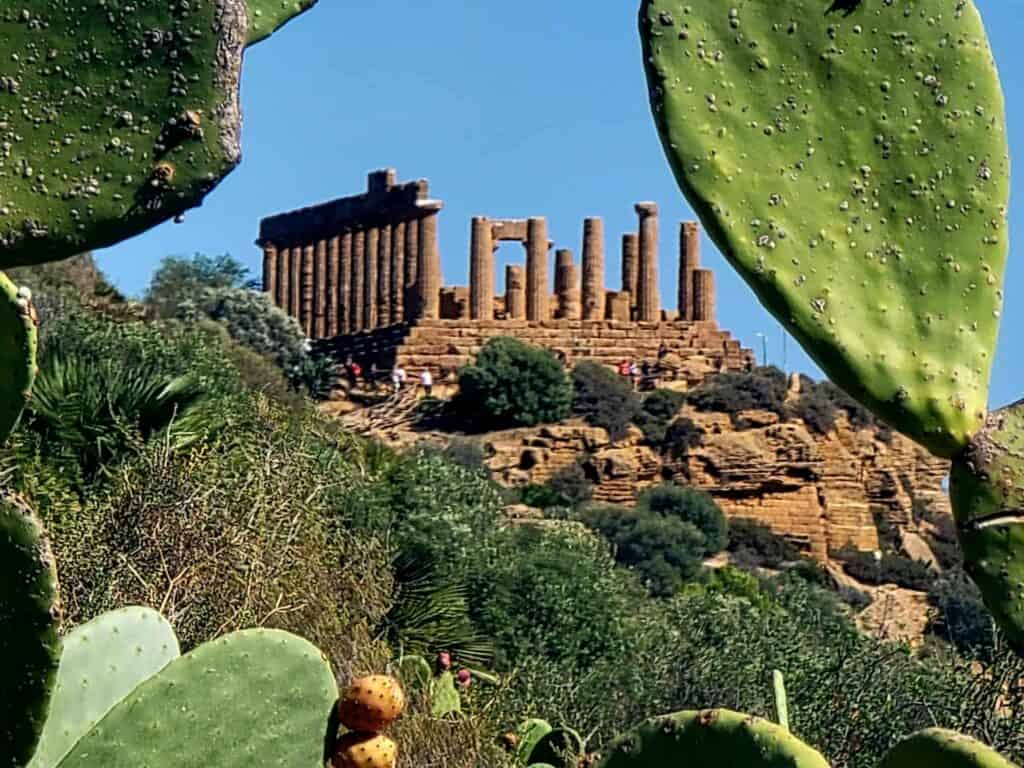
Temple of Juno
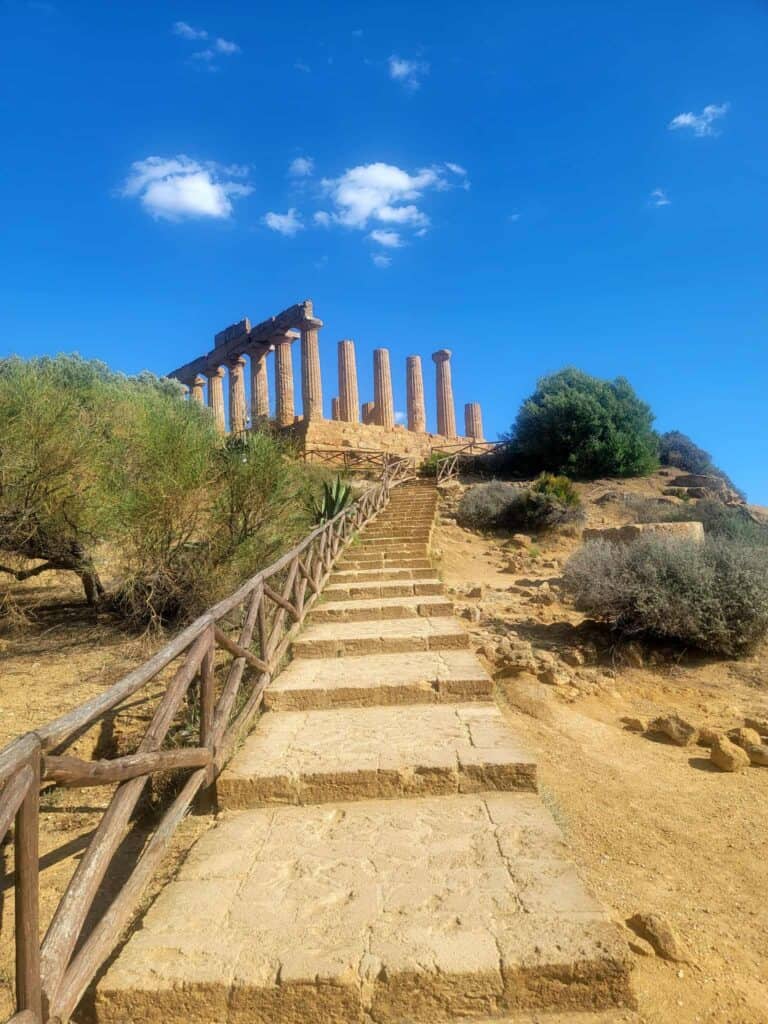
The Temple of Juno, sitting high on the hilltop, was the perfect finale to our day at the Valley of the Temples. After hours of dusty walkways and weaving through ruins, climbing that last flight of steps felt like the end of a small pilgrimage!
When I reached the top, the view took my breath away. From here, you can not only see the Sicilian countryside rolling out toward the sea, but the ruins behind you glowing in the late afternoon light. It’s the stuff poetry is made of.
This temple, dedicated to Hera (Juno), was especially sacred to women in ancient times, who came here to pray about matters of marriage and childbirth. I definitely felt a connection to the thousands of women who had stood there before me.
If you can, time your visit, try to arrive here at golden hour or sunset. It was one of the most magical moments of my entire visit, even though I was kind of tired.
🅿️ Valley of the Temples Parking and Entrance
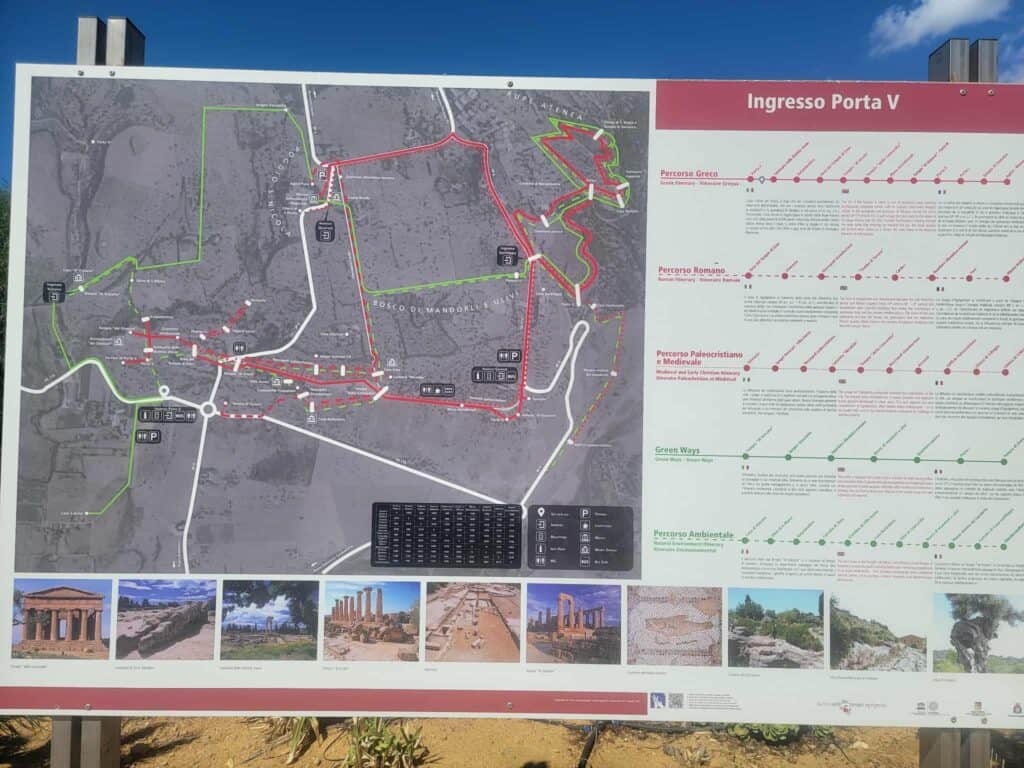
There is a ticket office, parking area for cars, and park entrance on each end of the park (East and West). We entered at Ingresso Porta V (Entrance Gate 5/Porta Quinta) – Via Caduti di Marzabotto, and found easy parking. You might even be able to find a shady spot to park your car if you’re lucky.
Parking at Porta V turned out to be a great choice for us. We started with the museum and smaller sites, and as we walked, the ruins got more impressive along the way. We ended at the temple of Juno, grabbed a gelato, and caught the free shuttle bus across the park back to our car. Highly recommend this route!
🚐 If you are in a camper, you must park at the Porta V parking area.
🚗 Driving in Sicily gives you complete freedom to explore ancient sites on your own schedule. We recommend DiscoverCars, because the process is fast, affordable, and incredibly smooth. Pickups at Palermo and Catania airports are easy, selection is huge, and they have free cancelation, no hidden fees, and 24/7 customer service in English.
👉 Check prices for your Sicily rental car here.
Nervous About Driving in Sicily?
If the idea of driving in Sicily makes you hesitate, you’re not alone. We felt the same way before our first trip, especially when visiting ancient sites that are tucked away, far from major cities and train lines. But after several road trips across the island, we’ve learned that having a car is often the only way to reach Sicily’s most fascinating ruins, and that driving here isn’t nearly as intimidating once you know what to expect.
If you’re wondering whether renting a car in Sicily is worth it, how the roads really are, or what to watch out for, we put together a practical guide based on firsthand experience to help you decide with confidence.
👉 Driving in Sicily: Best Rental Car & Travel Tips
🧭 Practical Tips for Visiting
Visiting the Valley of the Temples is unforgettable, but it does require some planning — especially with Sicily’s heat and the size of the site. Here are the tips I wish I’d known before going:
🚶 How much walking is involved at the Valley of the Temples?
The park stretches about 2–3 km (1.5–2 miles) from one end to the other. The paths are dusty and uneven in spots, so wear sturdy shoes or supportive sandals. There are shuttle buses that connect the entrances if you don’t want to walk both ways.
☀️ When is the best time to visit the Valley of the Temples?
There is very little shade at the site, so bear that in mind if you are visiting in the warmer months (May-September). The most comfortable times are early morning (arrive when the gates open at 8:30 am) or late afternoon, especially if you want to catch the sunset at the Temple of Juno.
🥤 What should I bring?
- A hat, water bottle, and sunscreen (the Sicilian sun is intense).
- Cash for food and gelato (some cafés don’t accept cards).
- A collapsible bowl and extra water if bringing your dog.
🍨 Is There Food Available at The Valley of the Temples?
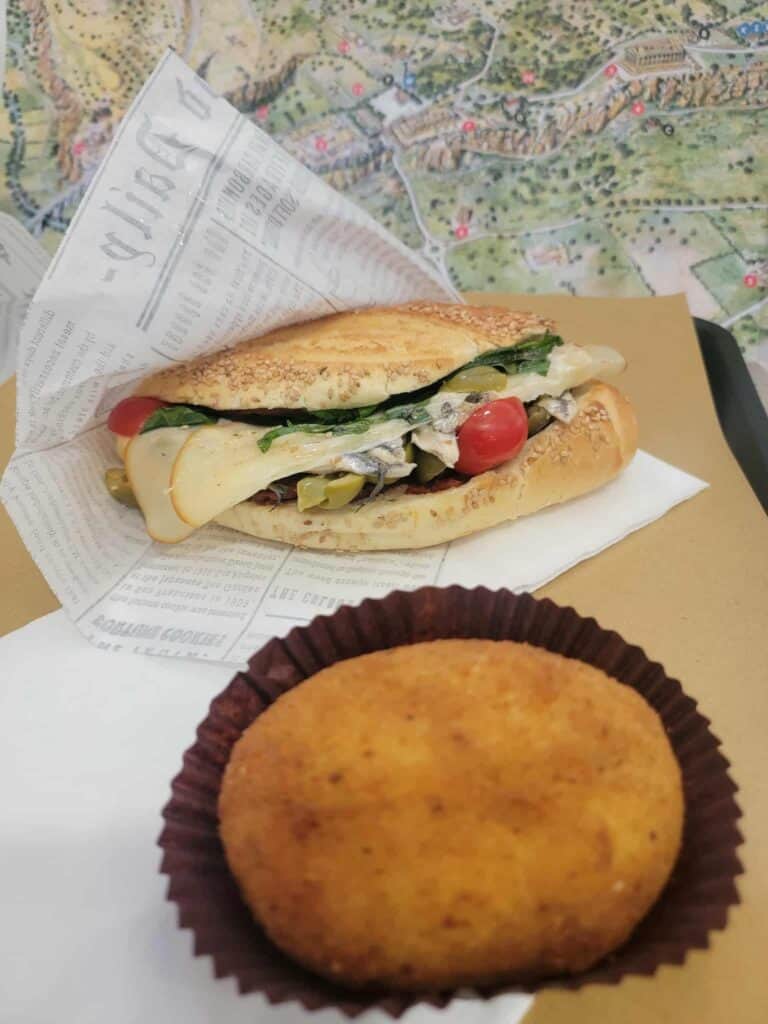
There’s a café near the archaeological museum where you can grab panini, salads, and Sicily’s legendary arancini (delicious deep fried rice and cheese ball) for a €10–12 lunch. I’d also recommend planning a gelato stop right before the climb up to the Temple of Juno; it’s the perfect refresh before the final stretch.
♿ Is the Valley of the Temples Accessible?
The main paths are mostly flat, but there are stairs at certain temples (like Juno). Wheelchair access is limited in places, though the overall terrain isn’t too difficult. If mobility is a concern, plan to use the shuttle buses between entrances.
🎟️ How to Get Tickets for the Valley of the Temples
A combo ticket covering both the archaeological park and the museum costs €19.80 for adults. Children and teens under 18 are free. You can buy tickets on-site or online in advance with an audioguide to skip the line.
👥 Should I book a guided tour of the Valley of the Temples?
Guided tours (around 2 hours) bring the ruins to life with stories you might otherwise miss. If it’s your first visit and you’re short on time, I’d recommend it.
You will be able to get a lot of information from the placards at the site, but if you’d rather listen to stories than read info boards, go with the tour.
👉 Browse all the tours of Valley of the Temples including sunset options
🕰 How Long Should You Stay at the Valley of the Temples?
If you are pressed for time, you could enjoy most of the site in a couple hours. Ideally, if you include a museum visit, lunch, a gelato stop, and taking your time as you wander, plan on about 4 and a half hours.
Guided tours of the site are mostly about 2 hours long, and will allow you to go back and revisit places you liked or stop at the museum and café.
🐾 Can You Visit the Valley of the Temples in Sicliy With a Dog?
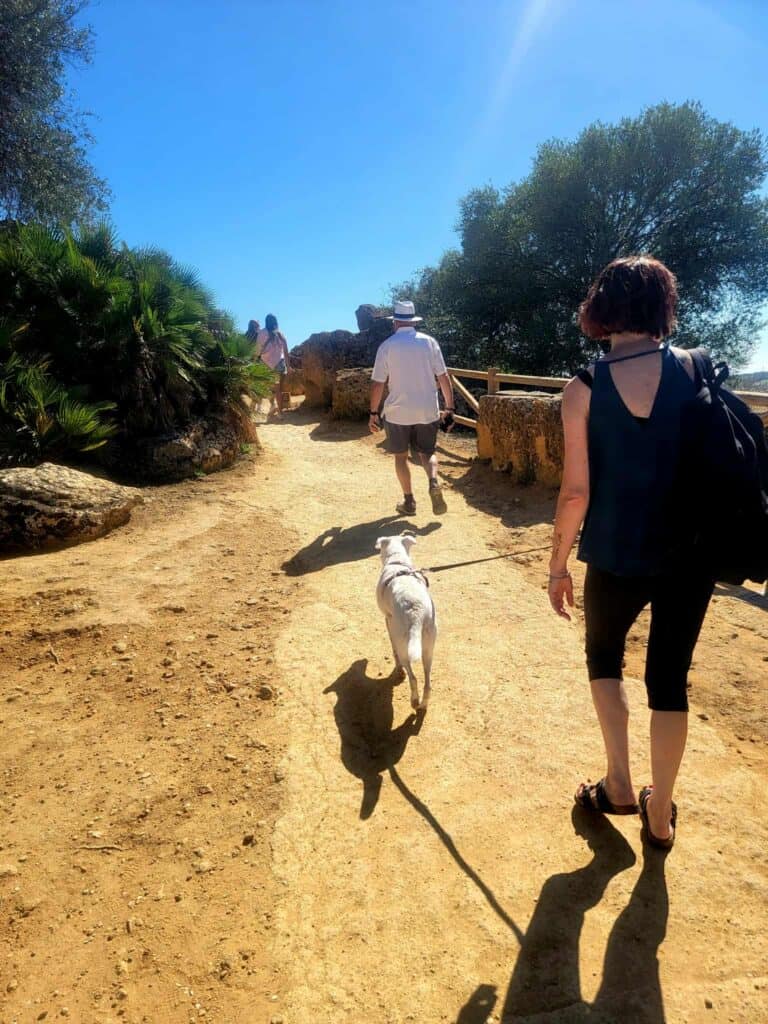
Yes, dogs are loved in Italy, and welcomed at the Valley of the Temples in Sicily as long as they are on a leash.
I actually debated bringing our Frenchie along, but in the end we decided against it, and I’m glad we did. The park is wide open with little shade, and the paths get very hot and dusty under the Sicilian sun. Even with water breaks, it would have been tough on her (or any snub-nosed breed).
That said, I saw plenty of other dogs who seemed perfectly content, especially larger or more heat-tolerant breeds. If you do bring your dog, here are a few tips I’d recommend after seeing the conditions myself:
- Bring a collapsible bowl and plenty of water: there are long stretches without access to shade or fountains.
- Time your visit for early morning or late afternoon when the paths are cooler.
- Pack poop bags: I did not see dispensers on-site.
- Avoid the museum: dogs are not allowed inside.
There were a few moments I thought, this would make a great photo with our dog, especially with the epic temple backdrops. But ultimately, I know she was happier napping in the air-conditioned hotel.
If you’re traveling Sicily with a dog, I’d say the Valley of the Temples can be done, but only if your dog tolerates heat well. For small or brachycephalic breeds, you may want to make the same choice we did and let them sit this one out.
💬 Is the Valley of the Temples English-friendly?
Everyone who is interacting with visitors to the Valley of the Temples, like park and museum staff, speaks English.
The signs in the park, and many of the signs in the museum are in Italian and English. It always pays to have Google translate loaded in your phone though, just in case you need it.
🏨 Where to Stay When Visiting the Valley of the Temples in Sicily
If you’re staying near the temples themselves, Villa Athena is the dream, a five-star resort located inside the archaeological park. We actually tried to book it and found it full, so we based ourselves in nearby Sciacca instead at the charming Garibaldi Relais. For the full picture on both, plus where to stay in Marsala and Palermo, see our complete Where to Stay in Western Sicily guide.
🗓 Suggested Itineraries for the Valley of the Temples in Sicily
How much time you spend here really depends on your pace, interests, and whether you’re traveling with a dog. Here are three realistic options:
⏱️ Half-Day Agrigento Visit
- Best if you have limited time or if you’re stopping on a road trip.
- Plan: Head straight to the archaeological park and focus on the temples. Add the museum if you’re especially interested in history.
- Spend your time wandering the temples, and hop on the shuttle but at the end to return quickly to your parking lot.
- Dog note: This is the most manageable option if you’re bringing your dog, since the heat and terrain can be tough for longer stays.
👉 Best paired with: A refreshing afternoon at your hotel pool or a relaxed dinner in Agrigento town.
🌅 Full Day With Museum + Sunset
- Best if you’re a history lover who wants the full experience without rushing.
- Plan: Start with the Archaeological Museum (1–2 hours), break for a quick lunch at the café, then explore the park at a relaxed pace. End your visit at the Temple of Juno to watch the sunset.
- Tip: This was my personal choice, and it gave me time to imagine daily life here while not feeling rushed.
- Dog note: No dogs are allowed in the museum, so you’ll need to leave them in your hotel room.
👉 Best paired with: A night at Villa Athena — imagine walking back to your balcony with temple views after sunset. [Check rates here].
🛥️ Adventure Day: Valley + Sea
- Best if you like to pack a lot into one day!
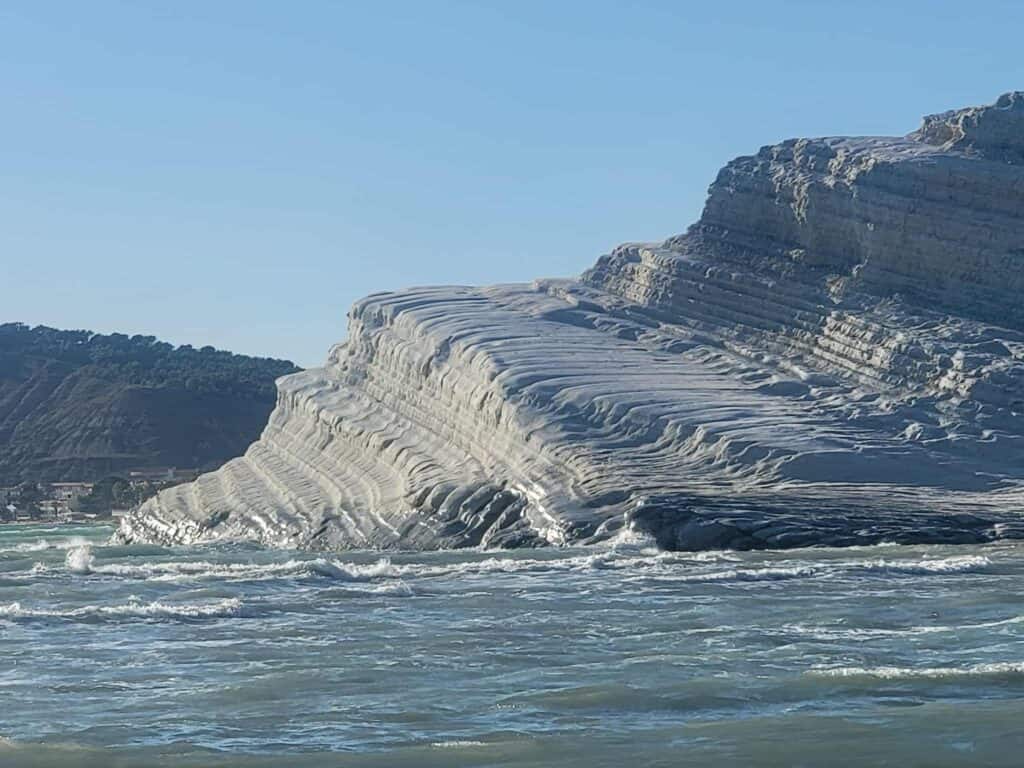
- Plan: Begin with breakfast by the sea and a morning boat excursion to the Scala dei Turchi (the dazzling “Turkish Steps” cliffs). Afterward, head to the museum and Valley of the Temples. Wrap up with a swim or sunset photos at Scala dei Turchi beach.
- Dog note: Skip this one with a dog — the heat and logistics make it tricky.
The day we went direct access to the Turkish Steps was closed, but it turned out well because we did get some photos without people on top, and had some great beach time with an unobstructed view.
✅ Final Valley of the Temples Tips & Resources
Before you go, here are the essentials to make your visit smooth and enjoyable:
- Book tickets and audio guides online to skip the line and head straight in.
- Bring the basics: hat, water, sunscreen, and sturdy shoes. The Sicilian sun is no joke.
- Timing matters: shoulder seasons (April, October) are cooler and less crowded, and mornings/evenings are far more comfortable than midday.
- Accessibility note: paths are uneven but mostly manageable; stairs at some temples. Shuttle buses connect entrances.
- Traveling with a dog? Yes, they’re welcome, but plan carefully for the heat and skip the museum.
- Here is today’s weather in Agrigento
Trip Planner Essentials
🚗 DiscoverCars for renting a car in Sicily
🏨 Best hotels near Agrigento
🎟️ Top tours for Valley of the Temples Archaeological Park
🕒 The park is open from 8:30am – 7:00pm. Allow most of the day to explore and wear comfy shoes!
We visited the site in early October, and the weather was absolutely perfect. It still felt like summer to me, but with fewer crowds, cooler nights, and not so much scorching heat during the day. I’m kind of a wimp in the heat, so it added much to my enjoyment.
We flew into Palermo and traveled down the coast to Agrigento and back up, hitting Selinunte and Segesta Archaeological Parks on the way back.
All I have to say is that there’s a reason this is the most visited site in Sicily. It’s truly epic in every sense of the word. I was stunned at its massive scale and the number of temples. I took hundreds of photos because every time I turned around there was another spectacular site.
It can only be compared in size and scope to the Selinunte Archaeological Park which is also worth a slot on your bucket list!
I hope you have the opportunity to visit for yourself because I guarantee it will be one of your absolute highlights of Sicily!
Other Great Destinations in Sicily You May Enjoy
The Best Archaeological Sites in Sicily: East to West
Western Sicily Itinerary: The Perfect 8-day Route for History Lovers
