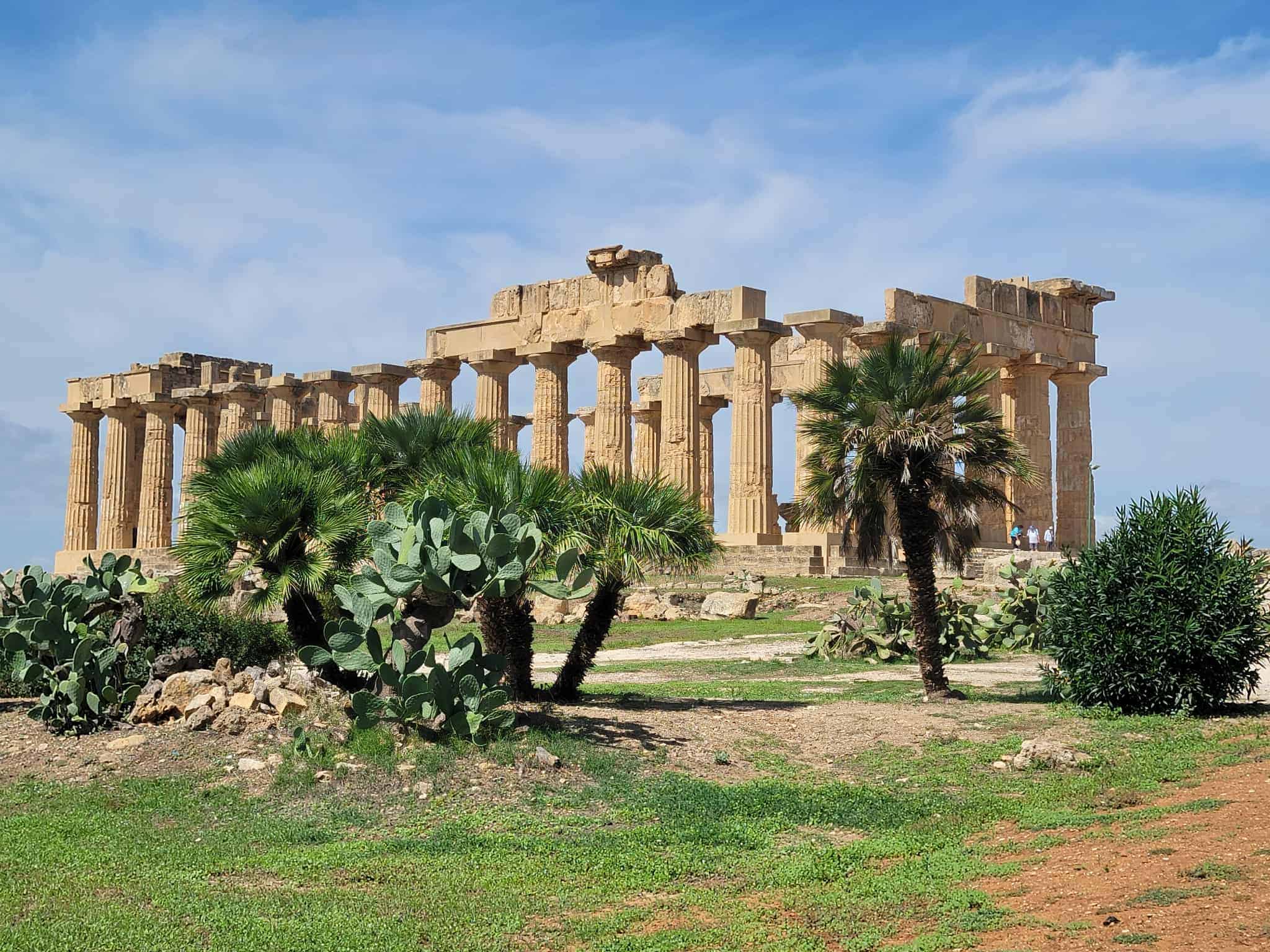
Few places in the ancient world invite you to step inside history quite like Selinunte Archaeological Park on Sicily’s west coast. And I mean that literally. Unlike many ancient ruins which are fenced off for preservation, here you can walk inside the temples, touch the stones, stroll down ancient lanes where people lived and worshipped, and feel the scale of a once-great Greek city that rivaled Athens in splendor.
If you’ve ever dreamed of walking through an ancient Greek city, Selinunte is definitely for you. Spread across nearly 660 acres overlooking the sea, Selinunte is one of Europe’s largest archaeological sites, and also one of its most immersive and most beautiful.
I visited Selinunte Archaeological Park as part of a dream 10-day Western Sicily road trip, and I had never heard of it until I started trip planning. It quickly became apparent that this was an absolute must-visit Greek ruin in Sicily that deserved a spot on our itinerary. It did not disappoint!

In this Selinunte travel guide, you’ll find all the practical information about visiting, the absolute must-see highlights, how the park is laid out, a route map to see it all, and whether it’s worth it to get a personal tour or to stick with the audioguide.
Founded in the 7th century BC, Selinunte rose to power as one of the richest cities in the Mediterranean. The flourishing city of 20,000+ people was wiped off the map by Hannibal Mago and his Carthiginian forces who sacked it in 409BC. They murdered more than 10,000 inhabitants and relocated and enslaved the rest.
Excavations revealed a city where meals were left uneaten on tables, and life was abandoned in an instant as people tried to flee the carnage. The city was looted, destroyed, and never reinhabited.
As you walk through the towering Doric columns, the scattered acropolis, and look out over the same blue ocean, you feel Selinunte’s grandeur and also its terrible loss. The on-site museum makes the experience even more personal, with incredible sculptures and fragments from everyday life, while electric carts help you navigate the park’s vast expanse. I was grateful for this on the hot afternoon we visited!
All in all, visiting Selinunte feels less like touring an archaeological site and more like joining the ancient world for a day. I’ve visited ancient sites across Europe and I’ve often thought “I wish I could walk inside there!” Selinunte Archaeological Park delivered on that wish again and again!
These are truly some of the greatest Greek ruins in Sicily and should be a core part of any Western Sicily itinerary for history lovers!
This was one of the standout stops on my Western Sicily itinerary → Our Western Sicily Itinerary: 1 Perfect Week
Visiting Selinunte Archaeological Park
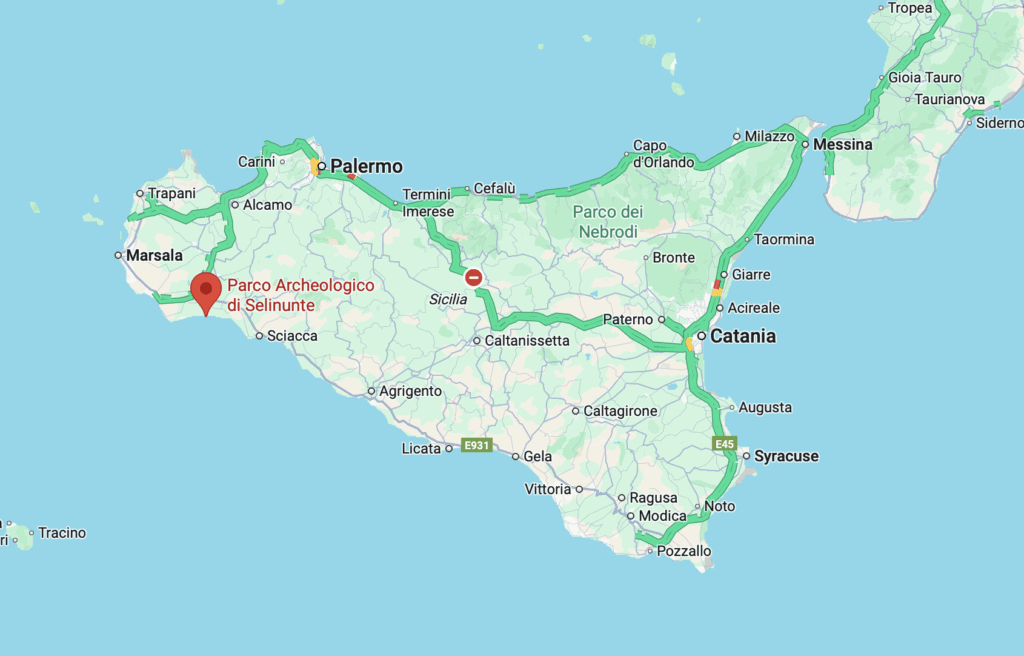
Selinunte is not only a major Sicilian archaeological site, it’s the largest archaeological park in Europe, covering nearly 270 hectares (660 acres), so a little planning makes a big difference. This is not a site to rush if you can help it. There is so much to see, and part of the experience is an unhurried journey as you immerse yourself in this ancient city.
PLAN YOUR TRIP TO SELINUNTE ARCHAEOLOGICAL PARK
👉 Top-rated Selinunte Archaeological Park Tours
🚗 Rent a car with Discover Cars for your Sicily road trip
🏨 Where to stay nearby, from a seaside getaway with terrace views of the acropolis to a charming stay in Sciacca down the coast
🅿️ Parking & Entrances
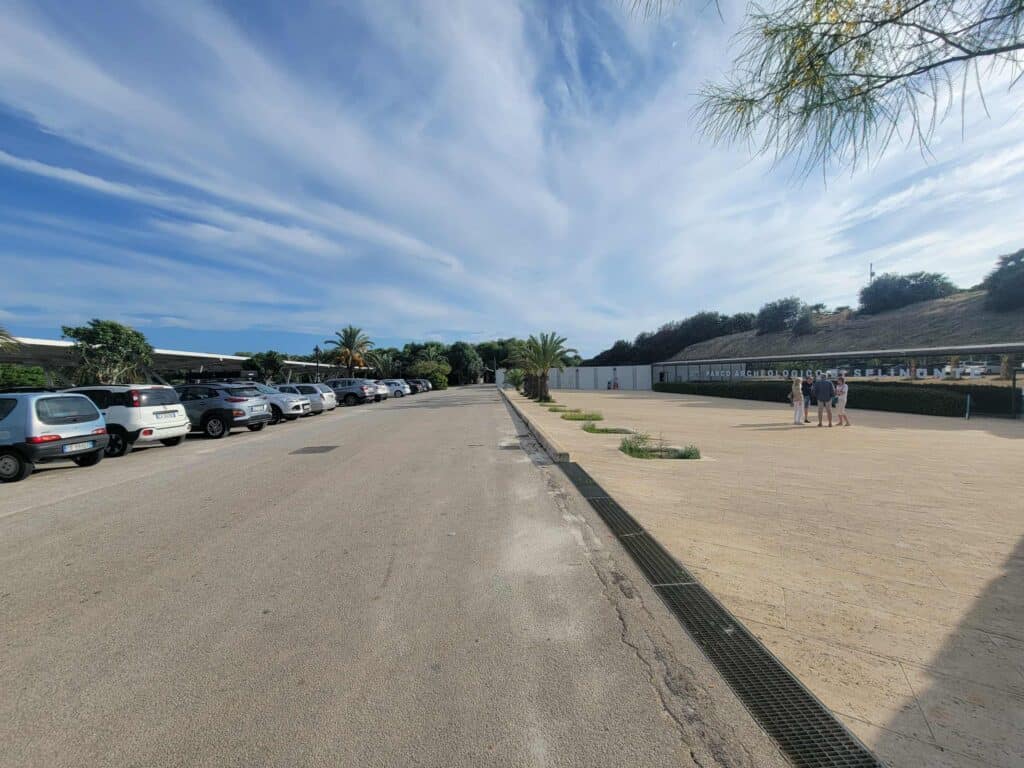
The easiest way to visit the site is by car. There are two main entrances to the park:
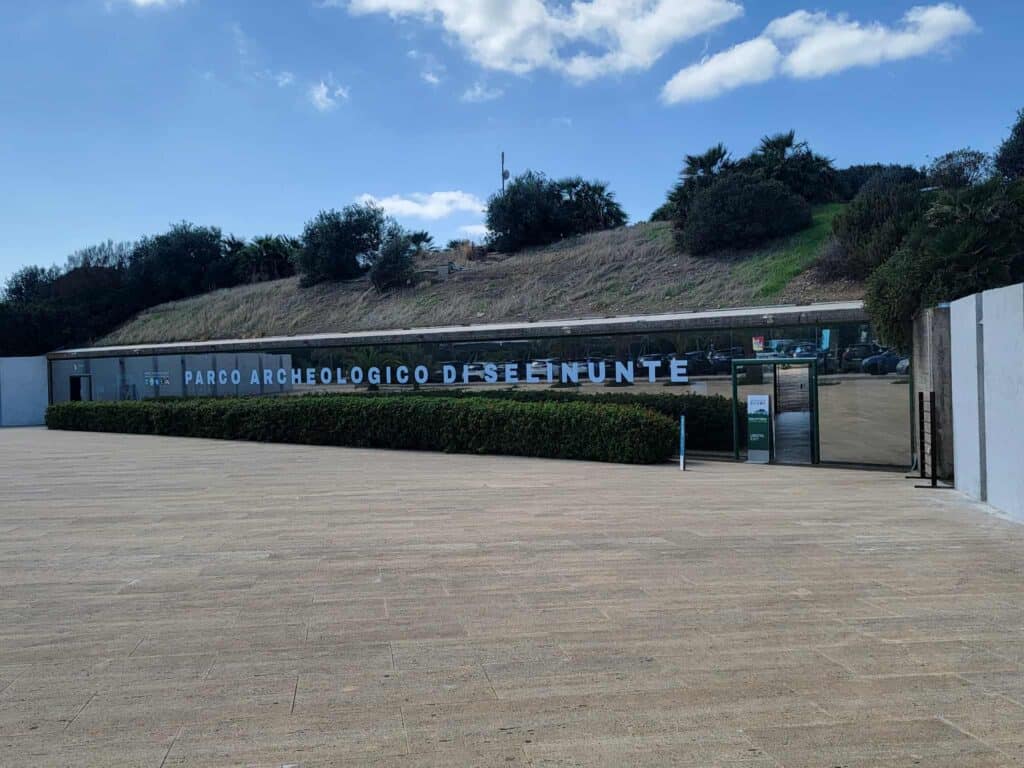
- Eastern Entrance (Temples E, F, G area): This is the main visitor entry point, with a large parking lot, ticket office, café, and restrooms. If you’re short on time, start here because it’s closest to the most reconstructed temples. This is where we parked.
- Western Entrance (Acropolis area): This entrance brings you to the city’s ancient core. It’s smaller and less busy, and it’s also where the shuttle stops if you’re coming from the east side of the park.
Nervous About Renting a Car in Sicily?
If the idea of driving in Sicily makes you a little nervous, it’s not just you. We hesitated before our first trip. But after several road trips across the island, we’ve learned that having a car is the best, and sometimes the only way to reach Sicily’s most fascinating ruins, and that driving here isn’t nearly as intimidating once you know what to expect.
If you’re trying to decide whether renting a car in Sicily is worth it, how the roads really are, or what to watch out for, we put together a practical guide based on our firsthand experience to help you decide.
🚐 Shuttle Carts (Navette)
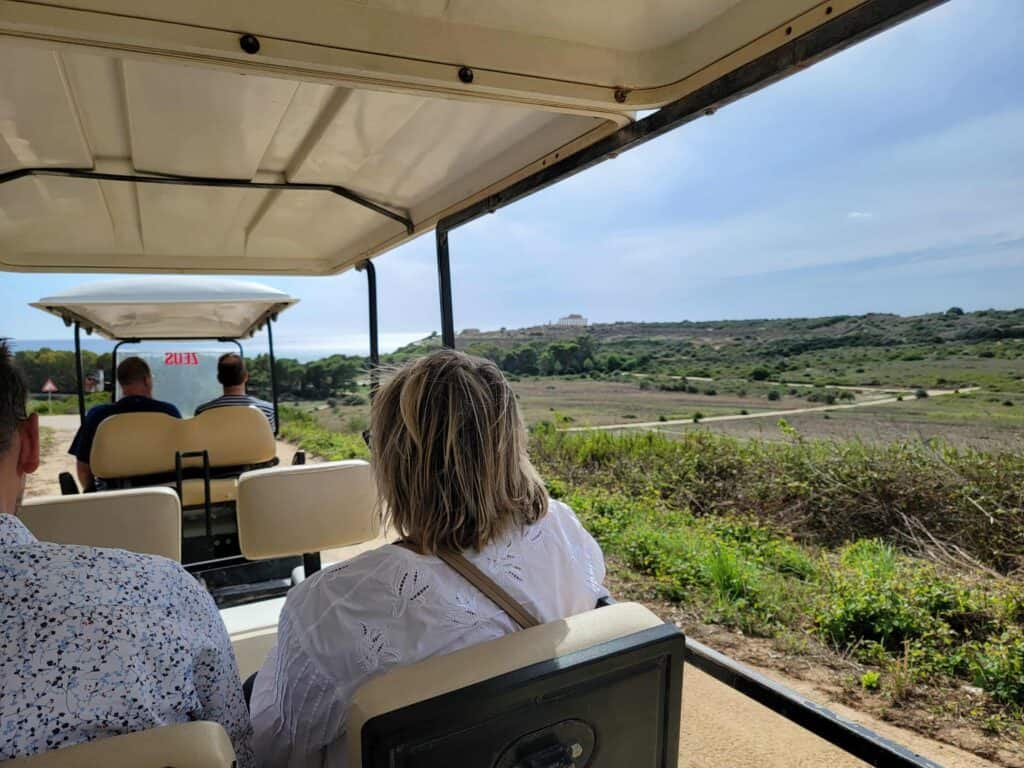
The park runs regular electric shuttles (navettes) linking the major temple zones and the Malophoros Sanctuary. It’s totally worth the €8 fee, especially in summer. The terrain it covers is hot, without shade, and you won’t miss any of the highlights. Highly recommend!
🕰 Hours of Operation
The park opens at 9:00am, but check the official website for closing times which change throughout the year.
🥪 Food & Facilities
Near the Eastern Entrance, you’ll find a café serving fantastic sandwiches and salads, cold drinks, and gelato. There’s also shaded outdoor seating and clean restrooms.
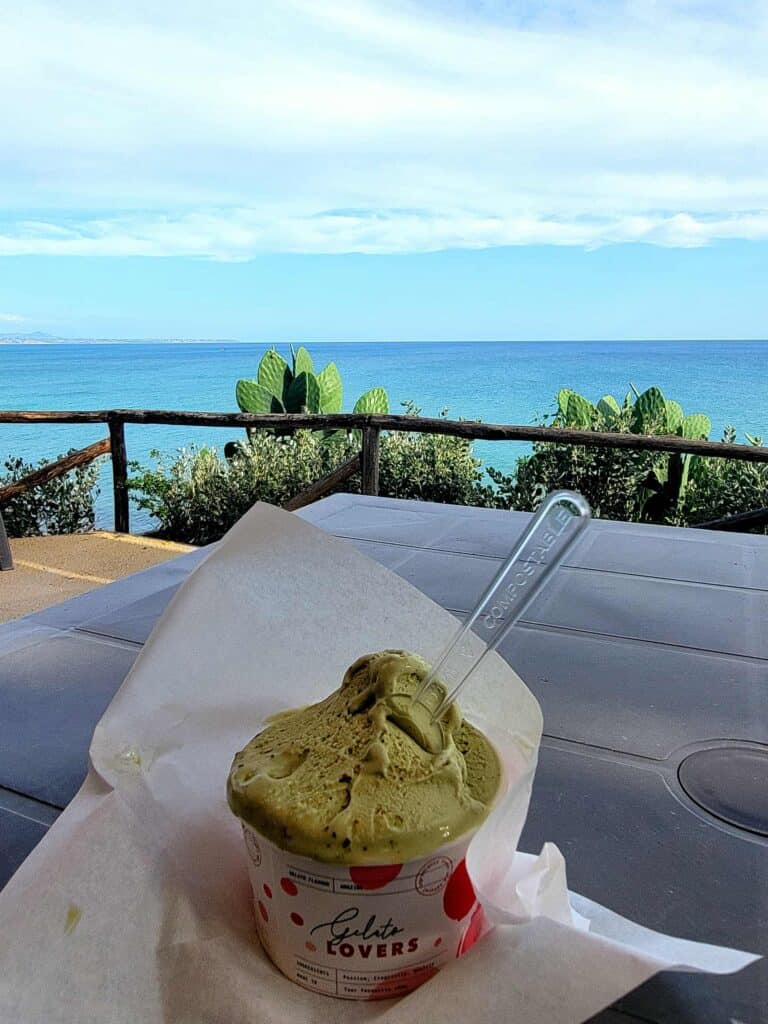
There’s another gelato spot near the acropolis where the shuttle bus stops. The view from this one is absolutely iconic. And you are allowed to have another gelato, even if you’ve had one already! That’s what vacation in Italy is for!
💧 Bring water
The site is vast and exposed to full sun so it’s important to stay hydrated. You can buy bottled water at the café, and the eatery located just outside the entrance.
🚗 Driving in Sicily gives you complete freedom to explore ancient sites on your own schedule. We recommend DiscoverCars, because the process is fast, affordable, and incredibly smooth. Pickups at Palermo and Catania airports are easy, selection is huge, and they have free cancelation, no hidden fees, and 24/7 customer service in English.
👉 Check prices for your Sicily rental car here.
🐶 Is Selinunte Archaeological Park Dog-Friendly?
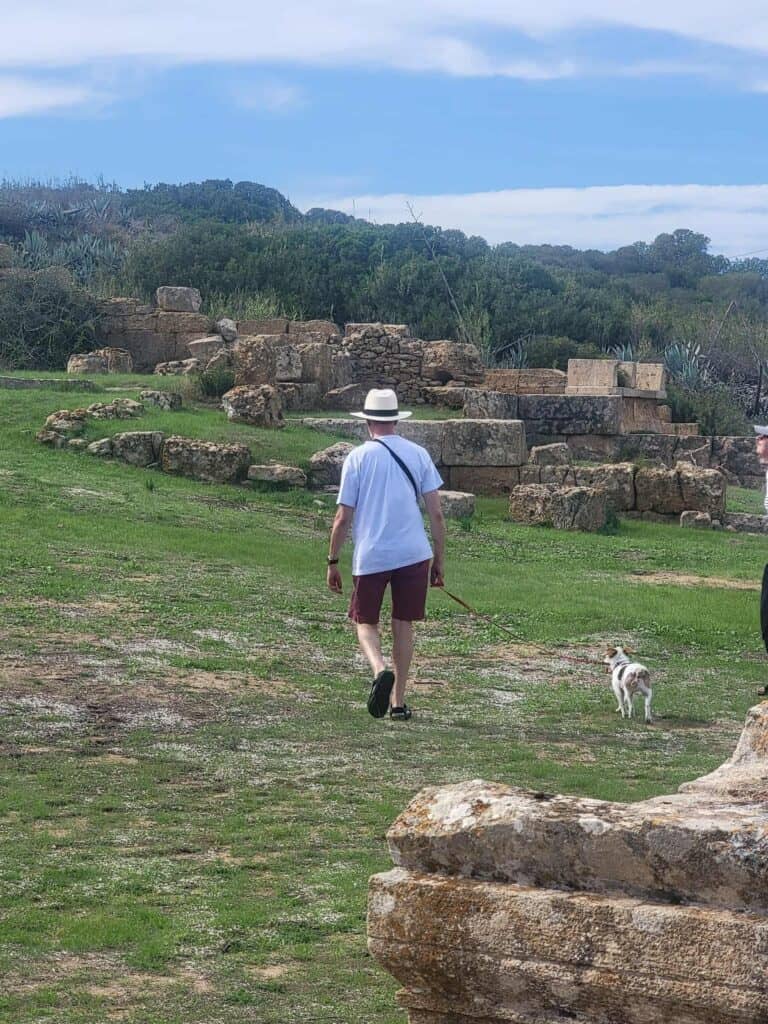
Dogs on leashes are welcome in the park, though not inside the museum. It’s a fantastic long walk for calm, well-trained dogs who can tolerate some heat, but be sure to bring water for them, and avoid midday visits in hot weather.
🌅 Best Time of Year to Visit Selinunte Archaeological Park
Spring and autumn offer the best light and temperatures for exploring, and avoid the bulk of the summertime crowds. We visited in late September and it was still hot during midday, but very doable and relatively uncrowded.
☀️ Best Time of Day to Visit
The park opens around 9:00 AM with beautiful light and cooler temperatures, and the golden hour just before sunset is unbeatable for photography, especially on the Acropolis with the sea behind the ruins. The stones glow and the whole place just feels magical.
🎟️ Buy Tickets to Selinunte Archaeological Park
Tickets for the park, audioguides, and the navette shuttle can be purchased on site or in advance to save time and waiting in line.
The Three Key Zones of Selinunte Archaeological Park
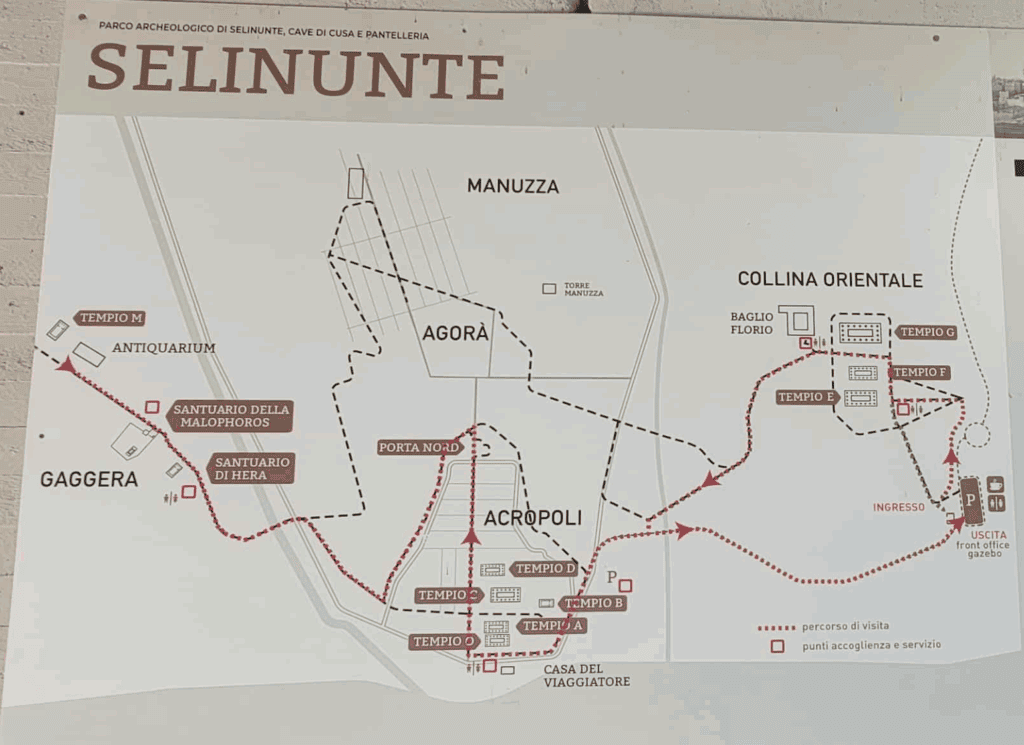
It helps to think of the park in terms of its three main zones. The temples are all named with letters which feels a bit like alphabet soup, but they are arranged like this:
1. The Eastern Temples (Temples E, F, and G)
This area is on the right side of the map above and is the most famous and visually impressive part of the park. It’s also the closest to the main entrance, parking, and the café. I recommend you begin here.
Temple E (Temple of Hera): The Jewel of Selinunte
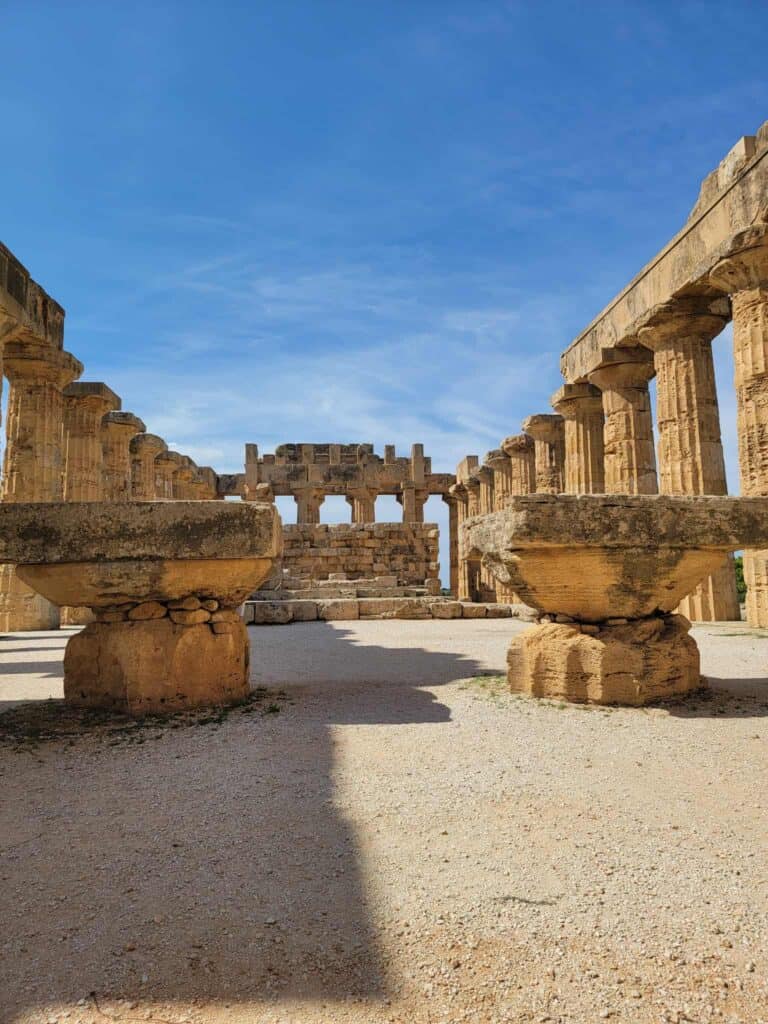
When you first enter the park, Temple E will absolutely take your breath away. I had to just stop for a minute and soak it in. This epic view was a great way to start the day!
The Temple of Hera is the crown jewel of Selinunte Archaeological Park and one of the finest examples of Doric architecture in the ancient Greek world. Dedicated to Hera, goddess of marriage and women, and the wife of Zeus, it dates from around 460 BC, when Selinunte was at the height of its power and prosperity.
Like many ancient sites, earthquakes and time had taken their toll on the temple, reducing it to rubble. But in the 1950s it was reconstructed using the original blocks found on the site!
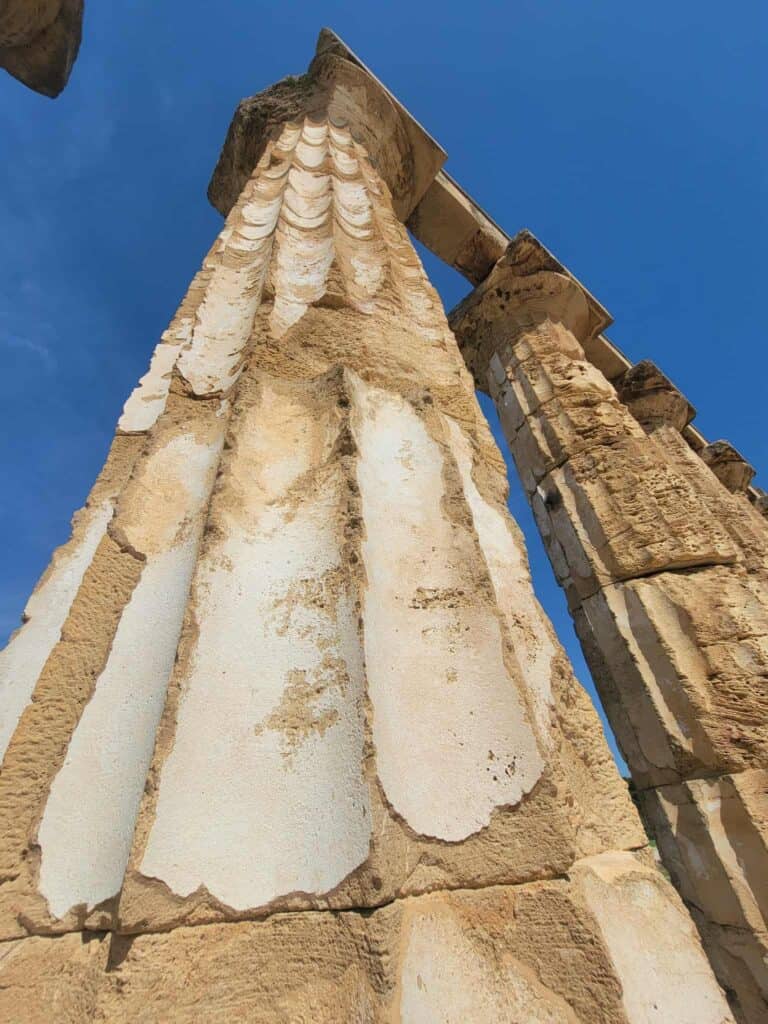
Temple E offers something rare in archaeology tourism in Sicily: the chance to step inside a Greek temple and sense its true proportions. As you walk between the fluted columns, each more than 10 meters (32 feet) high, you feel absolutely tiny.
I found it amazing that you can still see on many of the columns the original white plasterwork that would have made them just radiate in the sun. Standing inside the temple and seeing how the columns must have originally looked just blew my mind.
Morning photos of the temple are stunning, and I lingered a long time exploring every corner because it truly felt like a dream to be able to wander at will, and sometimes be the only person in the temple!
Thinking about it, this was my absolute favorite temple in Sicily not only for its size and condition and beauty, but because you can experience it from the inside, as it was meant to be.

Temple F: The Rubble of Athena (or Dionysus)
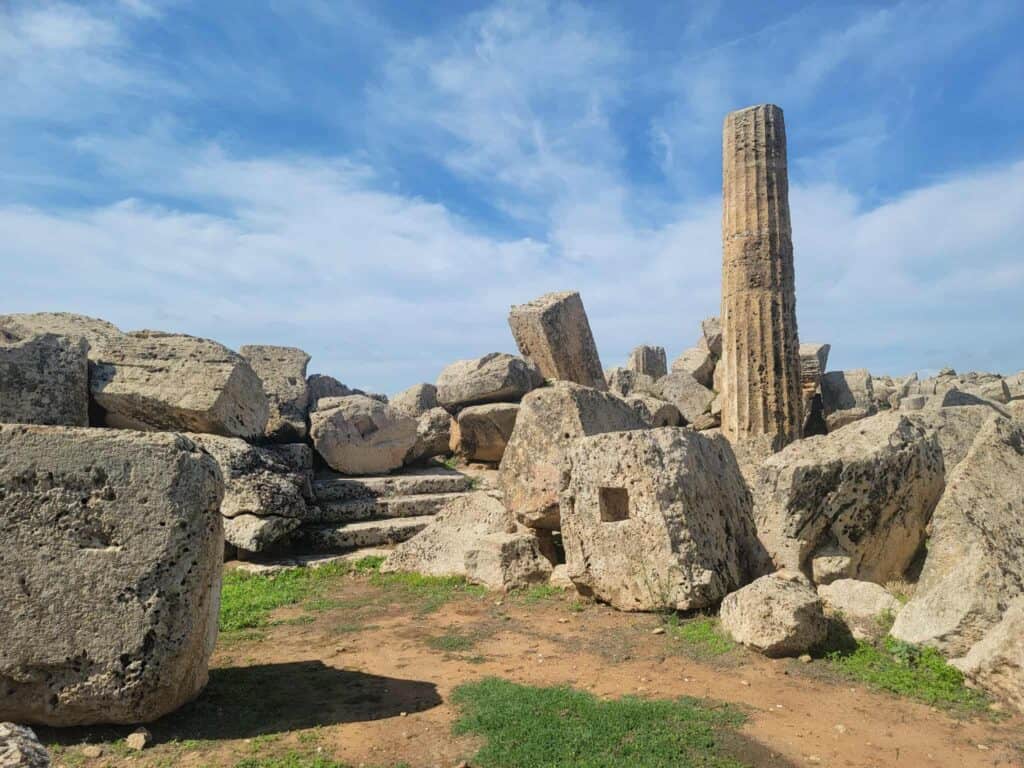
Just west of Temple E stands the haunting Temple F, a mostly-collapsed but evocative ruin dating to around 550 BC, a century older than the Temple of Hera (E). This temple’s dedication isn’t known, but they guess Athena or maybe Dionysus, so it gets the sad, understated name of “Temple F.”
Traces of painted stucco show that the temple, like its neighbors, once blazed with bright color rather than the bare stone we see today.
You can also see interesting “U” shaped grooves, and square cut marks in some of the colossal stones which were used to help in moving and lifting with ropes, and securing them into place.
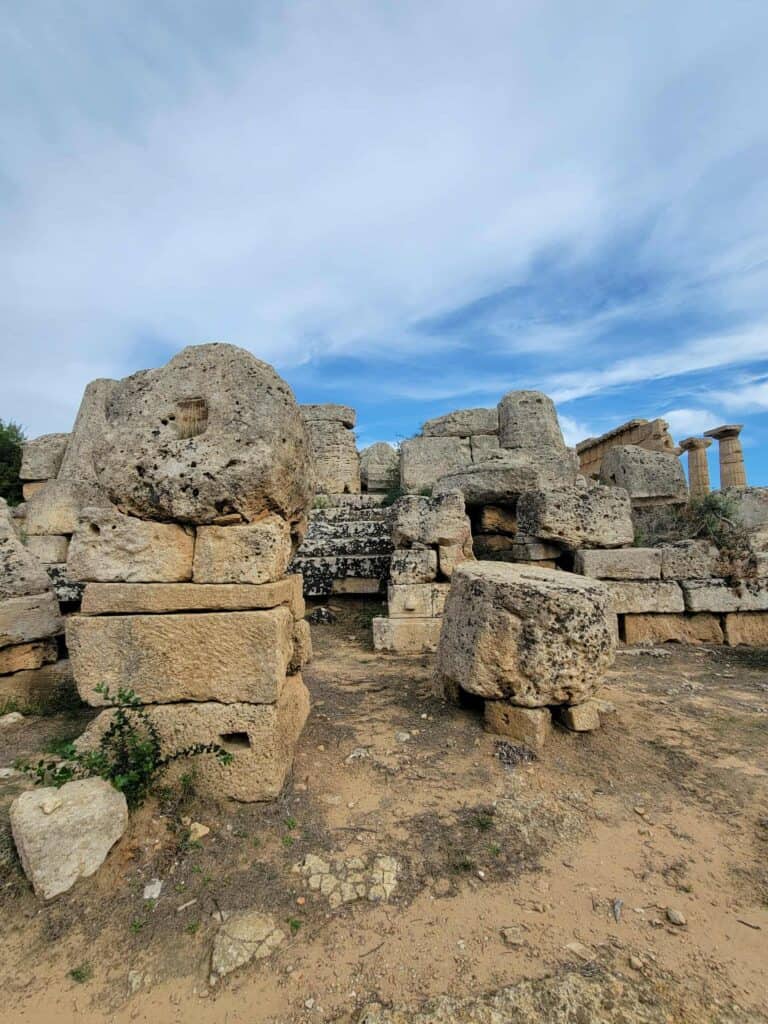
Unlike Temple E, Temple F has not been reconstructed, which gives it a much different feeling. As you walk among the fallen drums and capitals, it’s like walking in a destroyed world. It remains as it was left after an earthquake struck centuries ago – a huge pile of broken bones.
Temple G: What Might Have Been
Next in line is Temple G, and even in ruins it dominates the landscape – a dream that never was. Begun around 530 BC, it would have been one of the largest Doric temples ever built, dedicated most likely to Apollo or Zeus.
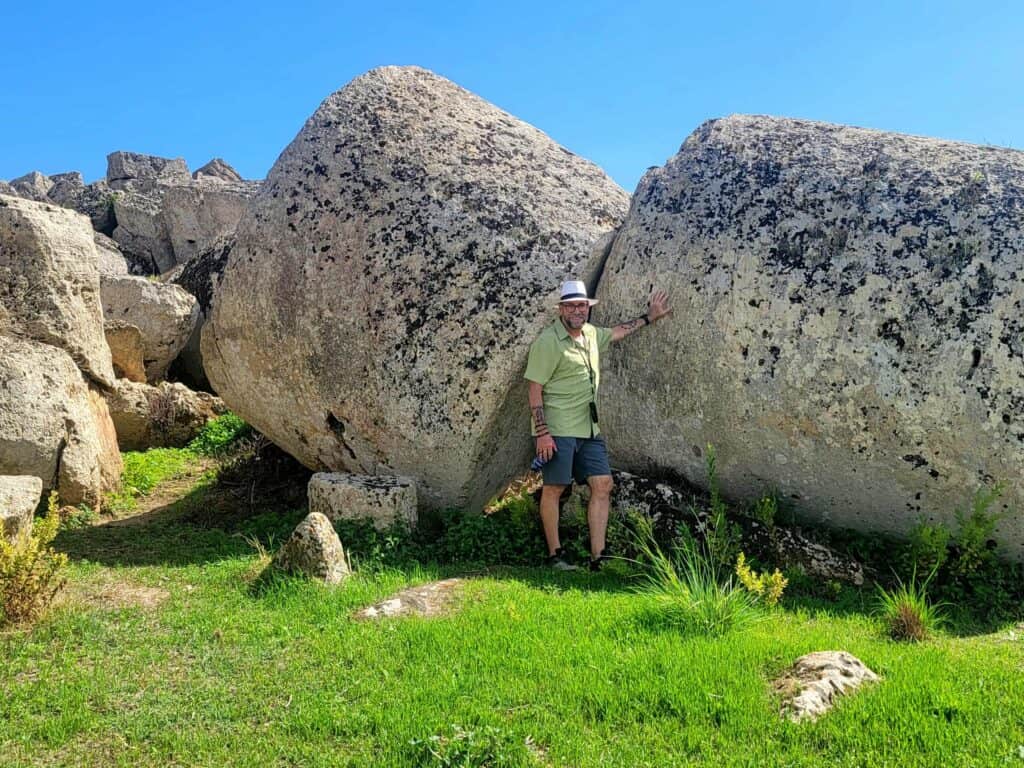
Archaeologists estimate that if it had been completed, it would have measured a staggering 113 meters long and 54 meters wide (370′ x 117′), with columns over 16 meters (52 feet) tall, larger even than the Parthenon in Athens!
Alas it was not to be. Today, the temple lies scattered across the plateau in a mesmerizing pile of classical architecture puzzle pieces. Here again you can see the masons’ marks and cuts. It’s hard to capture how enormous this site is, but you can certainly tell that it was an incredibly ambitious project.
It may have been an earthquake, or even the Carthaginian invasion that devastated Selinunte in 409 BC that brought the massive project to its end.
Temple G would have been Selinunte’s ultimate statement of divine and civic power, showing everyone that this city on the west coast of Sicily had arrived on the world stage. Even 2500 years later, standing in the giant rubble, I still felt disappointment at what might have been.
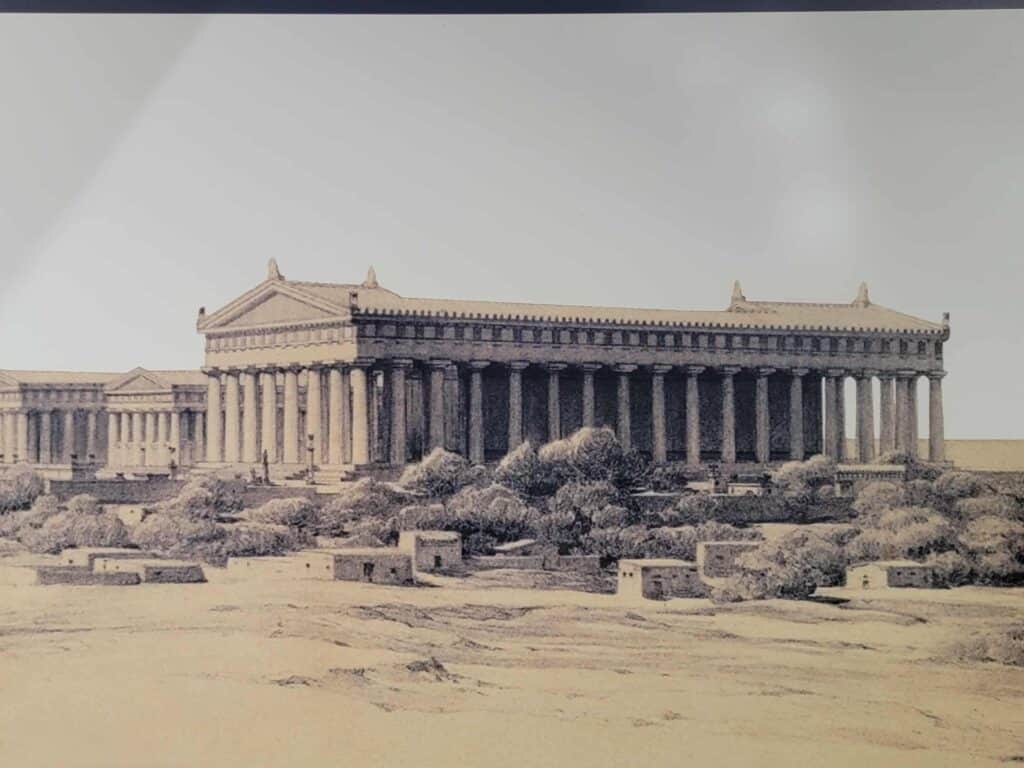
2. The Acropolis, Ancient Town and New Discovery! (Temples A, B, C, D, O, R, and residences)
At the center of Selinunte Archaeological Park lies its Acropolis, a plateau surrounded by the sea on three sides. This was the religious and political heart of the ancient city, where five smaller temples, called A, B, C, D, and O, once stood in close proximity. Unlike Temple E, they have not been reconstructed. But this spot makes you feel like an archaeologist, making new discoveries around every turn.
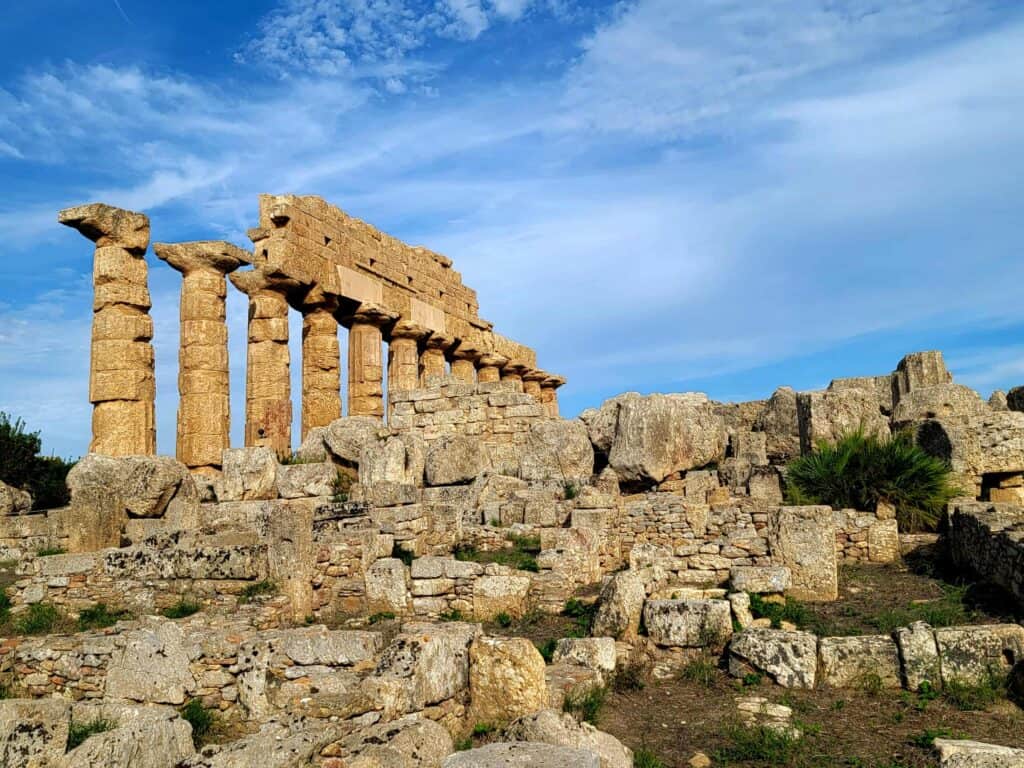
Temple C – The Iconic Photo Op
The most prominent of the group, Temple C, dates to the 6th century BCE and is one of the oldest in Selinunte. It was likely dedicated to Apollo or Heracles, and parts of it were reconstructed in the 1920s, giving a glimpse of its original scale. Its massive Doric columns and beautiful silhouette make it one of the most photogenic spots in the park.
Temple R – New Discoveries!
In extremely exciting news, a new temple was just discovered in 2024! It really brings home how much there still is to discover in these sites, and the amount of current effort to uncover more of the city’s fascinating history.
This new temple was found right behind the iconic Temple C! And perhaps most incredible is the cache of votive artifacts discovered underneath the floor of the most sacred inner chamber. The discovery included more than 300 objects including a silver ring, loom weights, spearheads, pottery, a bone flute, and a gold jewel.
These offerings are all related to the goddess Demeter, the goddess of agriculture. Interestingly, this rectangular temple has no columns like the others. It dates to between 580 and 570 BC, and is shedding new light on the earliest period of Selinunte.
Temples A, B, D, and O

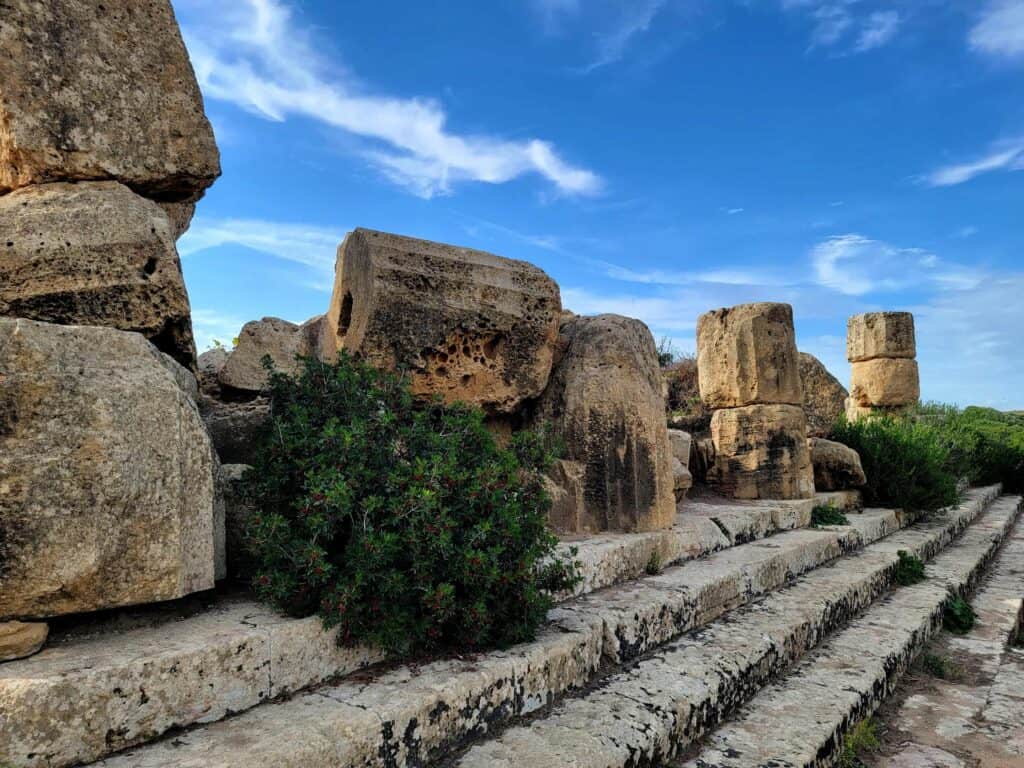
The remains of these temples are smaller, but closer to the residential and urban center of the city. You can still trace the outlines of their foundations, fragments of columns, and altars where sacrifices once burned. They, like evereything in the park, have great explanatory signage on site in both Italian and English.
Temple B, much smaller than the others, actually dates to the later Hellenistic period, representing a brief but unsuccessful revival after the city’s destruction.
The Ancient Town and Urban Core
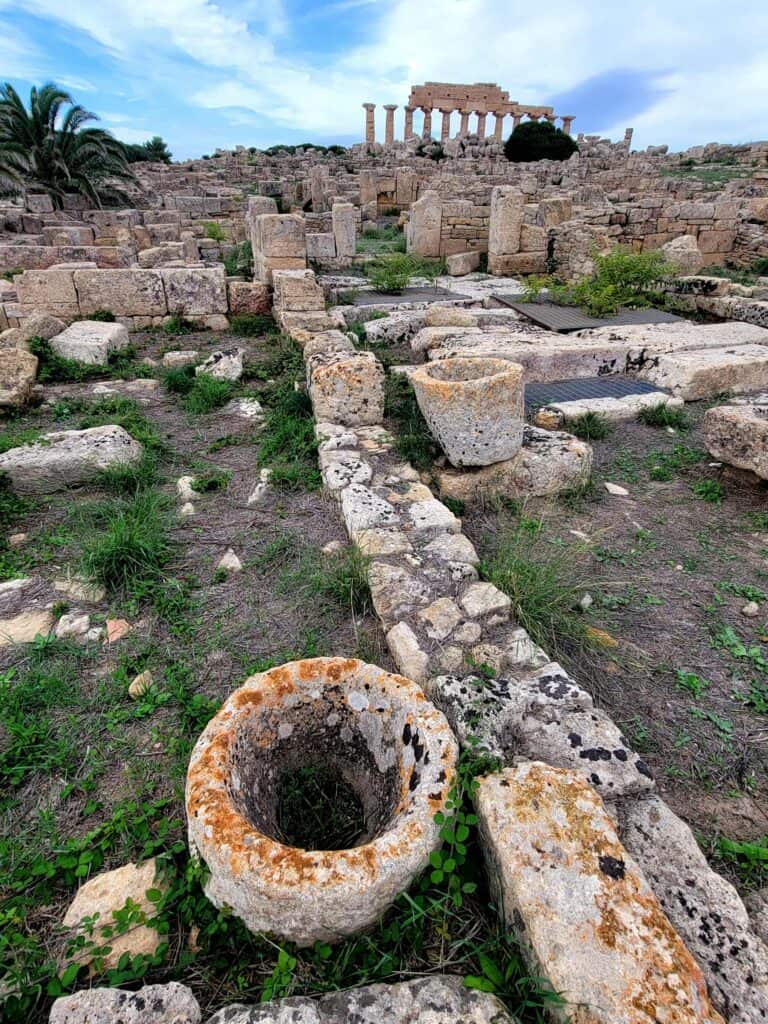
This area is absolutely fascinating. It’s easy to be swept away by huge monumental temples, but this area on the hill above the Acropolis shows you where the residents of Selinunte actually lived their daily lives. I was astounded at the number of identifiable relics here like water troughs, dwellings, and the old town walls.
It reminded me a little of Pompeii. There wasn’t the same well-preserved art, but you could walk down streets and into buildings from thousands of years ago and really get a feeling for how it must have been when the town was alive and bustling.
It gave a little bit of an eerie ghost town feeling to think of how suddenly and brutally the city was sacked, with more than 10,000 people murdered, and the rest enslaved while they fled, leaving the city abandoned. This was one of the more emotional and interesting parts of the park for me.
👉 Reserve a guided tour of Selinunte Archaeological Park
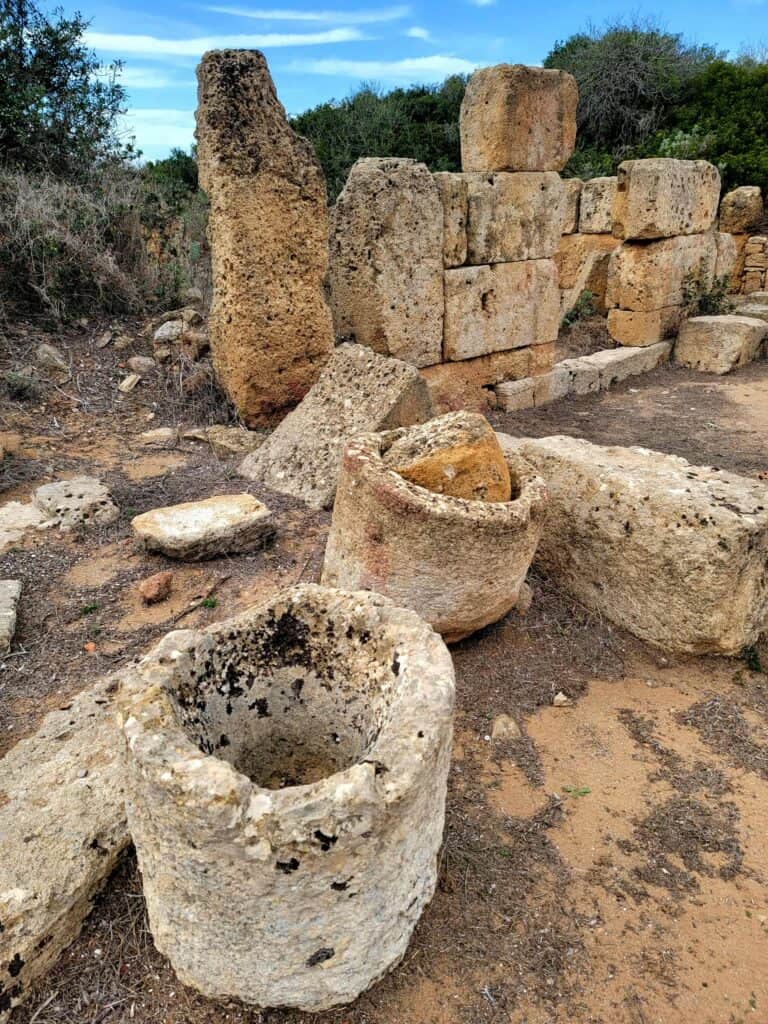
3) The Western Sanctuaries (Malophoros and Beyond)
Sanctuary of the Malophoros: The Ancient Center of Faith
At the far edge of the archaeological park lies the Sanctuary of the Malophoros, one of the most unique sacred sites in all of Selinunte. This area was dedicated to Demeter Malophoros, the “Apple-Bearing” or “Fruit-Bringing” goddess of fertility and the harvest.
This sanctuary was the spiritual heart of the city’s daily life long before the grand temples rose on the Acropolis to the East. Its origins stretch back to the 7th century BCE, making it one of the oldest cult sites in all of Sicily.
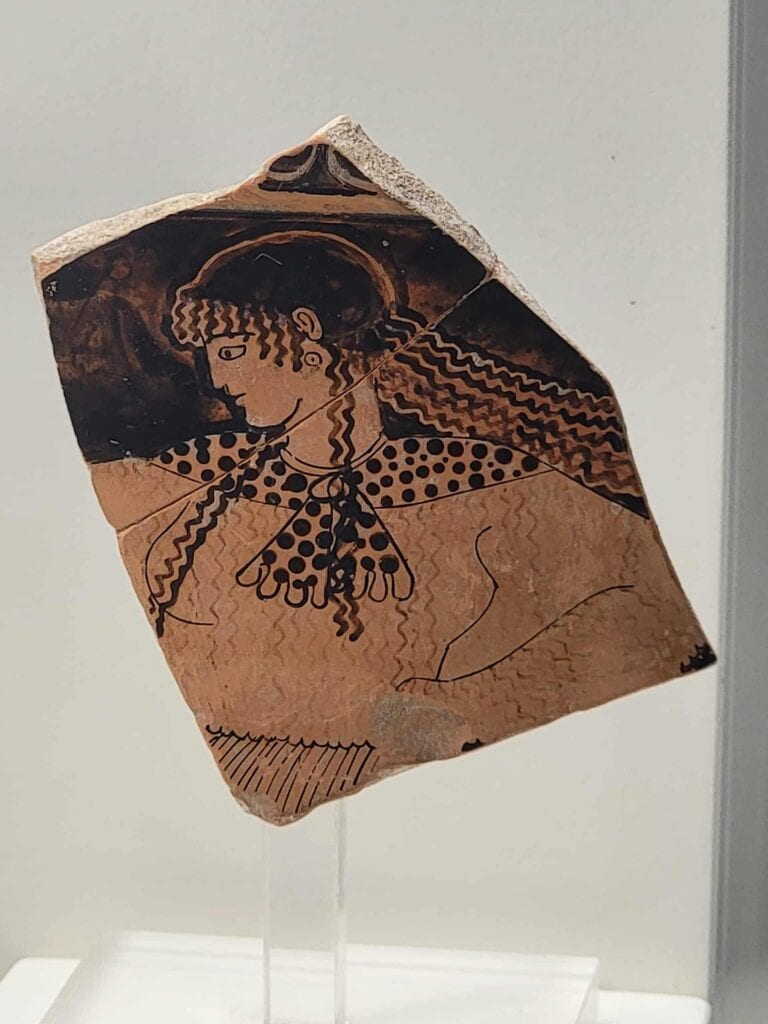
Excavations here have uncovered hundreds of votive offerings, terracotta figurines, and miniature altars left by worshippers seeking Demeter’s blessing for fertile fields, healthy children, and safe passage to the afterlife. You can see some of these items in the on-site museum, which really ties everything together.
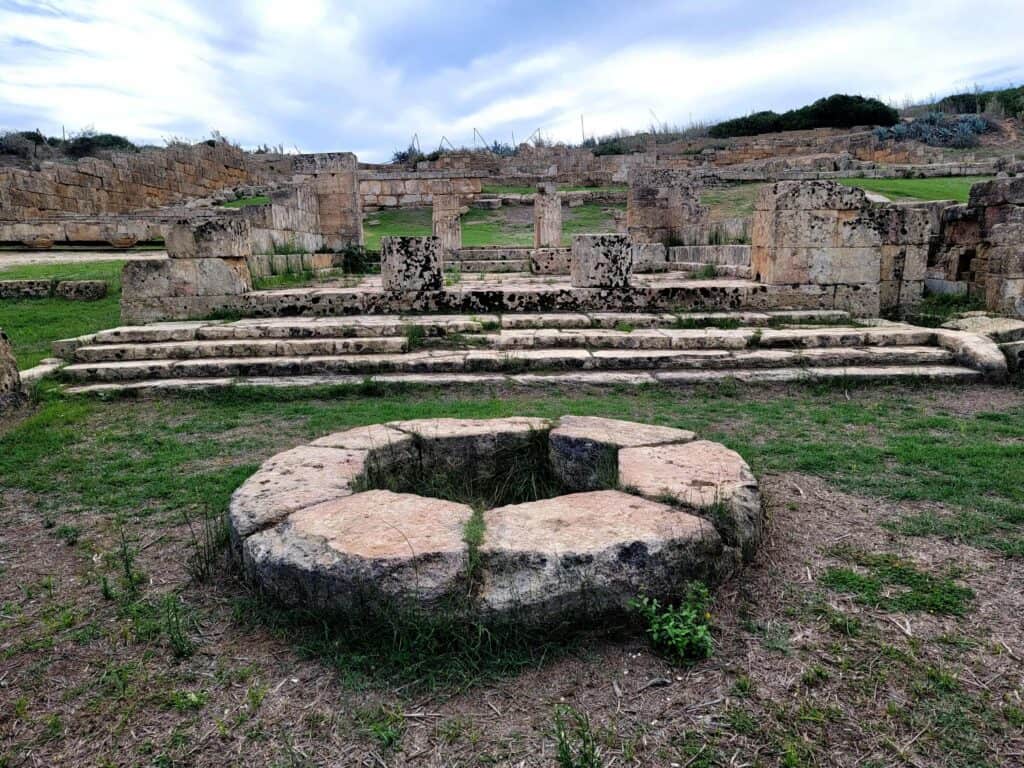
The sanctuary was not a single building but a complex of shrines, courtyards, and altars, including the Great Altar where public sacrifices took place. There’s even the ruin of a fountain which once stood at the heart of it all.
This area feels isolated from the hustle bustle of the rest of the city. It’s quiet and contemplative, and also feels a bit more wild and less visited than the rest of the park.
Getting to the Sanctuary of the Malophoros
The Sanctuary of the Malophoros sits at the far western edge of the Selinunte Archaeological Park. The site is roughly 1.2 kilometers (about ¾ mile) from the main cluster of ruins, and on a hot day, it can feel much longer. So here’s my big recommendation.
🚐 Take the park’s electric shuttle (navette) to reach it comfortably. The carts run regularly throughout the day and make several stops around the park, including one at the Malophoros sanctuary. You can buy a combined ticket that includes both the park entrance and shuttle service, or pay a small supplement onsite.
The shuttle will stop for about ten minutes at the Sanctuary of the Malophoros. You can either hop back on the same shuttle, or walk back. We took the same shuttle back to the acropolis area because we felt like we were able to see 95% of what we wanted to, and the gelato stand overlooking the ocean was beckoning!
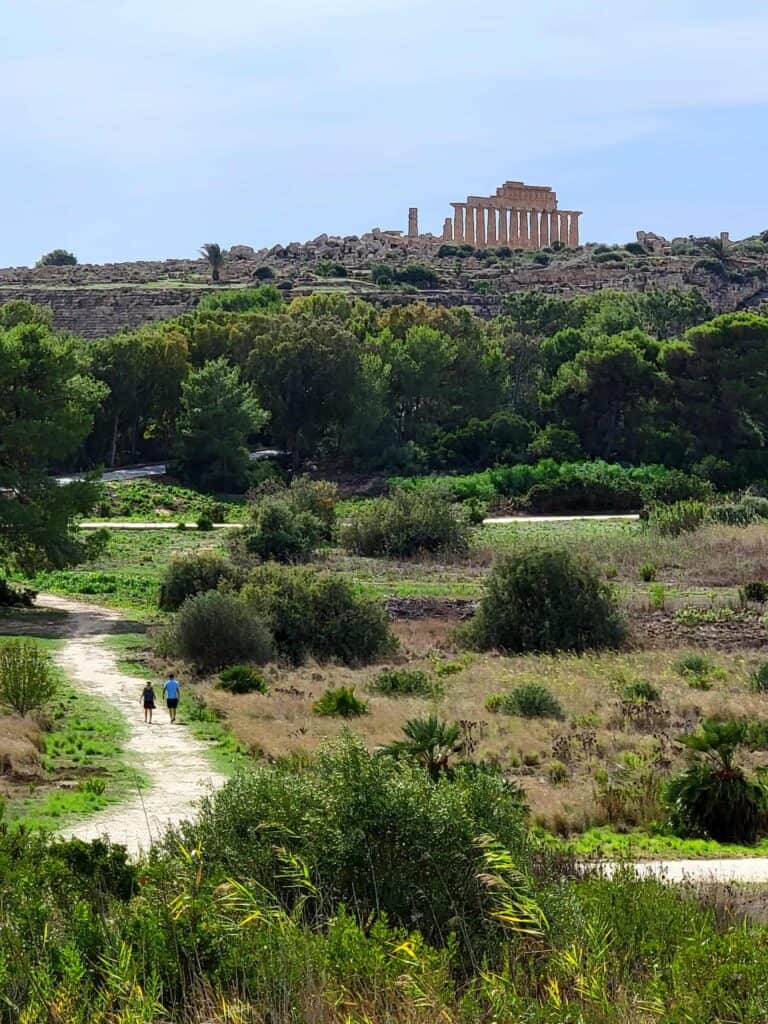
🚶♀️ Walking option: If you prefer to go on foot, plan for a 20–25 minute walk each way from the Acropolis area. Bring water, sunscreen, and a hat — there’s little shade once you leave the main temple zone. It’s a pleasant walk in good weather, and you will be able to take all the time you want to wander and explore this unique area.
♿ Accessibility: The sanctuary itself is mostly uneven terrain, with ancient stone foundations and loose gravel underfoot. The electric carts, however, make it possible for most visitors to experience this part of the site without difficulty.
💡 Tip: If you have time, combine your visit here with a stop at the Sanctuary of Zeus Meilichios and the Temple of Empedocles nearby, both part of the same sacred district that served as the city’s spiritual gateway.
I visited Selinunte as part of a multi-day route through western Sicily → Our Western Sicily Itinerary: 1 Perfect Week
The Selinunte Museum: Leveling Up Your Experience
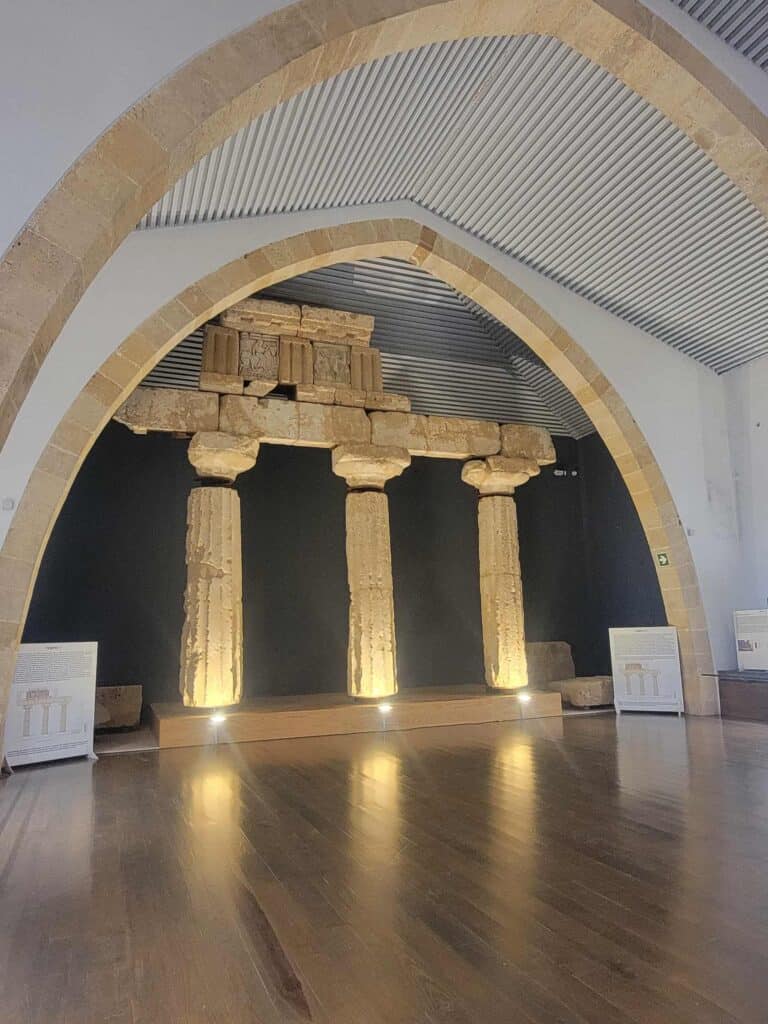
If you really want to be able to add another layer of understanding to your visit, don’t miss the Museo Archeologico di Selinunte “Antonino Salinas”, located inside the park just a few minutes from the entrance. It’s not large, but it’s a treasure trove of everyday and sacred objects that were discovered on site.
You can see a beautiful reconstruction of a portion of Temple E (Hera) with carved details and traces of color you won’t see on the stones at the site. The main, jaw-dropping facades are housed in Palermo’s Antonino Salinas Museum.
The Selinunte museum also displays terracotta figurines, spearheads, pottery, oil lamps, and offerings found in the Sanctuary of the Malophoros. Many depict Demeter and Persephone, showing the site’s connection to fertility and the underworld.
You can see the entire museum in just 30-45 minutes, and it really is worth it for the added context. Plus, it’s a nice way to get some shade if you time it for midday!
One Day in Selinunte: Do-it-Yourself Itinerary with Walking Route
Step 1: Book your tickets and audioguide to Selinunte Archaeological Park online to shorten the wait. You can pay for the shuttle on site easily if you want to use it.
10:00am – Arrive at the park (the park opens at 9am if you want to be earlier)
10:20 – 11:15am – Temples E, F, and G
11:15-12:15 Museum
12:30-1:00 Lunch at the café which is located in the museum courtyard before you enter. This is a quick bite which you buy at the counter and take to a table. There are premade sandwiches and salads and they were both excellent! Wine and beer are available as well.
Take a navette (like a golf cart train) to the far Western Side of the Park which will take 10 minutes. Then you can work your way back to where you started.
Visit Malophorous and the other Temples on the West side 10 minutes (or longer if you choose to walk)
1:30-2:45 Take the navette back, and hop off by the gelato stand to explore the Acropolis and the maze of streets in the ancient Town of Selinunte
Gelato Stop while you wait for your navette back to the entrance
Take the navette back to the main entrance (5 minutes)
Check out the gift shop before you leave
4:00 – 5:00pm End your day
✅ Optional add-on:
The famous and intriguing Cave di Cusa is about 11 km to the northwest of the Selinunte Archaeological Park. This is the rocky quarry which was used by the Selinuntines for the raw material used in the construction of their temples.
Like the Temple of Zeus, and the city itself, activity ended abruptly here and therefore you can see the quarrying process just as it was left, as if the workers had just gone home.
This site is only open from 9am to 2pm, so if you want to see it, you’ll need to do this add-on first before you visit the rest of the park, and adjust your times accordingly. Or you can save it for another day.
How to Get to Selinunte Archaeological Park
From Palermo
- 🚗 Car: 1 hour 39 minutes
- 🚉 Train: 3 hours 25 minutes
- 🚌 Bus: 3 hours 39 minutes
From Agrigento
- 🚗 Car: 55 minutes
- 🚌 Bus: 1 hour 56 minutes
From Other Points
Just click the link and enter your point of origin and Selinunte Archaeological Park as the destination and Rome2Rio will show you all the ways to get from Point A to Point B.
There are also a few tours available that will pick you up from other locations.
A Living Archaeological Experience
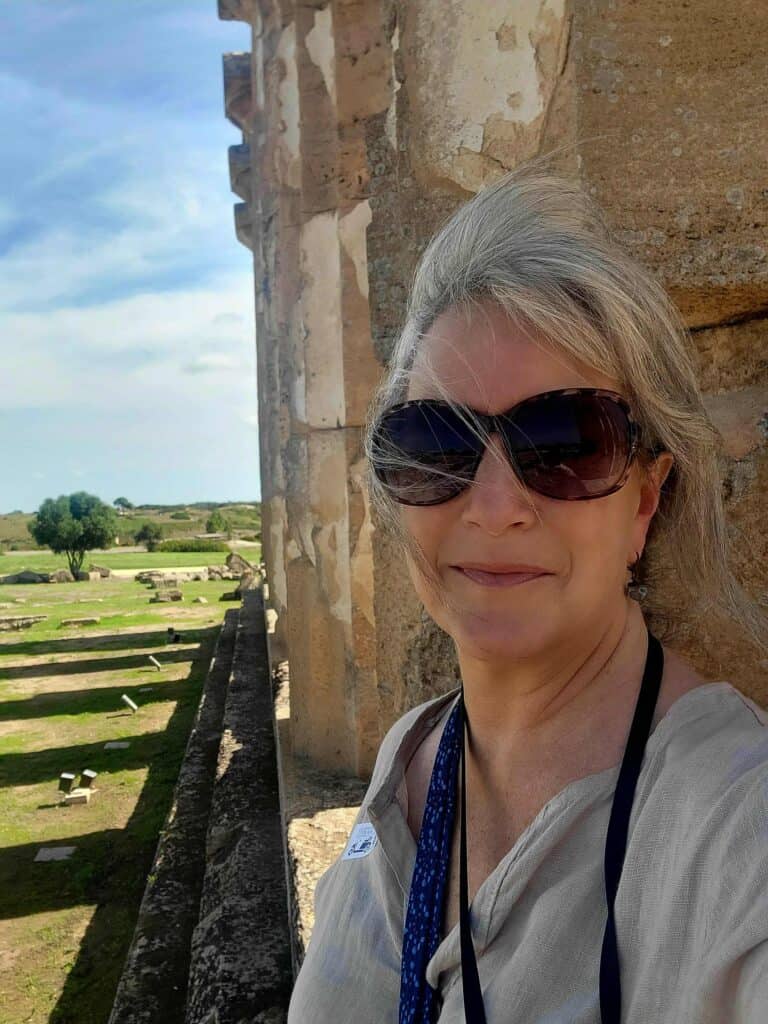
Unlike most Greek sites, Selinunte allows hands-on exploration. You can literally step inside the temples, feel the limestone blocks, and walk in ancient footsteps on the same stones. There are no barriers here, and if you’re a raging history nerd like me, this makes for an absolutely spine-tingling and unforgettable visit!
Places like this really remind me of why I love historical travel – to feel closer to people who lived long ago and understand how they helped to build the civilizations we live in today. It’s as close to time travel as you can get.
We visited in late September-early October, and it was perfect. Sunny warm days, cooler evenings, and fewer crowds. We started our trip in Palermo, and continued down to Sciacca for a visit to the Valley of the Temples in Agrigento.
To be honest, Selinunte Archaeological Park blew me away. It wasn’t just the astounding ruins – it was the fact you could walk in them, and the unbelievable emotional impact that the site had on me. I can only compare it to the Valley of the Temples in impact, but there was something about Selinunte that hit different.
You will have an amazing time exploring these ancient Greek ruins in Sicily, no matter how or when you choose to visit. Just don’t let this epic and lesser-known gem slip past if you have the chance to see it in person!
Trip Planner Essentials
🚗 DiscoverCars for renting a car in Sicily
🏨 Best hotels near Selinunte
🎟️ Top tours for Selinunte Archaeological Park
🕒 The park opens at 9:00am, but check the official website for seasonal closing times. Allow half a day to explore and wear comfy shoes!
Other Sicily Posts You May Enjoy
The Best Archaeological Sites in Sicily: East to West
Where to Stay in Western Sicily: Best Picks for Every Base
Our Western Sicily Itinerary: 1 Perfect Week
Driving in Sicily: Best Rental Car & Travel Tips
Selinunte or Segesta: Which Ancient Site in Sicily Should You Visit?
