Ravenna Italy isn’t the kind of European city that hits you in the face all at once.
There’s no dramatic skyline or iconic tourist photo like the Leaning Tower of Pisa, no single “wow” moment that you see from a distance. But there are plenty of incredible things to do in Ravenna… you just have to coax them out of hiding. Ravenna reveals more history, art, and jaw-dropping sights than you could possibly imagine, but you have to know where to look. And honestly this is my favorite kind of city.
Behind the most unassuming brick facades and down quiet little streets lie absolute treasures, waiting for you step inside. There you find yourself surrounded by the most extraordinary mosaics in the world, right where they were created, thousands of years ago.
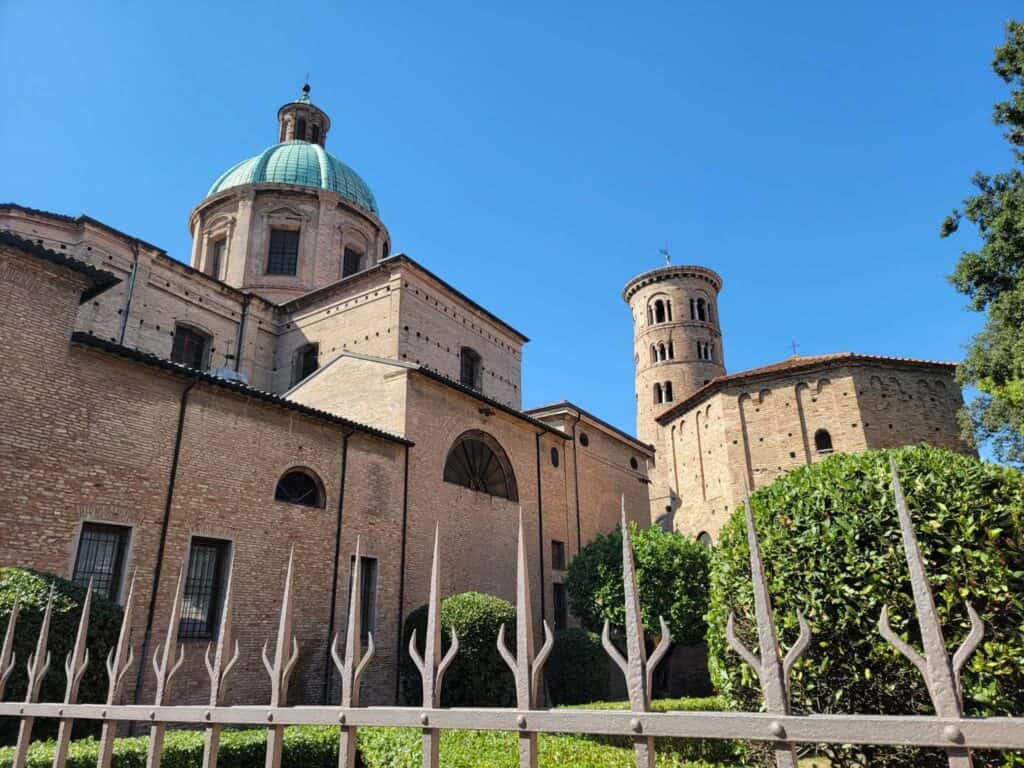
Ravenna was once the capital of the Western Roman Empire, and later a center of Byzantine power. Today, it holds eight UNESCO World Heritage sites, many within easy walking distance of each other.
In this guide, you’ll find out how to visit Ravenna:
- The best things to do in Ravenna, from its most famous mosaic-covered basilicas to lesser-known sites most people miss
- A clear breakdown of what each place is, why it matters, and whether it’s truly worth visiting
- Hidden gems, unexpected stops that will blow you away, and a few honest opinions
- Practical tips to help you plan your visit, avoid crowds, and make the most of your time
Whether you have a full day, a weekend, a quick stop, or if you’re deciding whether Ravenna belongs on your Italy itinerary at all, this guide will help you see what makes this city so special.
Best Things to Do in Ravenna at a Glance
If you’re short on time or just want the highlights, these are the best things to do in Ravenna. Most are located within the historic center, making it surprisingly easy to see a lot in one day.
- Basilica di San Vitale – Ravenna’s most famous church, known for its dazzling Byzantine mosaics. There are not enough superlatives for this one!
- Mausoleum of Galla Placidia – Small, dark, and absolutely unforgettable, with a star-filled mosaic ceiling. This one is pure magic.
- Basilica di Sant’Apollinare Nuovo – Long processions of mosaic figures that feel almost cinematic. Absolutely stunning and like a trip back in time.
- Dante’s Tomb – The final resting place of Dante Alighieri, tucked into a quiet corner of the city. If you are a language, history, or literary nerd, this is a must see!
- Neonian Baptistery – One of the oldest buildings in Ravenna, with a striking early Christian mosaic dome
- Arian Baptistery – A quieter, often-overlooked site that offers a fascinating contrast in style and history
- Mausoleum of Theodoric – A stark and unusual monument built by the Ostrogothic king Theodoric the Great
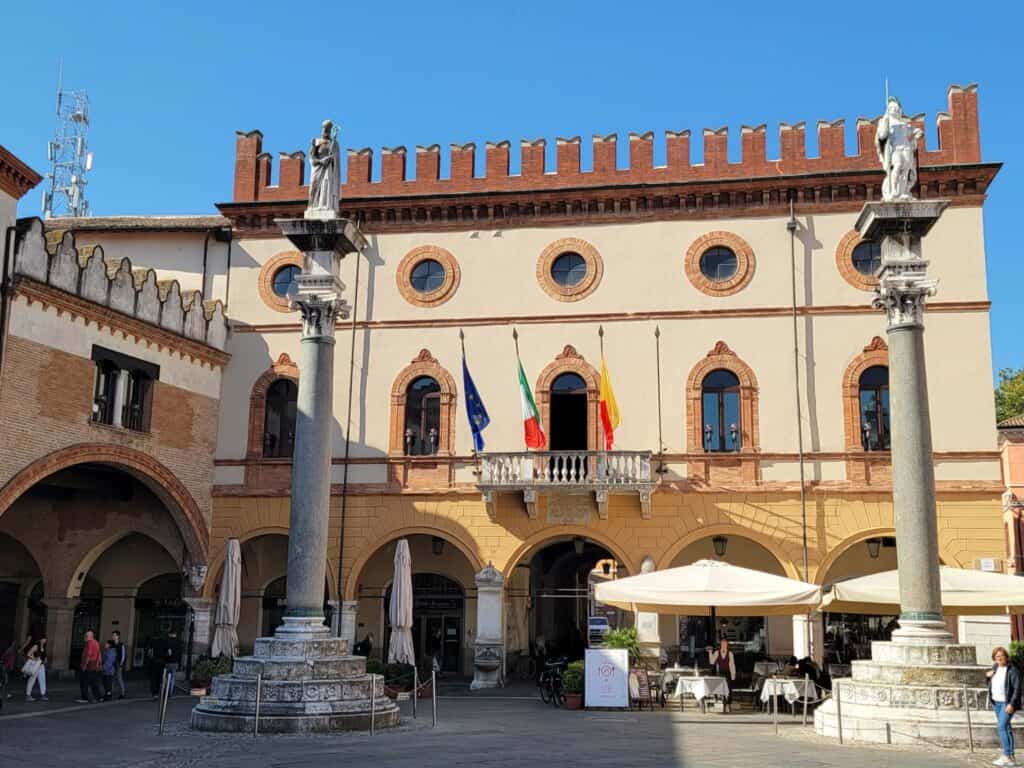
- Piazza del Popolo – The heart of Ravenna, perfect for a pause between sites to grab a coffee or lunch.
- Basilica di Sant’Apollinare in Classe – Just outside the city, with some of the most serene mosaics in Ravenna
- Domus dei Tappeti di Pietra (Stone Carpets) – Underground Roman mosaics that feel completely different from the churches above ground.
- Marina di Ravenna – A nearby beach escape if you want a break from history
- Dante Museum and Library – More for fans of Dante and literature in general. A great nerdy stop.
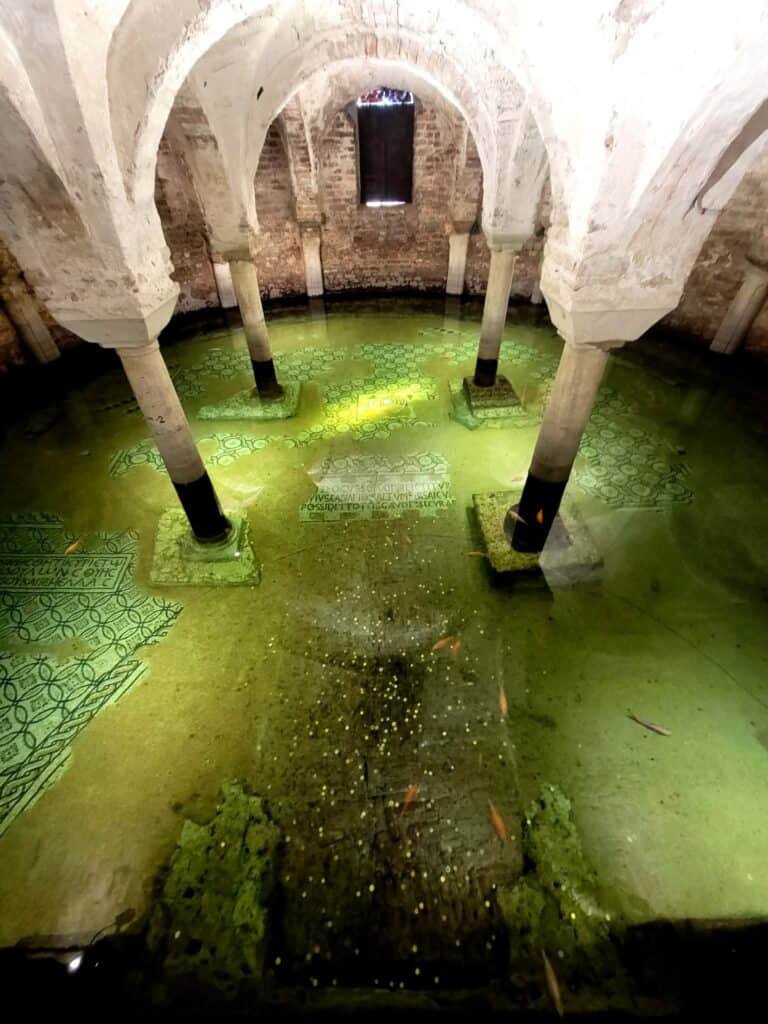
- Basilica of San Francesco – There are no mosaics here, but this is the church where Dante’s funeral was held, and has an amazing flooded crypt full of fish!
👉 If you only have a few hours, focus on San Vitale, Galla Placidia, and Sant’Apollinare Nuovo, then add Dante’s Tomb if time allows.
👉 If you only have one day, check out my post Ravenna in One Day: Best Guide to Italy’s Most Spectacular Hidden Gem
Why Visit Ravenna
Even though most people have never heard of it, Ravenna was once one of the most important cities in Europe. It served as the capital of the Western Roman Empire for most of the 5th century, then the Ostrogothic Kingdom, and later Byzantine Italy. That incredible layered history is still visible today, not in grand ruins or sweeping vistas, but in intricate mosaics and buildings that have survived for more than 1,500 years.
And those mosaics are the main (but not only) reason to come.
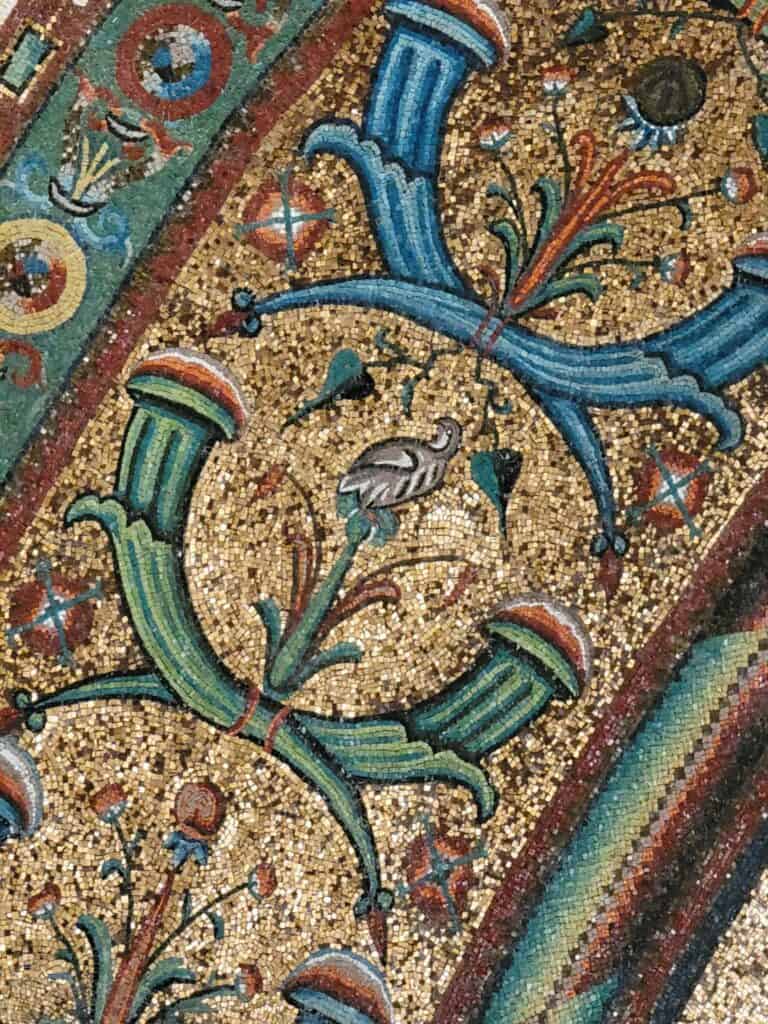
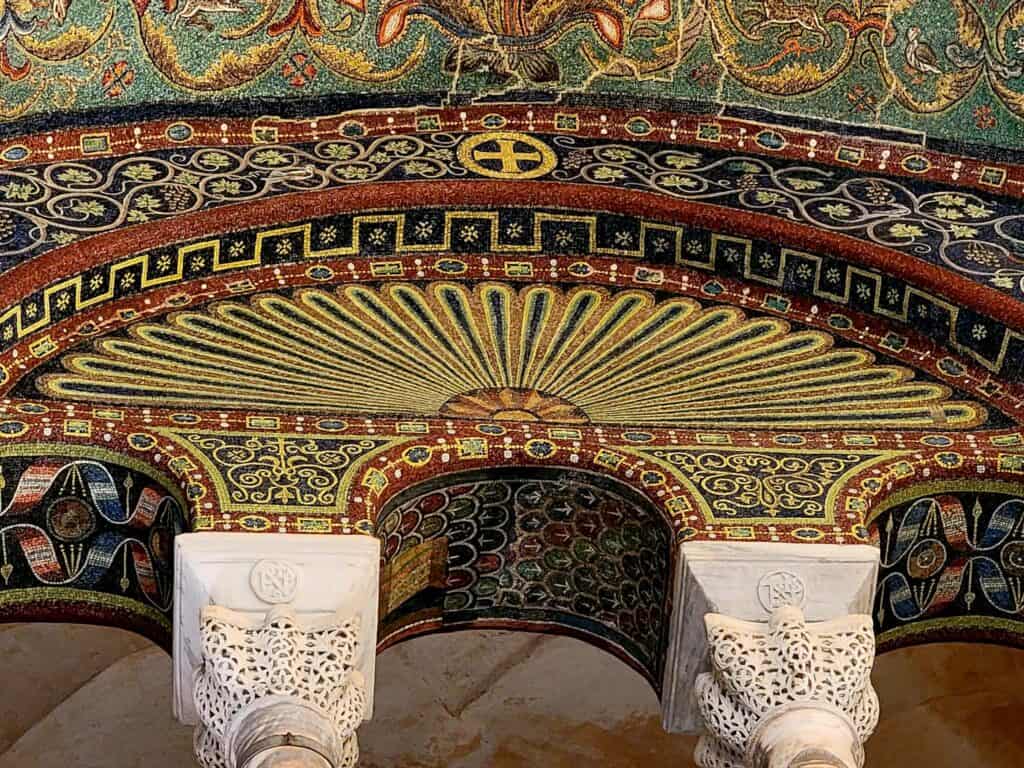
Inside otherwise simple buildings, you’ll find walls and ceilings where every square inch is spangled in gold, deep blues, stone, and glass, and vivid figures that feel remarkably alive. Floors feature every color and pattern of marble imaginable. Sites like the Basilica di San Vitale and the Mausoleum of Galla Placidia are historic, and deeply emotional in a way that’s hard to describe until you see them for yourself.
I’ve lived in Europe and traveled extensively for years, and those two places absolutely took my breath away.
Another thing that really makes Ravenna stand out is how accessible everything is in a short amount of time.
- Most major sites are within walking distance
- The city is far less crowded than places like Florence, Rome, or Venice
- You can experience multiple UNESCO-level landmarks in a single day without feeling rushed
At the same time, Ravenna isn’t for everyone.
If you’re looking for dramatic landscapes, iconic landmarks, a buzzing night life, or a long list of varied attractions, it may feel limited. But if you’re interested in history, art, authentic food, and places that cater to a slower, more thoughtful kind of travel, Ravenna delivers in a way few other cities do.
Map of Ravenna Attractions (How the City Is Laid Out)
Most of the things you’ll want to see in Ravenna are located right within the city’s very walkable core. There are a few attractions further outside the center, and the gorgeous Adriatic coast is located to the east of the city.
Top Historical and Cultural Attractions in Ravenna
1. Basilica di San Vitale
If you only visit one site in Ravenna, make it this one.
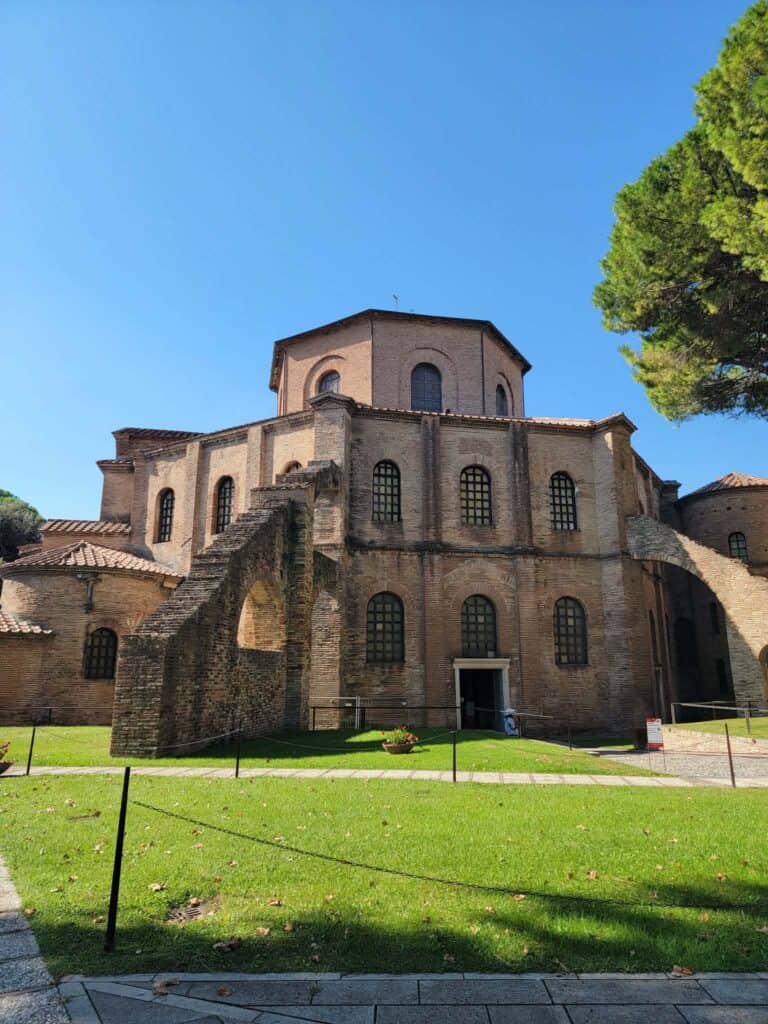
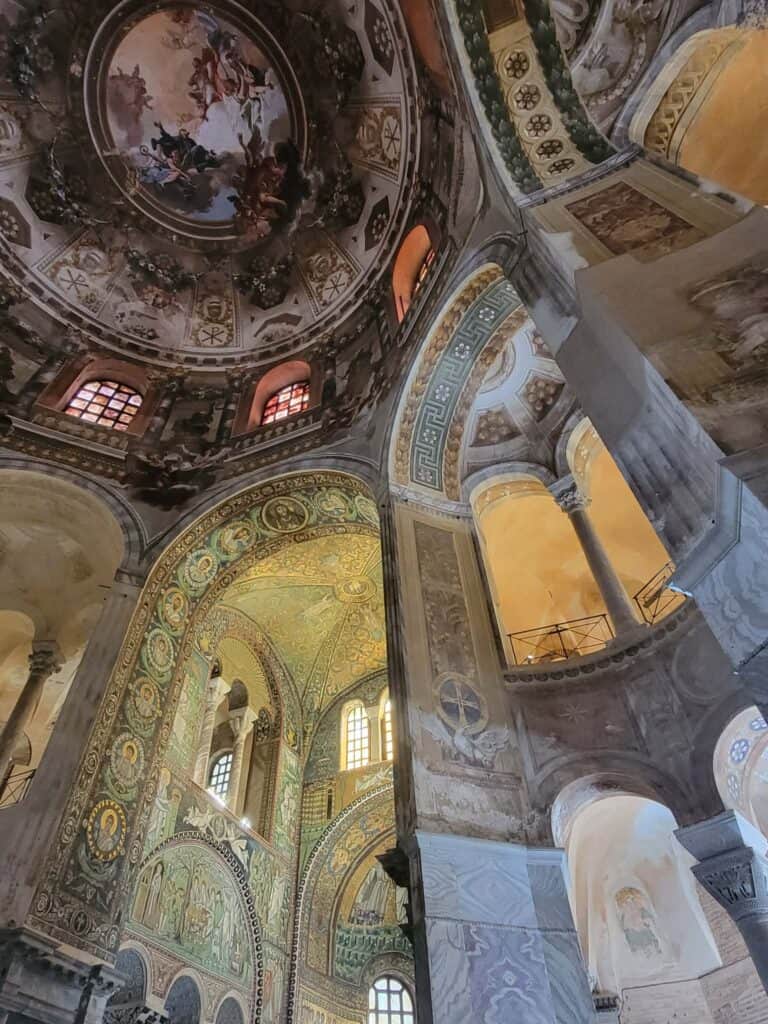
The Basilica di San Vitale is a masterpiece of Byzantine architecture and one of the most important early Christian monuments in Europe. Unlike the typical long basilica layout, its octagonal design makes it feel different as soon as you walk in.
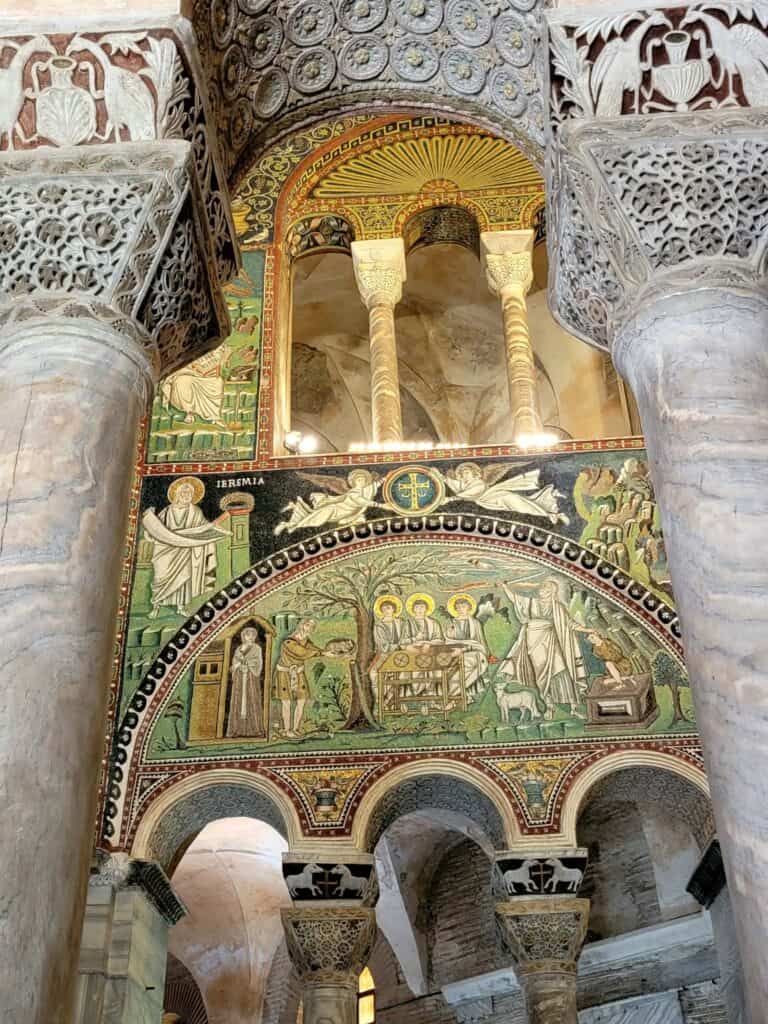
But it’s the mosaics that make it unforgettable. I was literally awestruck (in the true sense of the word) when I walked in. Every angle, every corner, every square inch was a place I could have gotten lost. When my neck got sore from looking up, I explored the incredible floors. It just never stopped.
👉 Give yourself some time here. This is not a quick stop.
2. Mausoleum of Galla Placidia
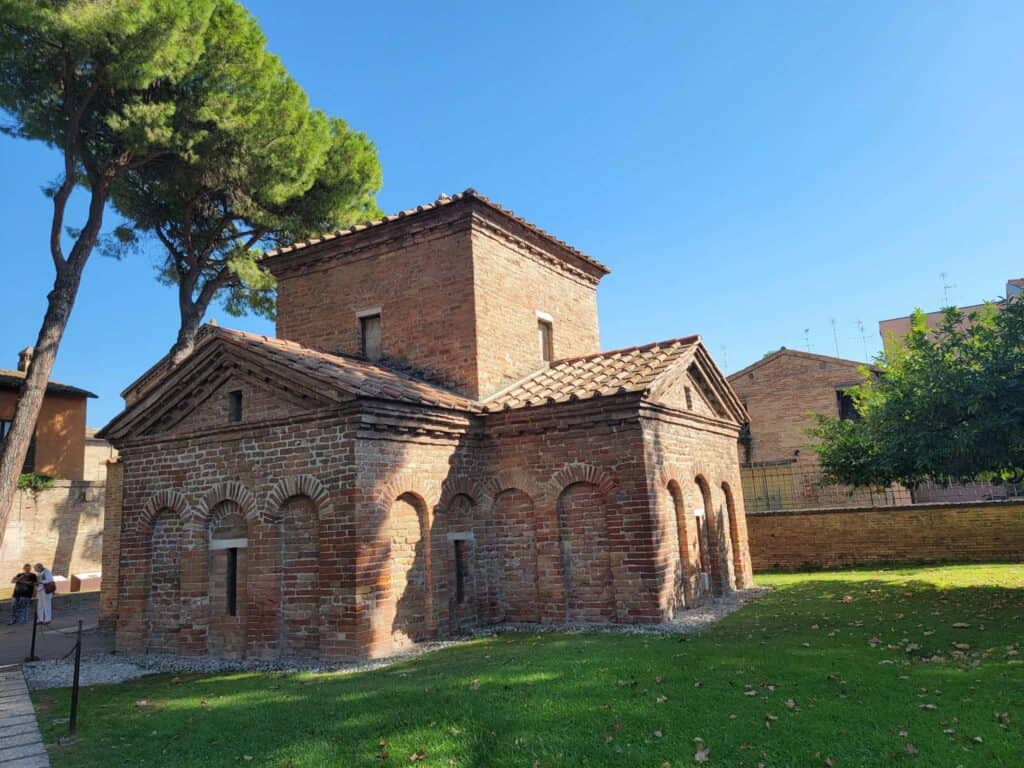
From the outside, the Mausoleum of Galla Placidia looks almost disappointingly plain.
Inside, it’s one of the most breathtaking spaces in Ravenna, and your #2 stop if you have time.
The Mausoleum of Galla Placidia is a small 5th-century building traditionally believed to have been constructed as a funerary chapel for the Roman empress Galla Placidia, though she was likely never buried there.
You will be allowed in only in small groups, and have a limited time to explore. But the space is small and they have timed it perfectly so by the time you’re done, the next group is ready to enter. This provides the best possible experience so you can fully appreciate the space without feeling crowded.
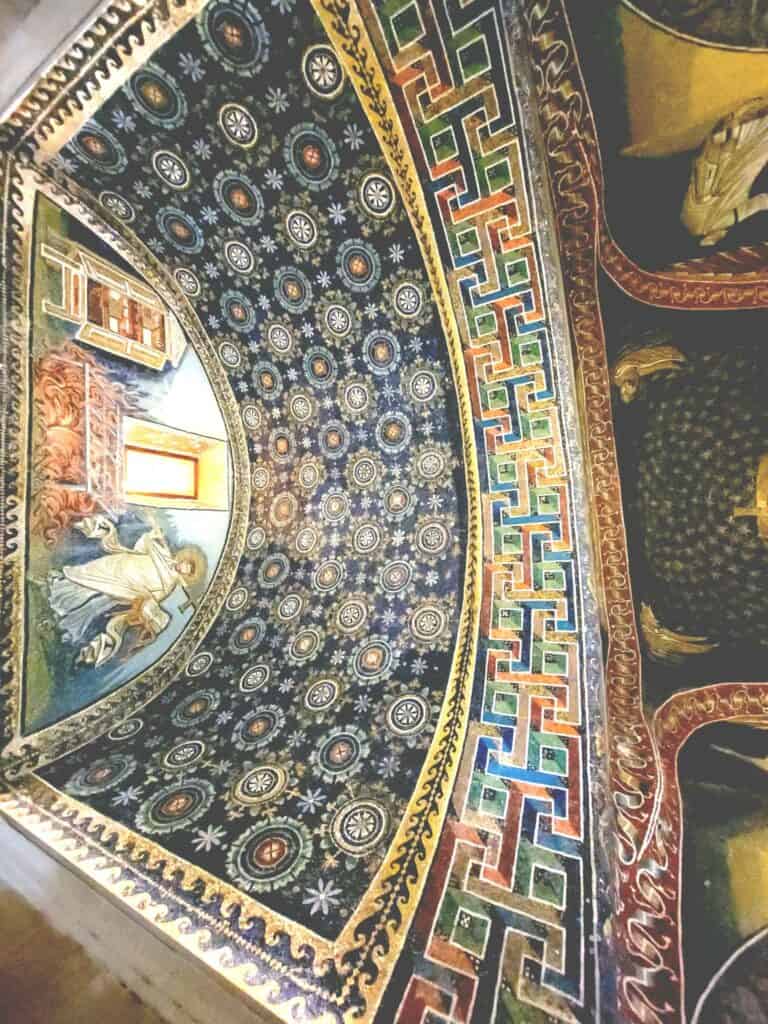
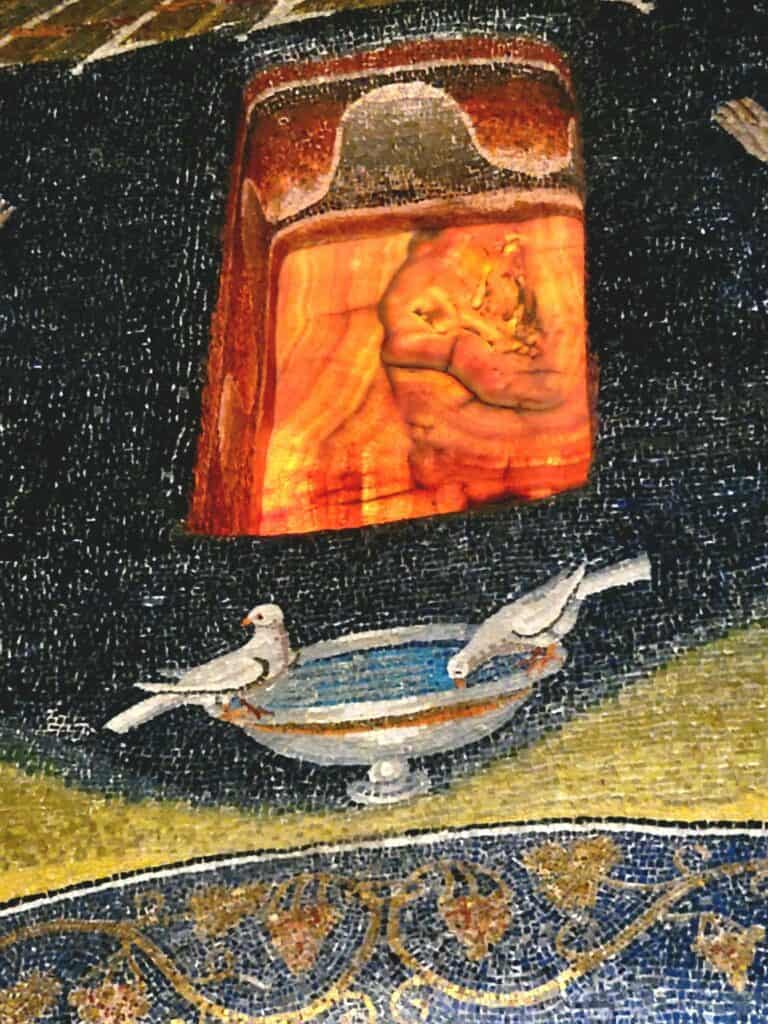
The ceiling is covered in a deep blue mosaic sky filled with stars that seem to glow as your eyes adjust to the darkness. Even the tiny windows are fascinating, made of alabaster, creating the perfect dim light that makes the whole place feel other-worldly. It’s intimate, atmospheric, and completely different from the grandeur of San Vitale.
👉 The contrast of its plain exterior vs. its extraordinary interior is Ravenna in a nutshell.
3. Basilica di Sant’Apollinare Nuovo
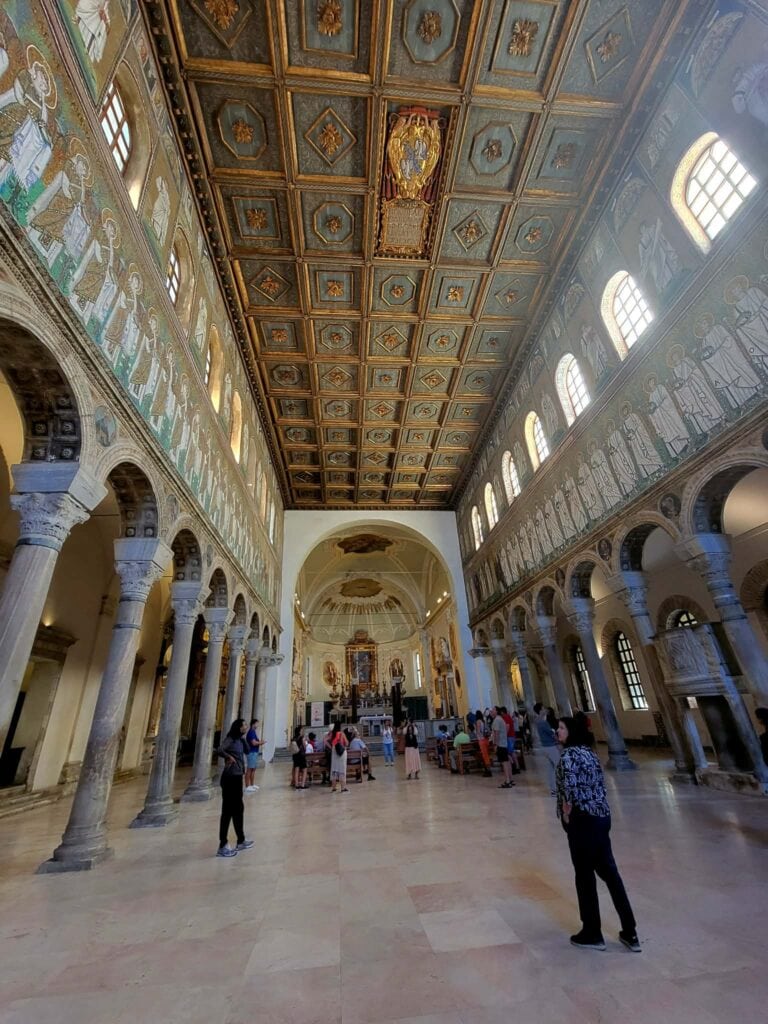
The Basilica di Sant’Apollinare Nuovo offers a different kind of visual experience from the overwhelming San Vitale.
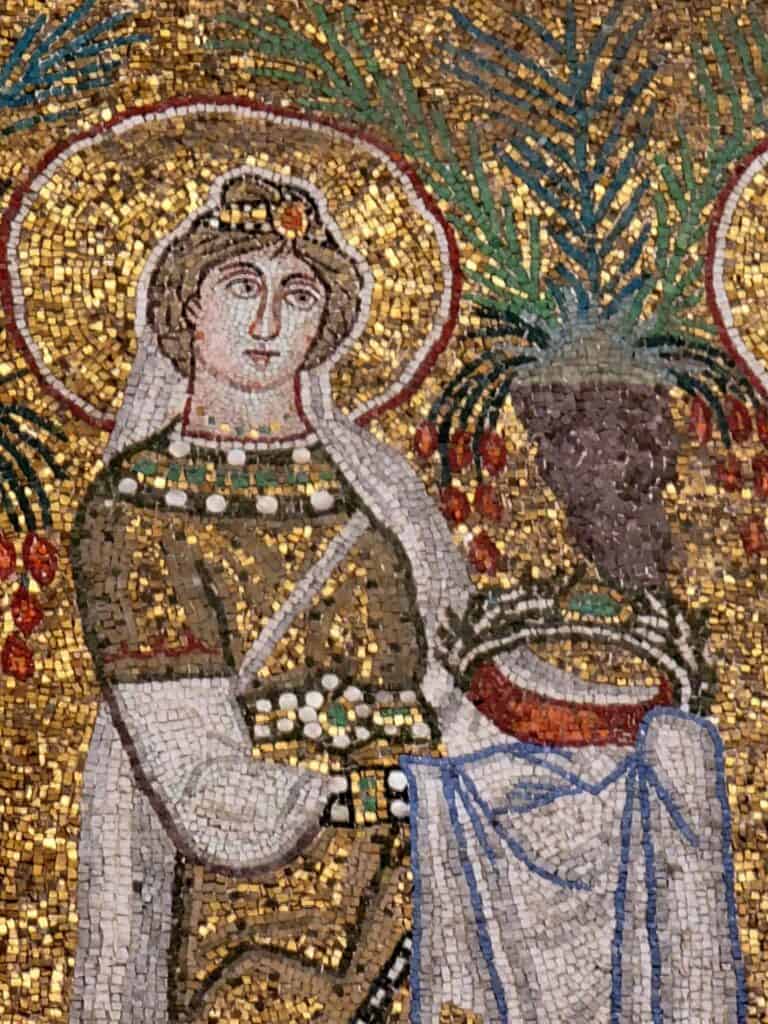
You’ll see long processions of figures moving along the walls in a huge cavernous space filled with light. It unfolds like a story unfolding as you walk. There is also a stunning mosaic of Ravenna’s harbor with ships under full sail.
4. Neonian Baptistery (Battistero degli Ortodossi)
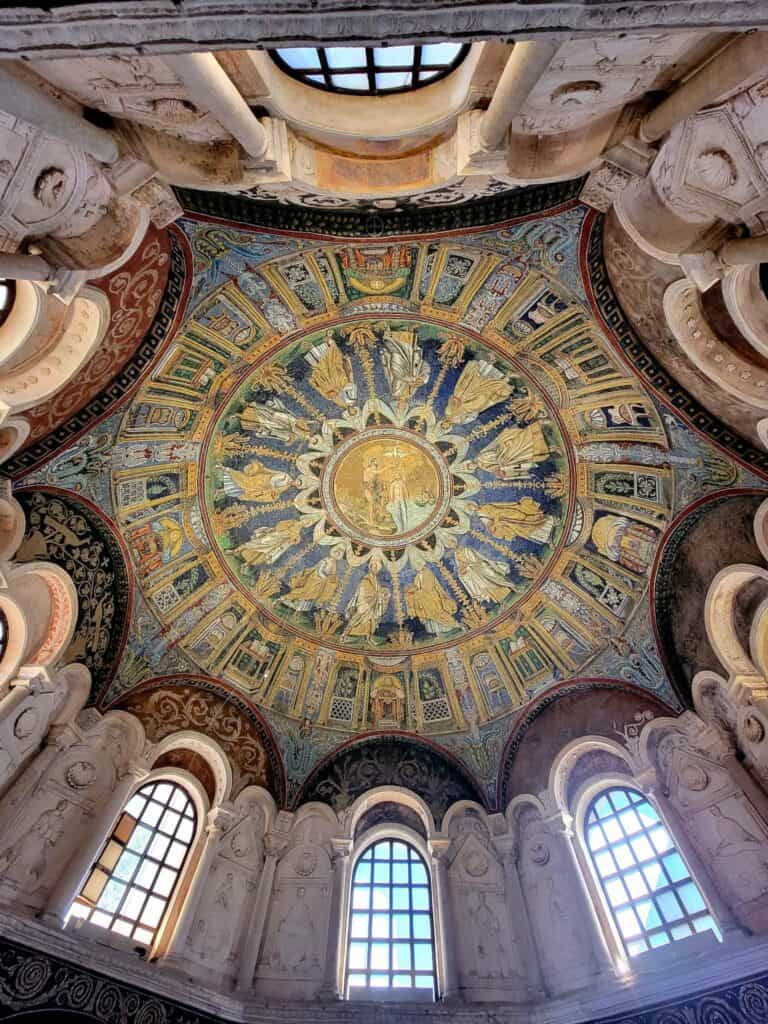
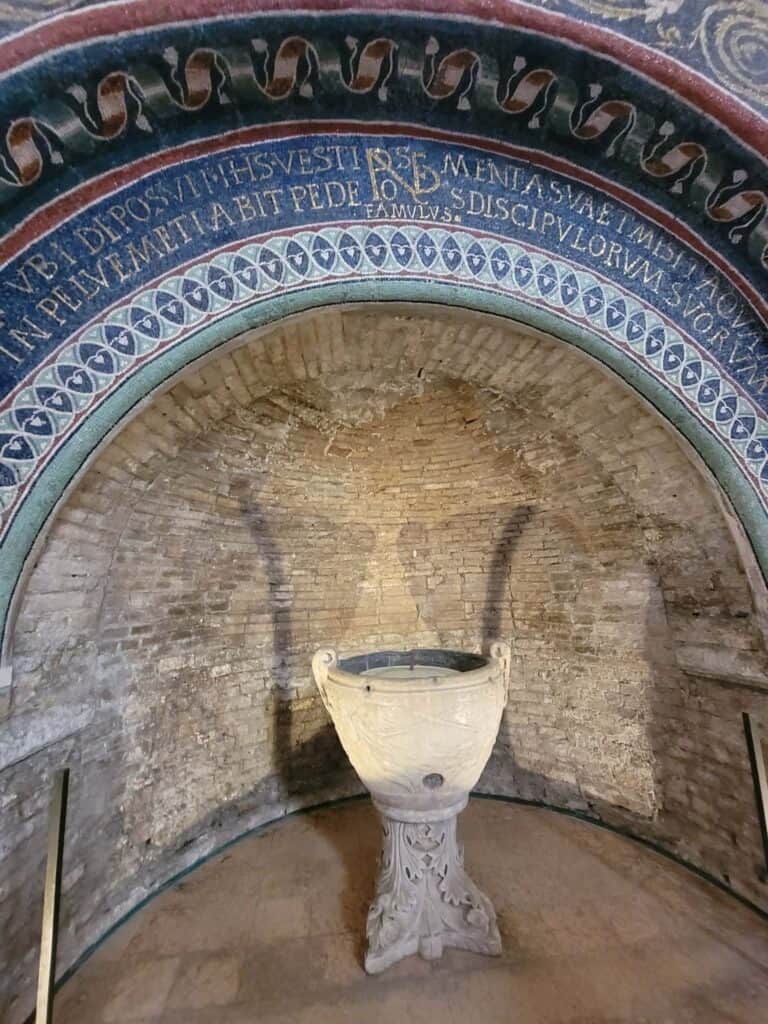
The Neonian Baptistery is one of the oldest buildings in the city, dating back to the 5th century.
It’s smaller than many visitors expect, but look up – the dome features a vivid mosaic of the baptism of Christ surrounded by rich detail and color.
👉 This is one of those places where the scale is modest, but the craftsmanship is not. It’s also worth noting the uniqueness of the mosaic of Jesus being baptized because he appears very young and without a beard.
5. Arian Baptistery
Often overlooked, the Arian Baptistery offers a fascinating contrast to the Neonian Baptistery.
Built under the Ostrogothic king Theodoric the Great, it reflects Arian Christianity rather than Orthodox traditions. The differences in the mosaics are subtle but if you’re really into mosaics, it’s worth a stop.
You’ll also find fewer crowds here.
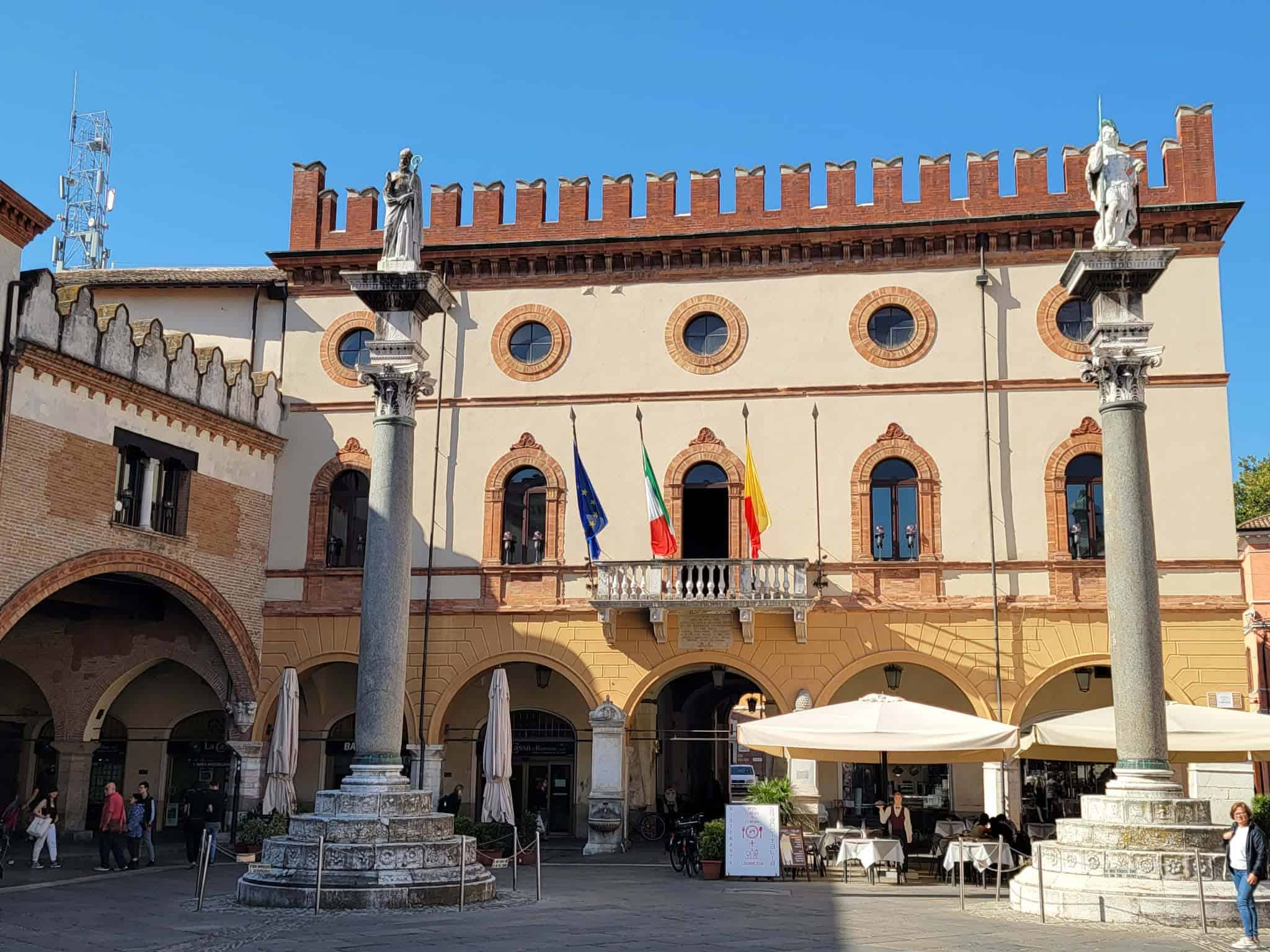
6. Piazza del Popolo
7. Archiepiscopal Chapel
Hidden inside the Archbishop’s Palace, the Archiepiscopal Chapel is one of Ravenna’s least visited UNESCO sites. And that’s exactly why you should go. It, too, includes stunning ceiling mosaics of starry skies, and ancient religious symbolism everywhere you look.
It’s small, quiet, and richly decorated with mosaics. And it’s the perfect final stop to tick off all those UNESCO sites in one city!
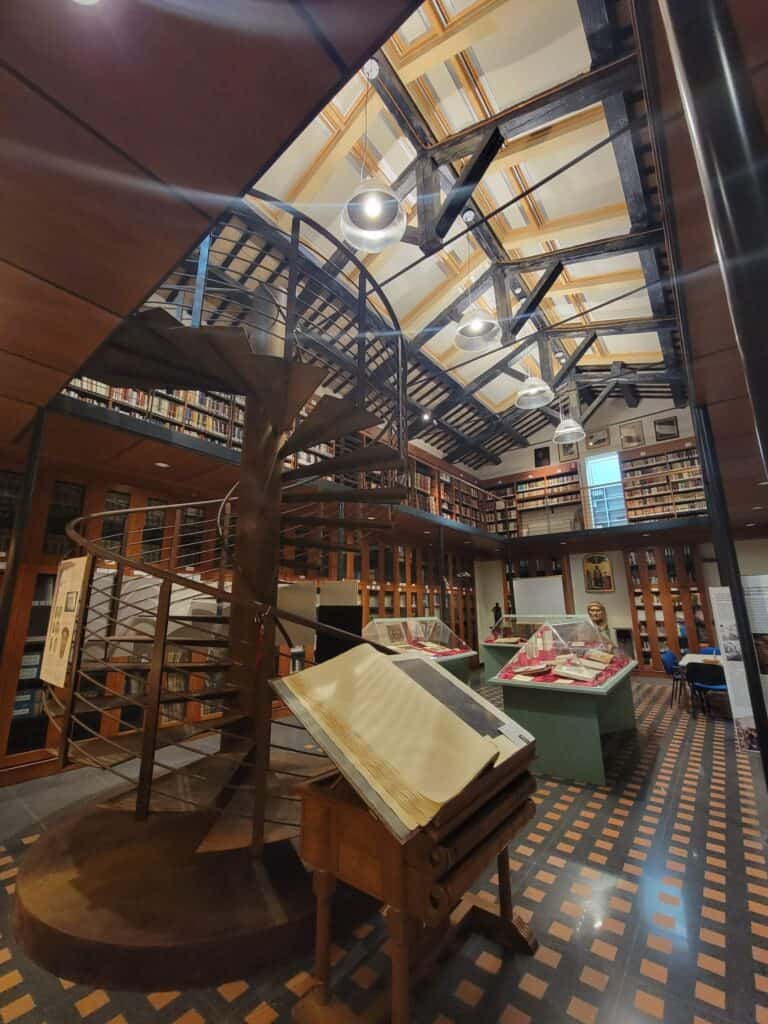
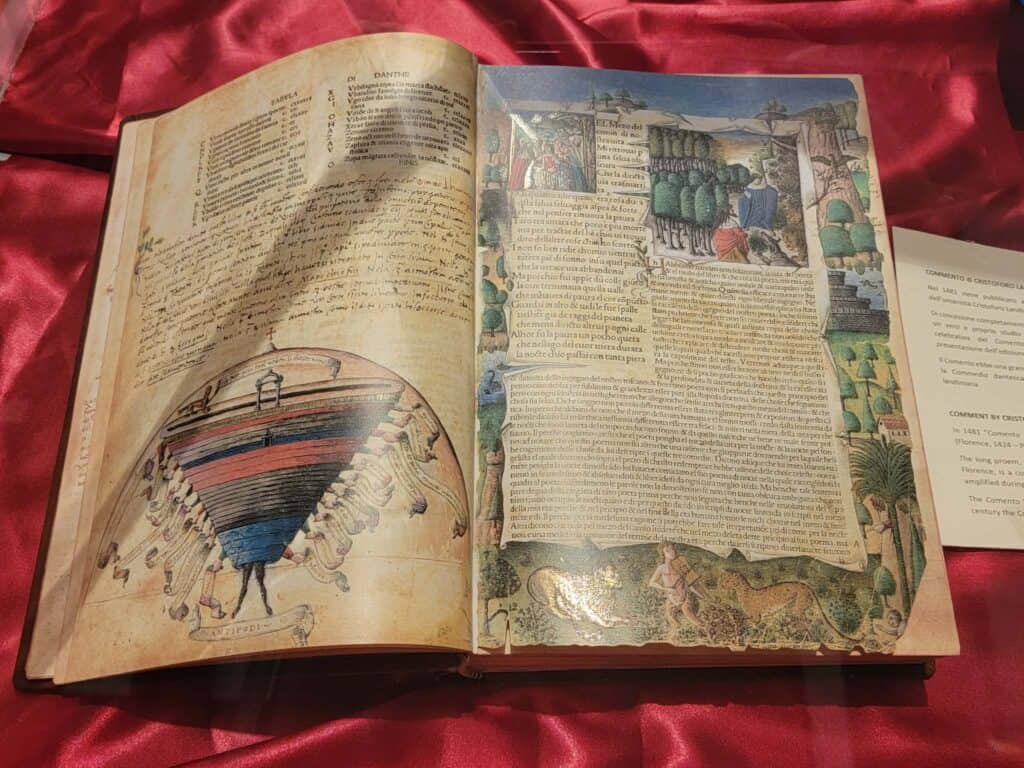
8. Dante’s Tomb, Museum & Library
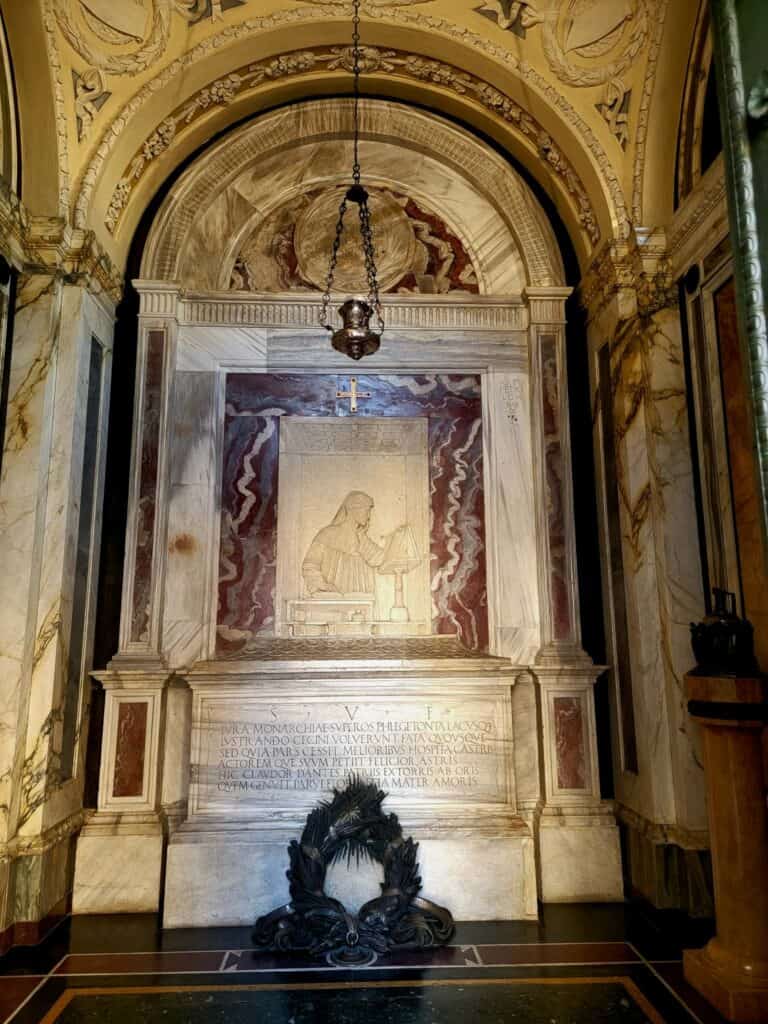
Ravenna is also the final resting place of Dante Alighieri, author of The Divine Comedy, and one of Italy’s (and all of literature’s) most famous and consequential figures. His life is fascinating and you’ll learn all about his exile from Florence, and the gripping story of what happened to his bones!
His tomb (where his bones finally ended up) is simple and tucked into a peaceful corner surrounded by a little park.
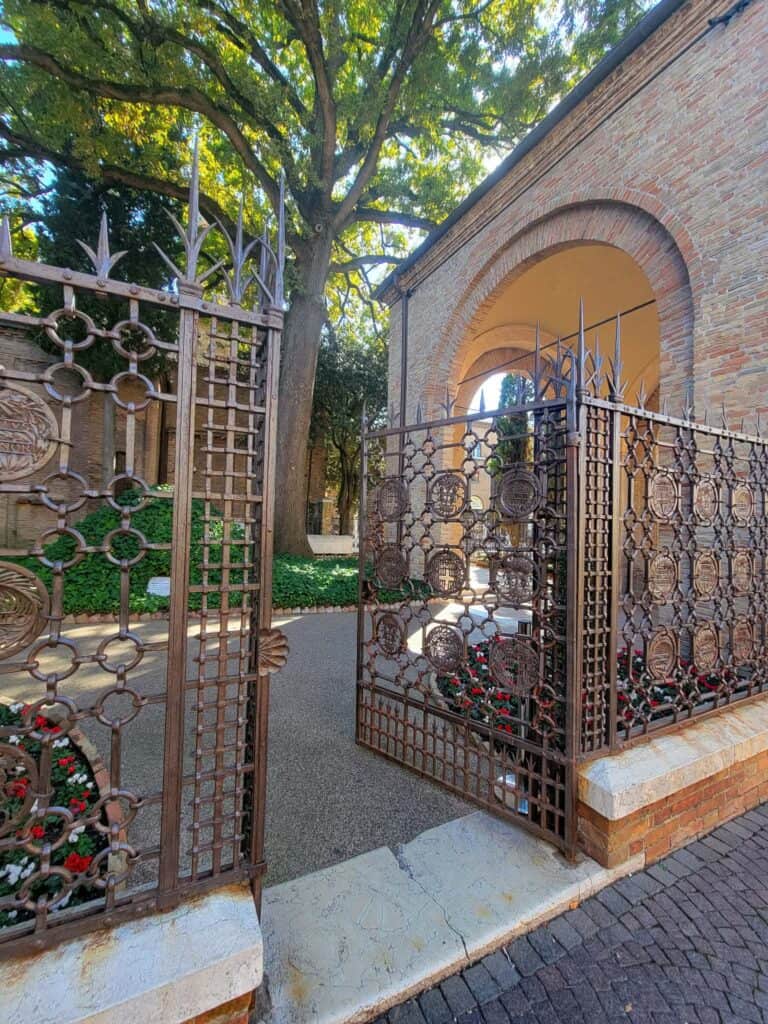
Right nearby you’ll find:
- The Dante Museum, which explores his life, exile, and legacy
- The Biblioteca Classense, a historic library with connections to Dante and the city’s intellectual history
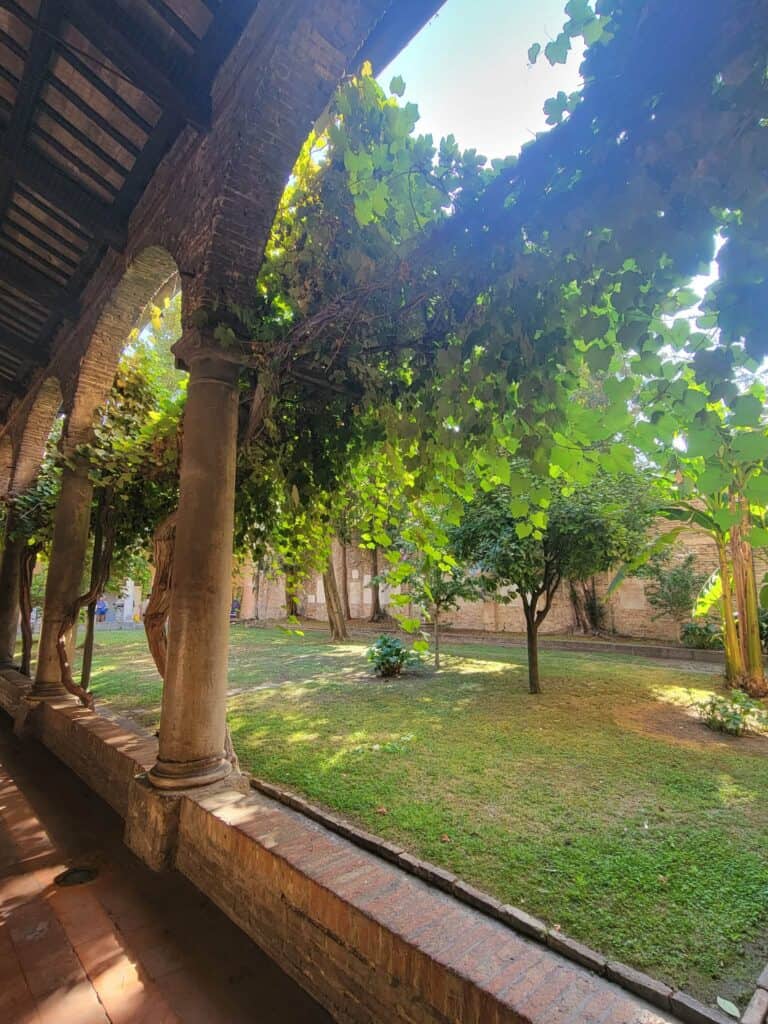
- A small cloistered complex across from the tomb (often considered part of the Dante area), which creates a reflective, almost contemplative atmosphere
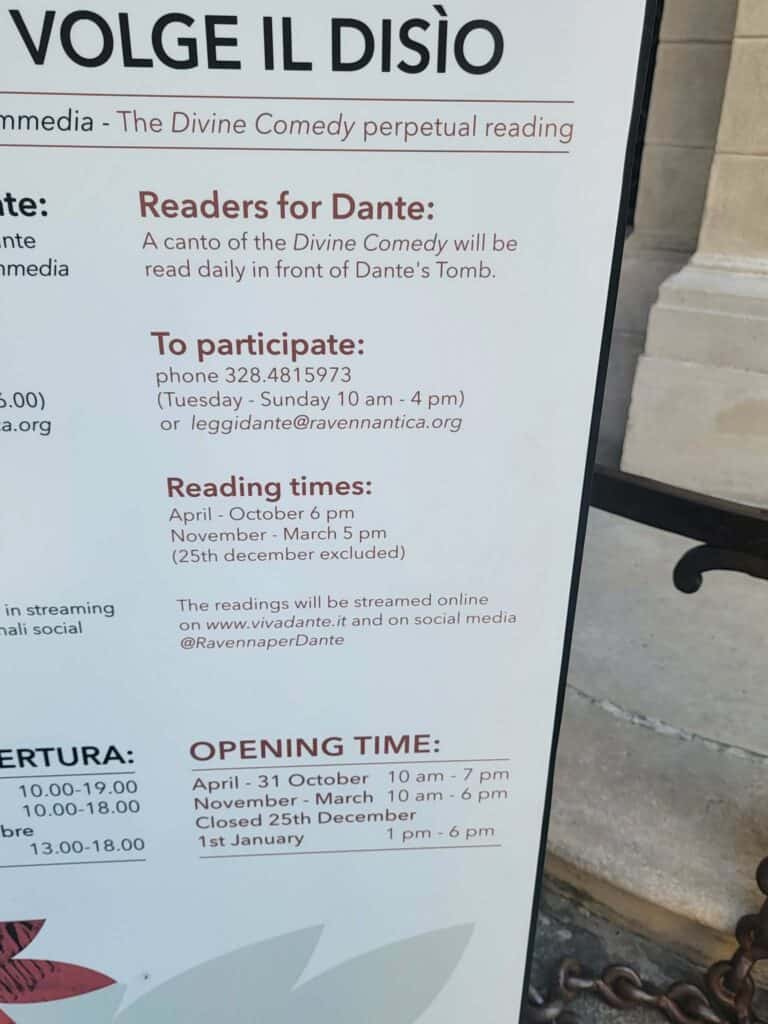
- Nightly readings of the Divine Comedy on site at 6pm. You can even sigh up to participate yourself!
👉 Even if you’re not a literature enthusiast, this area is worth a walk through. It feels different from the rest of the city. quieter, more introspective.
9. The Basilica of St. Francesco
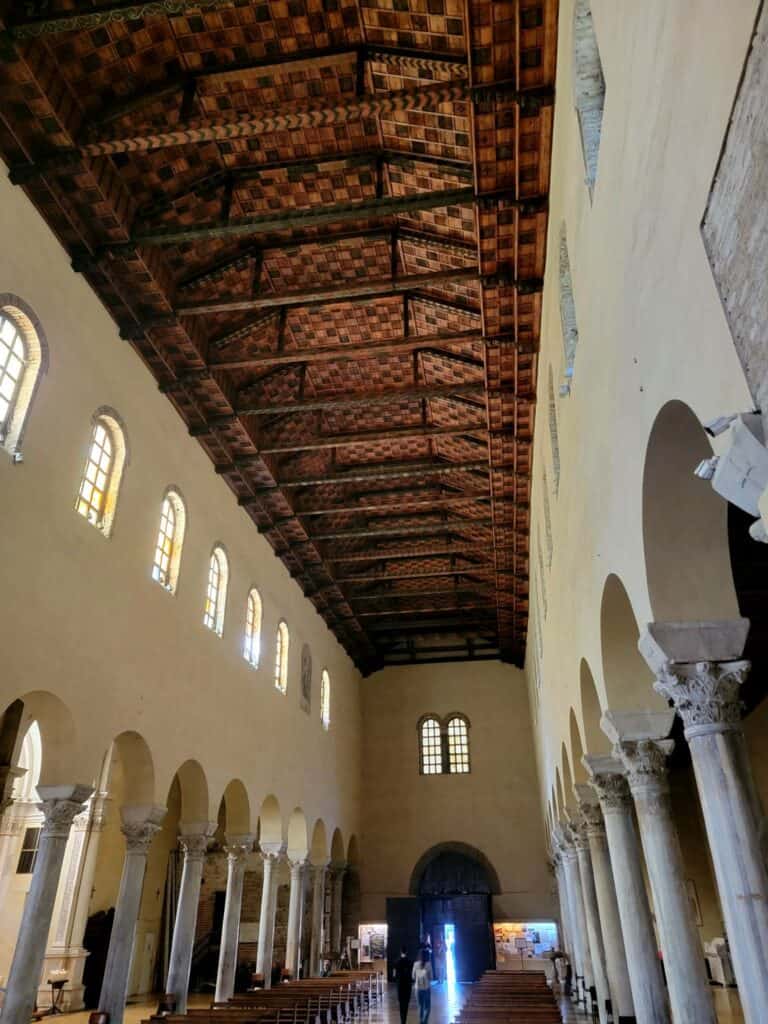
This church is located right near the rest of the Dante sites, and is where the great poet’s funeral was held. There are actually no mosaics in the building but it’s beautiful anyway, with alabaster windows, and an absolutely incredible wooden ceiling that looks almost like a basket.
If you bring a 1 euro coin, you can even go up to the front, deposit it in a coin box, which lights up an amazing flooded crypt full of fish. Worth it just for that in my opinion!
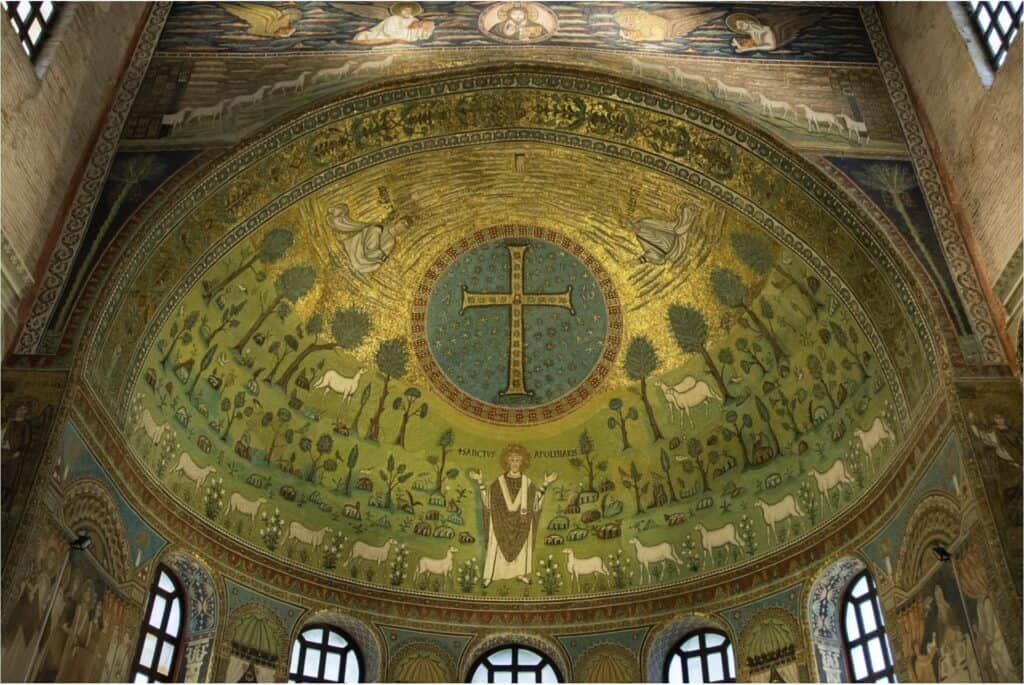
10. Basilica di Sant’Apollinare in Classe
This basilica is outside the main city center, and you may have had enough of mosaics with those that are centrally located. But this basilica is definitely beautiful, with a light elongated shape and columns with one of my absolute favorite and most colorful mosaics at the end.
Mosaics Everywhere, Not Just in Churches
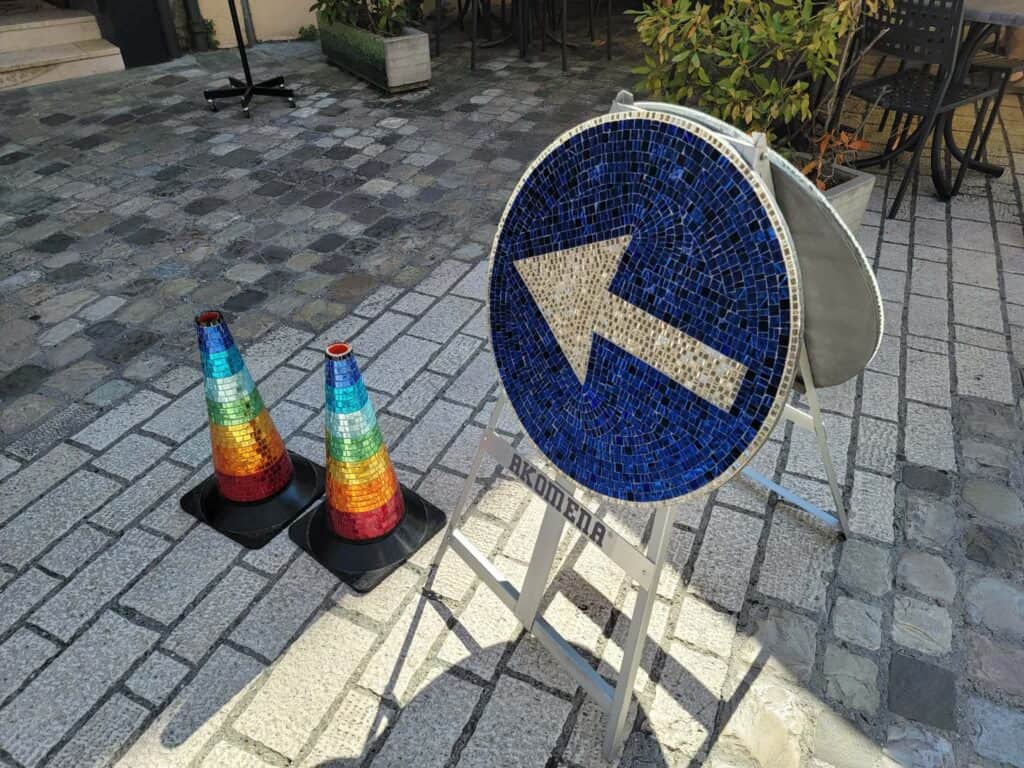
One of the most unexpected joys of Ravenna is that mosaics aren’t just confined to museums and basilicas.
You’ll see them everywhere:
- Decorative street signs
- Small details embedded in walls
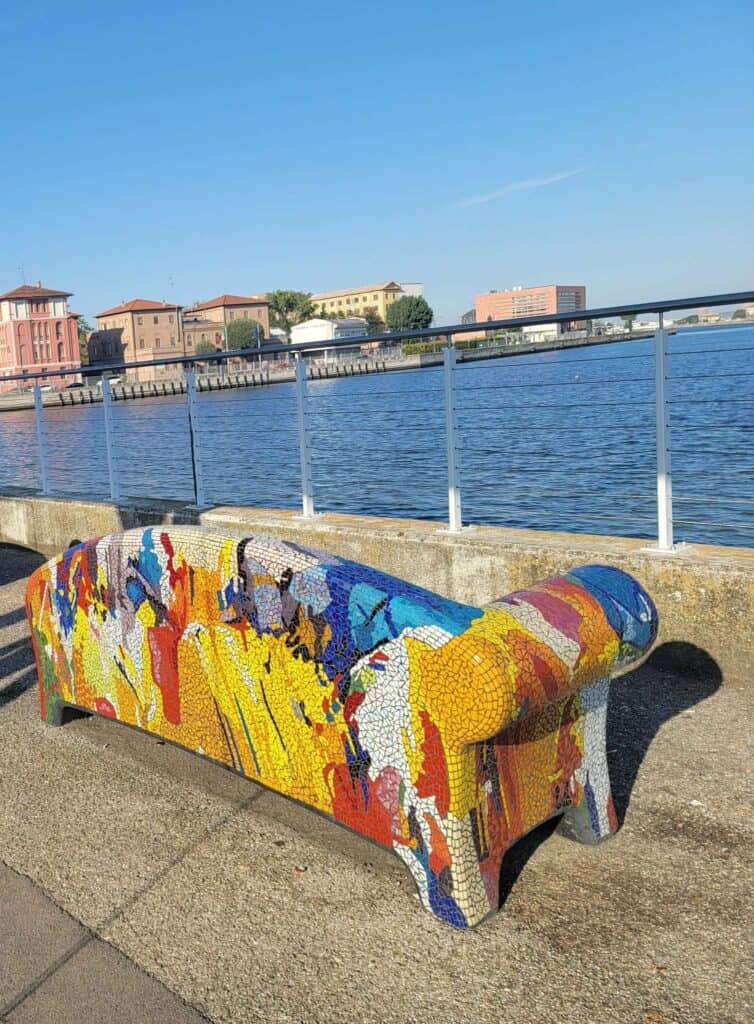
- Modern mosaic benches, and even sofas overlooking the harbor
- Whimsical mosaic artworks where you least expect them
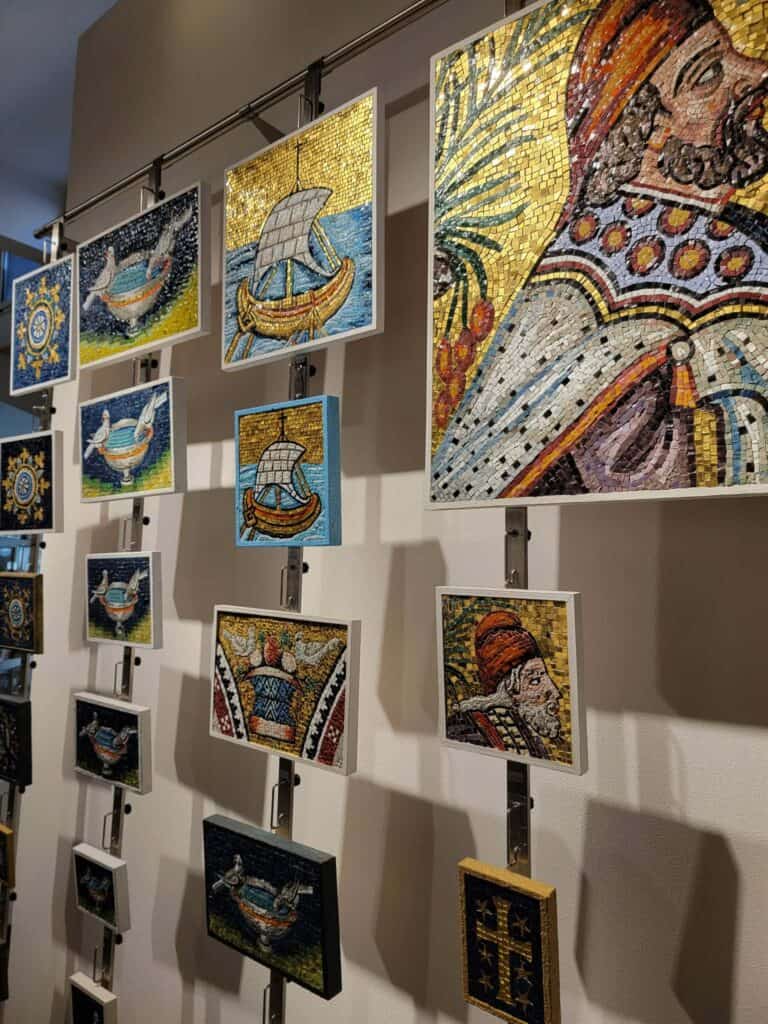
- Local artisan shops selling handmade mosaic tiles, plaques, and artwork
These shops are worth stepping into, even if you’re not planning to buy anything. Many pieces are crafted by local artists, continuing a tradition that goes back millenia!
👉 Ravenna not only preserve mosaics, it lives them, even to the present day.
Lesser-Known and Overlooked Things to Do in Ravenna
👉 Domus of the Stone Carpets (Domus dei Tappeti di Pietra)
The Domus dei Tappeti di Pietra is one of the most surprising sites in Ravenna. Located underground, this archaeological site reveals Roman-era mosaic floors that feel completely different from the religious mosaics above ground.
👉 Mausoleum of Theodoric
The Mausoleum of Theodoric stands apart from everything else in Ravenna. Built by Theodoric the Great, it’s stark, geometric, and almost austere. It’s a sharp contrast to the intricate mosaics found elsewhere.
It’s not the most visually ornate site, but it adds important context to Ravenna’s layered history if you have more than a day to visit.
👉 Rocca Brancaleone
The Rocca Brancaleone is definitely a departure from churches and mosaics. This medieval fortress has a dramatic entrance and is surrounded by green space. Often visited by locals, it’s a refreshing spot for a reset after a day of sightseeing.
👉 San Salvatore Ad Calchi
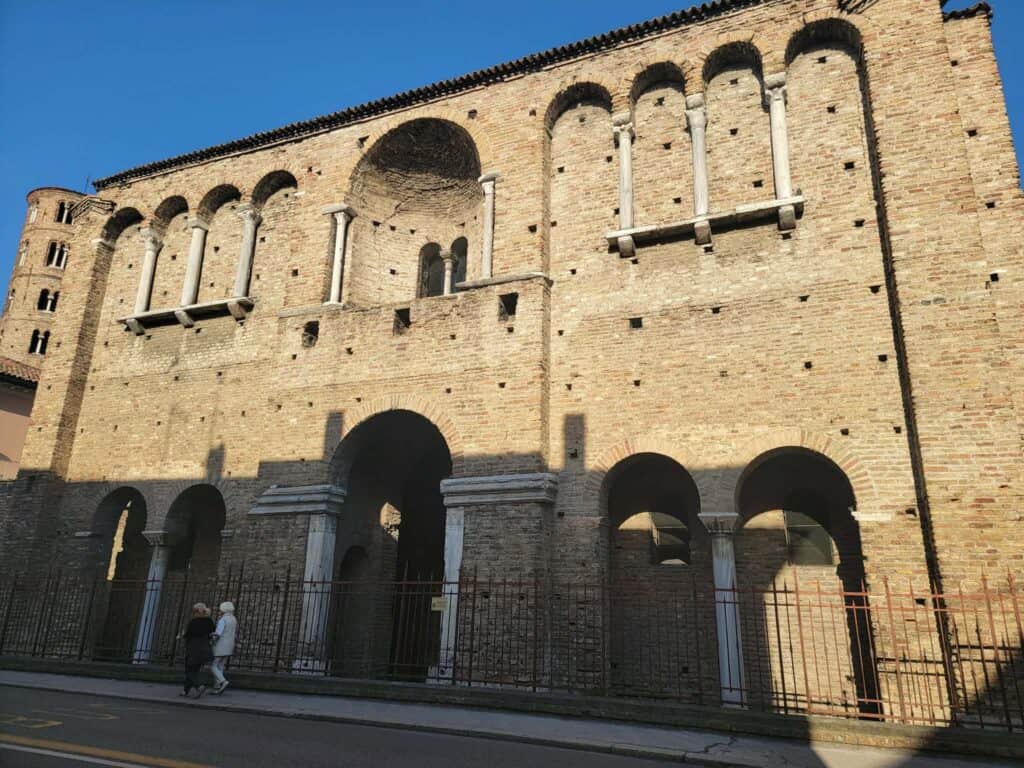
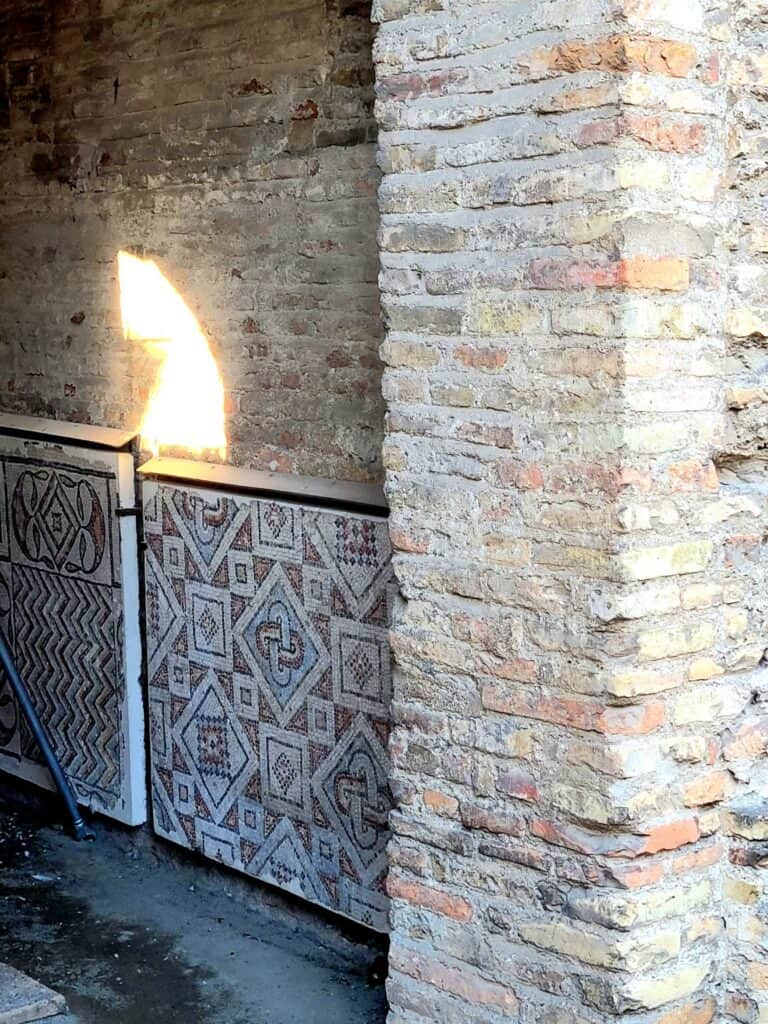
This building stands on the ancient complex of the palace of the Theodoric, King of the Goths (454-526AD). The building was destroyed at the beginning of the 16th century, but you can still see remnants of the facade and beautiful fragments of floor mosaics that were located in the area of Theodoric’s Imperial Palace.
👉 The Old Gates
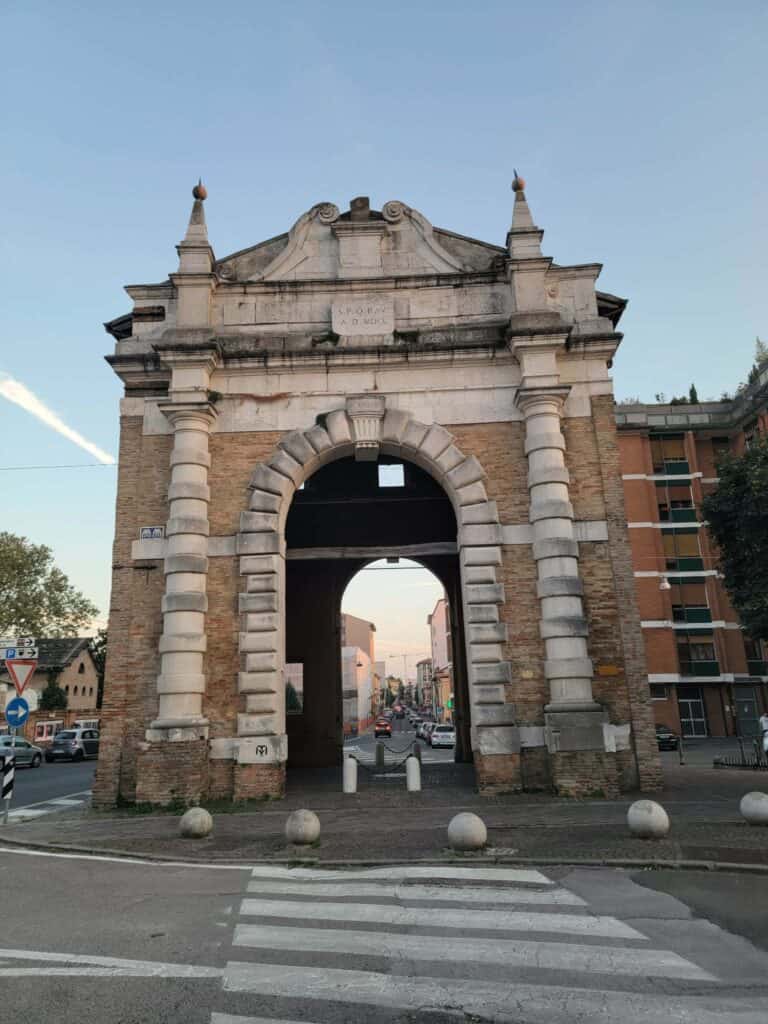
I always love finding remnants of the old defensive walls of medieval cities. Most have been destroyed over the years, but Ravenna has managed to keep four of the old gates to the city, at least one of which you’re likely to see on your travels.
In addition to the Porta Serrata pictured below, you can still see Porta Sisi, Porta Adriana, and Porta Gaza. These gates were built in the 13th century.
Ravenna Beyond the Mosaics
Visit the Beaches (Marina di Ravenna & Lidi)
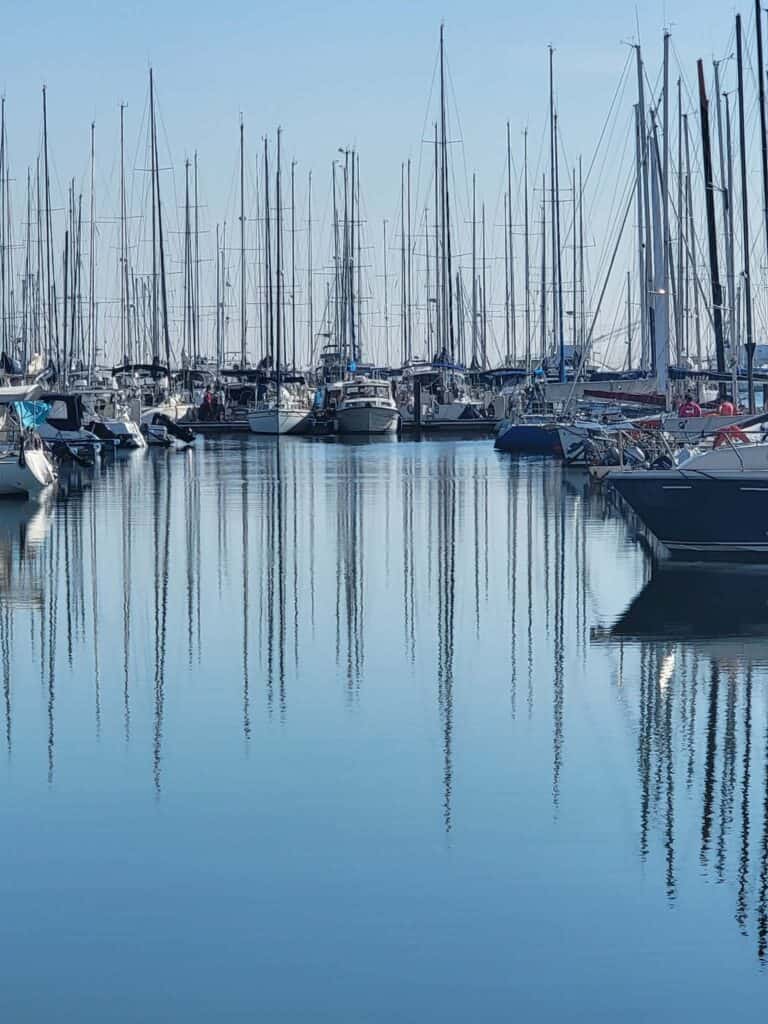
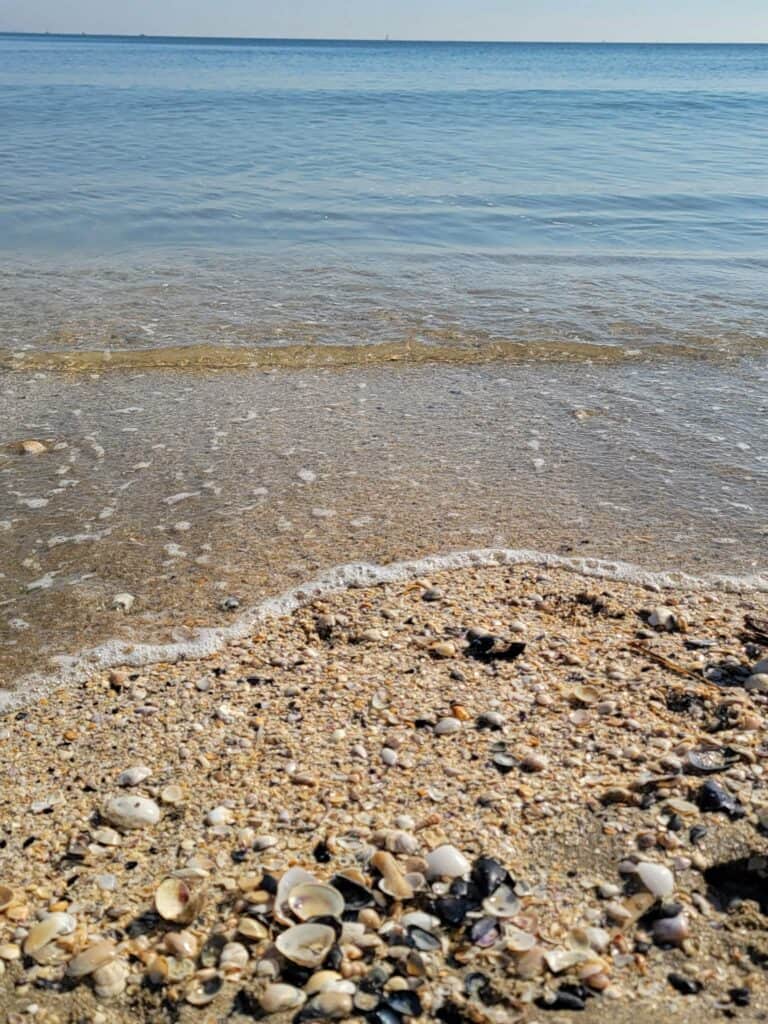
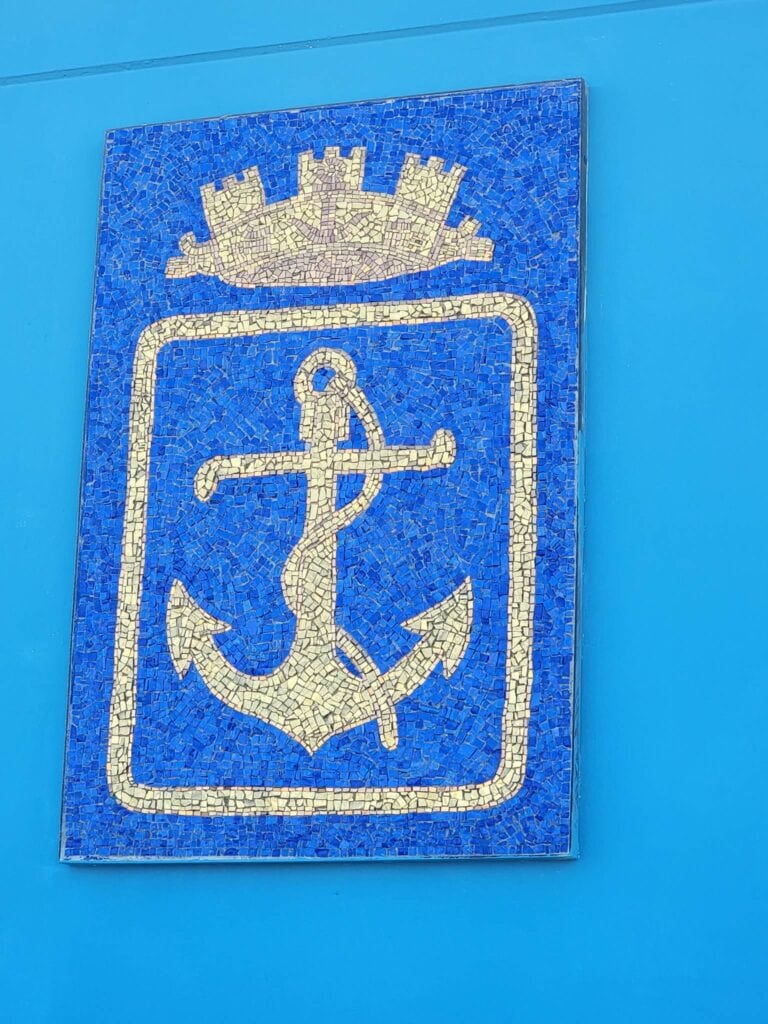
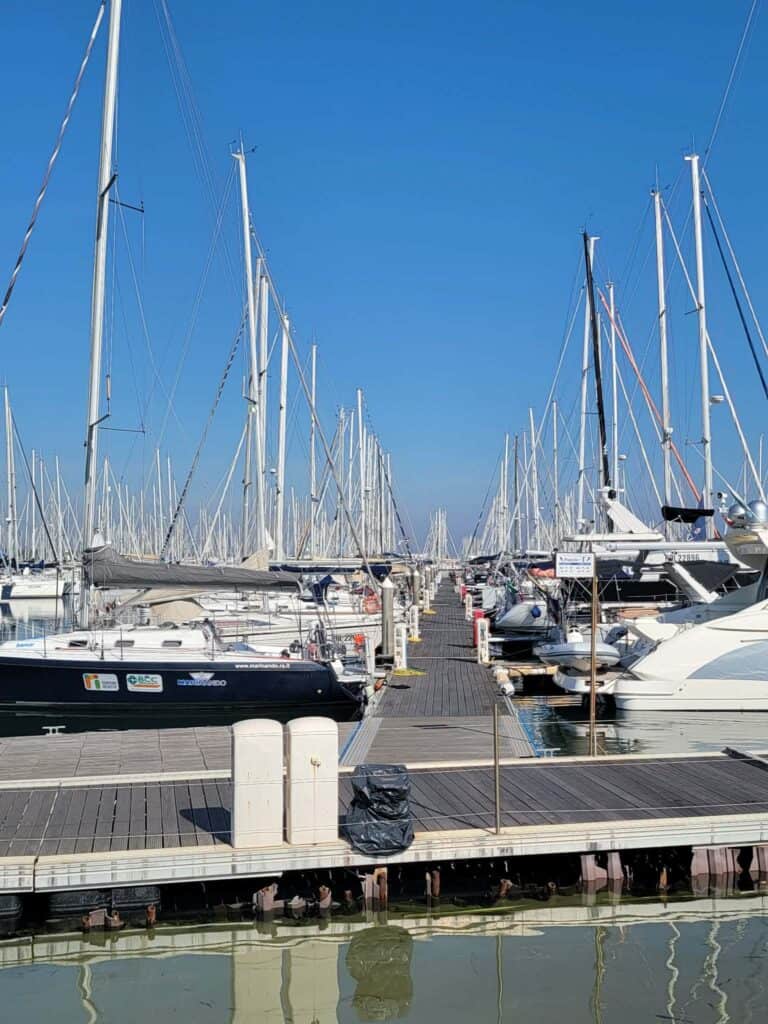
Outside the city to the east you’ll find the glittering blue Adriatic coast. This area of Ravenna has all the charm you’d expect from a beachfront town with little shops and restaurants, the marina which is full of boats, and miles of gorgeous sandy beaches.
This is a fabulous area to rest and rejuvenate, get your feet in the sand, and imagine what Ravenna must have been like in its heyday as a hub of the Roman Empire. We spent an afternoon, but I found myself wanting even more unhurried time here.
Ravenna Covered Market
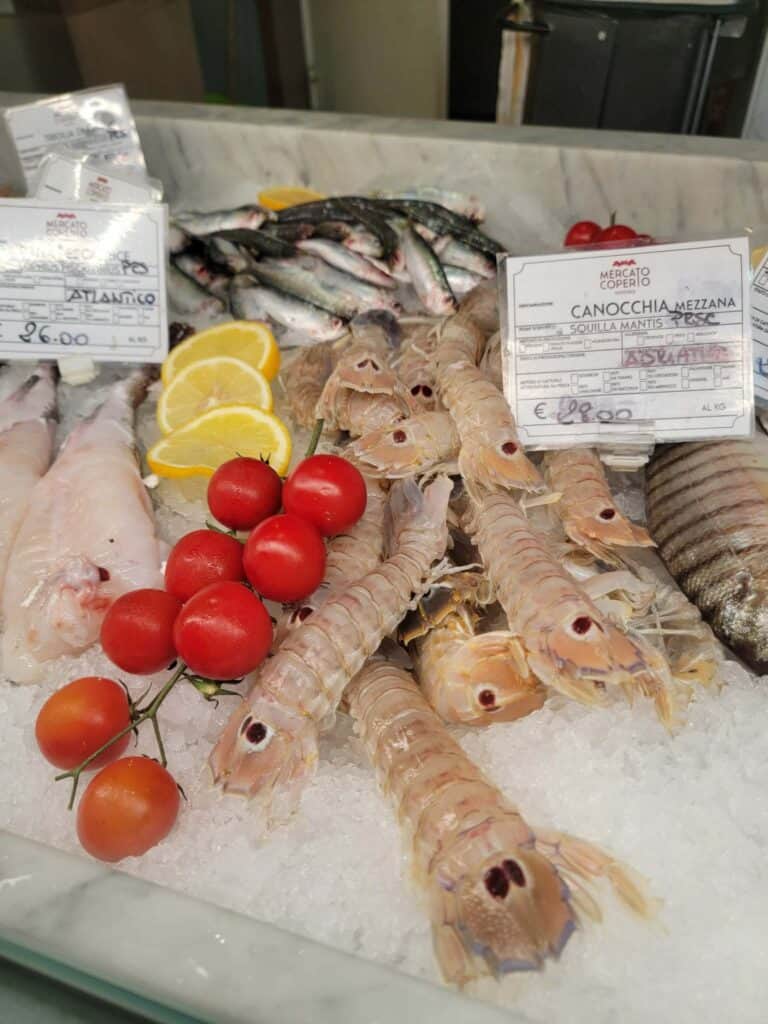
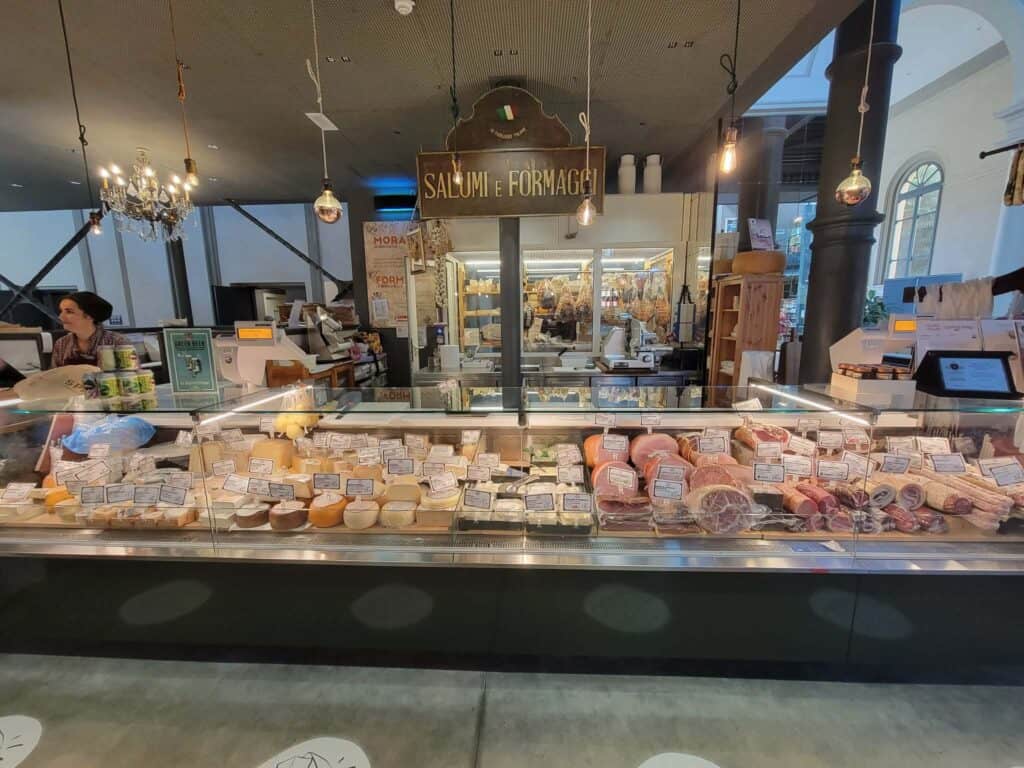
The covered market in Ravenna is a blast, and you should definitely give it a walk-through at the very least. You’ll be surrounded by the local sights and smells, residents doing their shopping, and all the hustle and bustle you would expect from a seaside Italian market.
You’ll see all kinds of incredible local seafood, cheeses, pasta, cured meats, produce, and more. There are also a couple spots you can grab a quick hot bite if you don’t want to slow down too much.
Things to Do in Ravenna Based on Your Interests
If You Love History and Art
Focus on the UNESCO World Heritage Sites, in this order.
- Basilica of San Vitale – 526–547 AD
- Mausoleum of Galla Placidia – c. 425–450 AD
- Basilica of Sant’Apollinare Nuovo – c. 493–526 AD
- Neonian Baptistery – c. 400–450 AD
- Arian Baptistery – late 5th century AD
- Archiepiscopal Chapel – c. 500 AD
- Basilica of Sant’Apollinare in Classe – 533–549 AD
- Mausoleum of Theodoric – c. 520 AD
If You Only Have a Few Hours
- Hit the top 3–4 stops from the above UNESCO list, and a quick bite at the covered market
If You Love Literature and Poetry
- Dante’s Tomb
- Dante Museum/Library
- Dante House
How to Spend One Day in Ravenna
There are no wrong answers in Ravenna. Everywhere you go are hidden gems, interesting history, and unexpected moments of art and whimsy.
But if you want my best advice which gives you the best of the mosaics, a smattering of Dante, some incredible food, and even a walk on the beach, check out my one day Ravenna itinerary.
🎟️ Tickets & Practical Tips for Visiting Ravenna
Seeing the best attractions in Ravenna is easy once you know how the ticket system works.
🎫 The UNESCO Combined Ticket (What You’ll Actually Need)
Most of Ravenna’s top attractions are set up as part of a combined ticket system, so you won’t be buying separate entry tickets for each site.
The standard ticket (the one I recommend) includes:
- Basilica di San Vitale
- Mausoleum of Galla Placidia
- Basilica di Sant’Apollinare Nuovo
- Neonian Baptistery
- Archiepiscopal Chapel
👉 These are the core UNESCO mosaic sites, and they’re all worth seeing. This combo ticket will cost you only €14.50 per adult for all the main sites.
There are also 4-site tickets, and 2-site tickets if you’re really sure that’s all you want.
Good to know:
- The ticket is typically valid for 7 days
- You get one entry per site
- Some locations (especially Galla Placidia) may require a timed entry slot
👉 You can see everything in one day, but you don’t have to rush if you’d rather spread it out across multiple days, and break up mosaic sites with other things of interest around the city.
📍 Where to Buy Tickets
You have a few easy options:
- At official ticket offices near the monuments themselves
- At the tourist information office in the city center (right next to the church of San Francesco) This is what I’d recommend if you are buying in Ravenna.
- Online in advance (mobile tickets). You can choose which combo tickets work for you.
👉 If you’re visiting during a busy time, booking ahead can save you time, especially for Galla Placidia.
👣 The Guided Tour We Took (Highly Recommended)
But honestly, if you want to truly understand what you’re seeing, I can’t recommend a guided tour enough. I would have missed so much context if I tried to DIY this one. The beauty is incredible, but the significance adds so much more.
👉 This is the guided tour we took to see most of the UNESCO sites (and more)
This tour became the centerpiece of my one day in Ravenna itinerary, and it completely changed the experience.
Why it was worth it:
- You don’t just see mosaics, you understand the stories behind them
- The historical context makes everything far more meaningful
- It removes the guesswork of what to prioritize and when
- I didn’t have to look at a map or a clock one single time! Everything flowed perfectly and I was in the hands of an expert.
This is the experience that stayed with me the most after leaving Ravenna.
👉 If you’re only visiting for a day and want to make the most of it, this is one of the easiest ways to do it.
How Long Do You Need in Ravenna?
Two days is the sweet spot for most people. This will allow you to see all of the main sights and have a little time to relax, enjoy a great meal, and walk on the beach.
If you’re a slow traveler and you want to really feel the rhythm of the place, take it at a casual pace, do some shopping, and have some down time, three days is ideal.
Only have one day? If you’re making Ravenna a day trip from Venice, Bologna, or other destinations on the Adriatic, the news is good. So much of Ravenna is located within the city center that you can really see a lot, especially if you take a guided tour.
Read my absolutely perfect One Day Ravenna Itinerary!
Best Time to Visit
If you plan to hit the beach, you can’t beat Ravenna’s hot summers to take advantage of the beautiful water, sand, and surf. If you’re looking for weather that’s still warm, but not too hot, and with fewer crowds, the shoulder seasons of fall and spring are great. And you are just going for the mosaics and history, late fall and winter are the least expensive times to visit, few crowds, and all the mosaic enjoyment you want.
My Favorite Spot to Eat in Ravenna
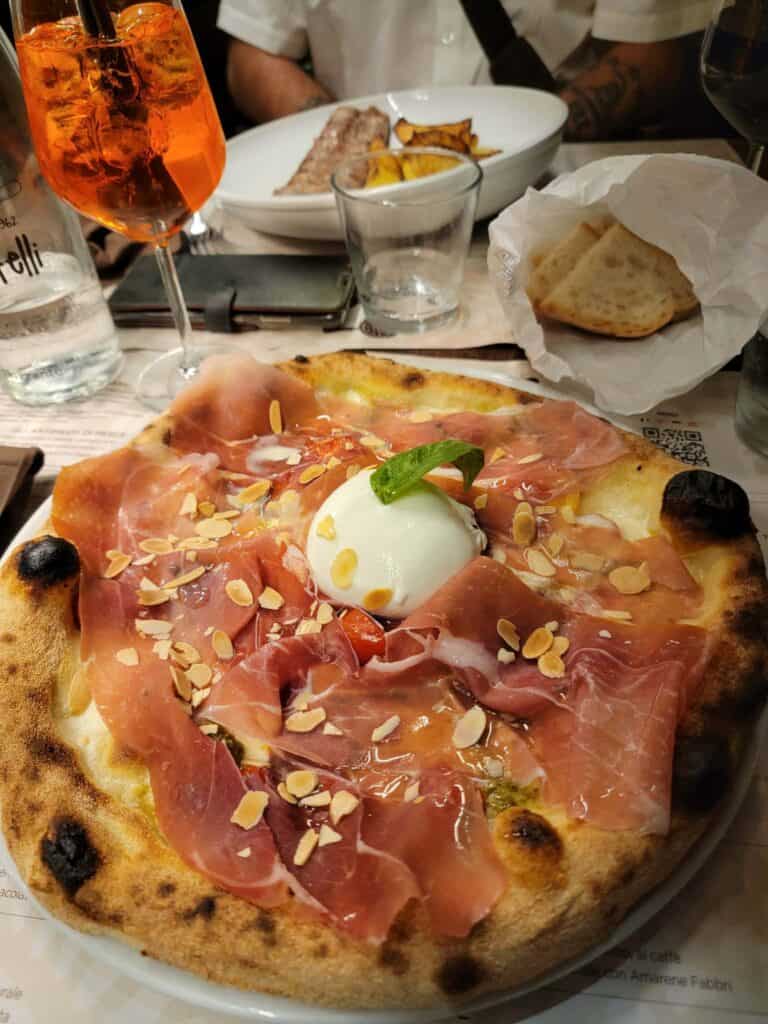
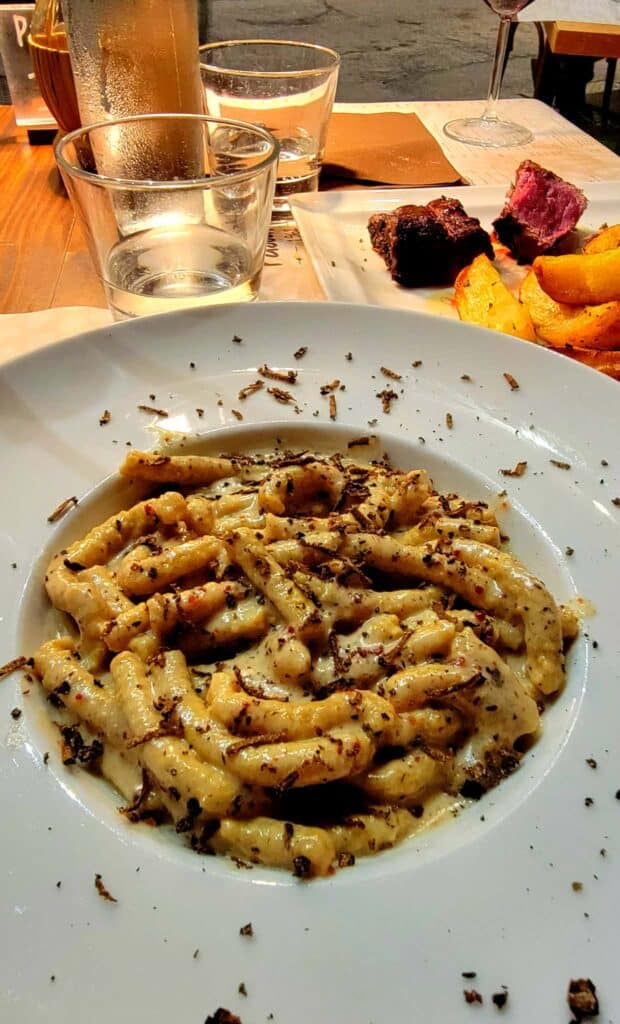
If you eat only one meal in Ravenna, let it be at the Osteria Passatelli. It’s not too formal but not too casual, has an extensive menu of incredible food, pizza to die for, local specialties and pasta found only in the region, a cheese plate for the ages, and fantastic cocktails.
Eat inside for a cozy local vibe, and outside on the terrazzo street under an umbrella to soak in the atmosphere of this incredible city.
Why Ravenna Will Be Your Best Decision
The thing about Ravenna that you don’t figure out until you get there is that it really is an ambush. You come for the UNESCO mosaics which are, to be clear, completely unhinged in the best possible way, and you leave having been ruined for lesser places by a city you just discovered.
And it all happens when you slow down to duck into an unassuming brick building that doesn’t have a mile-long line, or take the random turn that doesn’t lead anywhere obvious. Unhurried wandering is the name of the game. If that’s you, be prepared to have a new favorite hidden gem city!
🔗 Related Destinations in Italy
Epic 16-Day Italy Road Trip With Your Dog
Ravenna, Italy – Ultimate One-Day Itinerary
