
If you visited the Citadelle de Bitche with me, you already know the theme of this story because it happens again here. Fort de Schoenenbourg in Hunspach, France, is the most heavily bombarded fort on the entire Maginot Line, yet it was never defeated in combat. What forced its surrender wasn’t the German army, it was an order from the top.
This post will give you a brief history of the fort, explain how you can go visit, and what to expect there, plus some helpful tips to make the most of your day. The tour takes a couple hours, is fully underground but spacious and well-lit. It’s a great day trip from the Kaiserslautern Military Community area for those who want to explore more of the area’s World War II history.

The History of Fort de Schoenenbourg
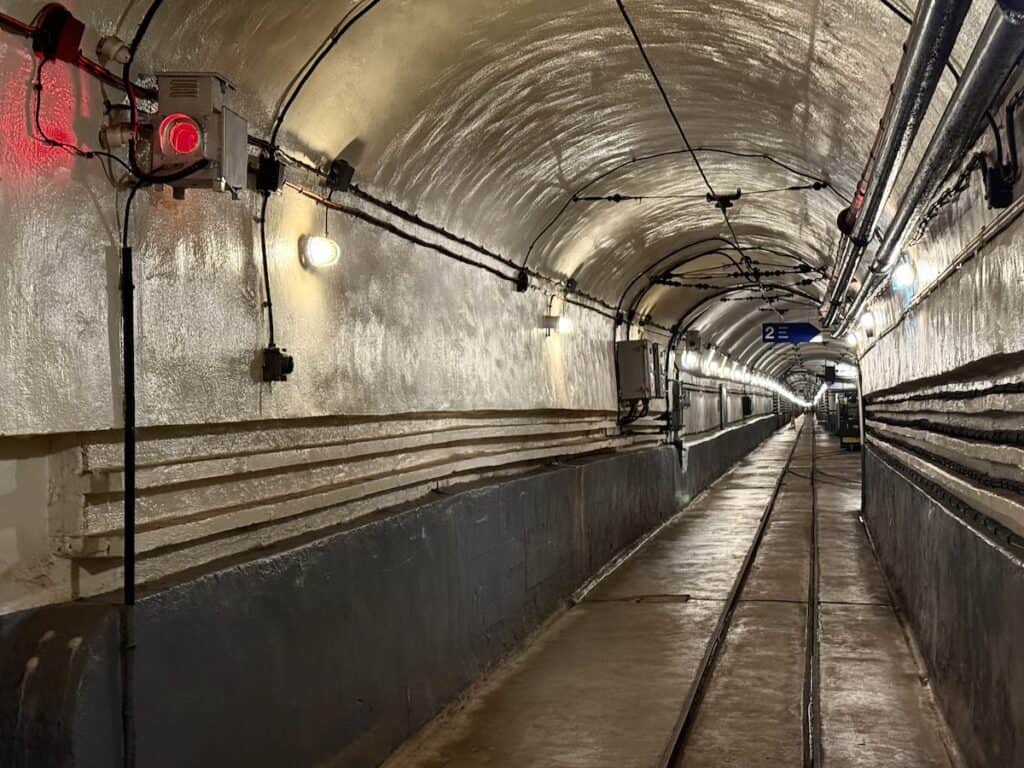
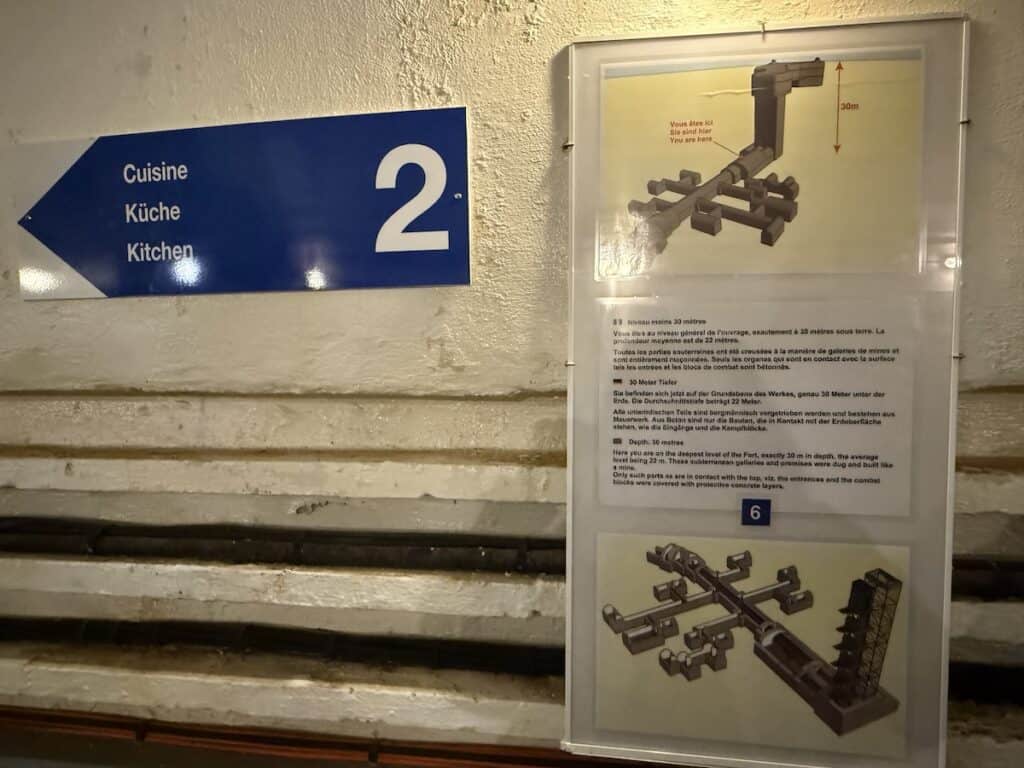
Fort de Schoenenbourg sits between the Alsatian villages of Hunspach and Ingolsheim, built between 1931 and 1935 as the easternmost artillery fort on the Maginot Line, France’s huge interwar defensive system consisting of massive underground concrete bunkers, and anti-tank obstacles along France’s eastern border. Fort de Schoenenbourg (Ouvrage Schoenenbourg) is an impressive and enormous feat of engineering: 620 men garrisoned across two entrances and six combat blocks, connected by roughly 3 kilometers (almost 2 miles) of tunnels sitting 30 meters (100 feet) underground.
The Heaviest Bombardment on the Maginot Line
When the German offensive reached the Alsace region of France in the spring of 1940, Fort de Schoenenbourg became the single most bombarded fort anywhere on the Maginot Line. Starting on May 14, German artillery opened fire, and the fort fired back. By the time the real battle began on June 14, 1940, Fort de Schoenenbourg had launched an impressive 3,840 shells of its own, holding off every German attack that came at it.
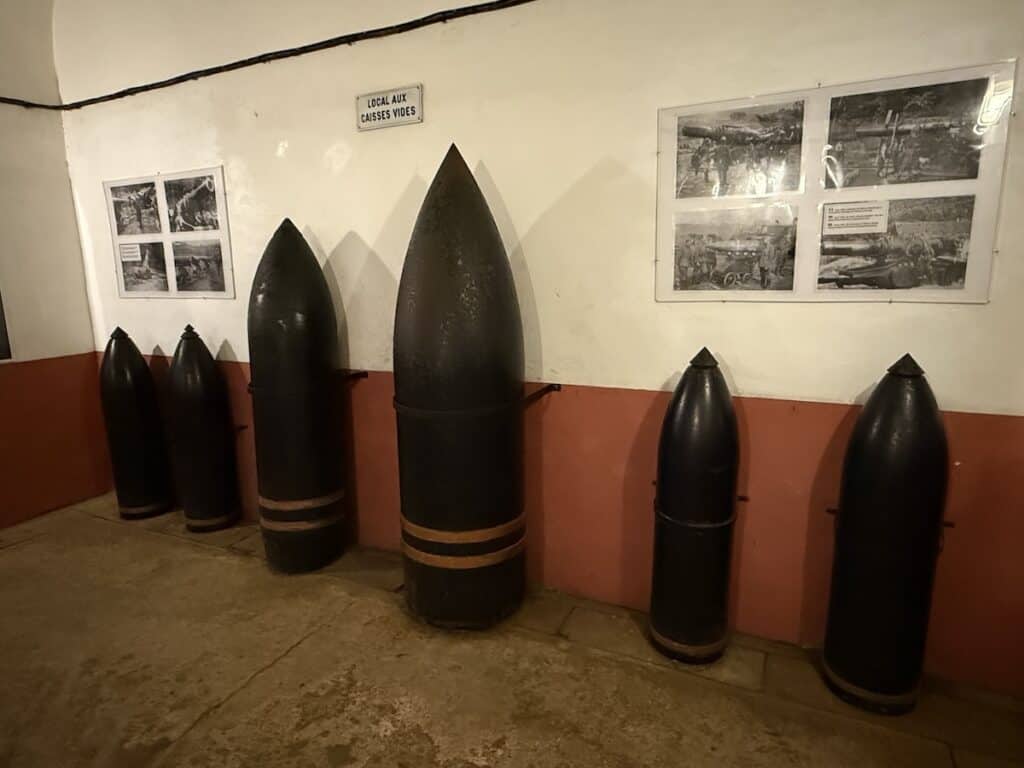
Between June 21- 23, the Germans brought in and fired fifty rounds from 420mm mortars, among the largest siege guns in existence at the time. According to the fort’s own historical signage, those massive shells barely damaged the bunker. Across the full bombardment, Fort de Schoenenbourg absorbed roughly 30 shells at 280mm, 50 at 355mm and 420mm, 160 aerial bombs, and 2,000 shells at 105mm and 155mm – a staggering amount of firepower. When it was over, the fort remained almost intact.
The Surrender of Fort de Schoenenbourg
The armistice between France and Germany took effect on June 25, 1940. Schoenenbourg kept fighting anyway. Commandant Martial Reynier held the fort for roughly another week past the armistice date, refusing to surrender a position that had never actually been beaten. Finally, the French High Command gave him direct orders to stand down. He finally complied, and surrendered on July 1, 1940.
If that sounds familiar, it’s because it’s almost exactly what happened seventy years earlier at the Citadelle de Bitche, less than an hour away. A fort that held its ground through everything the enemy threw at it, only to be handed over because the war around it had already been decided elsewhere. Reynier’s name lives on at the fort today: the access road is called Route du Commandant Martial Reynier in tribute to his courage and resilience.
The fort was restored starting in the 1980s by a team of volunteers and is now listed as a ‘Monument Historique.’ In 2022, it was voted the second favorite monument in France in a national television poll in the popular public-vote TV show Le Monument Préféré des Français, which tells you how impressive and emotional this place is.
Visiting Fort de Schoenenbourg Today
I went in with almost no expectations. This was a “let’s see what it’s like” outing on a day with no other plans. I honestly left overwhelmed by the absolute scale of it, and moved by its story.
Getting In to the Fort de Schoenenbourg
Parking is free, and there’s a detached restroom building outside, before you even reach the entrance. The above-ground entrance itself is small, almost unassuming, which makes the scale of what’s underneath it even more disorienting. You’ll get your steps in. An elevator takes you down into the tunnels, and there are also stairs.
Inside the Tunnels
The whole site feels frozen in the mid-20th century or like you’re walking on to the set of a war movie – gears, dials, knobs, machinery and furniture, signs and hardware – everything perfectly preserved. Numbered signage guides you through in order, so there’s no risk of missing a section. All the informational signs are in French, German, and English, so no translation app needed. You’ll see old train tracks running through the tunnels everywhere, the same ones once used to move men and supplies across the vast and sprawling underground network.
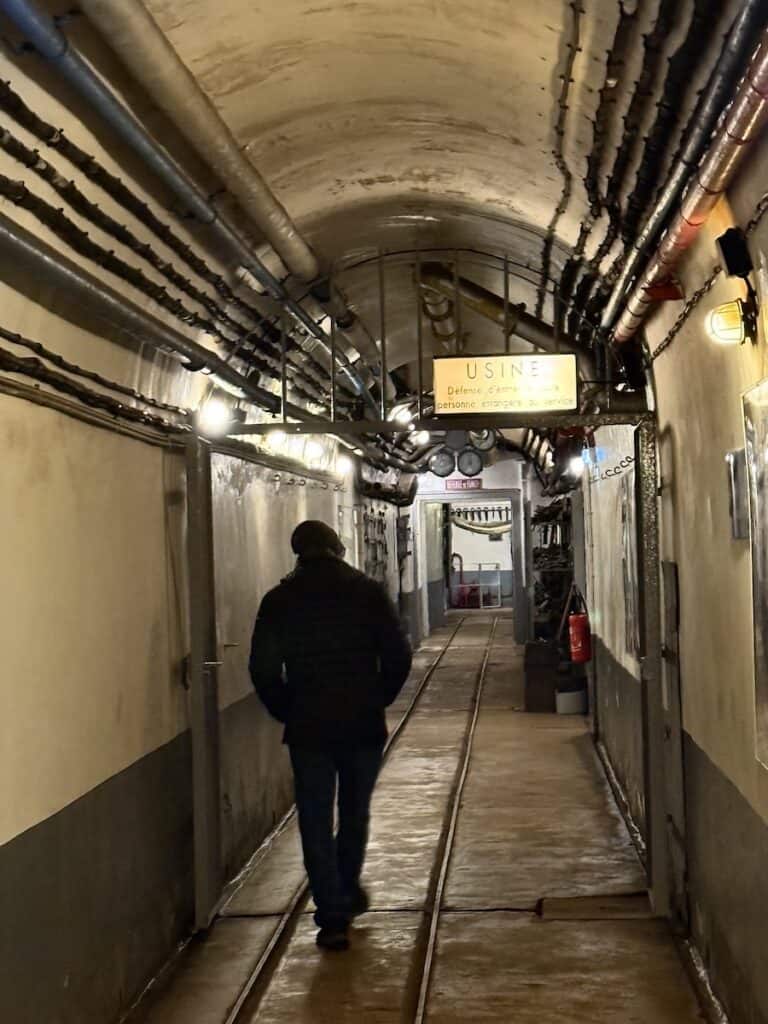
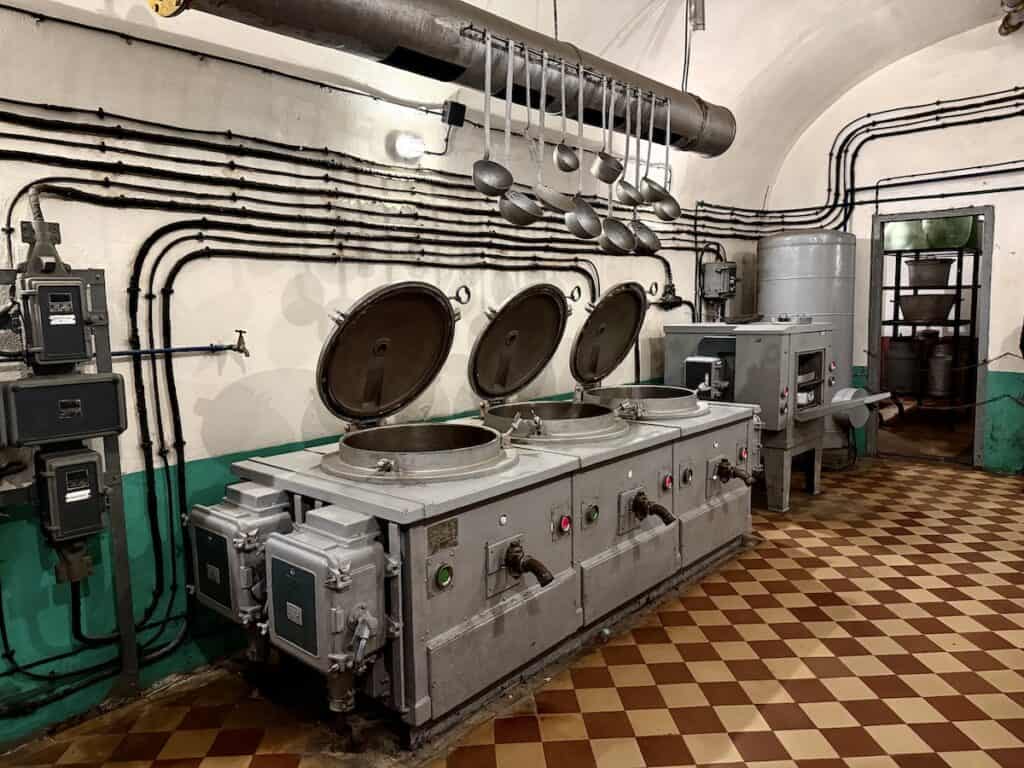
Despite being 100 feet underground, it never feels cramped. The tunnels are wide, tall, and well-lit, just without windows. The site is perfectly flat and fully navigable by wheelchair once you’re down, with wheelchairs available on-site for public use.
You pass through rooms left as though everyone just stepped out: desks, telephones, sleeping quarters, the kitchen, the map room, supply rooms, an electric power plant, and the infirmary. Soldiers’ original paintings, drawings, and doodles are preserved right on the walls, including a few of Mickey Mouse. There’s a seating area partway through where you can watch a short black-and-white film showing the tunnel trains in operation, and near the end, you can look up into one of the actual cannon turrets.
The artifact collections along the route are extensive, and I appreciated that the fort gathered hardware and signage from tunnel sections that aren’t open to the public and assembled them on display together, so nothing is lost just because it’s not part of the walking route. There are also massive artillery shells on display near the cannon, which give you a real sense of scale for what this place absorbed like it was nothing.
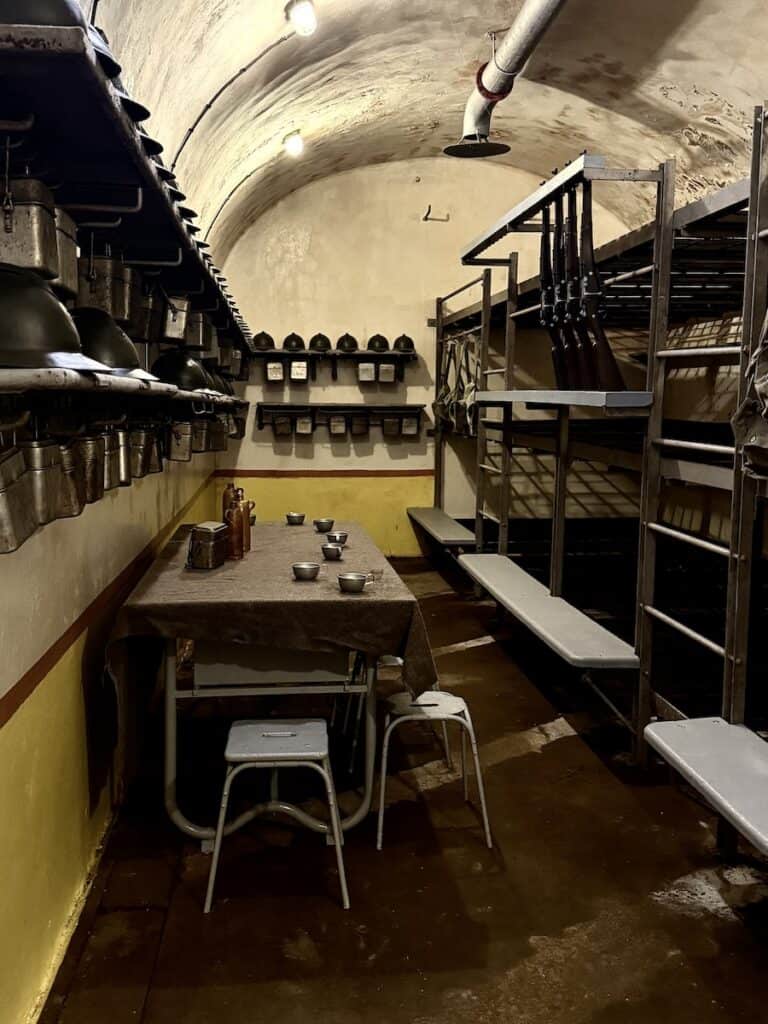
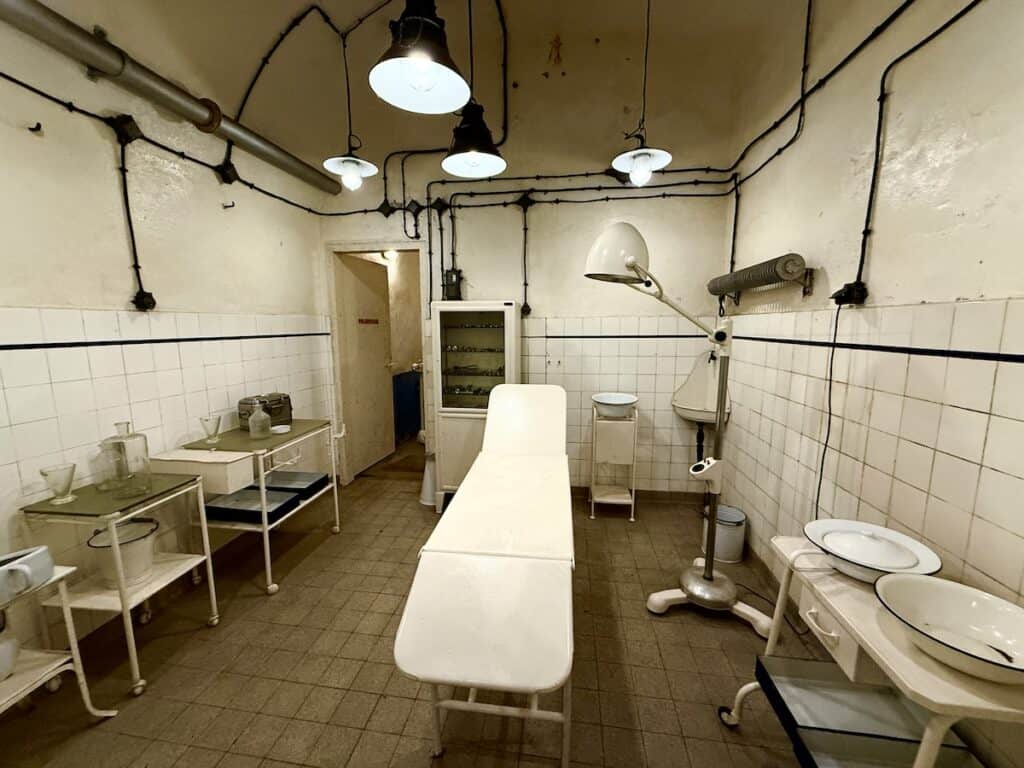
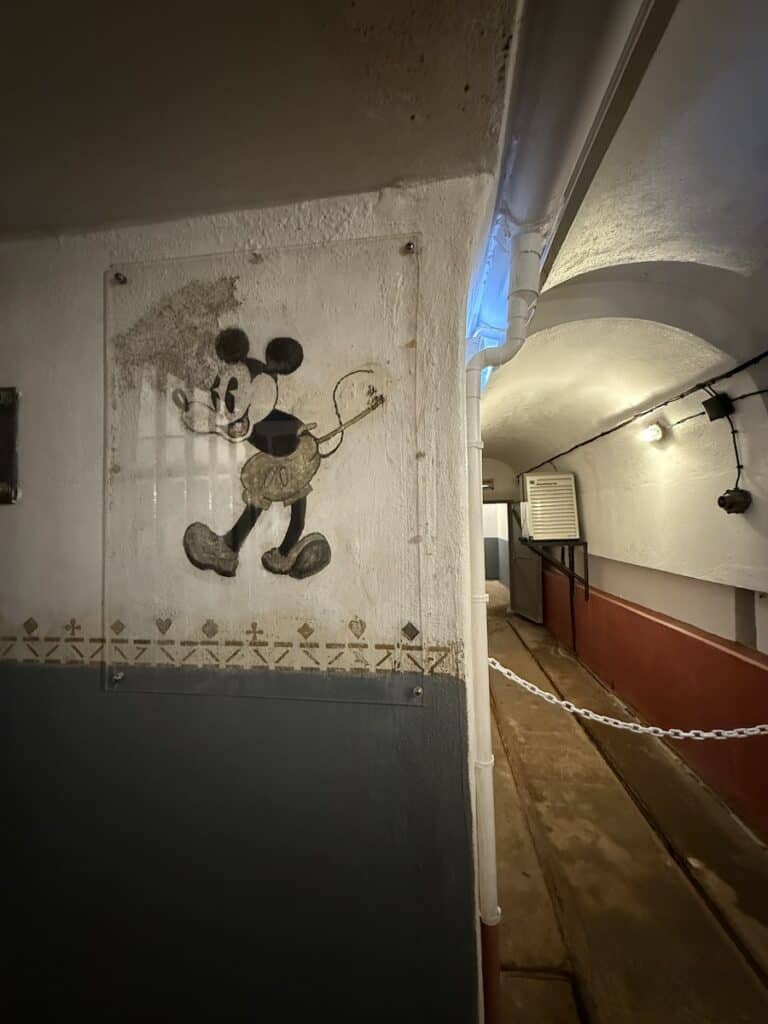
Walking through, it’s hard not to think about what daily life actually looked like here: sleeping in narrow bunks or hammocks, never seeing daylight, keeping photographs of the outside world on the wall just to have something to look at, and being underground when the shelling was at its worst.
A visit to Fort de Schoenenbourg will definitely leave you impressed, and stay with you. It’s a truly unique site, frozen in time, with a tremendously compelling back story, and a lot to teach to anyone interested in history.
Pair It With
- Citadelle de Bitche in France for another version of this exact story, but from the Franco-Prussian War, that unfolded about 70 years earlier.
- The Westwall Museum in Pirmasens, which tells the German side of this same fortification standoff, the two sides never actually facing off directly at Schoenenbourg, but the same era of border-defense engineering.
- Wissembourg, France, a beautiful half-timbered village right on the German border, for lunch, a walk along the canals, and a visit to the old church. I paired the two in a single day and the contrast between an underground fortress and a postcard Alsatian village made for one of my most vivid, and favorite day trips in the region.
Planning Your Visit to Fort de Schoenenbourg
📍Address: Route du Commandant Martial Reynier, 67250 Hunspach, France
🎫 Tickets (self-guided):
- Adults: 10€
- Children and students (6–18): 5€
- Children under 6: free
⌚️ Tour duration: About 2 hours
📱 There is no cell reception in the tunnels
🌡️ Underground temperature: A constant 13°C (55°F), so bring a warm layer and good walking shoes. And yes, this is a great stop on a hot summer day!
🇫🇷🇩🇪🇺🇸 Languages: French, German, English signage throughout
Parking: Free
🕓 Hours: These vary seasonally and shift year to year, so confirm current dates and opening hours on the official Fort de Schoenenbourg site before you go. 2006 hours are April 1 through November 11, open daily 2pm to 6pm (last entry 4pm), with extended hours in July and August of 9:30am to 6pm (last entry 4pm). From mid-November through the end of March, it’s weekends only, 2pm to 6pm, with daily openings during Christmas school holidays.
🚗 Drive time from Kaiserslautern: About 1 hour 30 minutes.
FAQ
Is Fort de Schoenenbourg worth visiting?
Yes, and if you only have time for one Maginot Line fort in this region, this is the one to pick. It’s the most heavily bombarded fort on the entire line, the largest visitable fort in Alsace, and the preservation work makes the underground network feel genuinely lived-in rather than like a static museum.
How long does the visit take?
Budget 2-2.5 hours for the self-guided route at a comfortable pace. Give yourself extra time if you want to watch the full black-and-white film in the seating area, work through every artifact case and display along the way.
Is Fort de Schoenenbourg wheelchair accessible?
Once you’re down in the tunnels, yes. The galleries are flat and easy to navigate, and wheelchairs are available on-site.
Are dogs permitted at Fort de Schoenenbourg?
No, dogs are not allowed in the bunker.
Was Fort de Schoenenbourg ever captured?
No, and that’s what makes a visit here different from touring a site that was rebuilt after being taken by force. Because the fort was never breached, most of what you’re walking through, the original machinery, the sleeping quarters, the soldiers’ own doodles still on the walls, is preserved rather than recreated. You’re looking at the real thing, not a reconstruction of what was lost.
How far is it from Kaiserslautern, and can I combine it with other stops?
About 1 hour 30 minutes by car, well within day-trip range. If you want to build a bigger day out of it, Wissembourg is right next door for lunch and a walk through its incredible old town.
Related Posts You’ll Enjoy:
The Westwall Museum in Pirmasens: A Different Kind of WWII Site
The Citadelle de Bitche: The Fortress That Wouldn’t Fall
29 Best Day Trips from Kaiserslautern: Europe’s Most Underrated Backyard
