
If you’ve spent any time visiting WWII sites in Europe, you’ve probably seen exhibits from the Allied side more often than the German one. The Westwall Museum in Pirmasens flips that. This bunker was built by the Germans, used by the Germans, and eventually taken by American forces near the end of the war. What’s inside reflects all three chapters.
What the Westwall Actually Was
The Westwall, known to English speakers as the Siegfried Line, was Germany’s answer to the French Maginot Line: thousands of bunkers, tunnels, and anti-tank barriers, but built to stop the Allied advancement from the west.
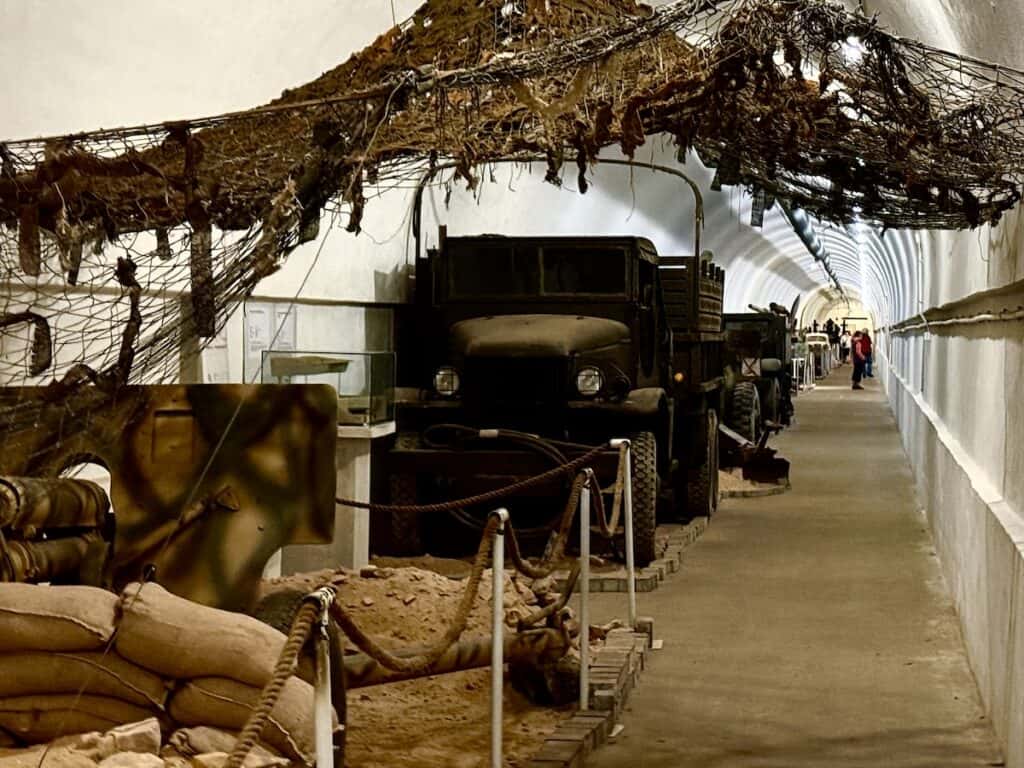
The Gerstfeldhöhe fortification at Pirmasens was one piece of that expansive and elaborate system. By June 1940, around 3 million Reichsmarks had gone into the site, roughly 90 to 100 million Deutschmarks in later-era value. The lower supply/service level runs about 1 kilometer through the red sandstone that is everywhere in this region, only around a third of which is inside the mountain, and another 4.5 kilometers were driven forward on the upper fighting level. In total, workers dug out about 65,000 cubic meters of sandstone to build it. One placard at the museum notes, as an unverified claim, that Russian prisoners of war were used in 1944 to help develop the tunnel system, with camps reportedly nearby.
Operation Northwind and the Site’s Role in the War
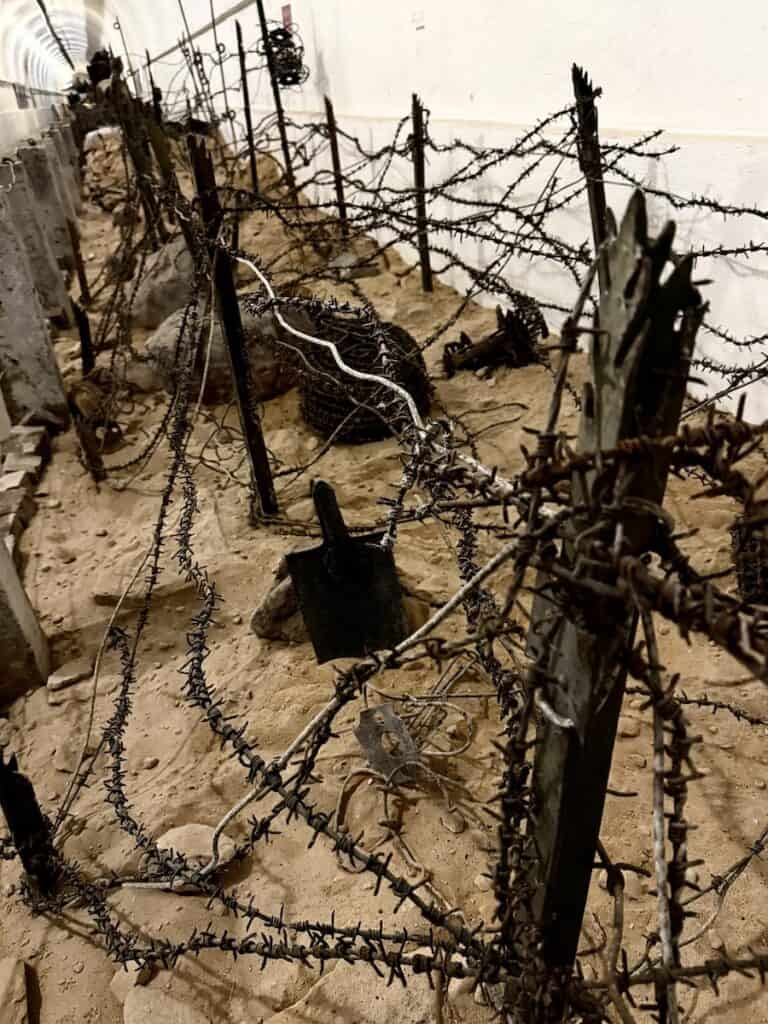
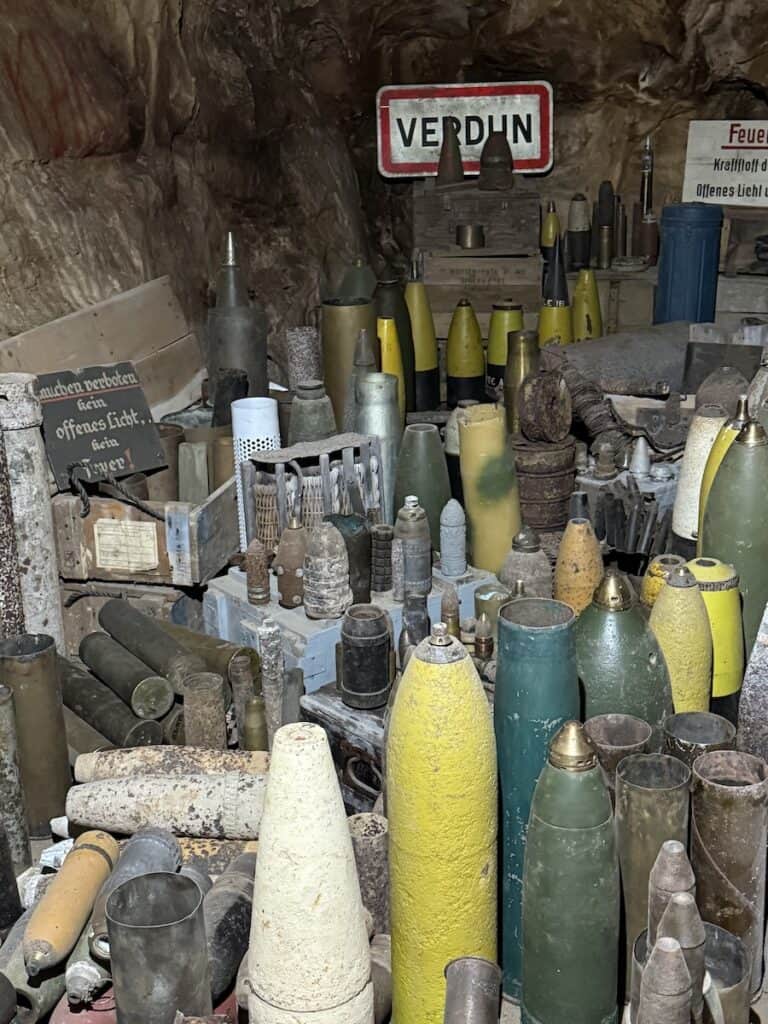
Part of what makes Gerstfeldhöhe’s history different from a typical Westwall bunker is its connection to Operation Northwind (Nordwind), Hitler’s January 1945 offensive aimed at retaking Allied-occupied sections of the Westwall and the Maginot Line in Alsace and Lorraine. The main fighting took place between January 8 and 20, 1945, around Haguenau and Wissembourg in France, and the goal was to relieve pressure on German forces further north during the Battle of the Bulge, after Patton had pulled Third Army units south to break the siege of Bastogne.
As we know from history, things did not go the Germans’ way, and American forces reached Pirmasens in late March of 1945.
That capture is why American vehicles and tanks still sit in the area around the bunker today, left behind after the fighting moved on.
After the War
The site’s story didn’t end in 1945. Parts of the tunnel system were destroyed under French supervision after the war, and by the early 1950s the Americans were examining the installation for possible military reuse. The Gehlen Firm, the original builder, was brought back to rebuild the sections that had been partly destroyed.
Once it was clear the fighting level couldn’t be restored without enormous cost, the window tunnels were sealed and some sections closed off. The lower supply level was fitted with a concrete floor, electrical wiring, a ventilation system, and fixed gates. Completed in 1952, the facility served as a depot for tank and aircraft parts, was renovated further over the years, and was used to store food rations.
Visiting the Westwall Museum
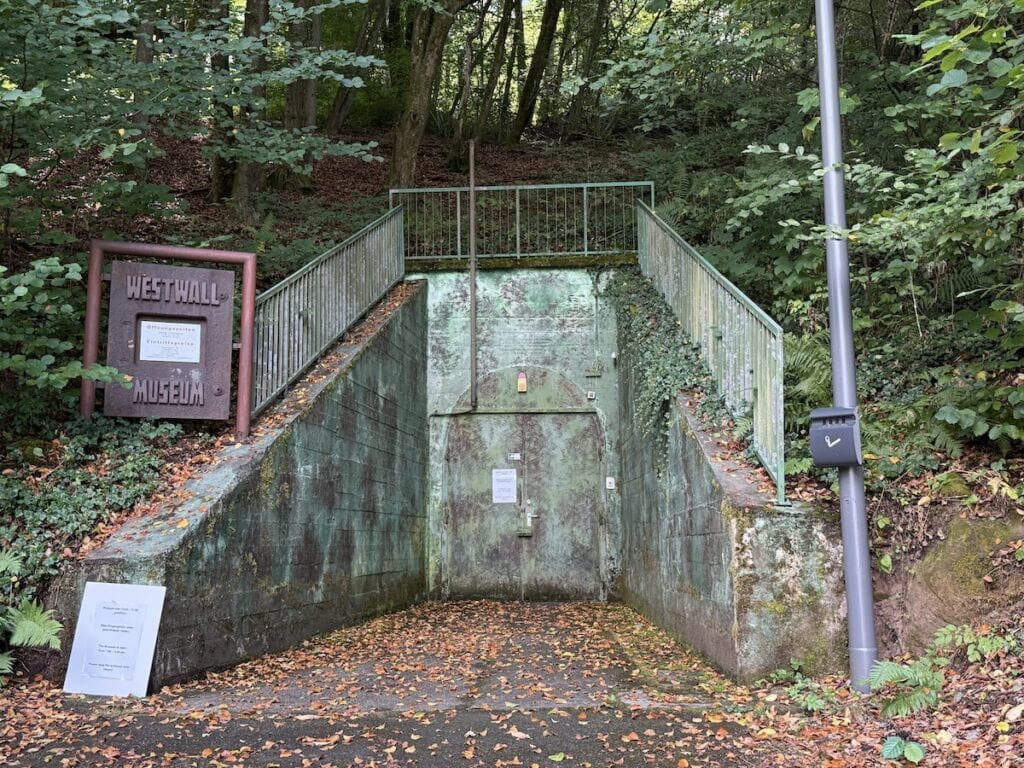
Plan on spending an hour or more inside the bunker, and be sure to dress properly. The tunnels remain a constant 46 degrees year-round, so bring a sweater or jacket even when it’s hot, and wear closed shoes and socks so your feet don’t get cold. On a hot day, this is one of the more comfortable places you could spend an afternoon in the Pfalz.
- Location of the Westwall Museum: In der Litzelbach 2, 66955 Pirmasens, Germany
- Hours and Days: Saturdays and Sundays from 1 p.m. to 5 p.m.
- Seasonal Opening: The museum is only open April 1 through October 31
- Admission: €10 for adults, €6 for school-age children
- Parking: Free, in the lot right outside the entrance
- Dogs: Allowed on leash
📲 There’s no cell signal inside the tunnels, so if you’re planning to use a translation app for the German signage, be sure to actually download the language before you go in so it will operate regardless of signal. Signs are frequently posted in English and sometimes French, but not consistently, so do this ahead of time so you can appreciate the full context of what you’re seeing.
What’s Actually Inside the Westwall Museum
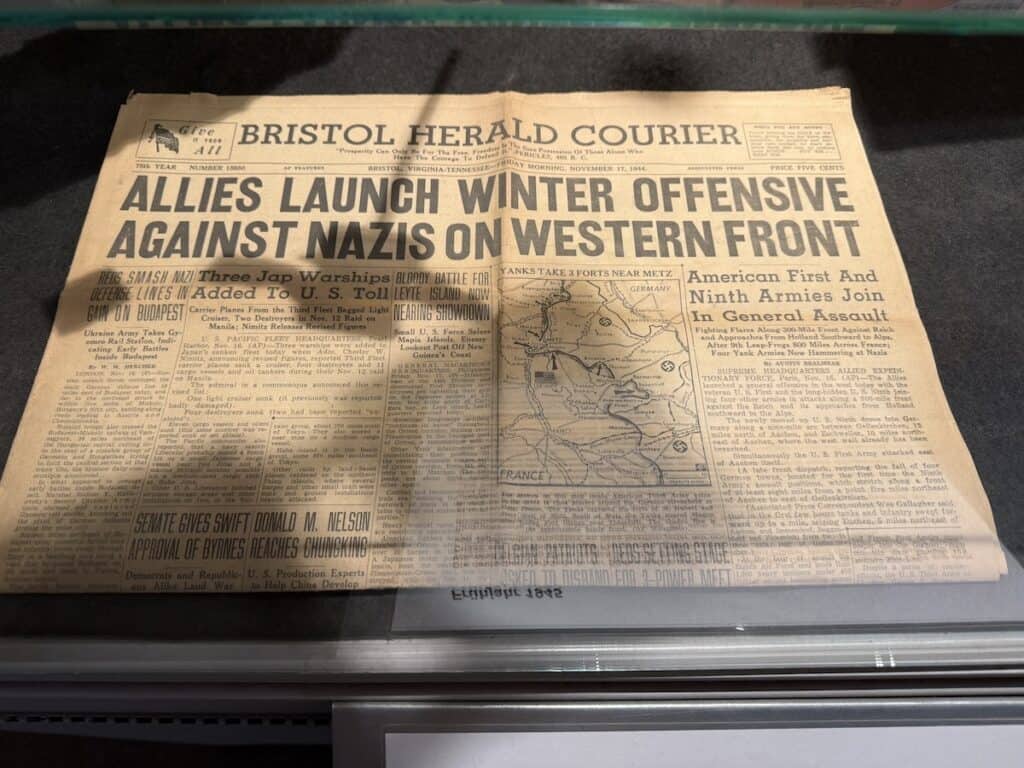
You’ll enter through a metal door right into the hillside. The ticket counter is on your left and then you’ll continue down a long series of tunnels. The collection leans heavily toward German militaria: uniforms, work books, and day-to-day items carried by German soldiers, more of it in one place than I’d seen at any other WWII site.
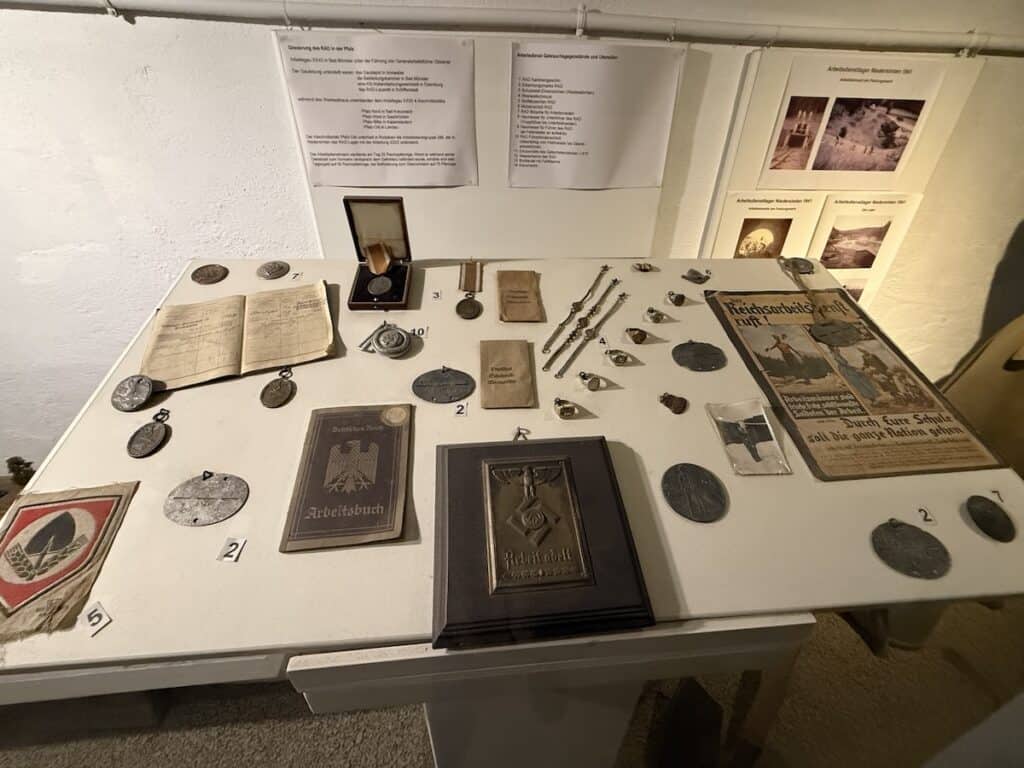
There’s also a section on the Reichsarbeitsdienst, the Reich Labor Service, which became mandatory for young German men ages 18 to 25 starting in 1935, working under the motto “with spades and picks” on projects like draining marshes, farmland cultivation, and building the Westwall itself. A women’s branch, the RADwJ, became mandatory for women ages 18 to 21 shortly after the war began in September 1939. Members were assigned to farms, childcare, and what were called National Socialist Relief camps, serving 26-week terms that could be followed by another six months of War Relief Service.
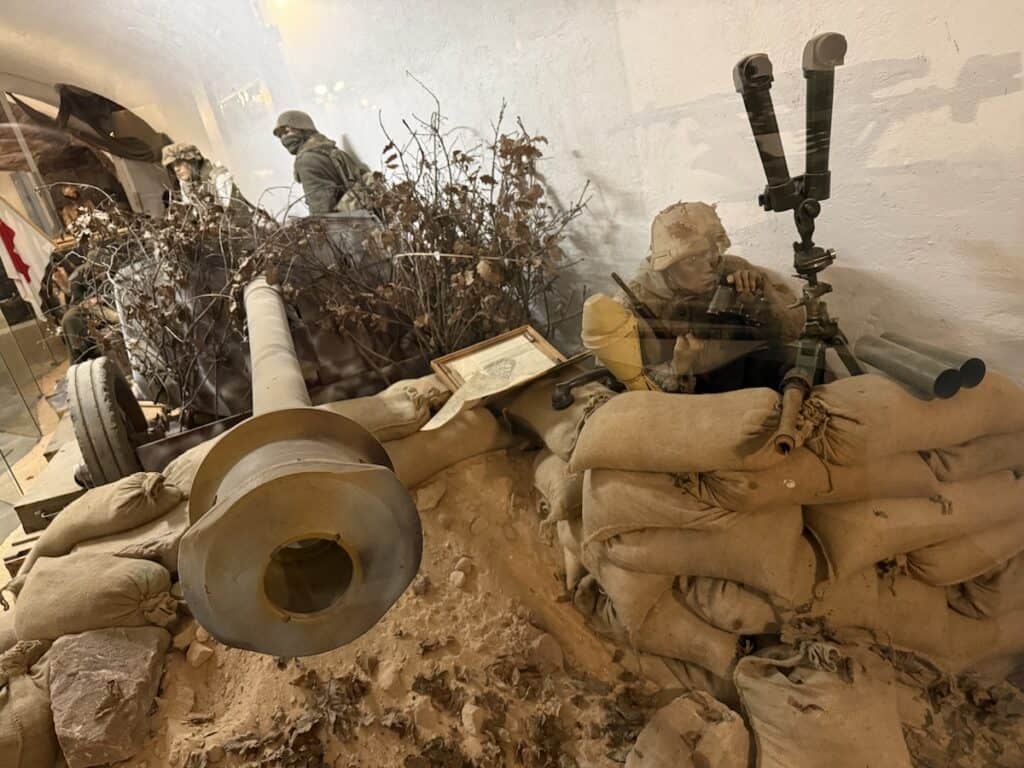
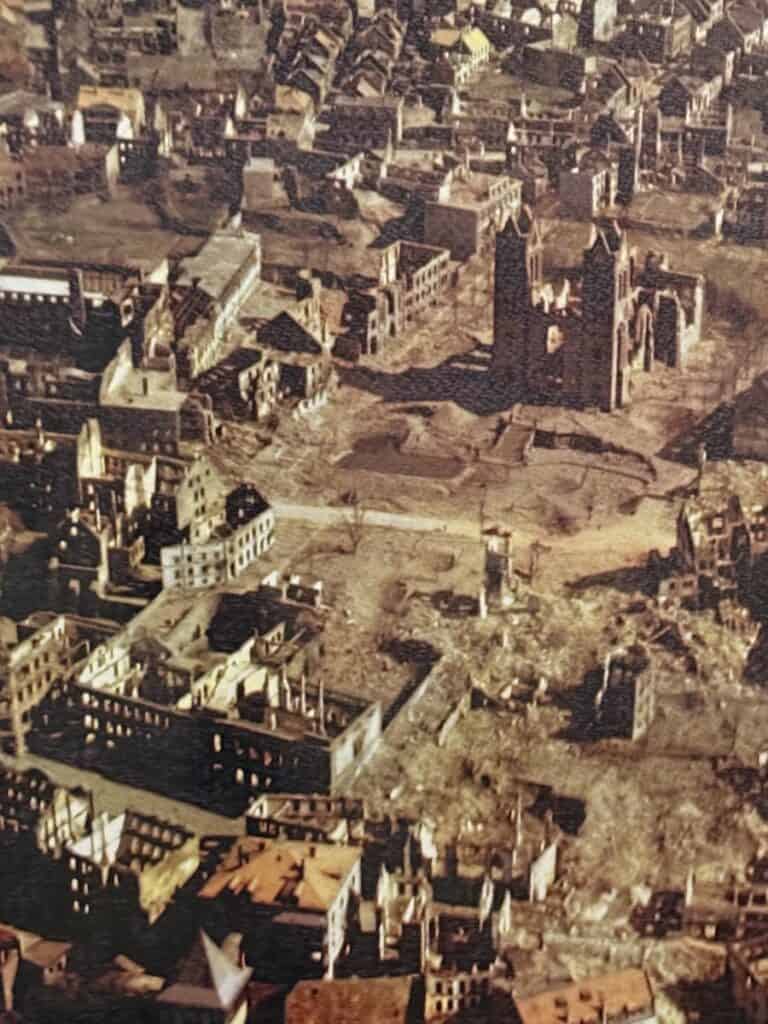
There are also photographs of Pirmasens before and after the bombing, salvaged machinery, and weapons ranging from small arms up to heavy anti-aircraft artillery. Several sections use mannequins to recreate specific scenes, each explained on nearby signage, and there are smaller dioramas throughout that help make sense of the tunnel layout and the timeline of events.
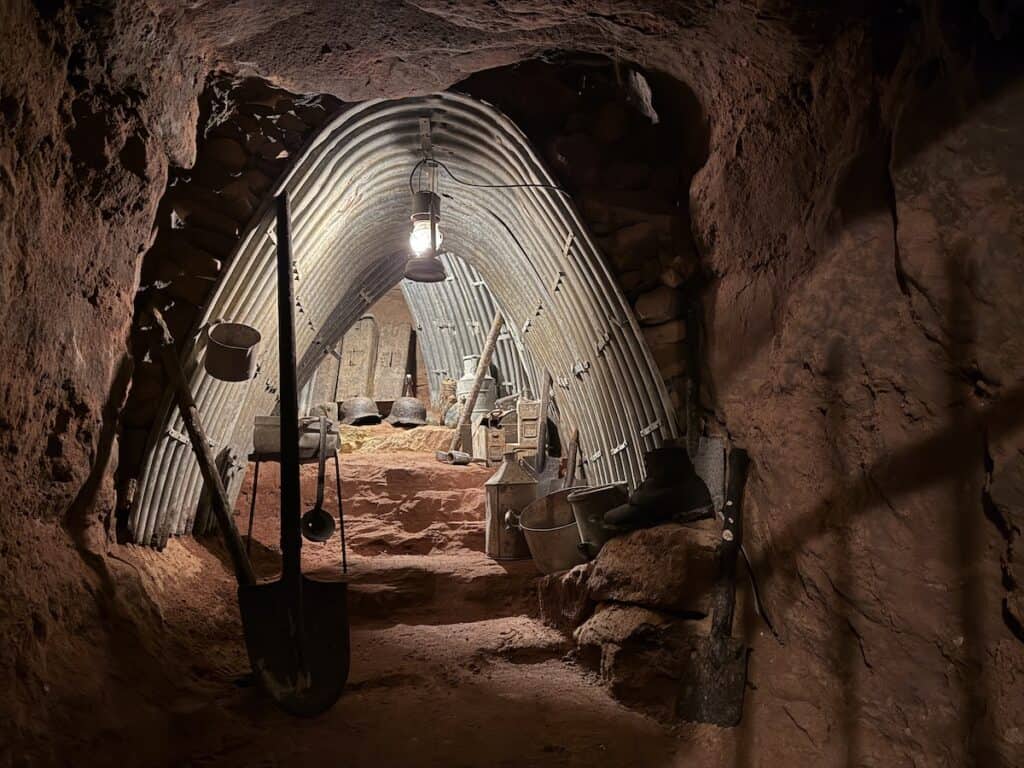
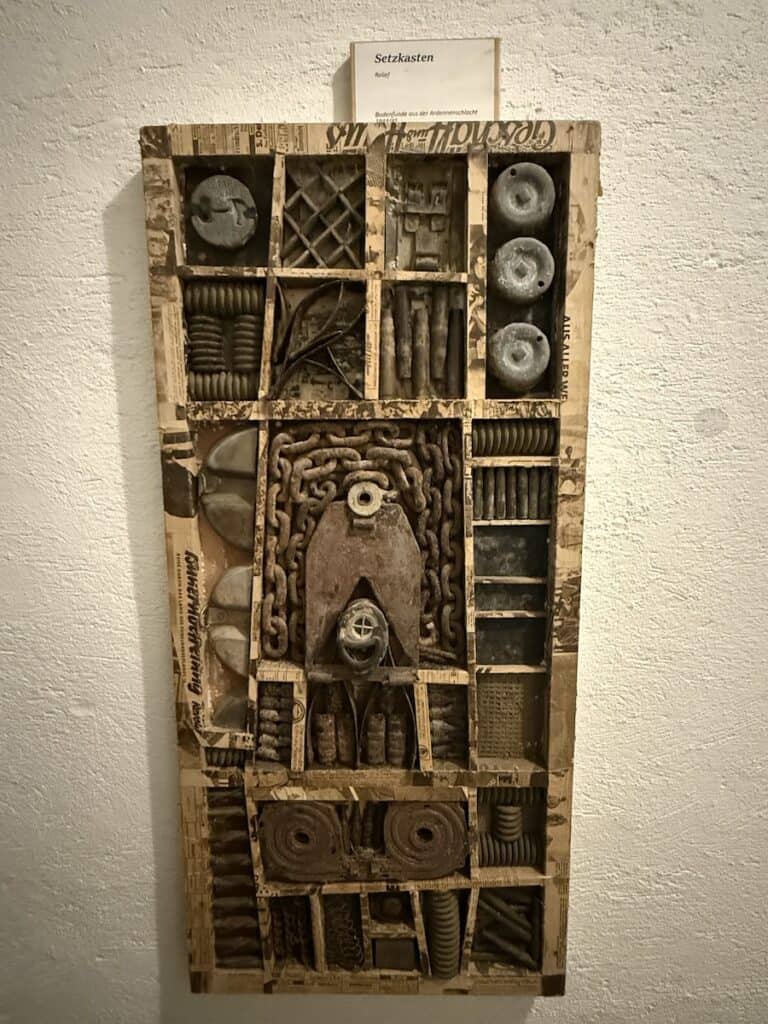
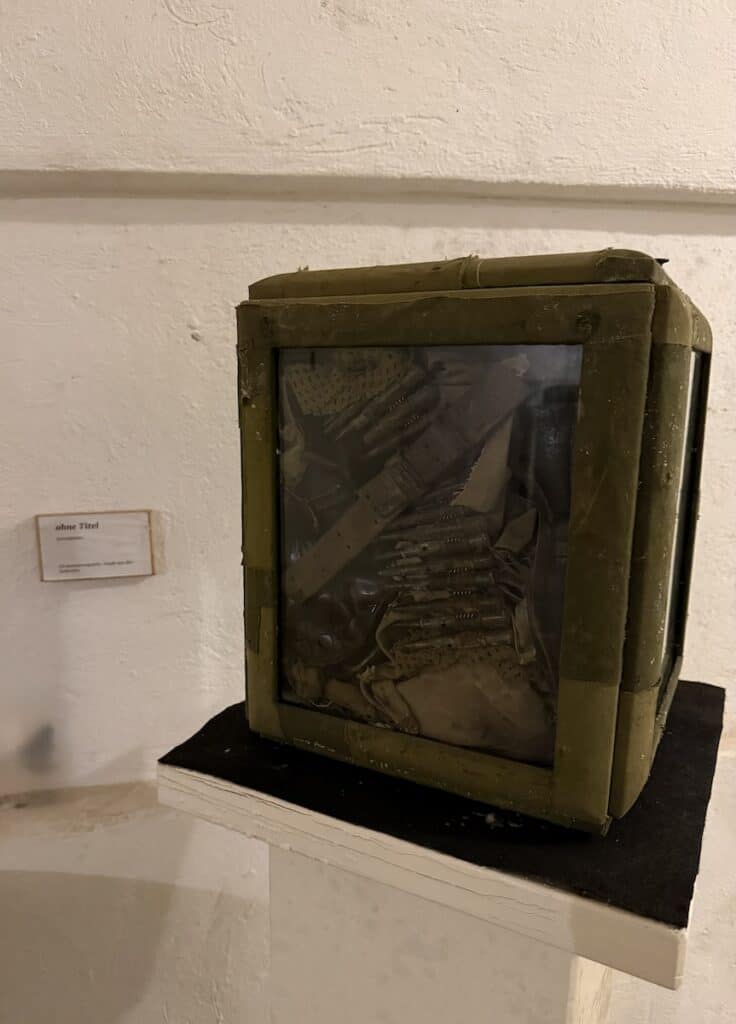
There are also several pieces of artwork on display created by local artisans using artifacts found in the surrounding forest. It’s a strange kind of afterlife for objects that started out as tools of war, but somehow I found them to be eerily beautiful.
Is It Worth the Trip?
Yes. The Westwall Museum is a short manageable visit that’s easy to do in an afternoon unlike some of the larger battlefield sites in the region, and the German-focused perspective makes it a useful complement if you’ve already seen more Allied-centric museums. Pair it with a trip into Pirmasens’ center for lunch at Kuchem’s Brauhaus overlooking the fountain and the square, and a stop at the city museum in the old town hall for a full day trip.
Guided tours of the Westwall Museum are available by appointment only. Check with the museum to arrange one.
Related Posts:
Fort de Schoenenbourg: The Maginot Line Fort That Never Broke
The Citadelle de Bitche: The Fortress That Wouldn’t Fall
General Patton’s Grave in Luxembourg: The Story Behind His Burial
Best Day Trips from Kaiserslautern: Europe’s Most Underrated Backyard
