
The first time I tried to park at Heidelberg Castle, I trusted Google Maps a little too much and ended up driving straight through the castle gate, into an area where cars are very much not allowed. It was mortifying, and it could have been avoided with about thirty seconds of the right information. Heidelberg Castle parking isn’t complicated once you know the layout, but nobody hands you that layout ahead of time. This post has your back.
I’ve been back enough times now that I finally understand how the whole visit fits together: where to park, how the funicular ties into your ticket, and what to expect once you’re standing in the courtyard trying to figure out where to go. This is everything I wish I’d known the first time, or honestly even the second.
Heidelberg Castle Parking Map
This map shows the castle parking, the Old Town parking, both ends of the funicular (Bergbahn), and the train station.
Heidelberg Castle Parking Options
Option 1: Parking at the Top of the Hill
For this option, you’ll have to drive up a pretty twisty, turny, narrow road. It never feels dangerous though, because everyone else has to do it too. People are on high alert, driving slowly, and making accommodations for each other. Take it slow and it’s a piece of cake.
Enter Schloß-Wolfsbrunnenweg 20, 69117 Heidelberg into your GPS to find the correct parking lot. It’s not huge, and in peak summer hours it’s possible the lot will be full, but I’ve been to the castle many times now and have always found a spot.
🚨 Do not type “Heidelberg Castle” into your GPS and follow it to the end. This is how we ended up through the castle gate where cars are not allowed! Don’t be us.
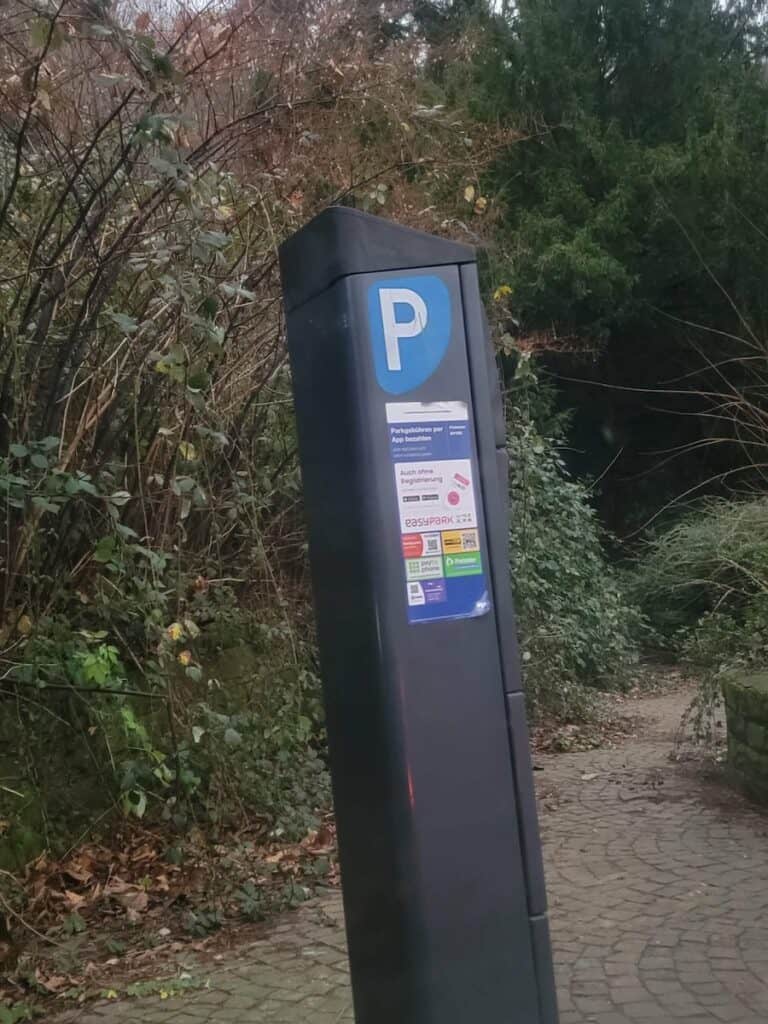
You’ll pay in advance at the meter located in the parking lot. Technically you can pay by credit card, but I have never had luck with this. I always pay with change. The first time, I was emptying the ashtray in my car and looking under the seats for another euro. After that, I always keep a little change purse filled with coins in the car. The rates can change, but the meter will tell you how much time you have accrued. Be sure to give yourself more time than you think you’ll need, especially if you are planning to visit the Old Town after the castle.
Once you’ve parked, you’ll walk a little way back down the hill, and you’ll see a staircase in a break in the stone wall. Take the stairs down and you’ll find yourself right in the castle garden, next to a large fountain. Continue on until you see the ticketing building on the left.
Option 2: Parking in the Old Town
The Q-Park garage near Kornmarkt is a solid, centrally located option in the Old Town where you can pay with a credit card. From there, you can take a short walk to the funicular station and ride up, or walk up to the castle yourself. It’s definitely an uphill walk, but if you don’t have mobility challenges and feel like getting a little exercise, it’s a good option.
Taking the Funicular (Bergbahn)
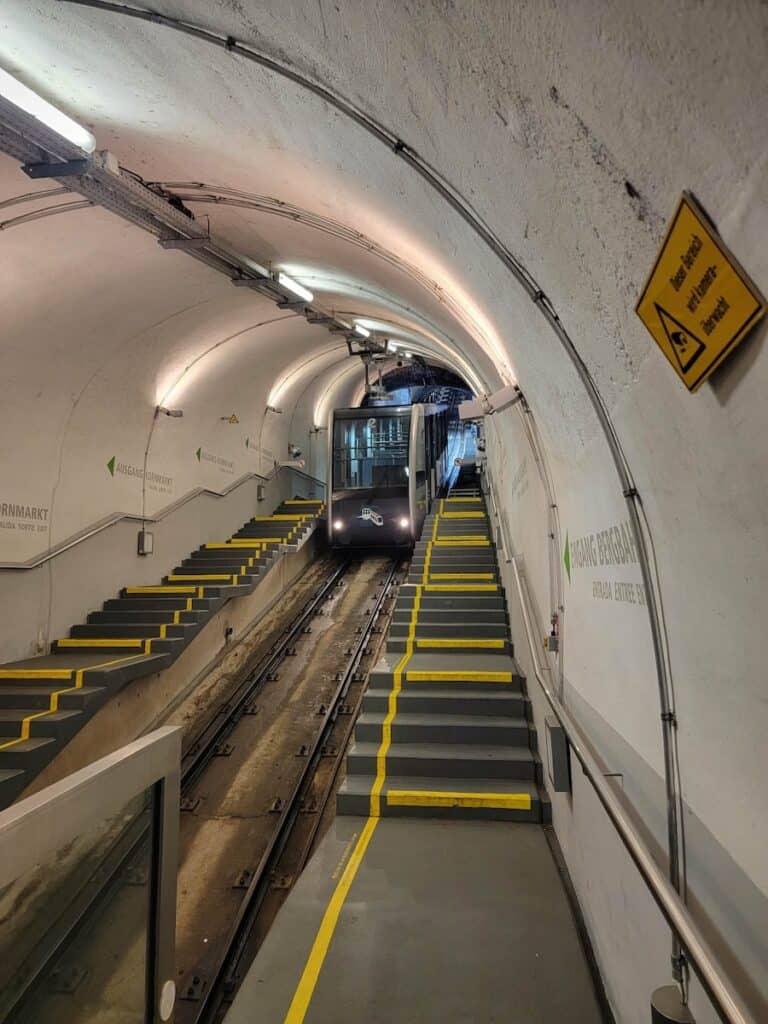
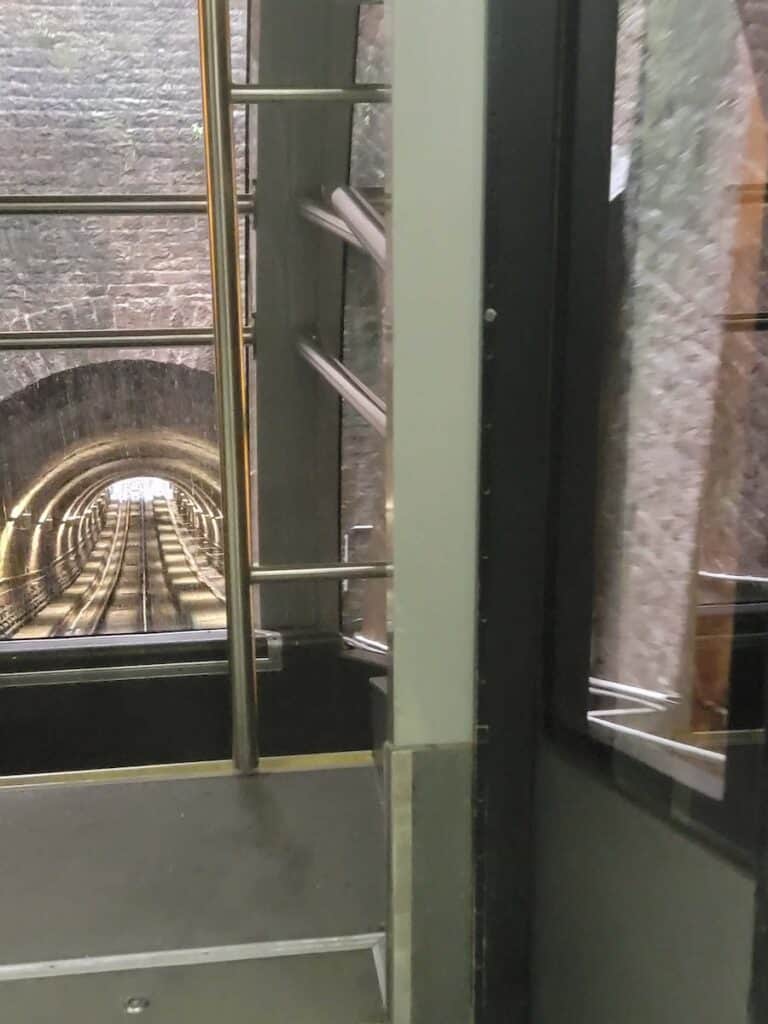
A funicular is a cable railway that pulls train cars up a steep slope using a counterweight system, with one car going up as the other comes down. The Heidelberg funicular, called the Bergbahn, is a fun way to reach the top of the hill if you’ve parked at the bottom, or to head down into the Old Town if you’ve parked at the top.
You can purchase tickets from a machine on the wall or from a person at the booth. If you’re unsure, go with the person. Most everyone speaks enough English to help you out if your German isn’t great.
About 10 people fit in each car of the funicular, and you’ll have the most interesting ride if you grab a seat in the last car, looking out the back window.
If you are going to the castle you’ll want tickets to the “Heidelberg Schloss” stop.
One thing to know: When you buy a castle ticket, it will already include a round-trip funicular ride. So if you park up at the castle and then go down to the Old Town and back up to your car, you’re covered. But if you’re purchasing the funicular ticket up to the castle from the Old Town first, you’ll have to buy a one-way funicular ticket up, and then you can use the down ticket that’s included in your castle ticket to return.
Check the current hours and schedule of the funicular.
Arriving by Train
If you’re coming into Heidelberg by train, you’ll arrive at Heidelberg Hauptbahnhof, the city’s main station. One thing worth knowing: despite the name, the Hauptbahnhof sits on the western edge of town, not near the castle or Old Town, so you can’t walk there easily.
From the station, take bus line 33 or bus line 20 to the stop Bergbahn (also signed as Rathaus/Bergbahn), both of which depart just outside the station, on the far side of the Tourist Information office. The ride puts you right at the lower funicular station in Kornmarkt, in the heart of the Old Town. From there, it’s the same funicular ride up to the castle described above.
If you’d rather skip the bus and walk into the Old Town first, the station is roughly a 20 to 25 minute walk to Kornmarkt, doable if you don’t mind the distance and want to see more of the city on the way.
Heidelberg Castle Tickets
You’ll buy your castle tickets in the large brick building on the right as you enter the castle grounds. You can walk around the gardens and the pond and view the outside of the castle without a ticket, but to get inside the courtyard, you need one. And to get inside the castle itself, you have to be part of a tour group. You definitely want to take the tour.
The cost for castle entry is €11 for adults, and reduced cost tickets are €5.50. The additional cost for a tour which is mandatory to get inside the castle itself is €6 for adults, and €3 for reduced price tickets.
Tours are offered in both German and English. Check the official website for current times and languages.
Once you have your two tickets, one for admittance to the courtyard and one for the tour, you’ll hand the admission ticket to the guard at the gate, and your tour ticket to your guide at the meeting point.
The Guided Tour
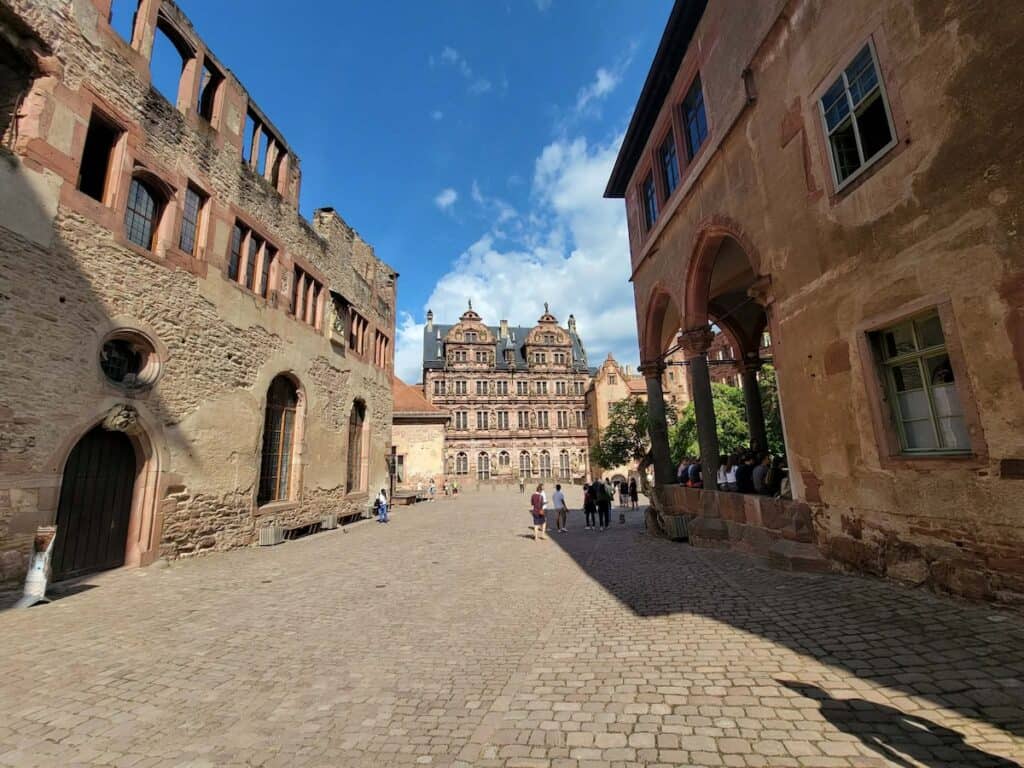
The meeting point for the tour is on the left, in the first large building you come to after entering the courtyard. There’s a sign and a bench right by the meeting point. Tours start right on time. The tour takes about 45 minutes and I’ve had several different tour guides over the years, all of whom knew their stuff. You’ll learn a lot about the castle, the colorful characters who built and shaped its history, and its various uses over the centuries.
Don’t forget to build in another hour to hour and a half to visit all the other attractions in the courtyard.
What to See at Heidelberg Castle
Make sure to allow plenty of time before and after your tour to enjoy everything else the castle has to offer. And make sure your phone is fully charged, because this is genuinely one of the most photogenic castles in Germany.
The German Pharmacy Museum
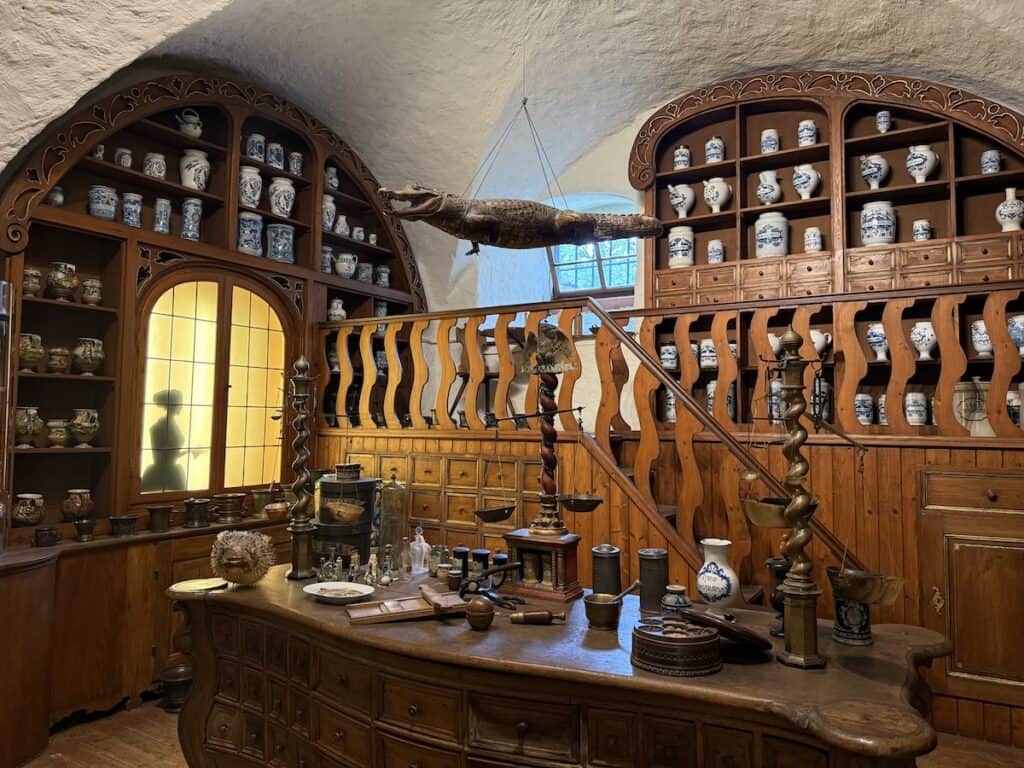
You may be thinking, why would I want to visit a pharmacy museum when I’m here to see a castle? Don’t make that mistake. I like to tell my guests it’s like visiting Hogwarts and stepping into the potions classroom. I’ve written a full post on it – The German Pharmacy Museum: Why You Shouldn’t Skip It – where you can get all the details, but it’s an absolutely delightful little detour you don’t want to miss, and it’s already included in the price of your ticket!
You’ll find the entrance in the far back right corner as you first enter the courtyard. A green light over the door means you can go right in, and a red light means you’ll wait a minute.
The Viewing Terrace
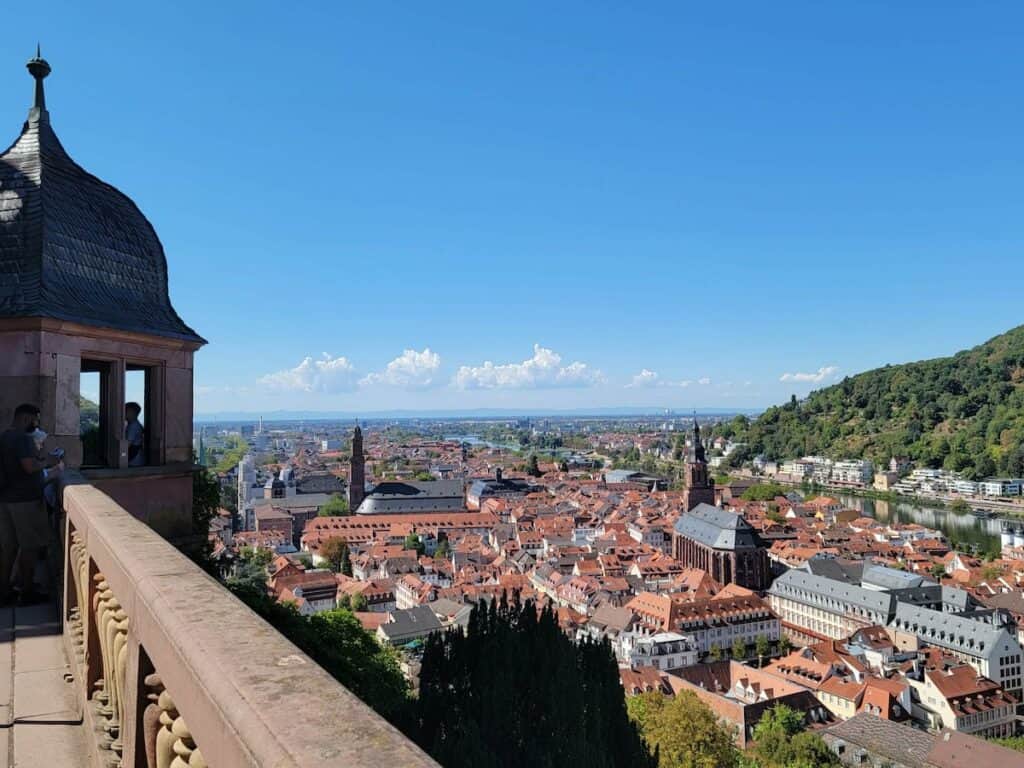
Truly one of the most dramatic and beautiful terraces in Germany, in my opinion. You get a sweeping view of the Rhine River, and you can see the famous Philosophers’ Walk across the river, where Goethe and Schiller, among others, strolled and pondered life’s big questions. There are two little gazebos that make for prime photo ops, a series of carved lions each with a different expression, some of my favorite art in the entire castle, and views over the red roofs of the Old Town below including the church, the Kornmarkt, and the old bridge that look like drone shots.
The Great Barrel
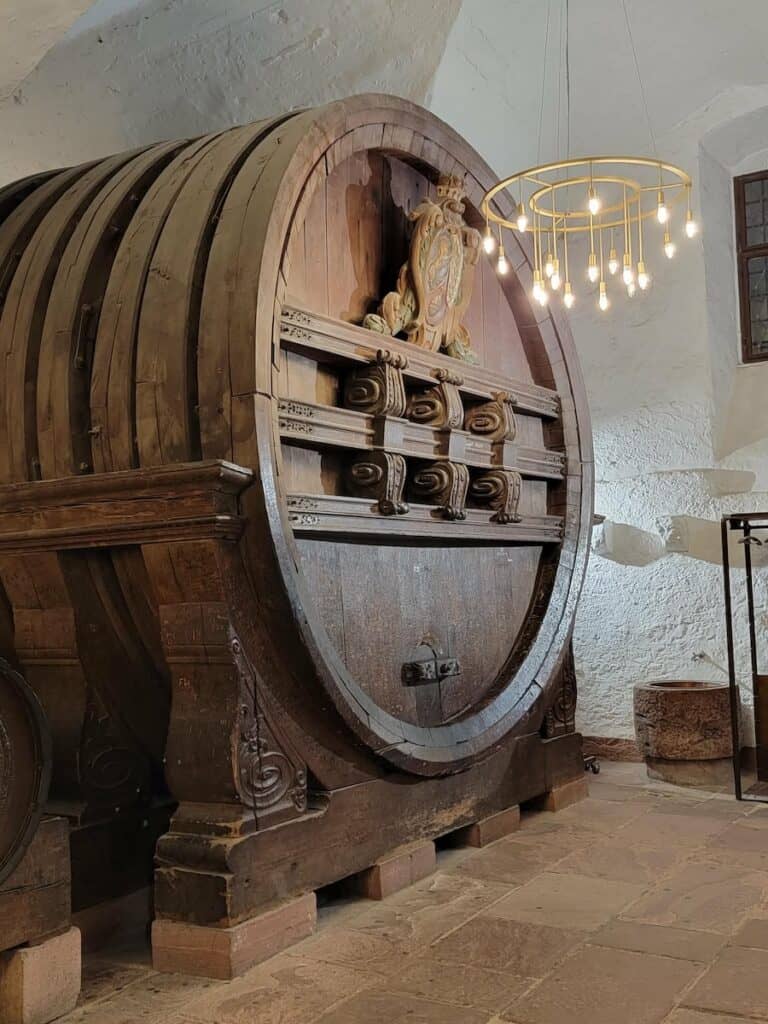
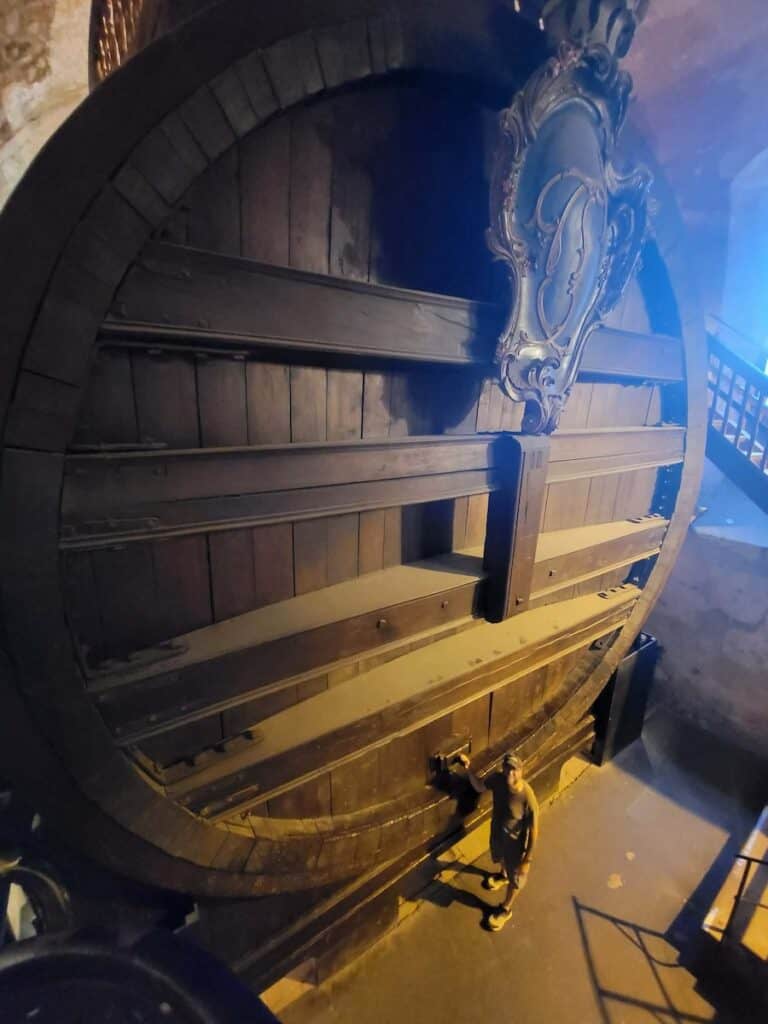
One of the biggest novelty draws at Heidelberg Castle is the presence of the largest wine barrel in the world, which holds up to 219,000 liters of wine (its capacity was originally 221,726 liters when it was built in 1751, but the wood has dried and shrunk slightly over time). It’s only been filled a handful of times in its history, not just once, largely because the massive wooden barrel had persistent leakage issues. Still, it’s a must-see at the castle. You’ll access it by walking down a ramp at the back of the courtyard.
Do not be fooled. The first giant wine barrel you see when you walk in is NOT the giant wine barrel. I’ve watched so many people pose next to it, only to discover that around the corner is the real Great Barrel, so impossibly huge it makes the first one look like a little beer keg by comparison.
You can climb the stairs and walk around the barrel from the top, where there’s a small platform. But if you have mobility challenges or just don’t feel like the stairs, you aren’t missing much. It gives you a sense of scale, but the best photo op is from the bottom.
You can also get a glass of wine at the wine bar near the entrance. How can you have that wine barrel and not serve wine, right?
The Endangered Salamanders
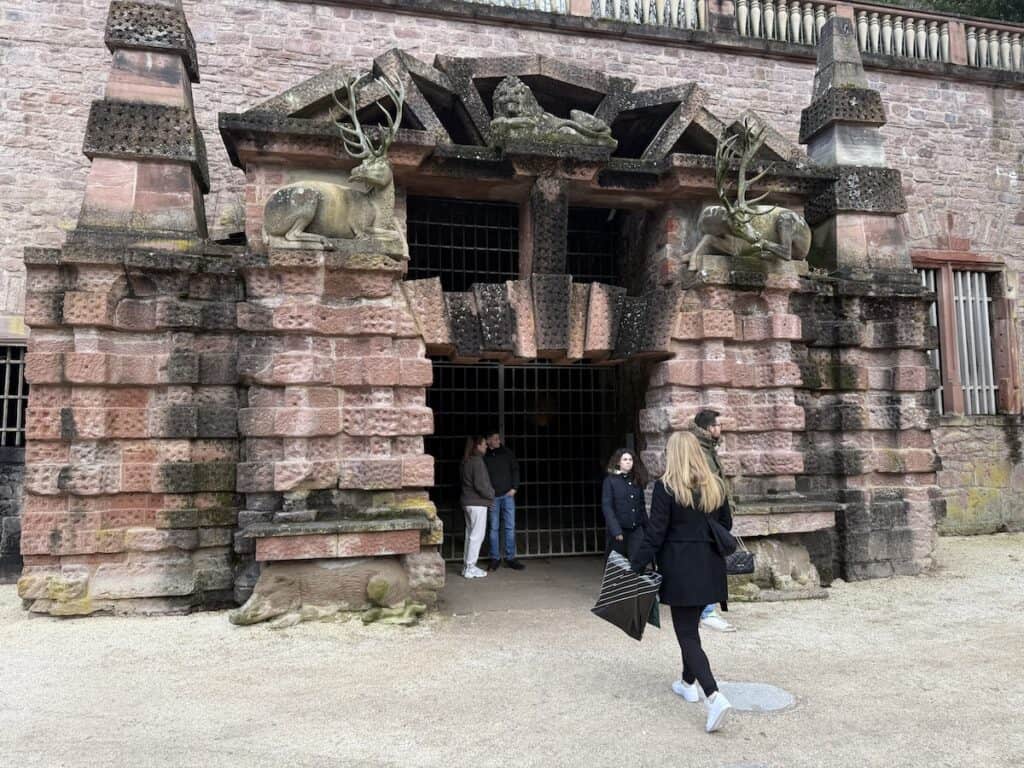
I can’t finish this post without mentioning the endangered salamanders. There’s a gated-off section of the gardens called the Grotto, a man-made cave built to look natural. Next to it is a sign explaining the endangered salamanders, newts, and toads that have made the Grotto home.
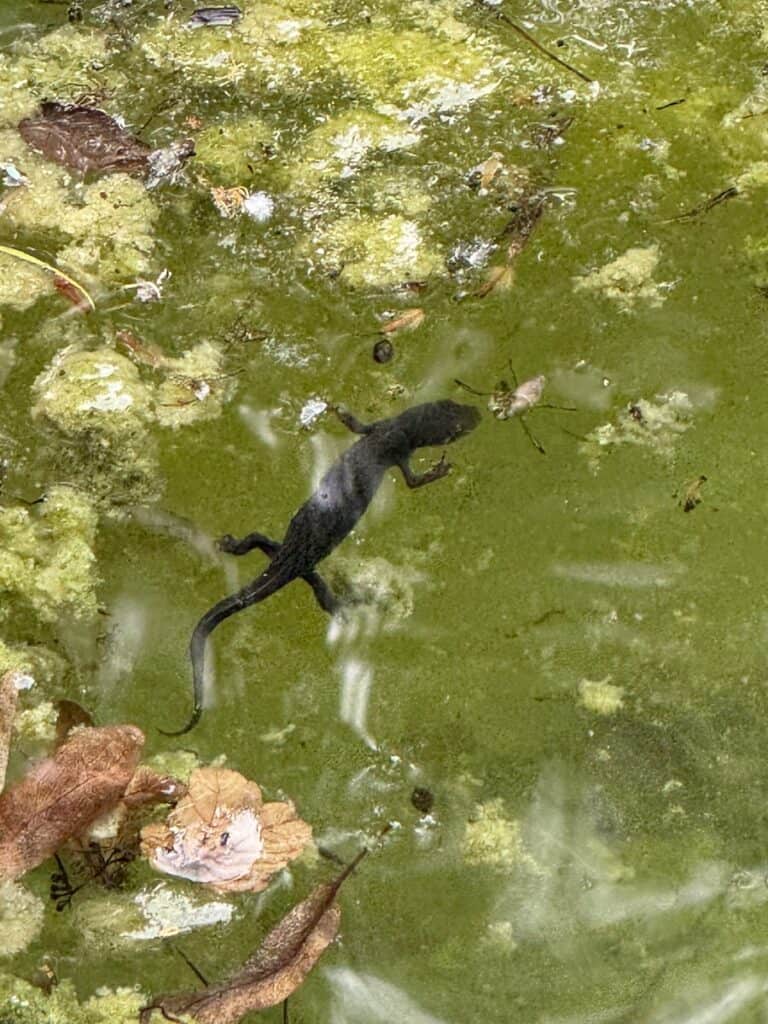
The first five times I visited the castle, I scoured every inch of what I could see in the Grotto with no luck. But the sixth time, my cousin pointed to the fountain pool and said, “Hey, is that one?” It turned out the whole pool surrounding the giant statue of a reclining Father Rhein was full of them. It was a blast salamander watching for a while, especially since they were so elusive until that point.
If you want good odds of seeing them yourself, timing is everything. Fire salamanders start showing up in the pools from March, and Alpine newts arrive during their spring spawning period, with the males turning a distinct bright blue for breeding season. Adults tend to retreat into cracks in the castle’s retaining walls once the weather heats up, so early spring, roughly March through May, is your best window for spotting full-grown salamanders and newts.
I saw mine in early June, which lines up with what was likely Alpine newt larvae rather than adults. The larvae are visible in the pools from June onward, before leaving the water as young newts starting in September. So if a spring trip isn’t in the cards, early summer is still a solid bet, just expect the dragon-like larvae in the water rather than adults out and about.
Restrooms
You’ll find free restrooms both outside the castle gate next to the ticketing building and the café, and also inside the gate if you make an immediate left as soon as you enter. They are both dependably clean and fully stocked.
Heidelberg Castle Café
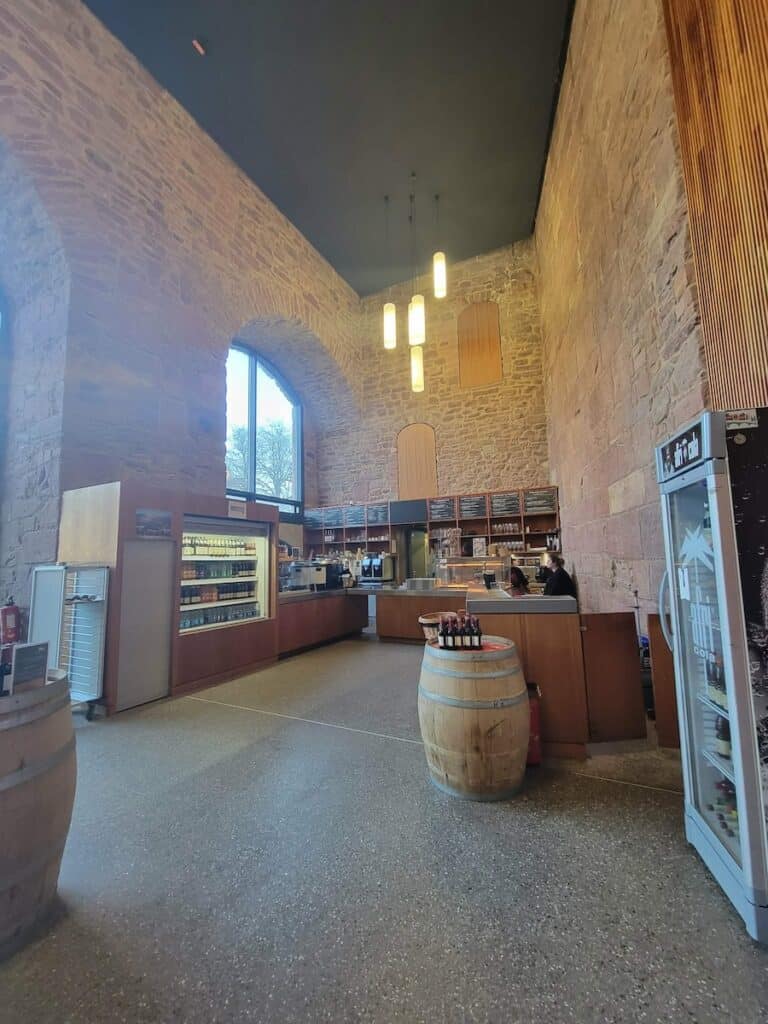
There’s a nice atmospheric cafe next to the ticketing area. It’s got basic eats, beer, wine, and soft drinks. We’ve had the bratwurst a couple times and it’s actually very nice. Don’t expect a huge menu but it’s a great place if you have a big group, or kids who want something quick and delicious.

Gift Shops
There are two gift shops, one outside the gate in the line of brick buildings on the right, and one inside the courtyard just next to the entrance to the viewing terrace. Neither are particularly fabulous, but you may find something you like. The one outside the gate has higher end items, and the one in the courtyard has a lot of generic medieval things. But you can pick up post cards at both places.
Final Thoughts on Heidelberg Castle Parking, Tickets, and Logistics
It’s no wonder Heidelberg Castle is one of the most visited attractions in Germany. It’s beautiful and full of fascinating history, with an interior you can tour and romantic ruins to explore outside. A gorgeous terrace, a giant wine barrel, a free apothecary museum, and endangered fire salamanders. What more could you want from an afternoon?
But understanding the how-to in terms of parking, ticketing, what’s included, where to go, and what to see once you’re there makes the day smoother and more enjoyable.
Other Posts You’ll Enjoy:
The German Pharmacy Museum at Heidelberg Castle
The Christmas Market in Heidelberg, Germany
Great Castles Near Kaiserslautern & How to Choose Your Perfect Day Trip
