
The first time I visited Heidelberg Castle, I skipped the German Pharmacy Museum entirely. My guided tour had just wrapped up, the museum entrance was free and right there in the courtyard, but at that moment a pharmacy museum sounded much less compelling than exploring the Old Town, so I blew it off. I was wrong, and it took me a second trip to figure that out.
The next time I was at the castle, my group had extra time before our tour started, so we ducked in. Twenty minutes later I realized I’d made a mistake the first time around. This is not a dry medical history exhibit. This is the closest you will get in real life to walking into a Harry Potter potions classroom, and it’s included in your castle ticket at no extra cost.
I’ve been back roughly five times since, and I make a point of stopping in every single visit.
Getting In: The Traffic Light System
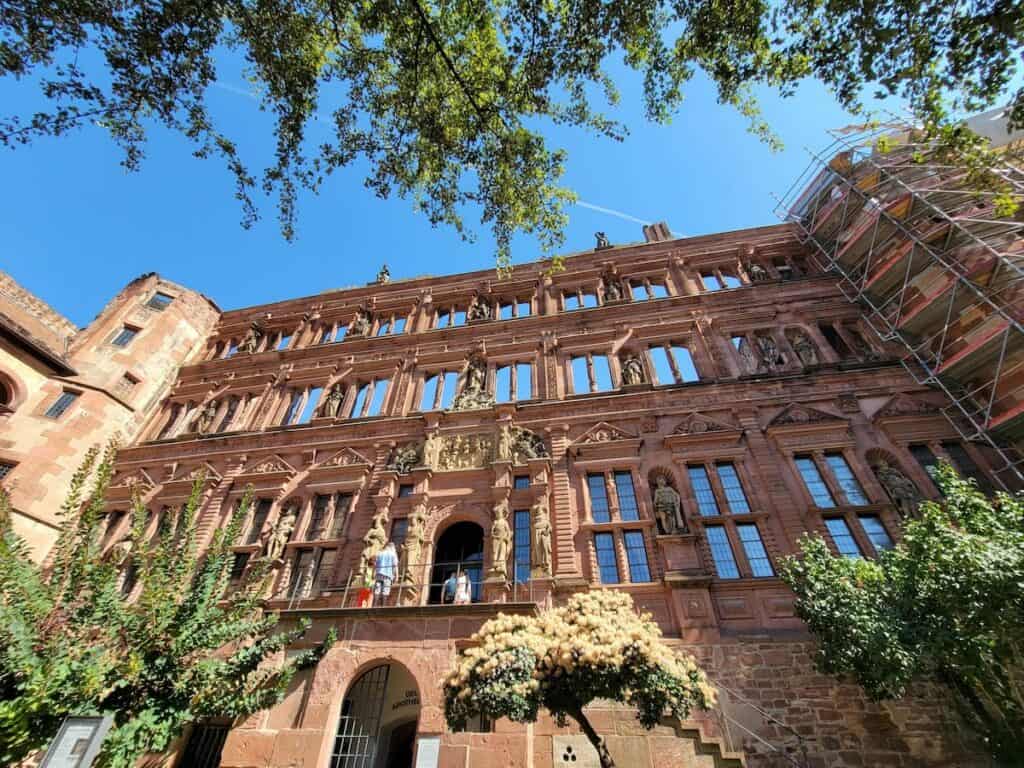
The museum entrance sits right off the castle courtyard near the far right corner as you enter, tucked into the basement of the Ottheinrichsbau. You can’t miss the door, but you might miss what’s above it if you’re not paying attention: a small light that controls entry.
Green means come on in. Red means the museum has reached capacity and you wait a few minutes. It’s a simple system, but it keeps the narrow historic rooms from getting overcrowded, which you’ll really appreciate once you’re inside and want to actually read labels or appreciate what’s in the display cabinets.
Hours: The museum runs roughly 10am to 6pm from spring through early January, and 10am to 5:30pm the rest of the year, with last entry twenty minutes before closing. It’s closed December 25th and has shortened hours around the other winter holidays. It’s always best to check the official museum site before you go if your visit falls near a holiday.
Cost: Admission is included in your standard Heidelberg Castle ticket. There’s no separate fee and no extra ticket.
Time to budget: Give it 30 minutes if you’re moving fast, closer to an hour if you want to actually read through the collection. I’ve never managed the fast version.
What’s Actually Inside the German Pharmacy Museum (Deutsches Apotheken-Museum)
The museum opens with a fairly text-heavy stretch of galleries covering the history and evolution of the German apotheke. If you’re really not into the history of the subject, you can skim and check out the artifacts in the room and move on. The collection gets dramatically more visual once you’re past the introductory rooms.
The Display Cases
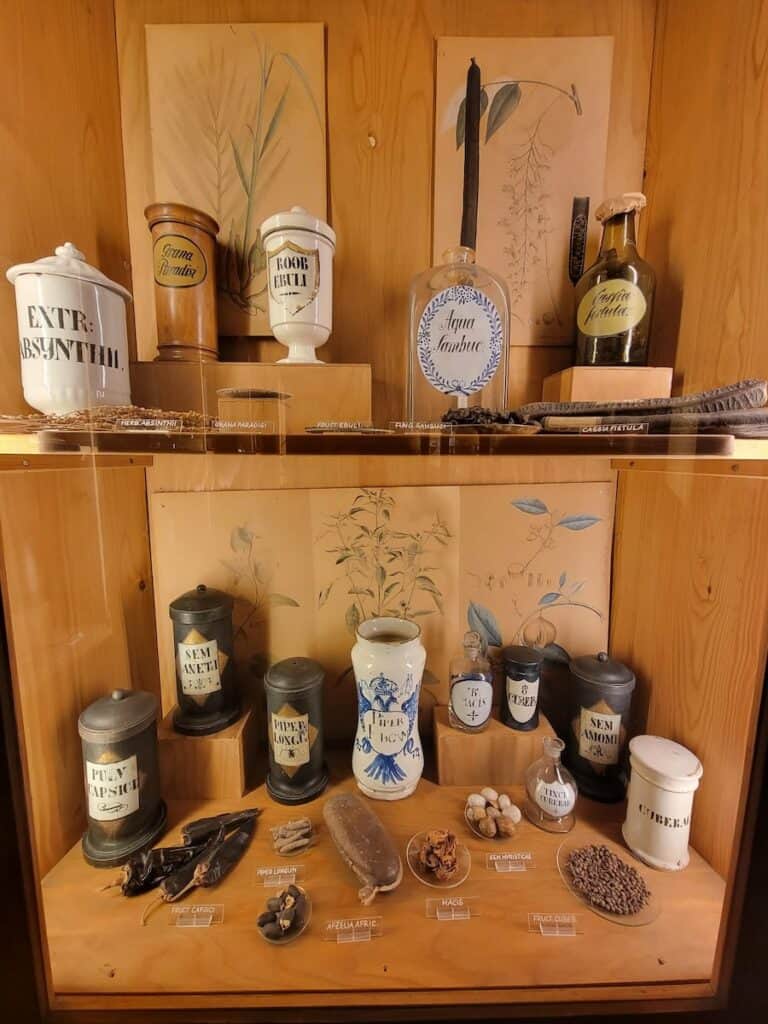
The heart of the museum is floor-to-ceiling glass cabinets organized by category of remedy: plant-based, mineral, and animal-derived. Every jar and bottle is labeled in careful hand calligraphy, exactly the kind of detail that makes you feel like you’ve stepped into an alchemist’s back room rather than a museum.
And the remedies themselves can get pretty weird. Ground beetles. Powdered unicorn horn. And the museum materials note that powdered mummy was once prescribed for everything from a sore throat to a broken heart. Yikes. This is 16th and 17th century medicine at its most bizarre, and the collection doesn’t sanitize any of it.
The Rescued Apotheke Interiors
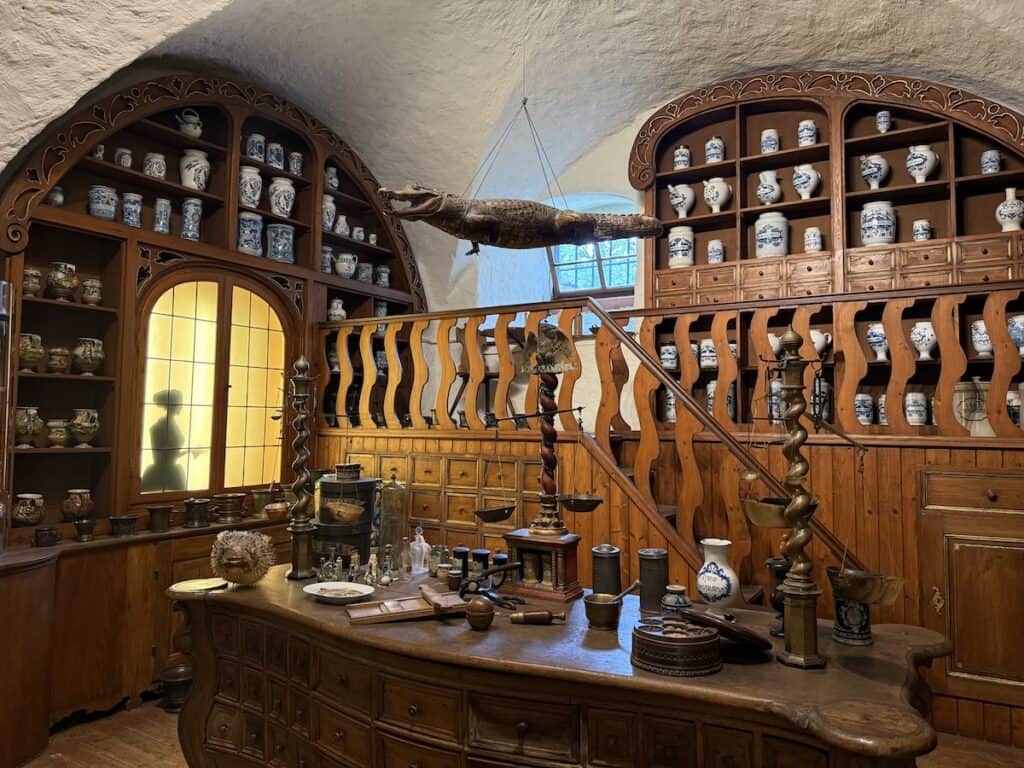
Several complete historic pharmacy interiors have been preserved and installed here, rescued from demolition rather than left to be lost. These aren’t reproductions. You’re looking at the actual cabinetry, the actual hundreds of tiny labeled drawers, from real working pharmacies that no longer exist anywhere else. These rooms drop my jaw every time, even though I know what I’m expecting.
Tucked among the shop displays are the oddities every old-world apothecary apparently needed for credibility: a giant puffer fish, a taxidermied alligator hanging from the ceiling. These weren’t decoration exactly. Hanging exotic specimens in an apothecary window was a centuries-old way of signaling that the shop dealt in rare and exotic cures.
The Basement Equipment Room
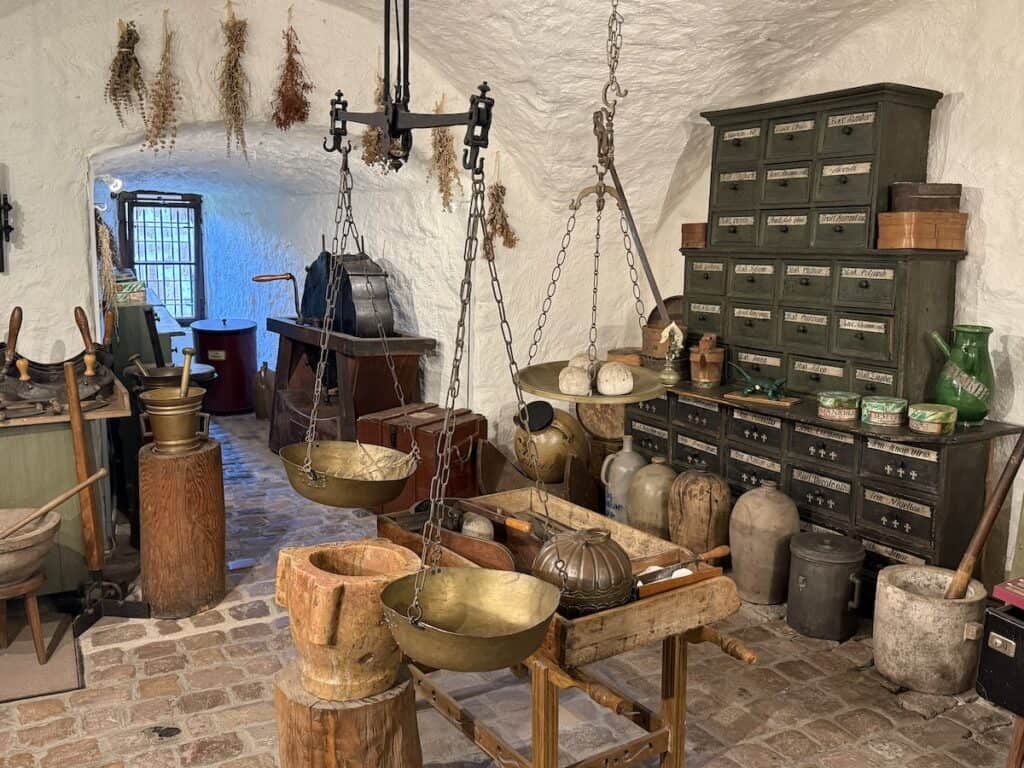
Below the display galleries is a room dedicated entirely to the equipment and physical work of making medicine: the grinders, stills, and tools apothecaries used to prepare their remedies by hand. It’s a good reminder that pharmacy was not only a growing science, it was manual labor, with remedies created one batch at a time in rooms like this one.
The Gift Shop at the German Pharmacy Museum
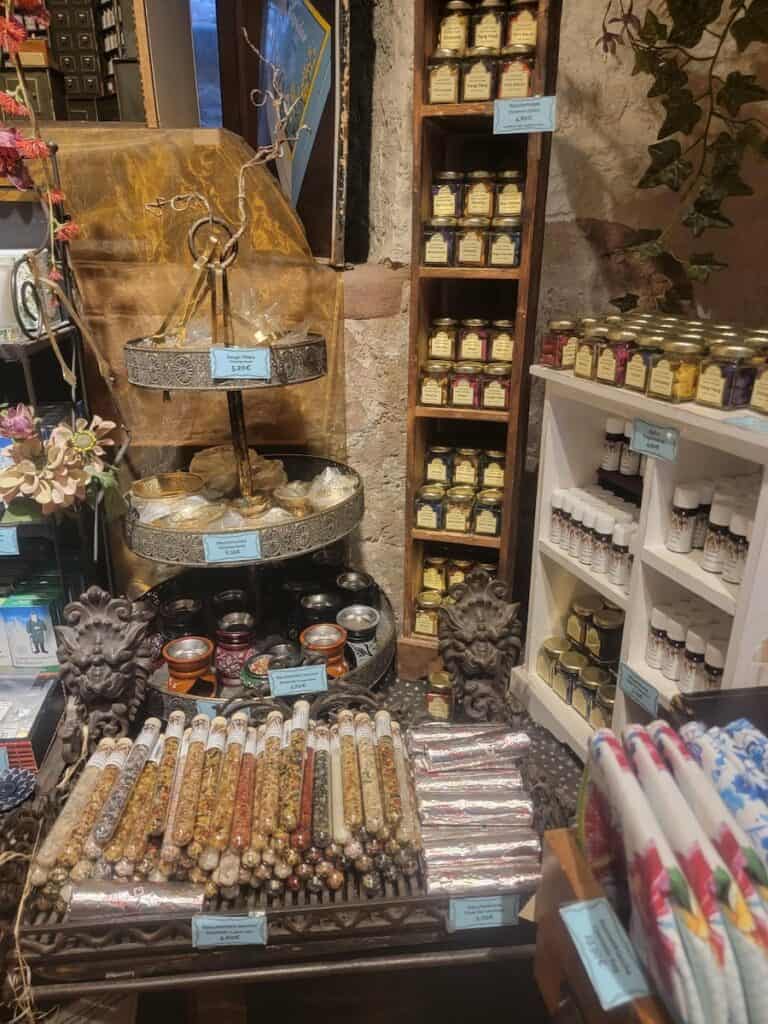
Don’t skip the gift shop on your way out. It looks small from the entrance, but it’s stocked with soaps, balms, incense, apothecary-style bottles and jars, and even herbal liqueurs. They even sometimes sell genuine antique apothecary bottles. I have never once left without buying something.
Who This Museum Is Actually For
This isn’t a museum that only appeals to pharmacists. I’d recommend it to:
- Anyone into plants, herbalism, or natural remedies
- History lovers, especially anyone drawn to the medieval and early modern periods
- Chemistry and science nerds
- Anyone who just likes the aesthetic of an old-world alchemist’s shop
If none of that sounds like you, it’s still free with your castle ticket and takes half an hour. Worth the detour even for the skeptics in your group.
FAQs for the German Pharmacy Museum
Is the German Pharmacy Museum worth visiting?
Yes, especially given it costs nothing beyond your standard castle admission. It’s one of the most overlooked stops at Heidelberg Castle relative to how much is packed into it: over 20,000 objects and around 1,000 remedies on display across ten rooms, drawing roughly 600,000 visitors a year even though almost nobody talks about it online. Don’t make the mistake I did the first time and walk past it!
How long does the German Pharmacy Museum take to visit?
Plan for 30 minutes at a minimum. If you want to actually read the case descriptions and take in the remedies, and rescued apotheke interiors, closer to an hour is more realistic.
Is the German Pharmacy Museum included in the Heidelberg Castle ticket?
Yes. There’s no separate ticket or additional charge. If you’ve paid for castle admission, you already have access.
Is the German Pharmacy Museum kid-friendly?
The oddities, the taxidermied alligator, the strange historic remedies, tend to land well with curious kids even if the early text-heavy galleries move a little slowly for younger attention spans. It’s a manageable size for a family visit and there’s no separate ticket to worry about.
Where exactly is the entrance?
Inside the castle courtyard, in the basement of the Ottheinrichsbau. Look for the arched doorway next to the cool tree with the traffic light system controlling entry.
Heidelberg Castle Parking and Tickets: What to Know Before You Go
Christmas Market Heidelberg, Germany Guide
Great Castles Near Kaiserslautern & How to Choose Your Perfect Day Trip
