
The first time I visited Luxembourg City, I was short on time and only caught a tantalizing glimpse of a whole series of cave-like openings cut into the stone cliff face above the river. I frantically googled, and put the “Bock Casemates” on my list for a future visit. I’ve been back to walk through them twice since.
Exploring the Bock Casemates is a great one-hour stop, easy to fit into any itinerary, and a must-see if you’re in Luxembourg City, even for one day. This post will tell you about their incredible history, heartbreaking demolition, getting there, how and where to buy your tickets, what you can expect inside, and what else to pair it with on your trip to Luxembourg.
What are the Bock Casemates
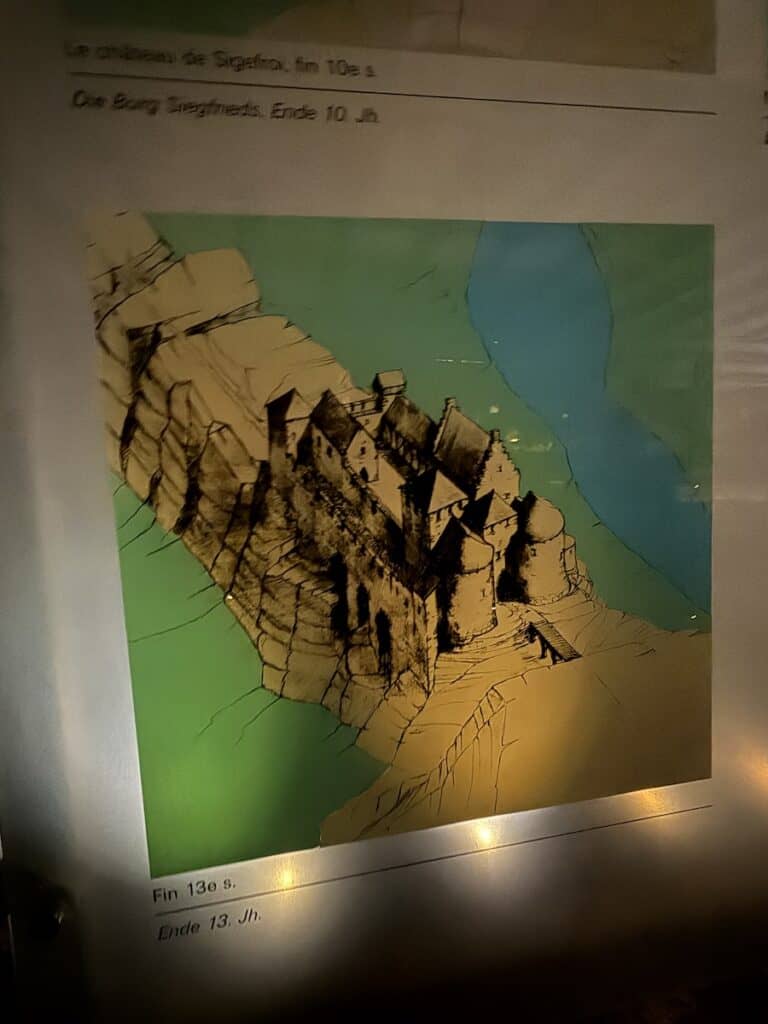
The ‘Bock’ is the rocky promontory where Luxembourg City itself began. Count Siegfried built a castle here in 963 AD, called Lucilinburhuc, which I have no idea how to pronounce, but is actually how Luxembourg got its name. Casemates are fortified areas built into a defensive wall with openings to fire cannons or guns, and thick walls to shield from attack. The Bock Casemates came centuries after the castle, carved into the rock beneath that original stronghold as the fortress above it grew into one of Europe’s most fought-over defensive positions.
Built and Rebuilt Across Three Centuries
The construction of the casemates was an international affair. Spanish engineers cut the first tunnels into the Bock starting in 1644, at the direction of the Swiss military engineer Isaac von Treybach. After a successful siege in 1684, the French engineer Vauban expanded the underground network further, recognizing that tunnels and chambers mattered as much to a fortress as anything built above ground. He’s the same engineer whose fortification work also shaped the Citadelle de Bitche, and whose heart, after his grave was destroyed in the French Revolution, was reburied at Les Invalides in Paris, alongside Napoleon. The Austrians took over next, and General Neipperg oversaw another major expansion, completed by 1744.
By the time it was finally finished, the fortress above the casemates had grown formidable enough that Lazare Carnot, the French military strategist, reportedly called it the best fortress in the world, aside from Gibraltar. His comparison stuck, and the casemates became known by the nickname “the Gibraltar of the North.”
The Siege That Never Broke the Walls
The Gibraltar nickname was put to the test in 1794. French forces under the Army of the Moselle laid siege to Luxembourg, facing an Austrian garrison of roughly 15,000 troops under Field Marshal Baron von Bender. The siege dragged on for more than seven months, through the winter and into summer, but the French couldn’t breach the walls.
The Austrians eventually surrendered on negotiated terms, in June 1795. The garrison marched out with the honors of war, over 12,000 soldiers still standing, because the fortress had successfully outlasted the war itself. France annexed the territory afterward, and Luxembourg became part of the Département des Forêts, but the fortress itself went into the history books as undefeated.
It’s an interesting pattern I keep running into in this part of Europe: a mighty fortress that holds against everything thrown at it, only to be forced to surrender on paper rather than in battle. Fort de Schoenenbourg and Citadelle de Bitche, both nearby in France, tell the same story, a war and an armistice later.
Dismantled by Treaty, Not by War
What finally physically took the fortress down wasn’t even a war. The 1867 Treaty of London declared Luxembourg “a neutral state” and required that the fortifications be dismantled. Honestly, to me that’s kind of a heartbreaker because I would have loved to see the entire “Gibraltar of the North” fortification in place.
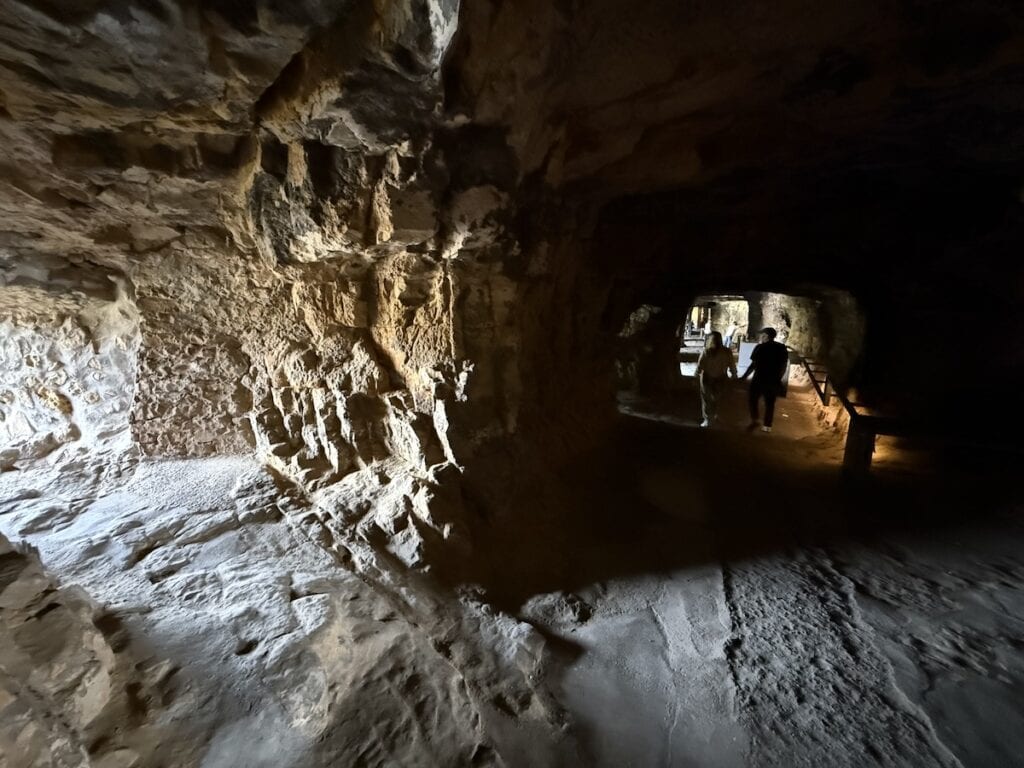
Demolition of the behemoth fortress took 16 years and cost 1.5 million gold francs. The full underground network beneath the city had once spanned an incredible 23 kilometers (14 miles) of tunnels; but most of that was destroyed during the demolition, so what you see today is only a much smaller, self-contained piece of it. There’s a main gallery about 110 meters long and 7 meters wide (360 feet x 23 feet), with branching side passages leading out to 25 cannon openings, 12 facing north and 13 south.
In its heyday, the casemates could have sheltered up to 1,200 soldiers along with the stables, workshops, kitchens, and storerooms a garrison that size needed to function, plus a water well drilled 47 meters (154 feet) down into the stone. The site first opened to tourists in 1933 and became a UNESCO World Heritage Site in 1994.
Visiting the Bock Casemates Today
Getting In
You access the casemates from the top, through what looks like a nice overlook balcony above the river. Follow the signage from there. Once you’re at the entrance, there are two lines: one for ticket holders and one for non-ticket holders. Buying your ticket in advance will save you time waiting in the second line, but pay attention to your time slot. Entry runs every 15 minutes during opening hours, and there’s only a 15-minute grace period built into each slot.
The One Museum Room
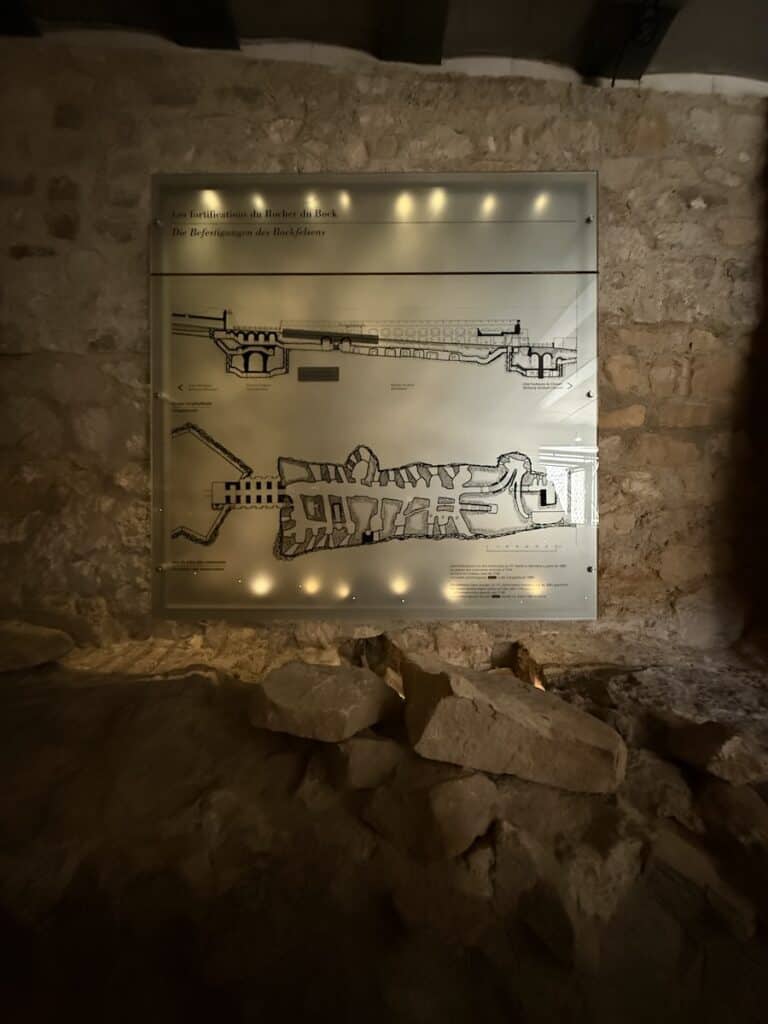
The first area you reach, and the only spot in the whole site set up this way, has museum-style display cases: a diorama, maps, information boards, and images showing how the casemates were built and how they changed over time. The signage here is in French and German only, so download one of those languages into your translation app before you go. There’s no cell or internet service behind the thick stone walls to translate on the fly.
Inside the Tunnels
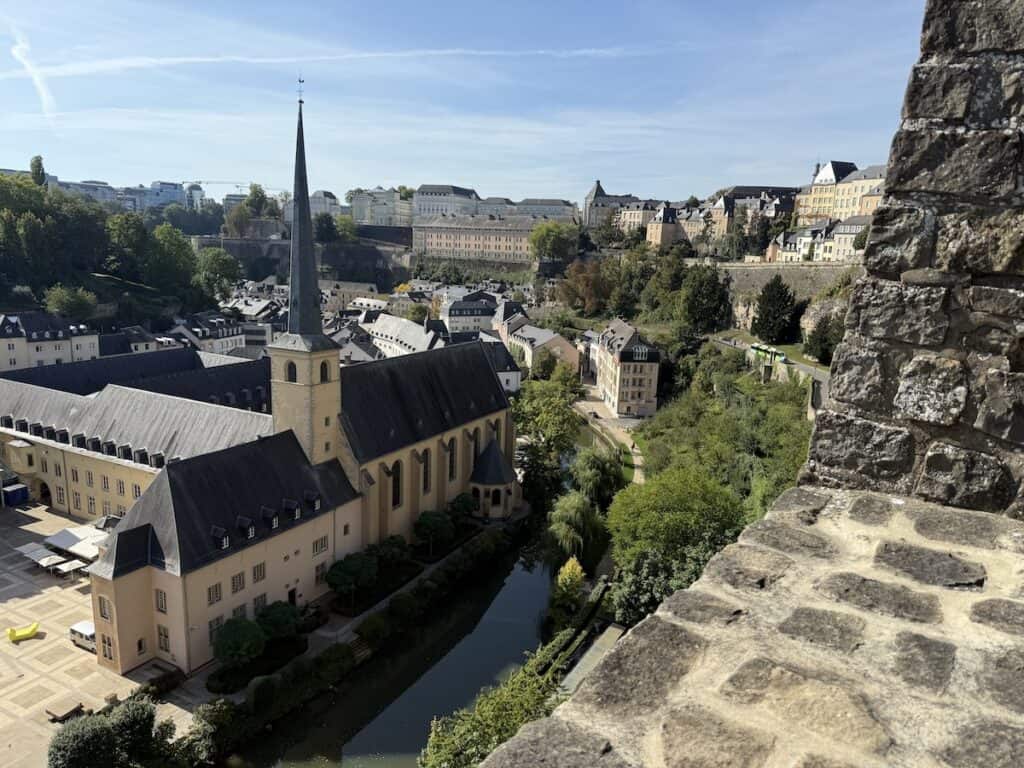
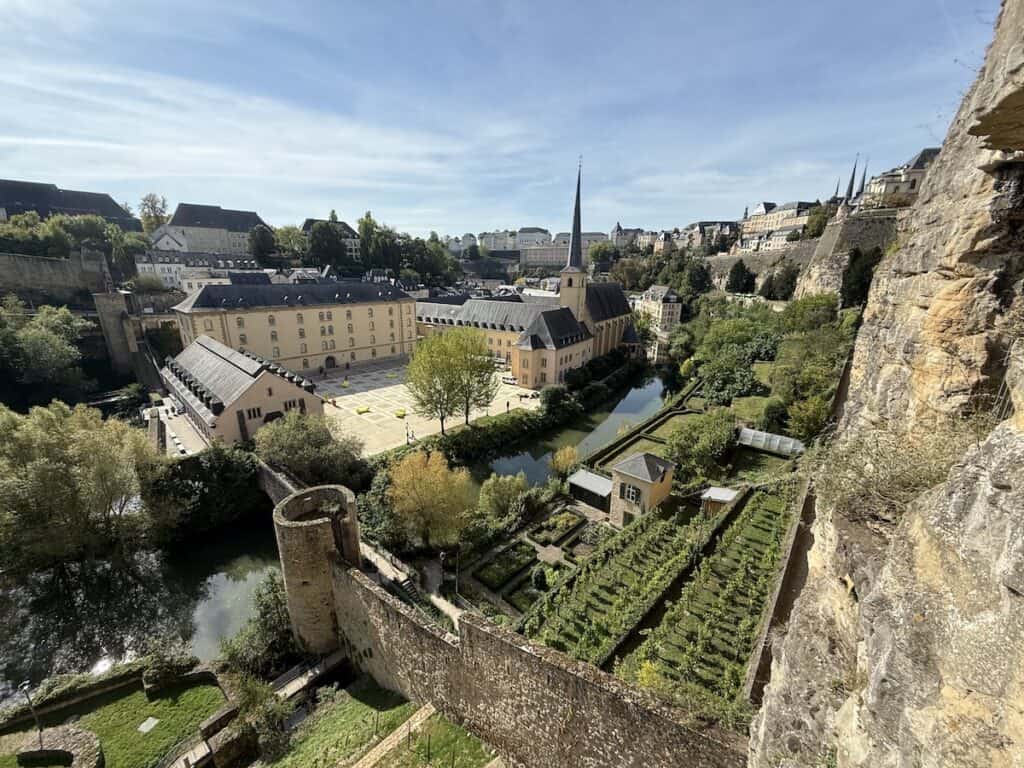
Past the museum room, the casemates open into a long series of wide tunnels with smaller passages branching off to either side. Many of those branches lead to open archways looking out over some of Luxembourg’s most recognizable views, including the picturesque yellow church, Église Saint-Jean-du-Grund, with a weeping willow trailing into the river just below it. That church dates back to a structure first mentioned in 1309, and in its current form since the late 1600s. It’s easily one of the best photo ops in the whole city.
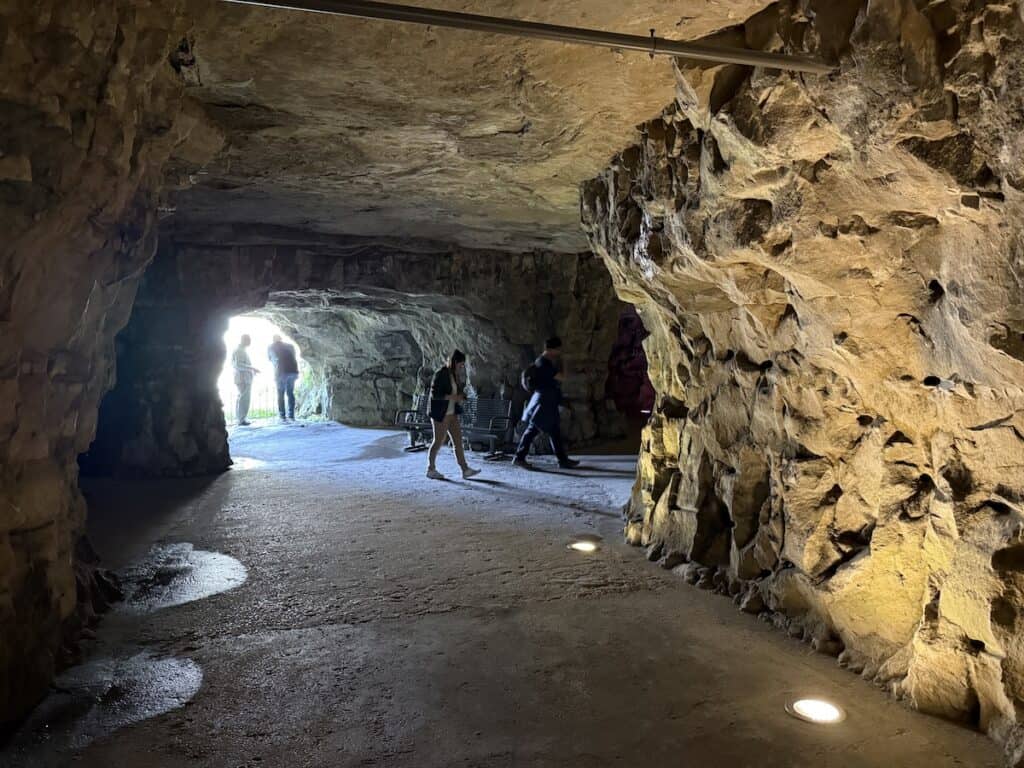
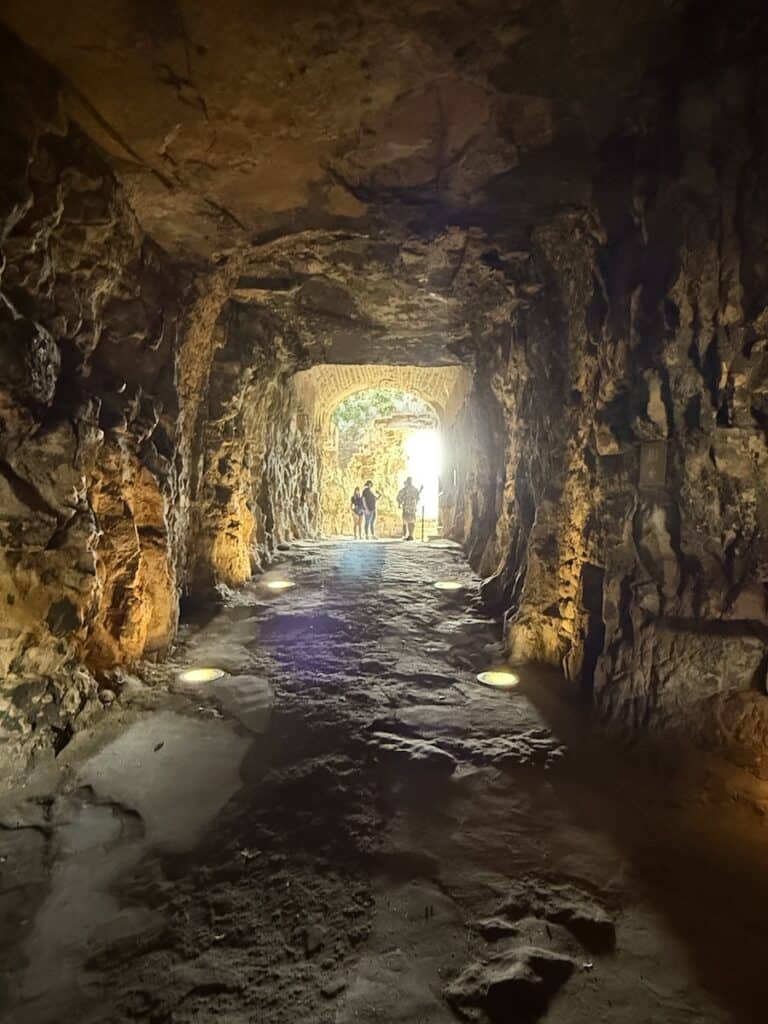
The tunnels themselves are fairly well lit in most places, but keep your eyes on the ground as you walk, especially if you or anyone with you has mobility or balance concerns. The footing can be uneven in places, and there are a few unavoidable flights of stairs, including one narrow stone spiral staircase. This isn’t the easiest site for anyone with significant mobility challenges.
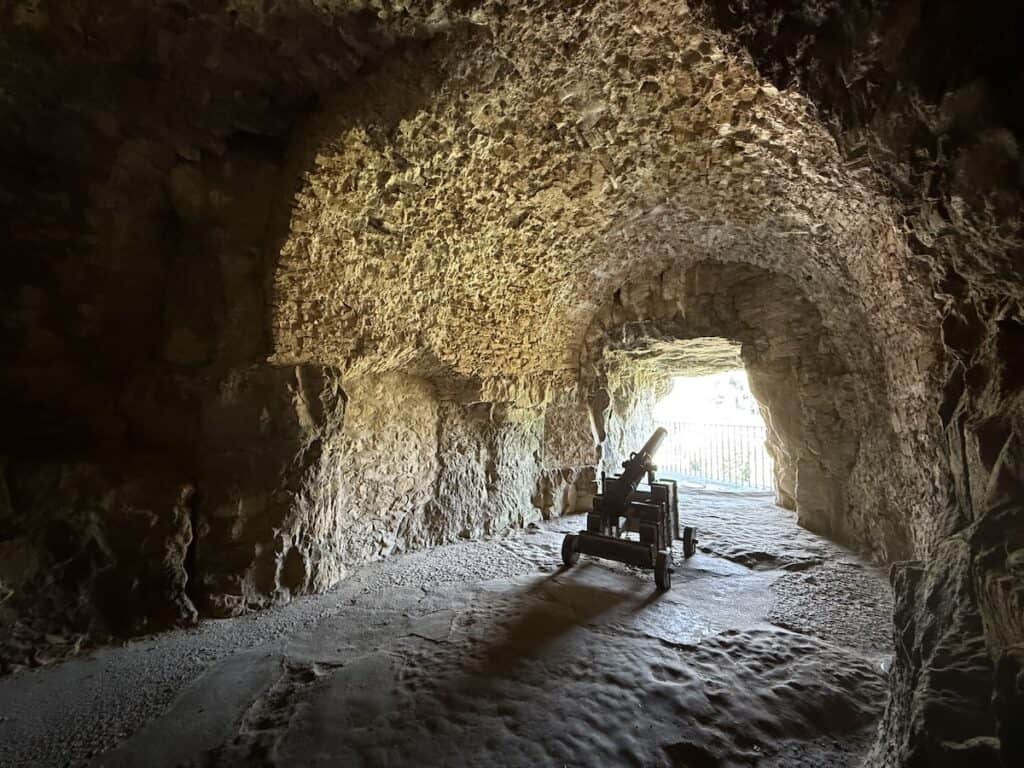
There aren’t many objects to see inside the tunnels themselves beyond a handful of cannons aimed out through the openings and some additional signage. What you will find is atmosphere aplenty. It’s fun to wind through the passages and wonder what view or photo op is waiting around the next corner, try to find where the heck you are on the map, and look for old graffiti carved into the walls along the way.
The 45 minutes you’re given to complete the visit is enough time to see everything. On a slower day, my visit ran about eight minutes past that with nobody enforcing the clock. The second time, it took exactly 45 minutes on the dot. Either way, it’s a cool place, literally, 13°C (55°F) year-round underground, to spend an hour while you’re touring the city, and it’s a must-do while you’re in Luxembourg.
Pair It With
- Patton’s Grave, a short trip across the city and one of the most-visited WWII sites in Luxembourg. This is easiest with a car.
Planning Your Visit
Address: Montée de Clausen, L-1343 Luxembourg City
Bock Casemates Tickets
- Adults: 11€
- Students and seniors (60+): 9€
- Children (4–12): 5.50€
- Children under 4: free
🎫 Get your timed tickets in advance to save time in line, or waiting for a time slot
Hours: Open 7 days a week, 9:45am to 5pm (last admission), but closed December 25 and January 1.
Tour duration: Maximum 45 minutes per timed entry slot, with a 15-minute grace period.
Underground temperature: A constant 13°C (55°F), so bring a light jacket.
Accessibility: Uneven ground and a few unavoidable staircases, including one narrow stone staircase. Contact the Luxembourg City Tourist Office before your visit if anyone in your group has mobility concerns.
Drive time from Kaiserslautern, Germany: About 1 hour 45 minutes (roughly 115 km / 71 miles by road).
FAQ About the Bock Casemates in Luxembourg
Are the Bock Casemates worth visiting?
Yes. They’re one of the few fortress sites in Europe that were never actually broken by siege, only dismantled decades later by treaty, and the tunnels themselves open onto some of the best views in Luxembourg City.
How long does the visit take?
Plan for the full 45-minute window you’re given. That’s enough time to see everything, including the museum room and the full tunnel route.
What are the Bock Casemates opening hours?
Daily, 9:45am – 5pm, with the last admission at 5pm and entry slots released every 15 minutes. Closed December 25 and January 1.
Are the Bock Casemates wheelchair accessible?
Not fully. The ground is uneven in sections and there are a few unavoidable staircases, including one narrow stone staircase.
Can I get a guided tour of the Bock Casemates?
Contact the Luxembourg City Tourist Office ahead of your visit to arrange a guided tour.
Related Posts You May Like:
The Citadelle de Bitche: The Fortress That Wouldn’t Fall
Napoleon’s Tomb in Paris: What to See at Les Invalides
Fort de Schoenenbourg: The Maginot Line Fort That Never Broke
