
Don’t do leg day just before visiting this castle, because you’ll get all the lower body exercise you need – and it’s totally worth it.
Trifels Castle (Burg Trifels) sits on top of a semi-formidable hill overlooking some of the most beautiful rolling hills, rock formations, and forested areas in the Palatinate. The views from the top make the hike to get there worth it, and then some.
This is a great day trip from Kaiserslautern, Ramstein, and the surrounding area, or a really fun half-day stop if you happen to be driving past.
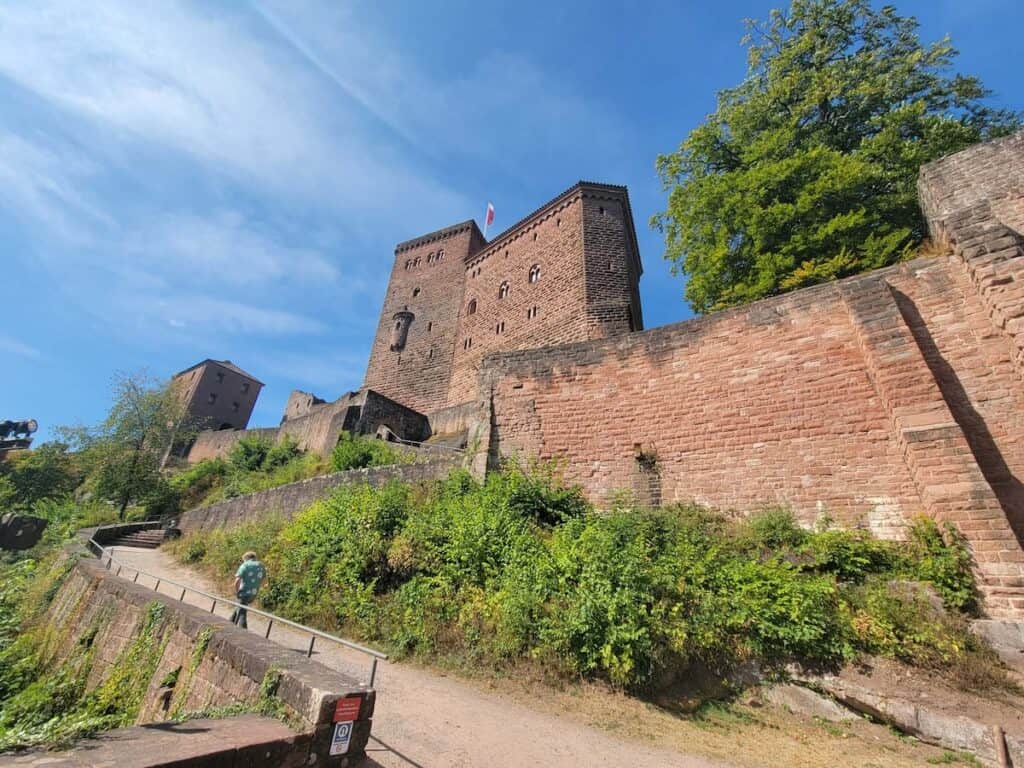
Getting to Burg Trifels and the Walk Up
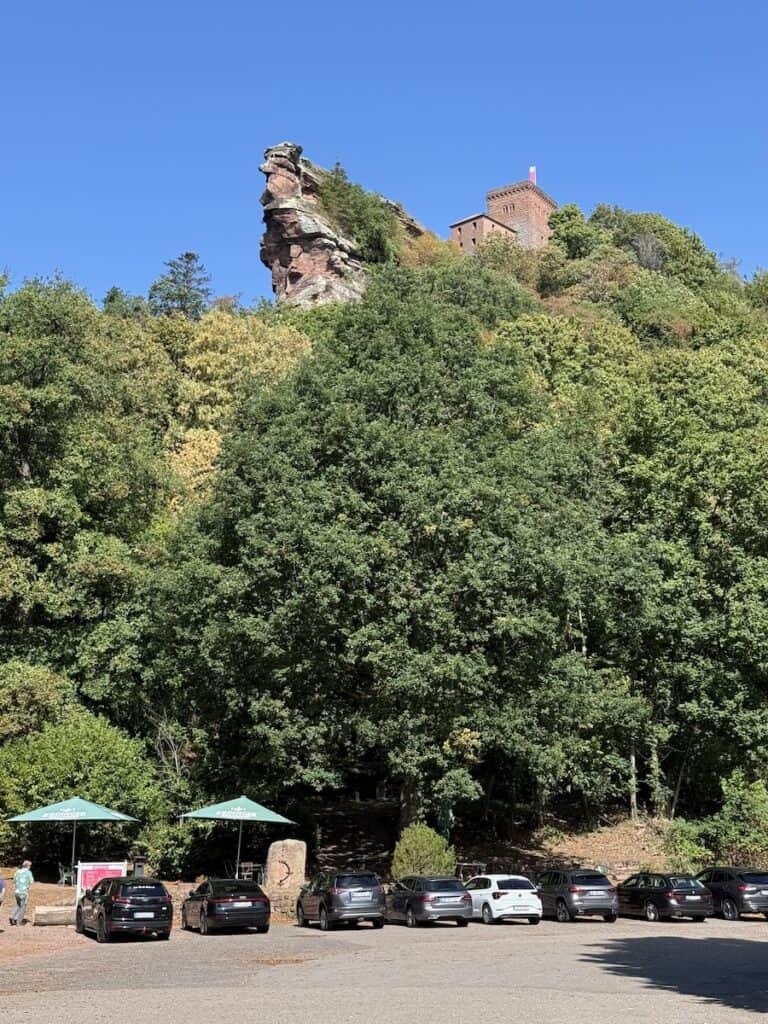
There’s a parking area right at the base of the castle’s hill. You’ll also find a restaurant with restrooms, and a small concession stand where you buy your parking ticket. You can pick up lighter bites and drinks there, and there are several umbrella-covered picnic tables where you can sit.
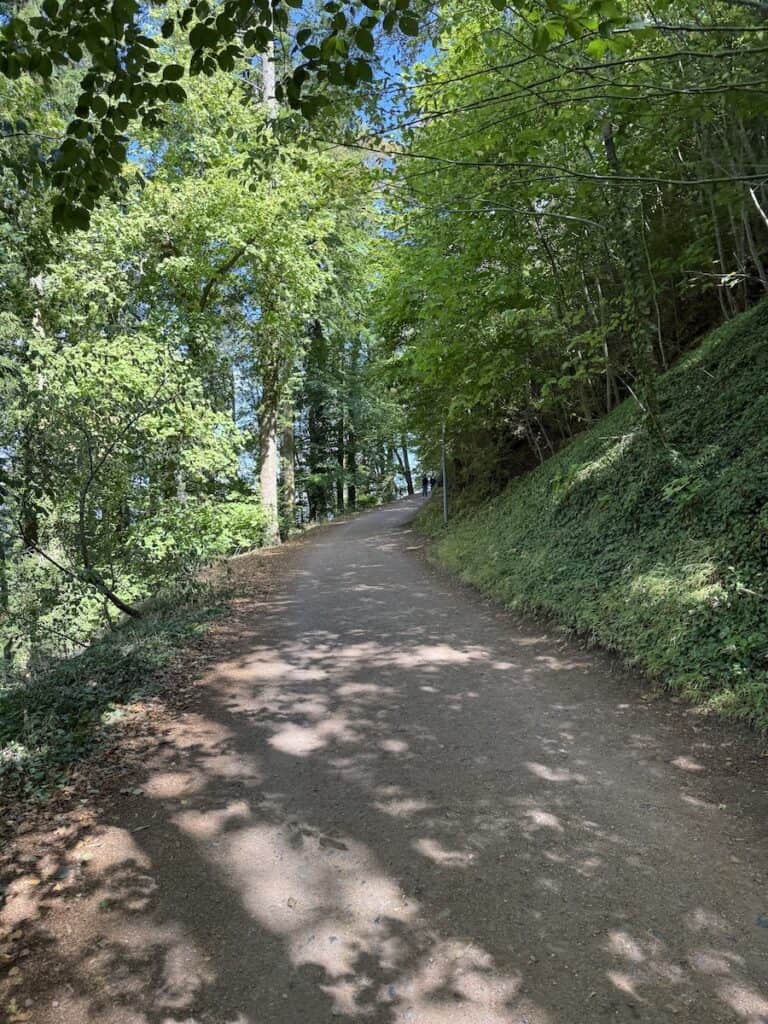
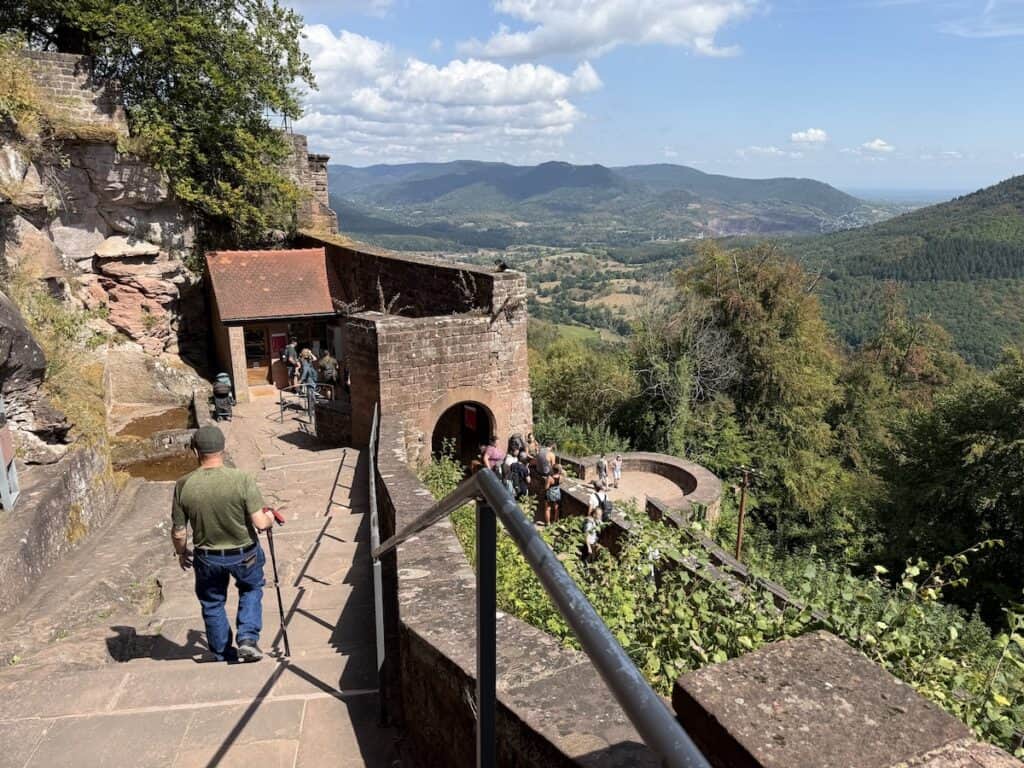
The walk up to Burg Trifels is a series of switchbacks. The trail is well kept and mostly in the shade. There are a few rough spots and uneven surfaces, half buried cobblestones, and enough reasons to keep your eyes on the ground in front of you.
Good walking shoes are best. Hiking boots aren’t needed, and definitely don’t be like the woman I saw on the trail in suede pumps!
There are several benches along the way if you need to rest. It took us 25 minutes from bottom to top. We walked slowly but steadily and didn’t stop except to take in the views from the viewpoint near the top.
Burg Trifels Tickets, Tours, and Times
Tickets are purchased as you enter the castle. Adults €6, Children 6-17 are €3, and kids 5 and under are free.
Hours of Operation:
February 1 to March 14, Saturday/Sunday/holidays 10am-5pm (last entry 4pm)
March 15 to October 31, Wednesday through Sunday plus holidays 10am-6pm (last entry 5pm) November, Saturday/Sunday/holidays 10am-5pm
The castle is closed in December and January.
To double check prices and times, check the Burg Trifels official website. You can also purchase tickets for a dramatic performance castle tour in German.
Inside Burg Trifels
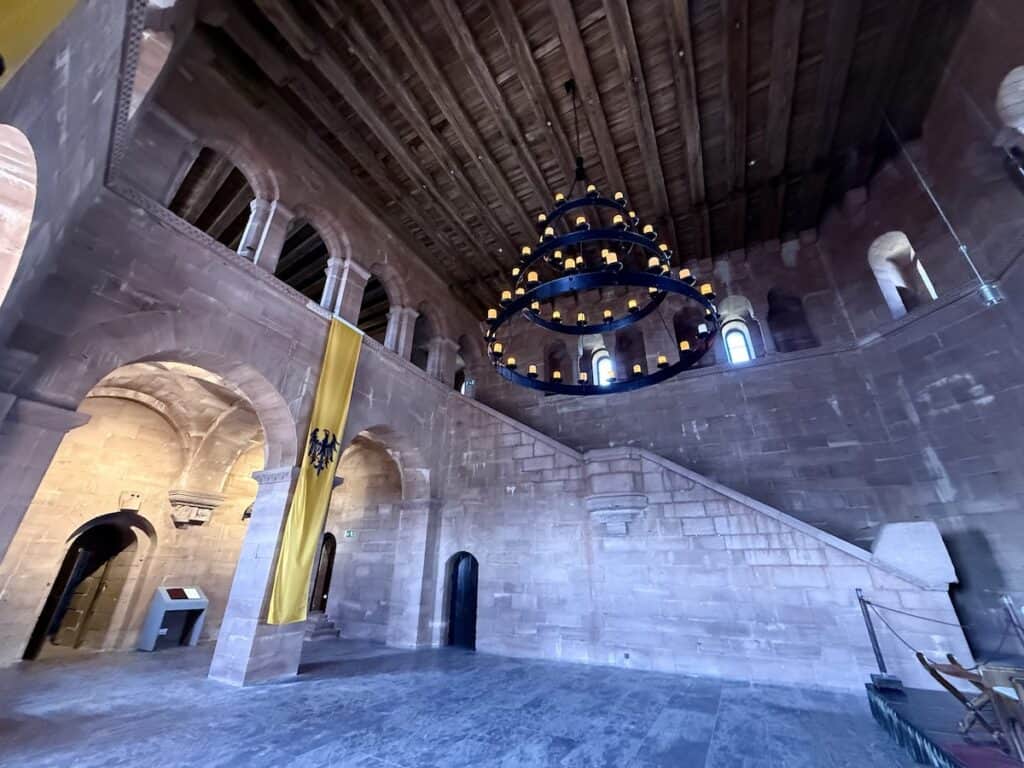
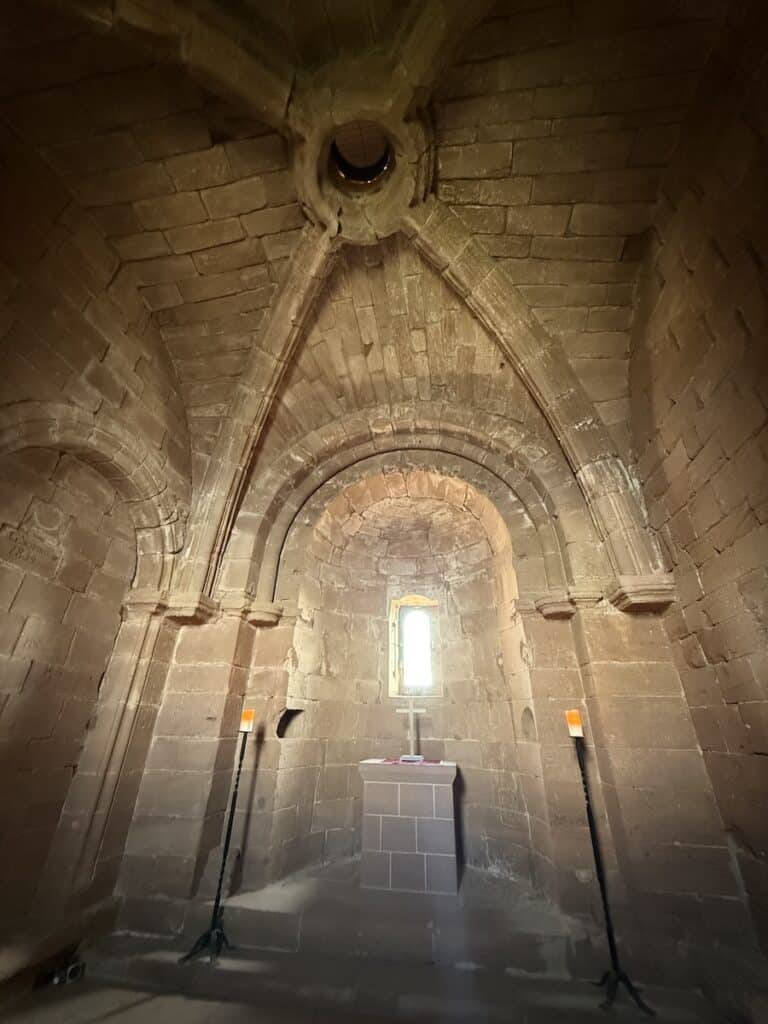
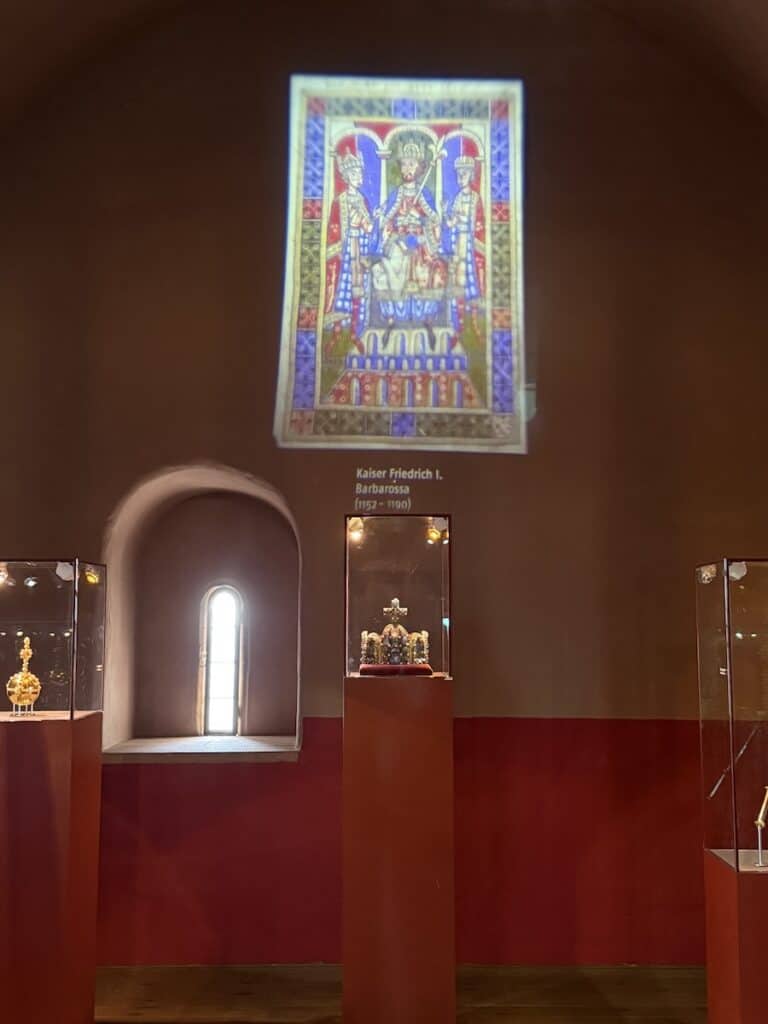
When you enter the castle, the climb isn’t over. There are multiple floors, all connected by narrow winding spiral staircases. You’ll find the throne room, the chapel, and the best part: the Imperial Regalia. The actual crown jewels of the Holy Roman Empire aren’t kept at Trifels anymore. You’ll find the real deal at the Imperial Treasury in the Hofburg Palace in Vienna, but the replicas on display at Burg Trifels are impressive, and knowing the originals were stored here for real is what makes the room worth lingering in.
The regalia wasn’t a one-time visitor either. In 1125, the last Salian emperor, Henry V, entrusted the crown and the other imperial insignia to his nephew, Duke Frederick II of Swabia, a Hohenstaufen, with instructions to keep them at Trifels until the empire’s princes could gather. From that point until the end of the 13th century, Trifels repeatedly served as the treasury for the most important symbols of imperial power, on and off for close to two centuries.
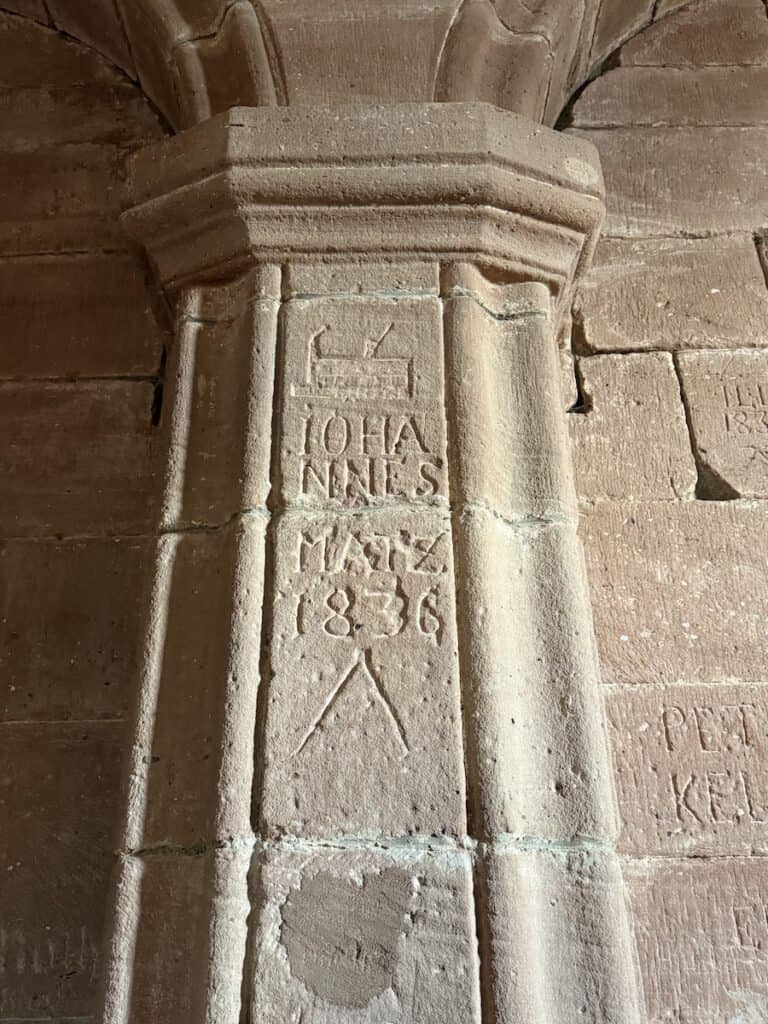
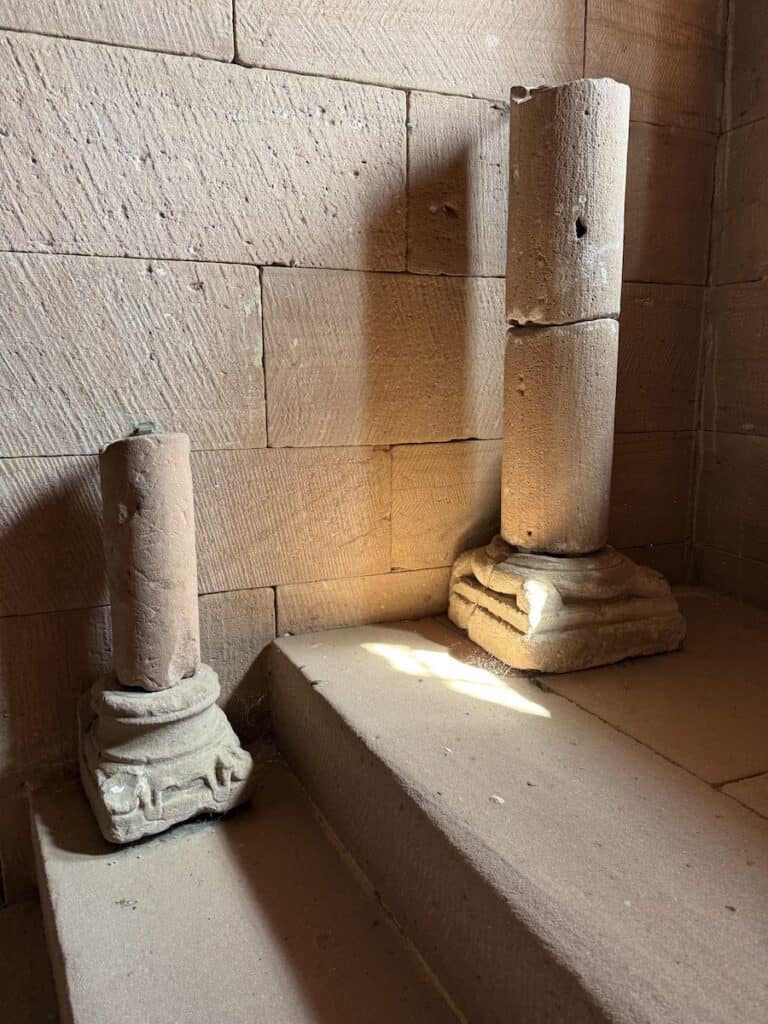
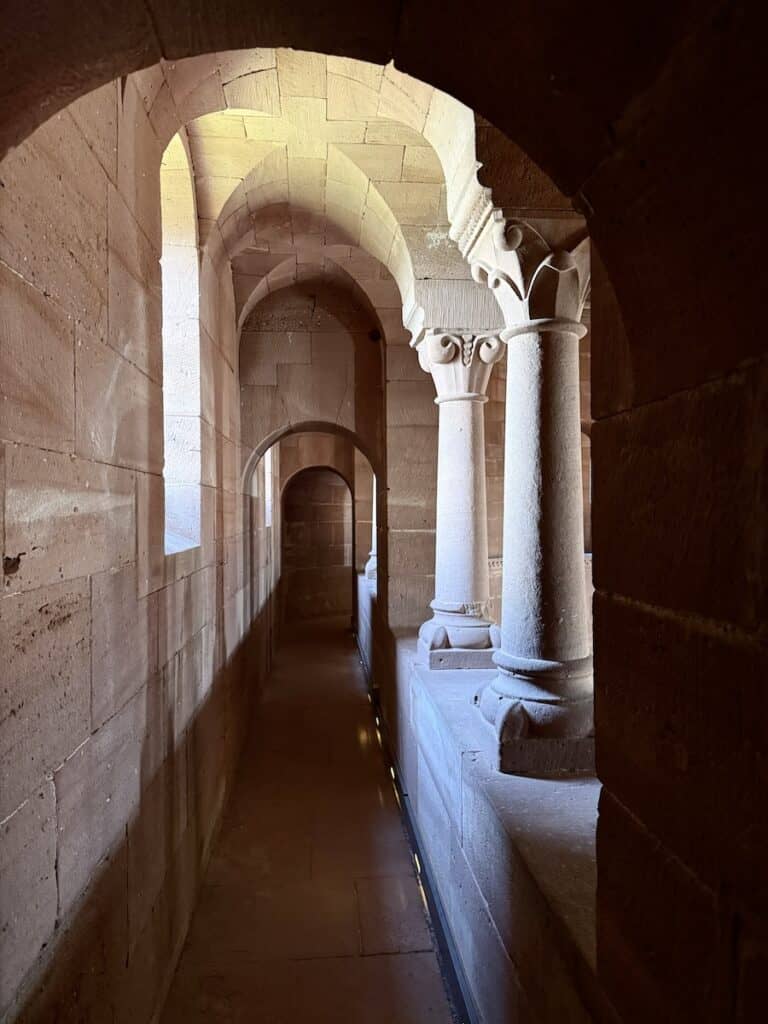
Throughout the castle you’ll find information about its history, destruction, and reconstruction, and there are some architectural structures from the original castle on display on the walls.
Richard the Lionheart’s Year at Burg Trifels
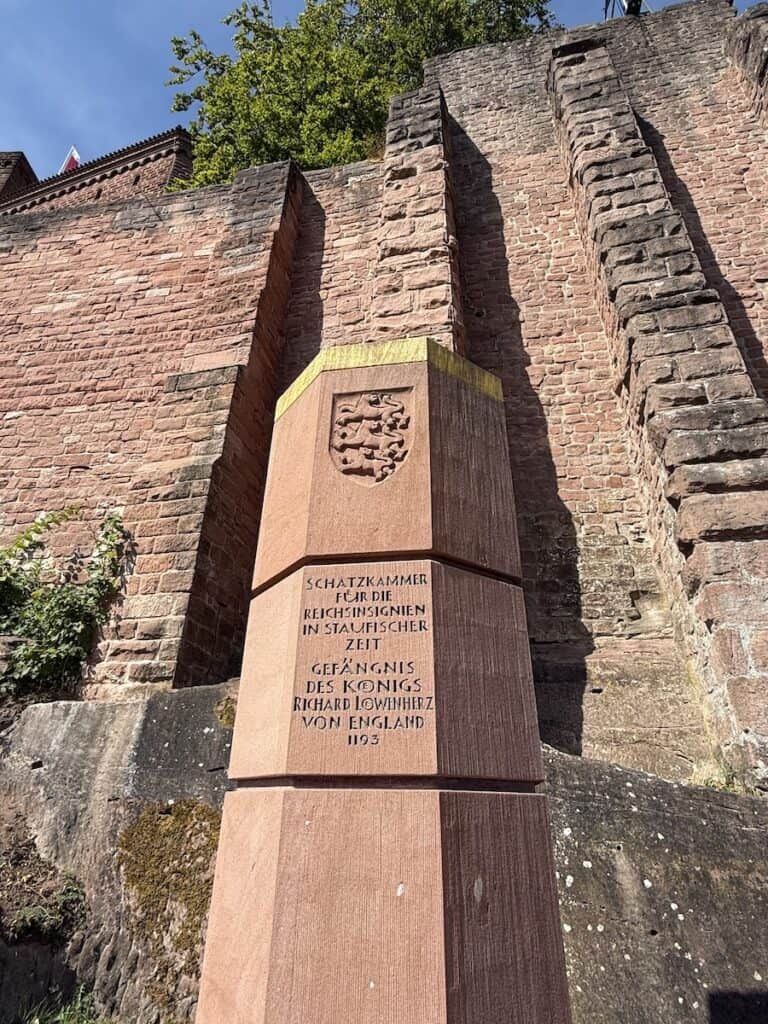
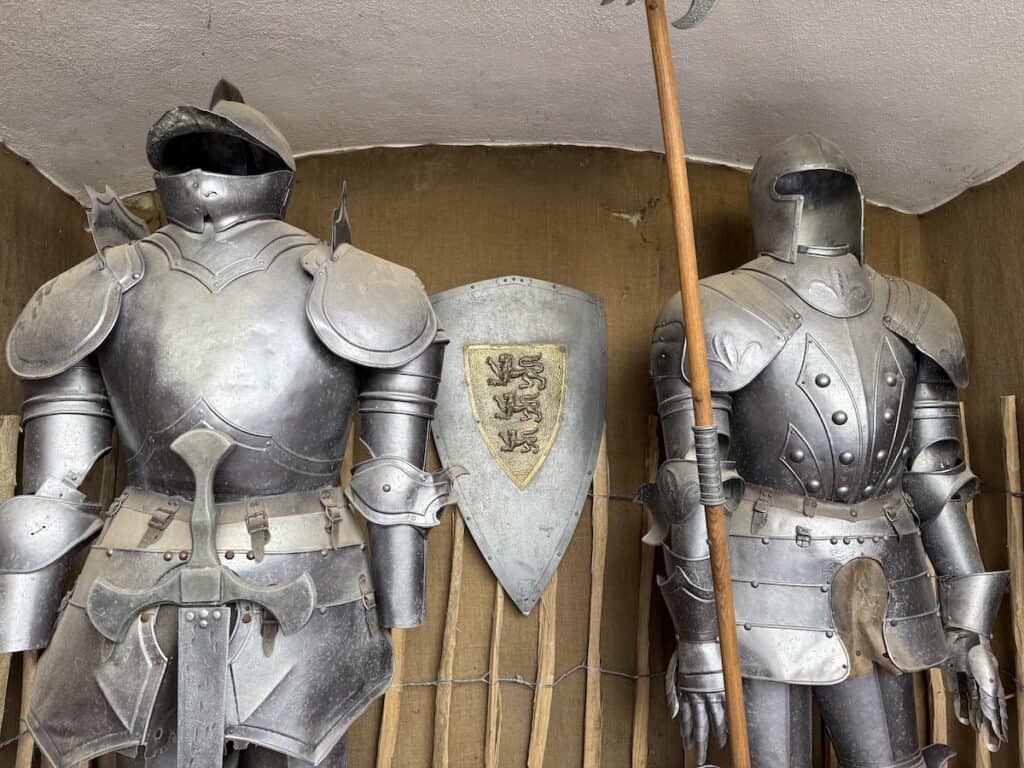
The Imperial Regalia isn’t the castle’s only famous former resident. Richard I of England, better known as Richard the Lionheart, was held here after his capture during the Crusades.
On his way home from the Third Crusade in December 1192, Richard was captured near Vienna by Duke Leopold V of Austria, whom Richard had reportedly insulted during the crusade. Leopold handed him over to the Holy Roman Emperor Henry VI, who imprisoned him at Burg Trifels from 1193 into 1194. Richard was released after an enormous ransom was paid, and returned to England to reclaim his crown.
Legend says that Richard’s minstrel, Blondel, supposedly traveled from castle to castle searching for his missing king, singing a song only the two of them knew. At Burg Trifels, Richard is said to have sung it back to him, revealing where he was being held. With more than 20,000 castles in southern Germany, he got lucky!
The Observation Deck
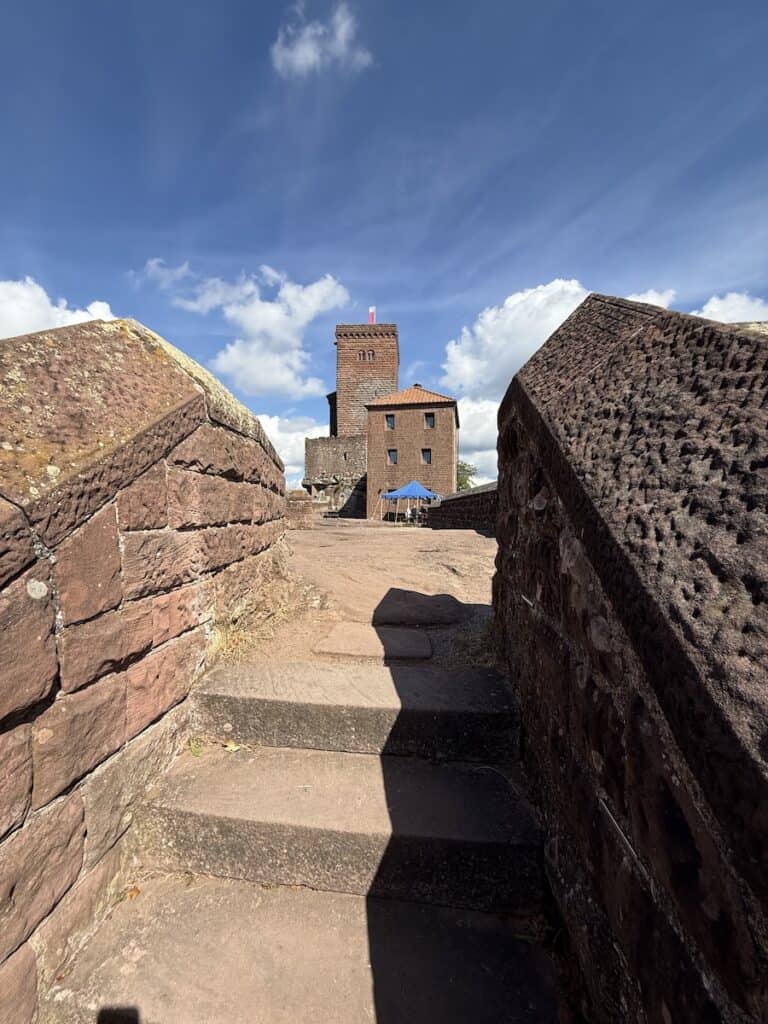
There’s an amazing observation deck that you can’t miss. From the parking lot, you can see a dramatic natural rock outcropping jutting out from the mountain like a ledge, and it turns out the viewing area takes you all the way to its end. It doesn’t feel as precarious standing on it as it looks from far below, but the perspective from the lower area, and also from above on the top of the tall tower is something else.
A practical note: the signage in the castle is in German, and I couldn’t get cell service for some reason, even high on the hill, so download the German language into your translation app before you go so you can read as you climb. You’ll see references to the history of the castle, Friedrich II, Emperor Barbarossa, and Richard throughout.
The View From the Top
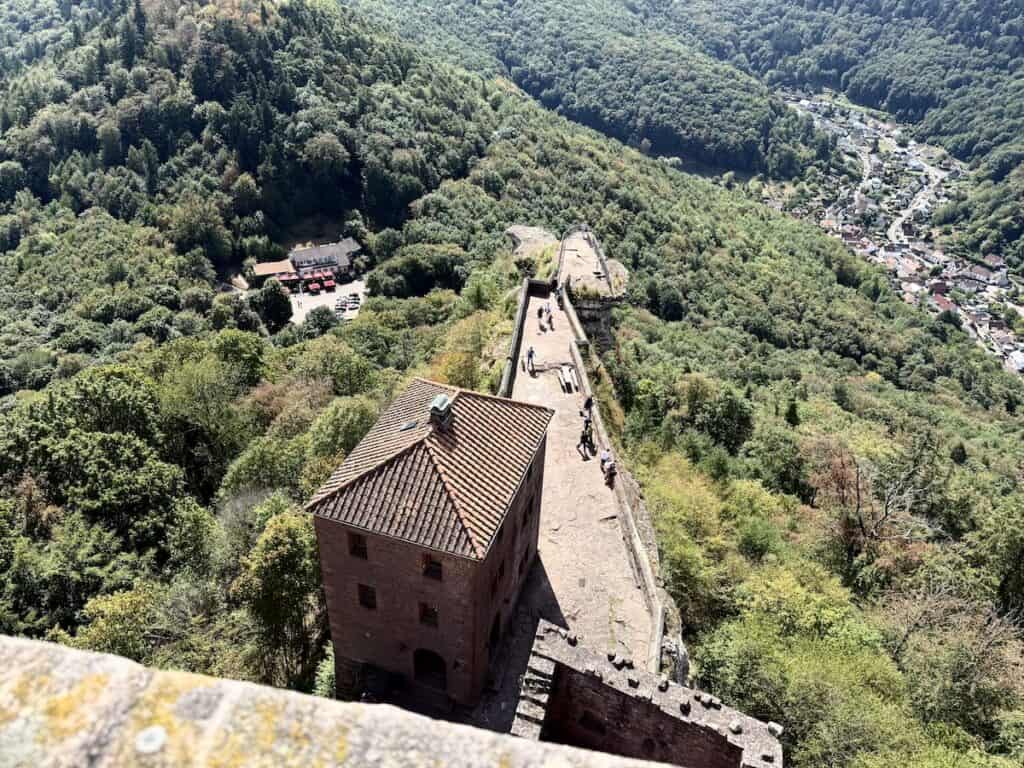
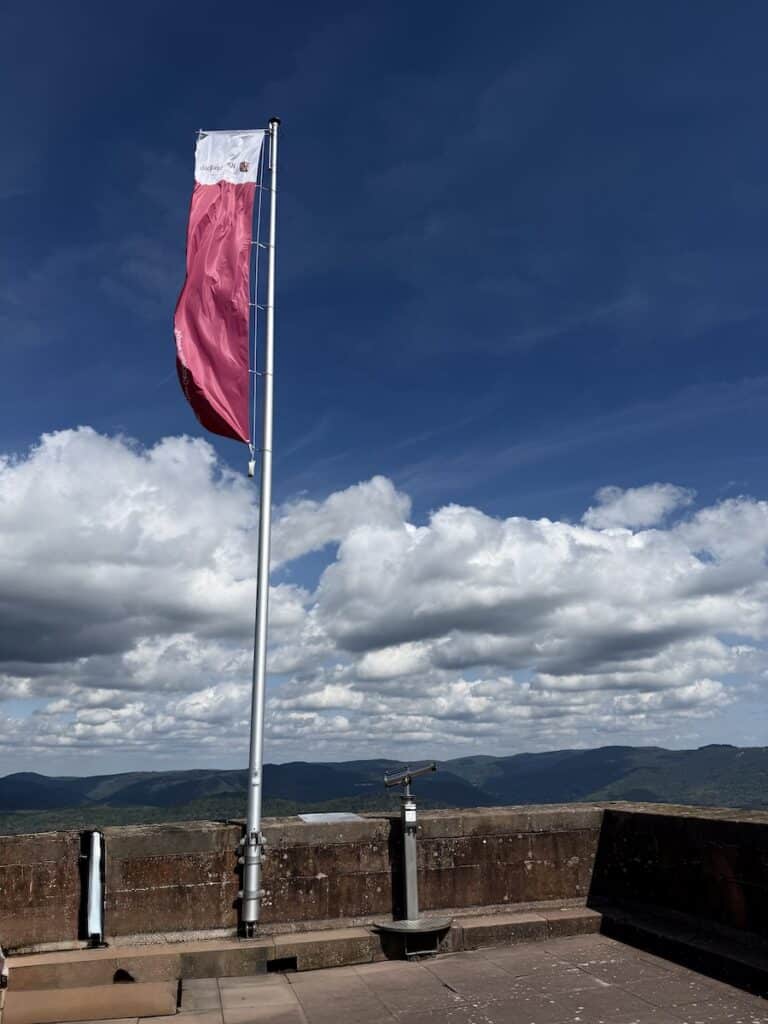
Your reward after climbing floor after floor of stairs is the rooftop view. There are coin-operated binoculars (€1) if you want to get a closer look at the surroundings, but the wide view alone is worth the climb. You can pick out other watchtowers, tall columnar rock formations, and the red rooftops of the medieval town of Annweiler below, which is worth exploring once you’re done at the castle.
Best Photo Ops
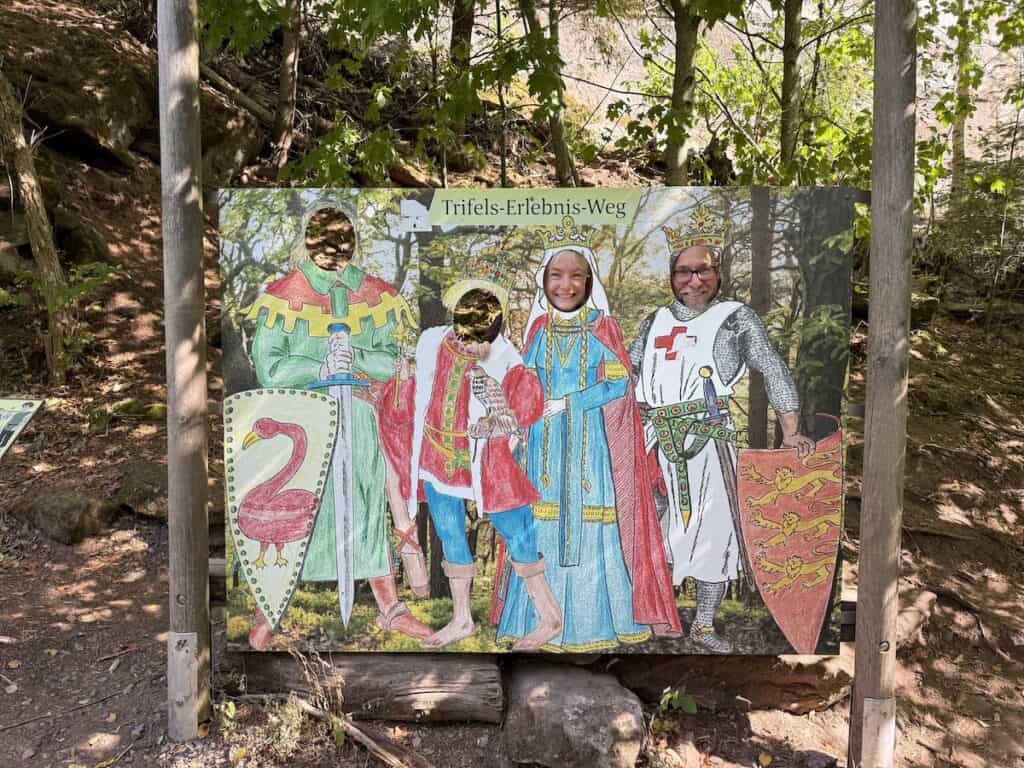
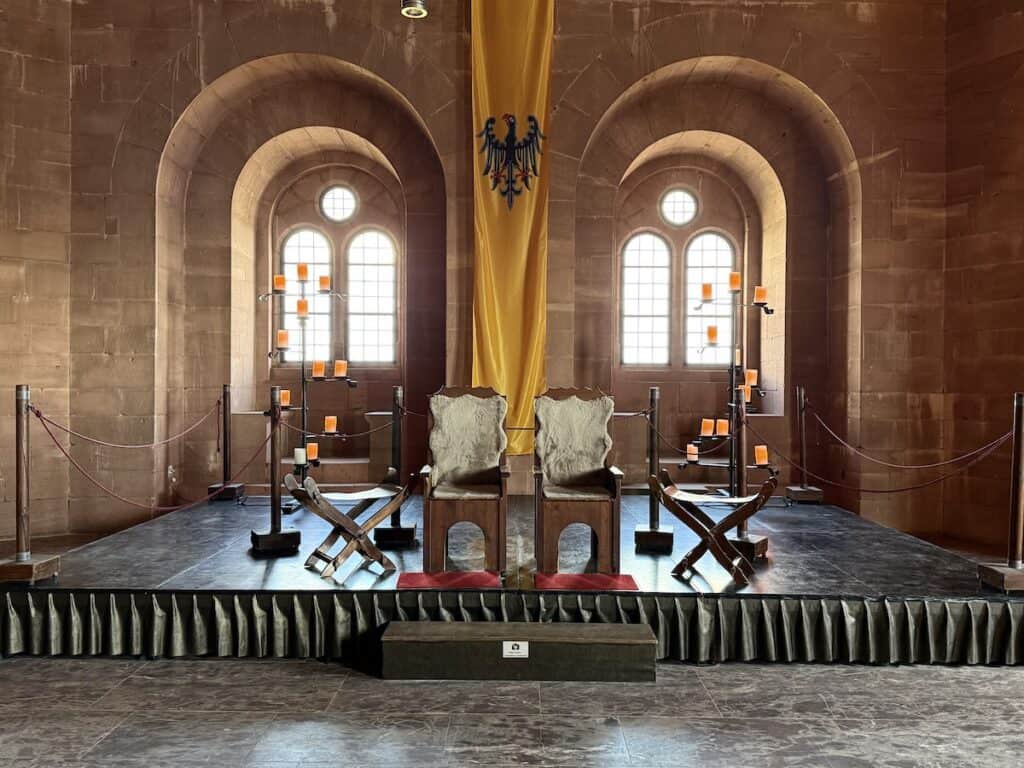
The views from the tall tower are unbeatable. And there are a couple of cute staged photo ops approaching and inside the castle. On the trail there’s one where your group can put your heads through cutouts and pose as a royal family on the trail, and there are two fur-covered thrones set up in the great hall.
Amenities
There are restrooms at the castle, picnic tables at the scenic overlook where you can bring your own lunch, a vending machine with snacks and drinks. There is no restaurant or café inside the castle, but there are a couple options right in the parking lot at the foot of the trail.
Getting Down, and What to Expect
Our trip down took about 20 minutes instead of 25, but we both felt it in our legs. If you’re traveling with older family members, anyone with mobility issues, or bad knees, this may not be the right castle for that trip. Otherwise, it’s a genuinely enjoyable day out.
Plan on at least an hour once you get to the top to explore the castle and see all the rooms, more if you want to sit with the views along the way, or linger on the observation decks.
Annweiler: Where to Eat and What Else to See
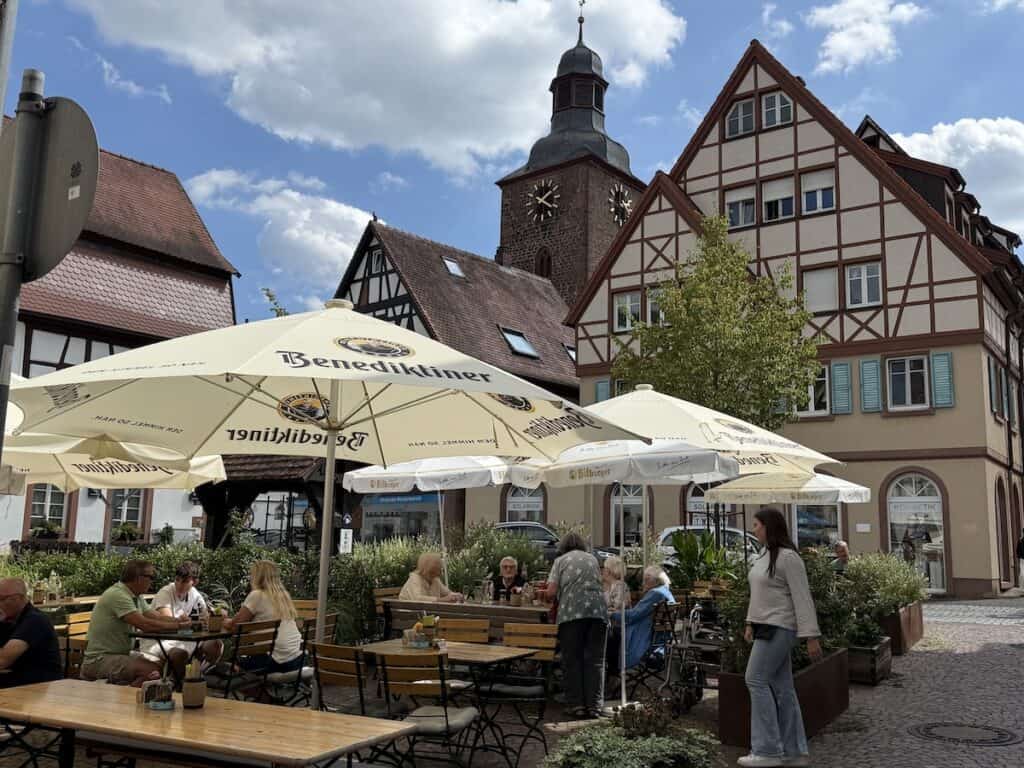
Finish your day in Annweiler’s Old Town, which we hadn’t expected much from and ended up loving. The historic center has postcard views at every turn, and really is a hidden gem in the area.
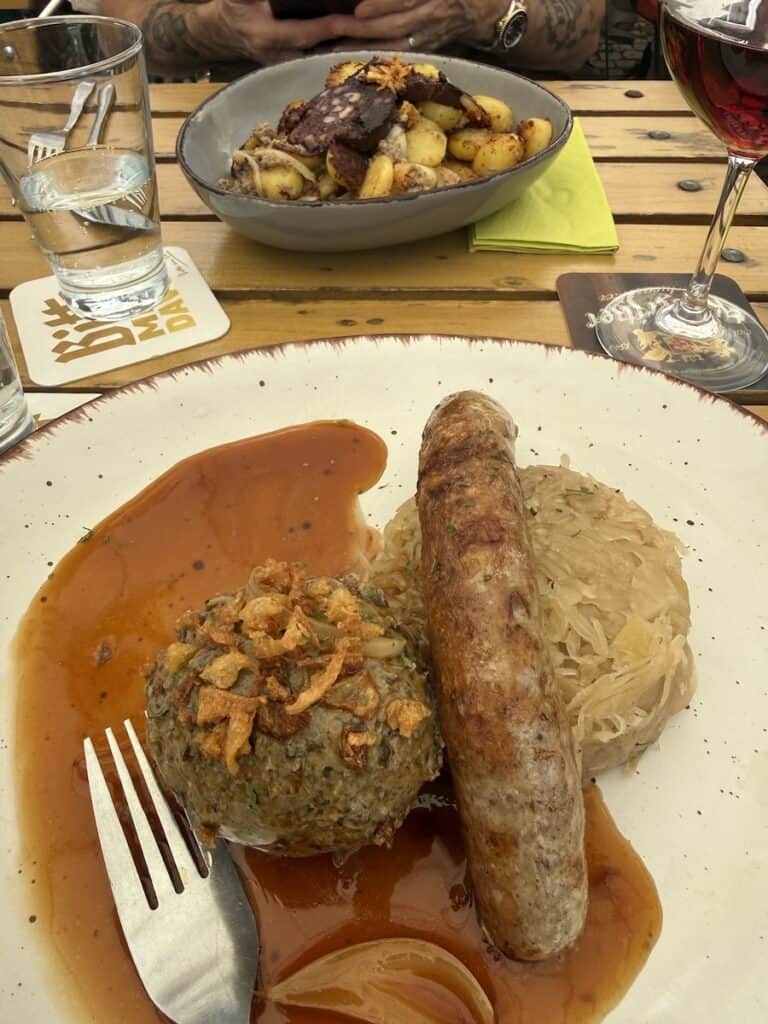
We were starving by the time we got to town and had lunch at Zum Goldenen Löwen (the Golden Lion), which has outdoor terrace seating, beer and wine, and a menu that focuses on regional Palatinate cooking.
Alongside the expected schnitzel and bratwurst, they serve a cordon bleu with liver and blood sausage. I had a bratwurst and liver dumpling on sauerkraut, and my husband had liver and blood sausage with fried potatoes. We both cleaned our plates.
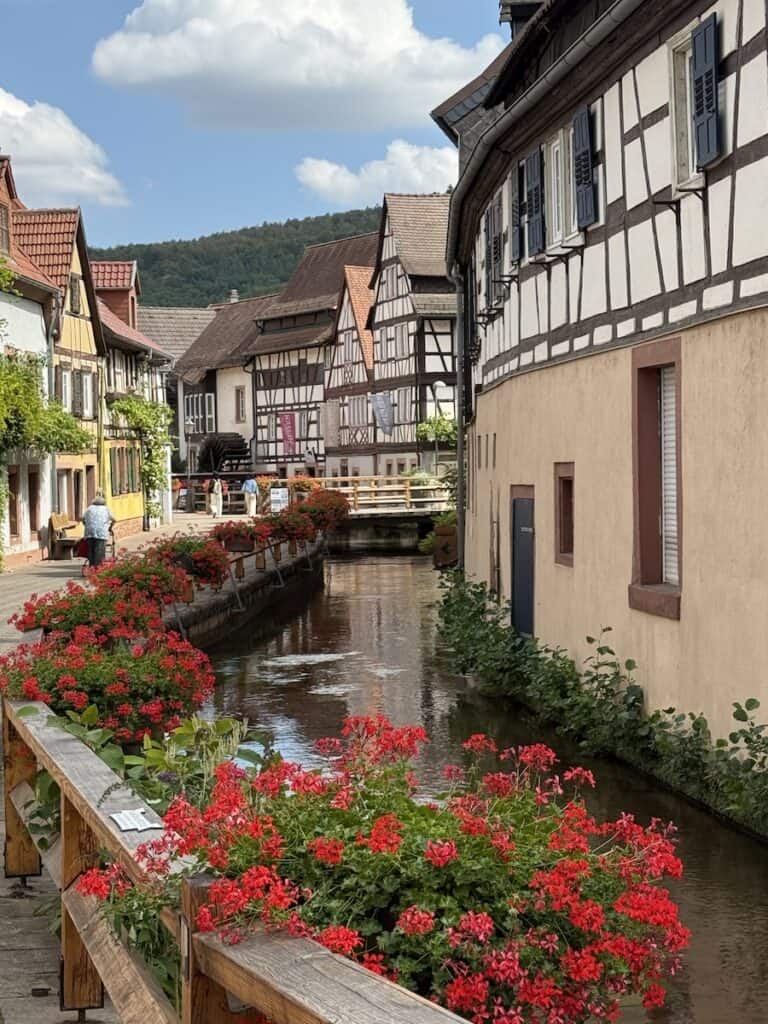
Afterward we wandered, took photos, and stopped into the small Annweiler Museum, which turned out to be one of those odd little local museums worth the detour: regional artifacts, a collection of neolithic tools from around the world, a genuinely impressive set of dinosaur fossils, and an attic full of trolls and fairies I still can’t fully explain, and several scale models of surrounding castles. It’s the kind of place where you never quite know what you’re going to find around the next corner, which is exactly why I keep visiting places like it.
We wrapped up with ice cream by the canal. A really solid day trip start to finish!
Other Posts You’ll Enjoy:
Best Day Trips from Kaiserslautern: Europe’s Most Underrated Backyard
Great Castles Near Kaiserslautern & How to Choose Your Perfect Day Trip
