
When is the best time to visit Nuremberg? I planned my visits for the first week of January and the first week of March, and both times it made me happy. I’d heard the stories: shoulder-to-shoulder crowds at the Christkindlesmarkt, tour groups stacked up outside the castle in summer, prices that spike the moment anyone mentions “Bavaria” and “Christmas” in the same sentence. I really wanted to enjoy Nuremberg’s incredible history without the crowds, so I picked the weeks nobody else picks. It worked like a charm both times.
This guide will tell you what each season actually looks like in Nuremberg, based on what I’ve seen firsthand in winter and spring, and on solid weather and event data (and second-hand accounts) for summer and fall. If your goal is history over crowds, keep reading. If your goal is the Christkindlesmarkt at full tilt, I’ll tell you when to come for that too, and maybe this year I’ll brace myself and give it a try!
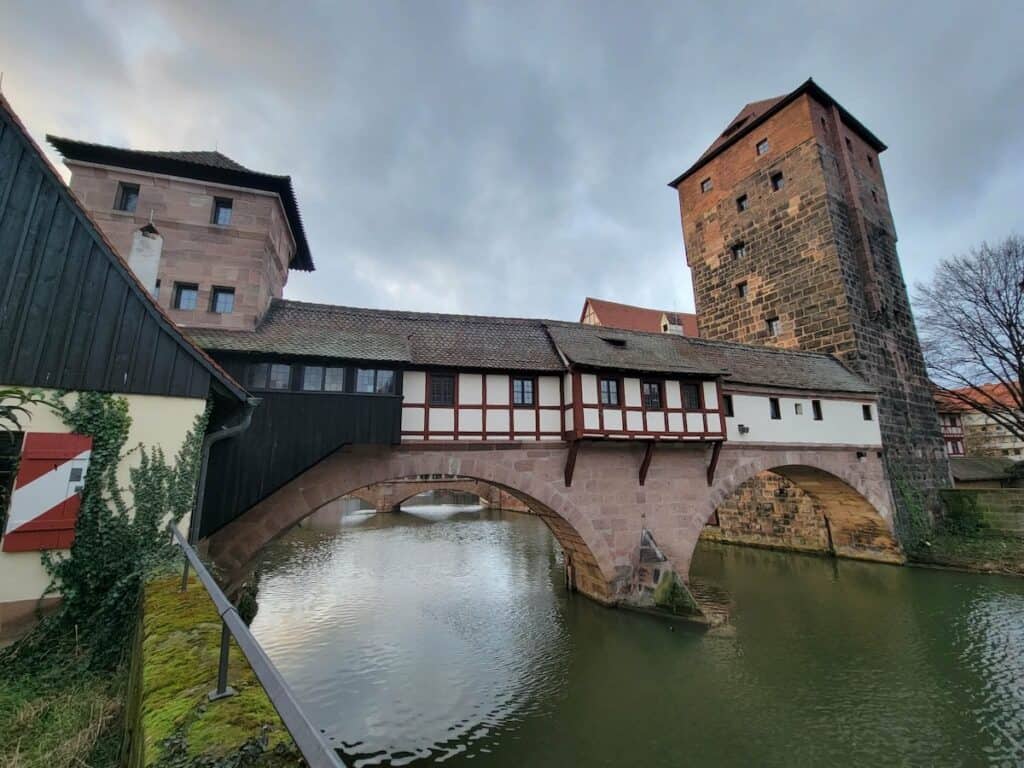
So, What Is the Best Time to Visit Nuremberg?
There’s no single right answer, it depends on what you’re after. But honestly, Nuremberg is such an incredible place, and so rich in historical treasures, there’s no wrong answer either.
Here’s the short version before the details:
| Season | Weather | Crowds | Best For |
|---|---|---|---|
| Winter (early Jan.- post-Christmas) | Cold, highs around 2-4°C (36-39°F), possible snow | Lowest of the year | History/museums, quiet Old Town, lower lodging prices |
| Winter (late Nov-Dec) | Cold, damp, occasional snow | Very high (Christkindlesmarkt) | Christmas market atmosphere, first-timers who want the full market experience |
| Spring (March) | Unstable, highs 8-10°C (46-50°F), could still snow | Low | Quiet sightseeing, still cool-weather clothing |
| Spring (April-May) | Milder, highs 18-20°C (64-68°F) | Moderate | Comfortable walking weather without summer heat |
| Summer (June-Aug) | Warm to hot, highs 24-25°C (75-77°F), can spike above 35°C | Highest of the year outside Christmas | Long daylight hours, beer garden season |
| Fall (Sept-Oct) | Mild, drier than summer, highs around 18-20°C (64-68°F) | Moderate, drops off after October | Comfortable weather, fewer crowds than summer |
Weather information is from climate averages pulled from multiple meteorological sources and represent typical conditions. This, of course, is not a guarantee for any specific week and you should always check current weather conditions in Nuremberg right before you travel.
Nuremberg in Winter: The Week After Christmas
This is the trip most people don’t think to plan, and it’s the one I’d point history-focused travelers toward first.
I went in the first week of January, after the Christkindlesmarkt had already closed and most of the holiday crowds had gone home. I was brilliant! The Old Town was cold but not brutal, and I never needed more than a medium coat. I wore lined boots built for walking, not fashion boots, and that mattered because the cobblestones can get slick when wet or freezing, and there’s nothing to kill a day like cold feet! (Take it from someone who lived in Alaska for 30 years!)
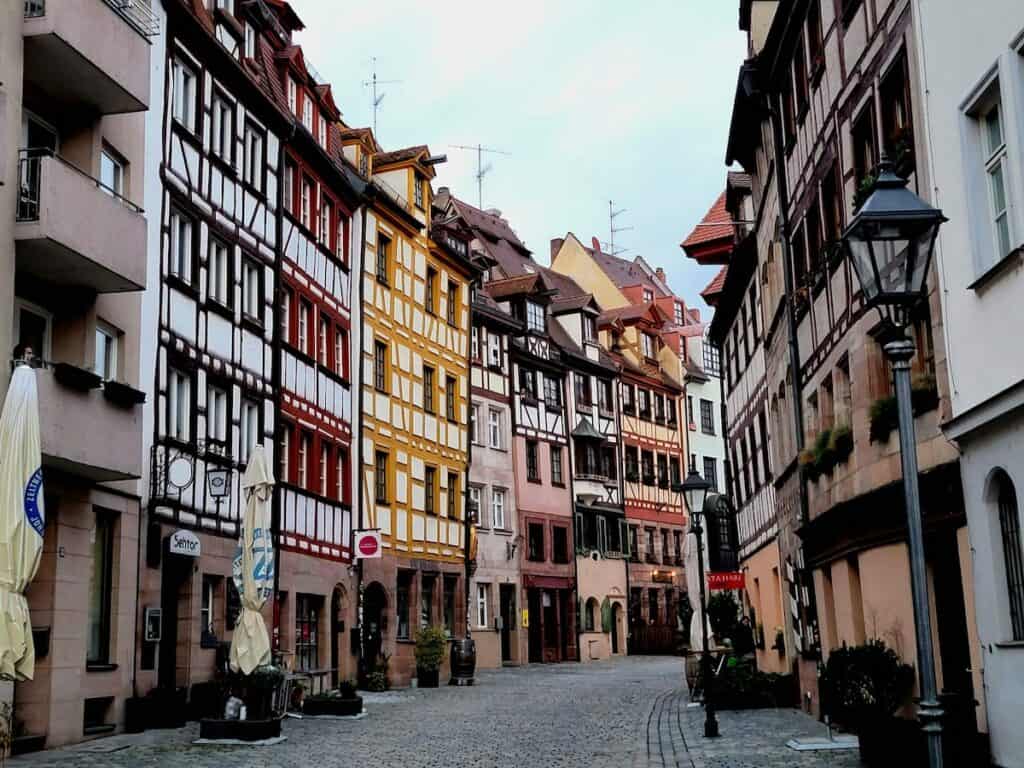
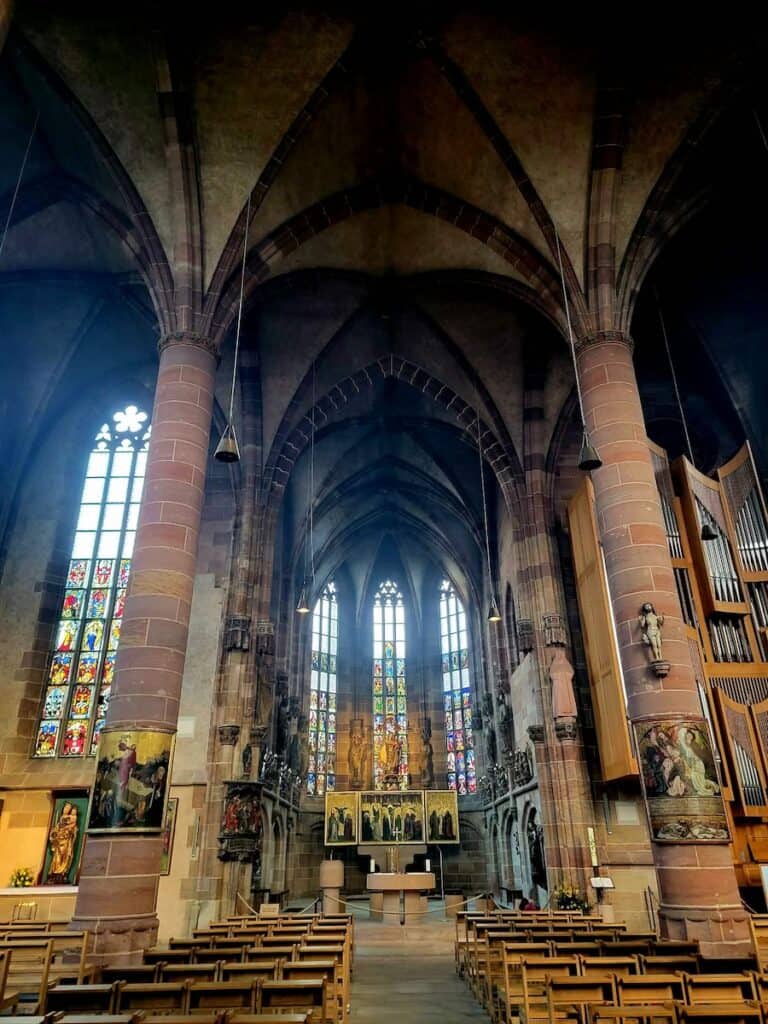
What struck me most was the quiet. I could stand in front of St. Sebaldus or wander Weißgerbergasse without waiting for a tour group to clear the frame. Lodging prices drop once the market crowds disperse, and hotels that book out months ahead for December have plenty of availability in early January. It was perfect for what I wanted.
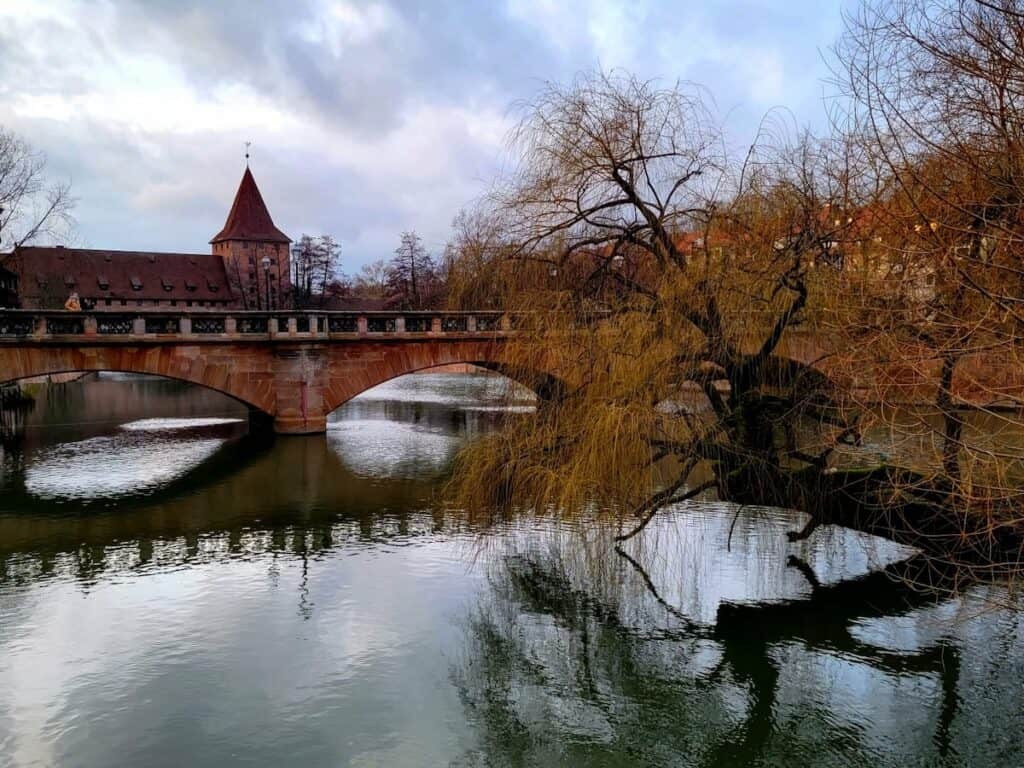
A few practical notes from that trip: the Hangman’s House is closed from January through March, so if that’s on your list, this isn’t the season for it. The castle runs shorter hours in winter, 10 AM to 4 PM October through March, versus 9 AM to 6 PM the rest of the year, so plan your day around that rather than assuming summer hours. And book the Art Bunker tour in advance regardless of season because it will sell out. It also doesn’t sell walk-up tickets.
If you want all of Nuremberg’s history without bumping elbows with anyone, this is your window. And there’s really something to be said for snug dark taverns with a bowl of stew and a smoked beer or a hot gluhwein.
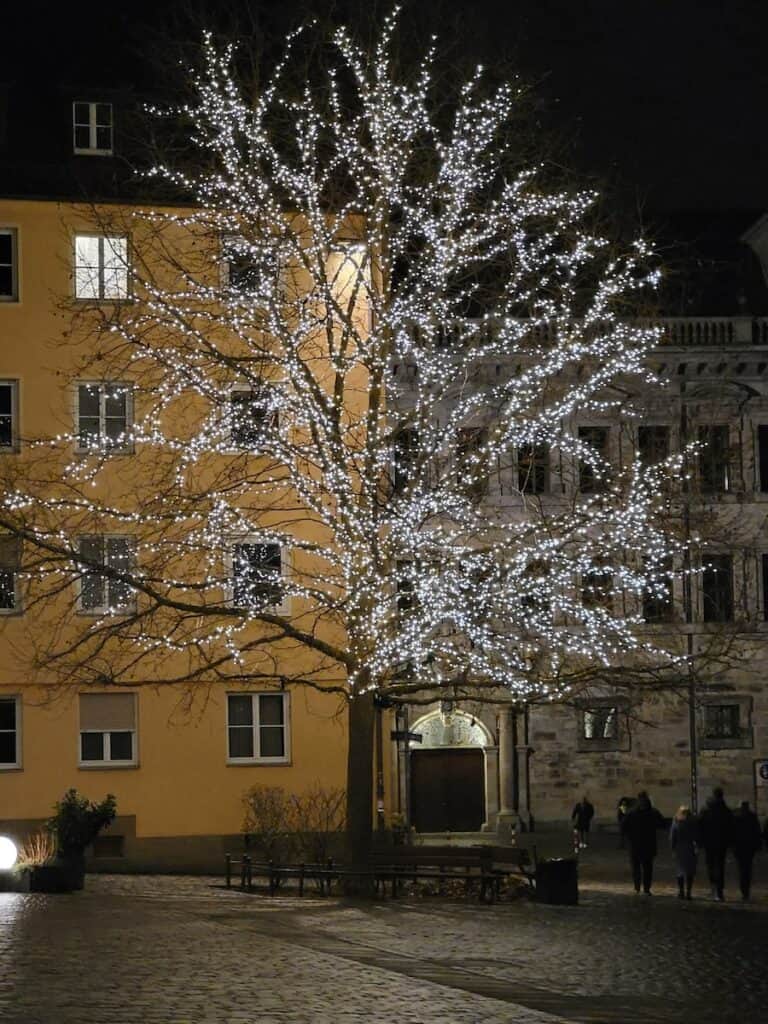
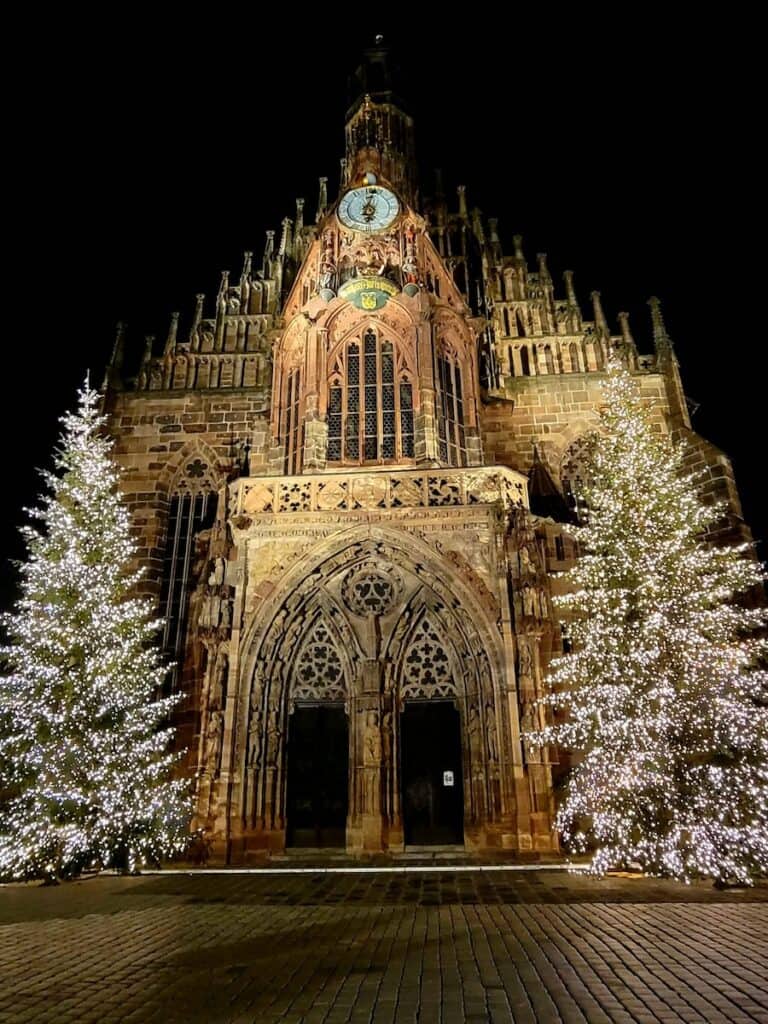
Nuremberg in Spring: The First Week of March
“Spring in Nuremberg” conjures images of blooming gardens and mild afternoons, and that’s true by late April or May. The first week of March is not that. It’s still deep transitional weather, closer to the tail end of winter than the start of a mild spring. Highs typically run 8-10°C (46-50°F), and snow is still a possibility into March and sometimes mid-April.
What I found was the same quiet, cool-but-manageable version of Nuremberg I’d experienced in January, just with slightly longer daylight and a little less bite in the air. No crowds, no lines, comfortable walking in the same kind of lined boots I wore in winter. Evenings were chilly, not cold. Daytime was somewhere between sweater weather and needing a real coat.
If you’re chasing the flowering-garden version of spring, wait for late April or May, when highs climb to 18-20°C (64-68°F) and the parks around the city start to green up. If you’re chasing what I found, quiet streets and comfortable history-focused sightseeing without summer’s crowds, the first week of March delivers exactly that, as long as you pack for cold rather than mild.
Nuremberg in Summer: Warm Days, Bigger Crowds
I haven’t personally visited Nuremberg in summer, so this section runs on weather data and general seasonal patterns and stories from those who’ve gone during the summer months.
June through August brings Nuremberg’s warmest and driest-feeling stretch, though July is technically the wettest month by rainfall total, prone to short afternoon thunderstorms rather than steady rain. Highs average 24-25°C (75-77°F), with an occasional spike well above that. Nuremberg has not been immune to the crazy heat waves in recent years here in Germany. It’s gotten past 35°C (95°F) in recent summers, so pack for both comfortable warm days and also the possibility of a genuine heat wave.
This is also peak tourist season for Bavaria generally, and Nuremberg pulls crowds from travelers using it as a base for day trips to Rothenburg ob der Tauber and Bamberg, both about 45 to 75 minutes away by train. If you’re set on summer, early mornings and late afternoons will be your quietest windows for the castle and Old Town, with midday better spent in one of the city’s beer gardens waiting out both the heat and the crowds.
And of course, weekdays rather than weekends will limit the crowds a little bit because locals love to enjoy Nuremberg on the weekends too.

Nuremberg in Fall: The Comfortable Middle Ground
September and October offer some of the most comfortable weather of the year, drier than summer with highs typically in the high teens to low 20s Celsius (64-70°F), and crowds noticeably thinner than peak summer once October gets underway.
Nuremberg isn’t an Oktoberfest destination – that belongs Munich – but Franconian beer garden culture lasts all through summer and fall, and the region’s harvest season brings its own food and wine events. By late November, the whole focus of the town is the Christkindlesmarkt, one of the oldest and most beloved Christmas markets in Germany. With that, hotel availability starts to shrink as the market time approaches. If you want fall’s comfortable weather without any Christmas crowds, aim for September through mid-November.
When to Visit for the Christkindlesmarkt
Nuremberg’s Christkindlesmarkt is one of the oldest and most famous Christmas markets in the world, drawing over two million visitors during its annual run! It typically opens in late November and continues through Christmas Eve. If the market itself is your reason for visiting, be prepared for a stunning Christmas market, but also for the highest crowds and prices of the year, and hotels that book out months in advance.
A few strategies if you’re set on seeing the market itself rather than the quiet post-Christmas version I experienced: visit on a weekday rather than a weekend, arrive early in the day before tour buses unload, and book your hotel as far ahead as you can, ideally several months out. If crowds are a dealbreaker but you still want the festive Old Town atmosphere without the market itself running, the week right after Christmas, which is what I did, gives you the decorations and the cold-weather charm minus the market stalls and the mobs.
Best Time to Visit Nuremberg From Kaiserslautern
If you’re stationed at KMC or otherwise based near Kaiserslautern, Nuremberg is a manageable weekend trip. It’s about 290 km (180 miles) by car, roughly 2.5 to 3 hours depending on traffic, or a train connection running through Mannheim and Frankfurt in around 4 hours.
A few timing notes specific to military family logistics:
Three-day weekends work well for Nuremberg since two to three days is genuinely enough time to see the highlights without rushing. Federal holiday weekends throughout the year give you a built-in window without burning extra leave.
Where to Stay, By Season
Choosing where to stay shifts depending on when you’re coming. In the quiet months, you wil have real flexibility and greater choice closer to the time you visit. Historic properties like Hotel Elch in the Castle District are easy to book without months of lead time.
During the Christkindlesmarkt window, book as early as possible regardless of which part of the Old Town you’re targeting, since availability tightens fast. Many properties will let you cancel reservations with no penalty if your plans change, so it’s worth it to book ahead to be safe. For a full breakdown of where we’ve personally stayed and our research-backed picks by budget, see our complete guide to where to stay in Nuremberg.
FAQs About the Best Time to Visit Nuremberg
What is the best time to visit Nuremberg?
It depends on your priority. For the Christkindlesmarkt experience, late November through December is the only real option. For quiet, crowd-free sightseeing focused on Nuremberg’s history, the week after Christmas or the first weeks of March deliver the lowest crowds and lowest lodging prices of the year. And late spring and summer are the times to enjoy the beer gardens, and flower gardens!
Is Nuremberg cold in winter?
Yes. January highs average around 2-4°C (36-39°F), with lows dropping below freezing. Pack a real coat, warm layers, and boots built for walking on cold cobblestones, not just fashion boots.
Does it get crowded in Nuremberg?
It depends entirely on timing. The Christkindlesmarkt window and peak summer bring the heaviest crowds. Early January and early March, based on my own visits, were close to empty by comparison, no lines, no crowd management, just open streets and short waits at every site.
Final Thoughts on the Best Time to Visit Nuremberg
If you’re coming for the Christkindlesmarkt, plan around late November through December and accept the crowds as part of the experience. If you’re coming for the history, the castle, the churches, the Art Bunker, the trials memorial, consider going against the grain. Early January and early March gave me a version of Nuremberg where I could actually stand still in front of something five hundred years old without anyone behind me waiting their turn. That’s worth the cold to me!
Check Out Our Other Nuremberg Guides
The 25 Best Things to Do in Nuremberg
Where to Stay in Nuremberg: Best Hotels for 2026
