
Is Nuremberg worth visiting? Yes, and I didn’t even have to think about it. There are few cities as truly compelling and rich in history as Nuremberg. I’ve been twice now, once for the Old Town’s history and architecture in early spring, once for the quiet post-Christmas version of the city, and both trips left me wanting (and planning) a third. Nuremberg gets overshadowed by Munich in most Germany itineraries, or treated as a day trip or a Christmas market stopover rather than a destination in its own right. That’s a mistake, and here’s why.
Why Nuremberg Is Worth Visiting
A City That Rebuilt Almost Everything You See
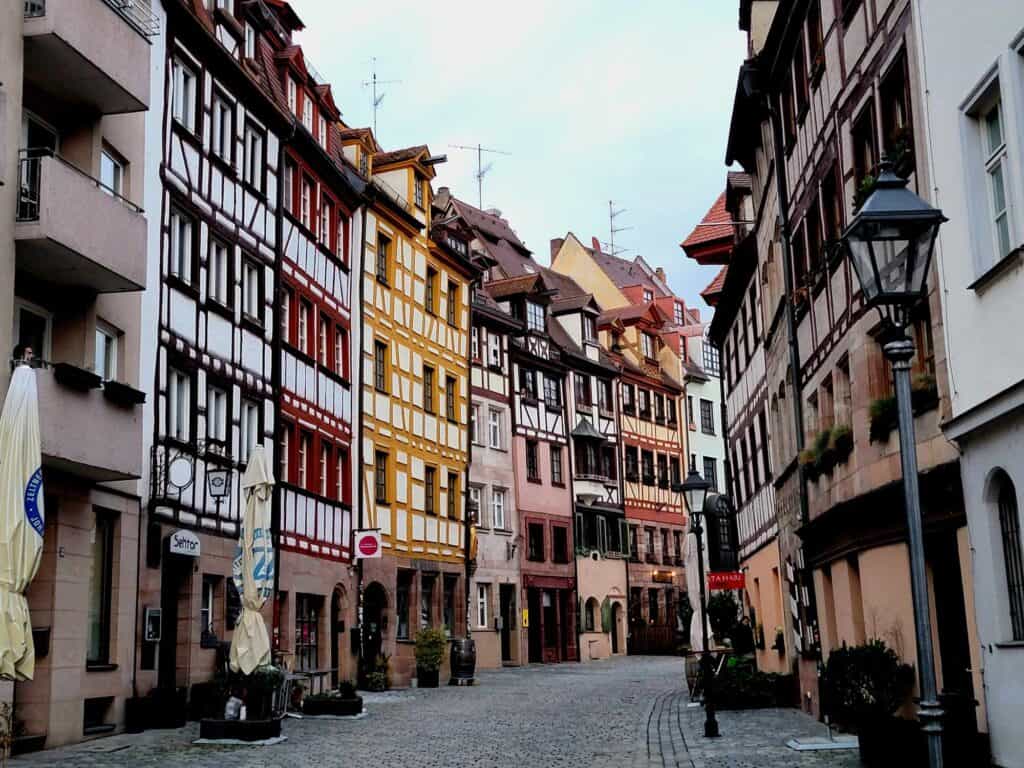
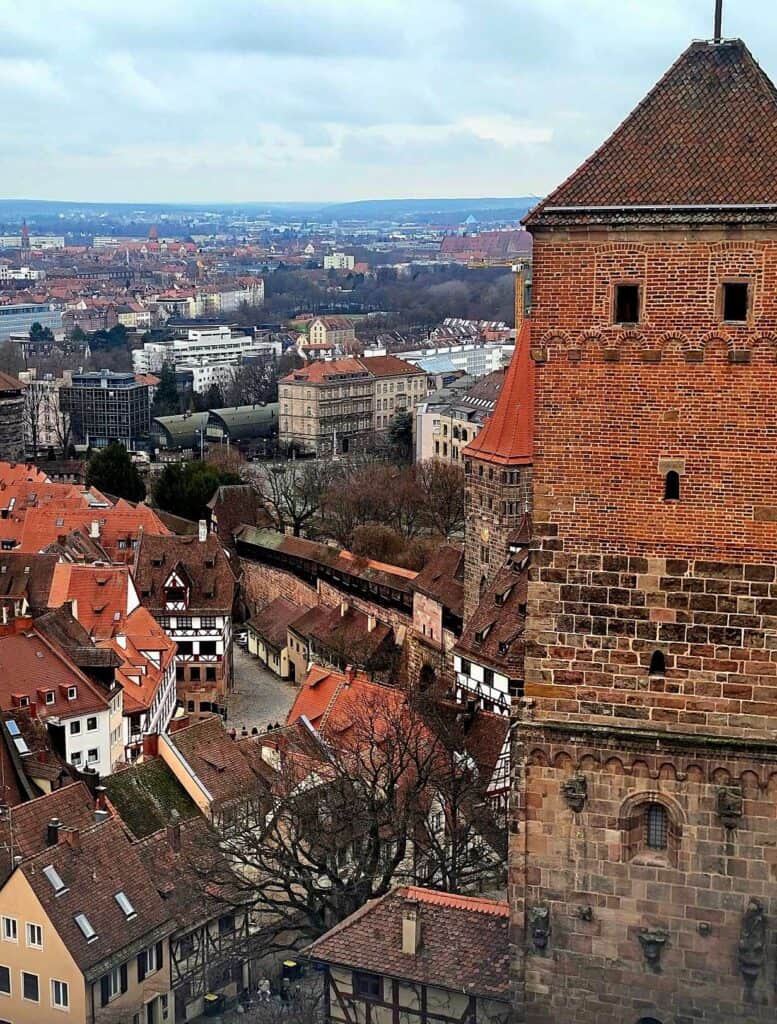
Allied bombing during World War II reduced most of Nuremberg’s Old Town to rubble in January of 1945, and once you get there, you’ll hardly believe it. What you’re walking through today, the cobblestones, the half-timbered facades, the Gothic church spires, were largely reconstructed afterward, in many cases using their original stones. Like Dresden it’s the thing that makes Nuremberg different from cities that either lost their historic core permanently or never had one destroyed at all. You’ll get the medieval atmosphere and the story of how it survived, side by side.
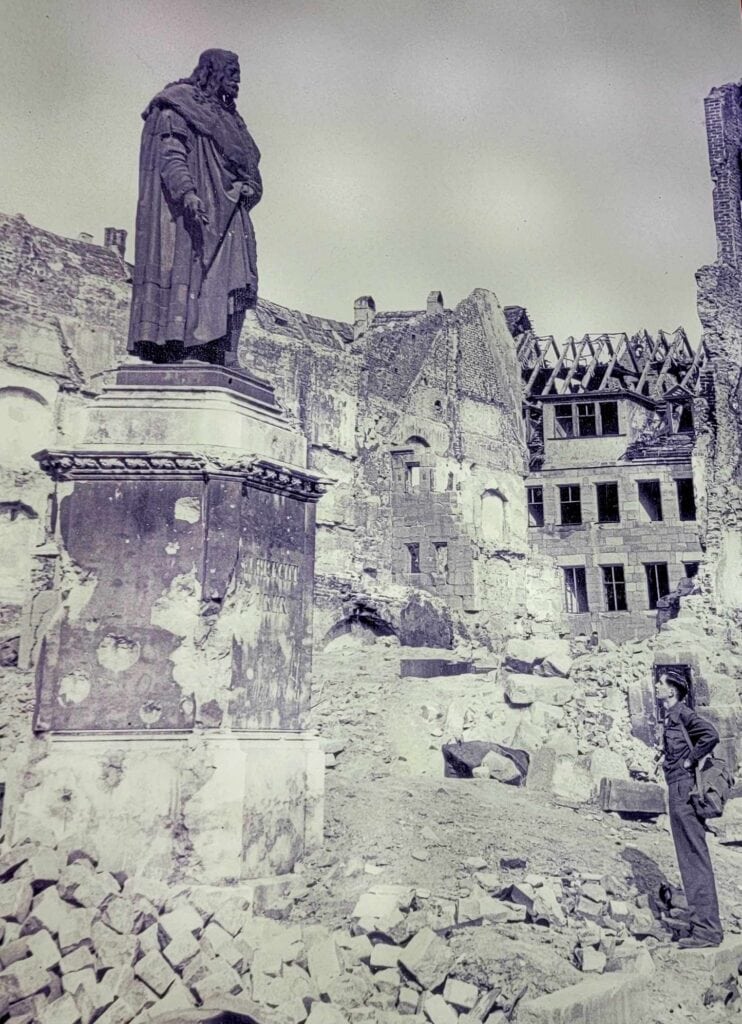
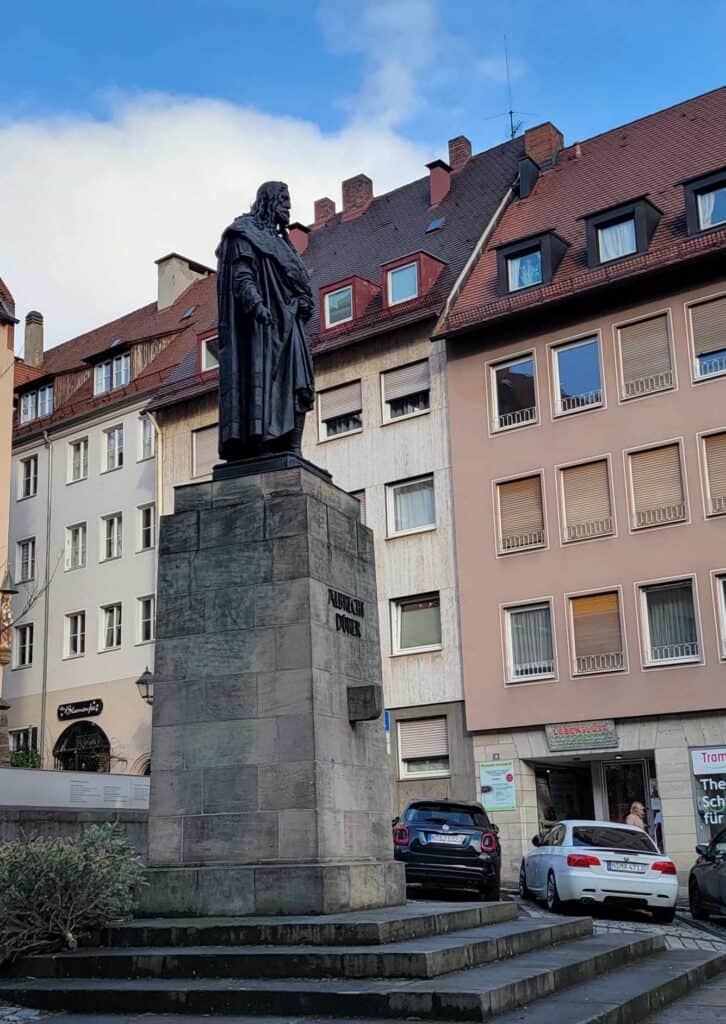
And the things that actually survived the war have incredible stories of their own – like Germany’s greatest artist Albrecht Dürer’s home which incredibly remained standing in the middle of the devastation, along with a bronze statue of him. Or like the precious artworks and stained glass that survived by being scurried away into deep tunnels under the castle to escape the bombing. Or the 15th century tabernacle which was sandbagged in place at St. Lorenz Church where it still stands today. Miracles abound here.
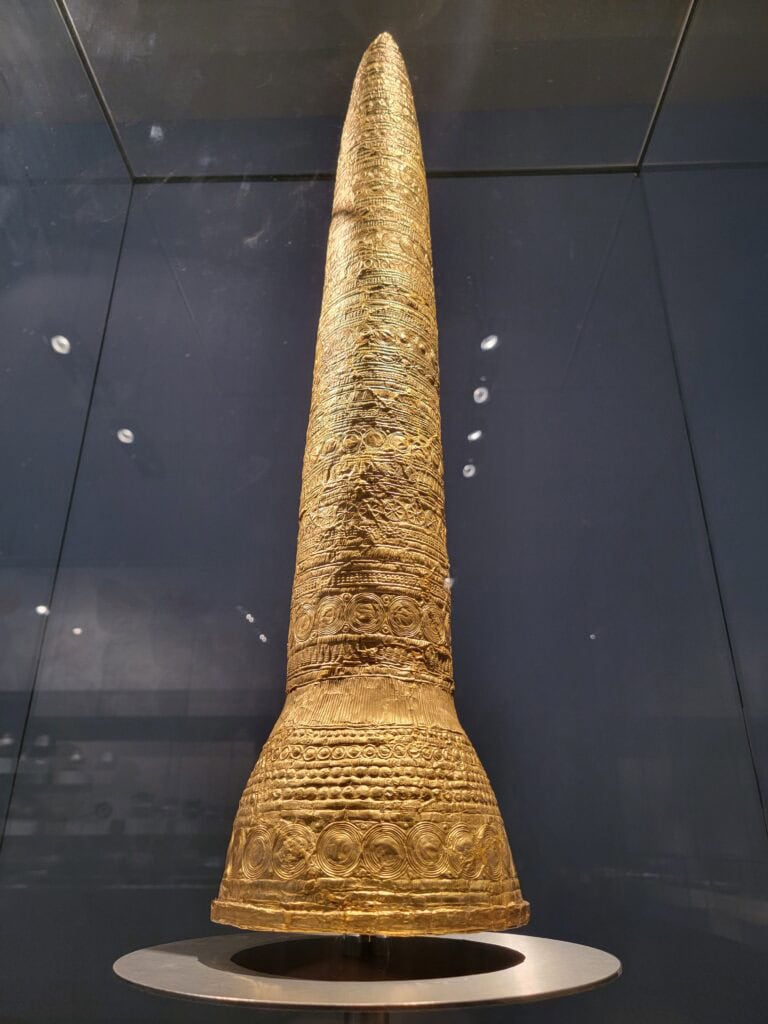
History Layered on History, Not Sanitized
Nuremberg was one of the wealthiest, most powerful cities of the Holy Roman Empire, home to Albrecht Dürer, keeper of the Empire’s Imperial Regalia. It’s also the city Hitler chose as the symbolic staging ground for Nazi rallies, and later the city where the Nuremberg Trials that brought Nazis to justice established the modern framework for international law.
Most cities pick one identity to sell tourists. Nuremberg presents all of it, the medieval castle, the Renaissance art, the Documentation Center at the former Nazi rally grounds, Courtroom 600 where the trials happened, without pretending any part of it didn’t happen. That combination of depth and honesty is rare, and it’s the single biggest reason I keep coming back.
A Genuinely Useful Base for Day Trips
Nuremberg sits inside easy striking distance of Rothenburg ob der Tauber and Bamberg, both under 90 minutes away by train, which makes it a strong home base if you want Franconia’s medieval towns without switching hotels every night. If you’re building a Bavaria itinerary and trying to decide between basing yourself in Munich or Nuremberg, Nuremberg’s central position in Franconia gives you more variety within a shorter radius.

It’s Dog-Friendly
If you’re traveling with a dog, Nuremberg makes it easy. Lots of hotels in the Old Town, including the two we’ve personally stayed at, welcome dogs for a nightly fee, and the Old Town’s walkability means you’re not relying on transit to get your dog from the hotel to dinner and back.
What About the Nazi History? Is It Too Heavy?
Nuremberg’s WWII history is unavoidable if you spend any real time in the city, and some of it is genuinely heavy: the Documentation Center isn’t recommended for children under 14, and the exhibits don’t soften what happened. But the city’s handling of that history is also what makes a visit worthwhile rather than something to avoid. Nuremberg doesn’t present itself as a victim of the war, or bury the story.
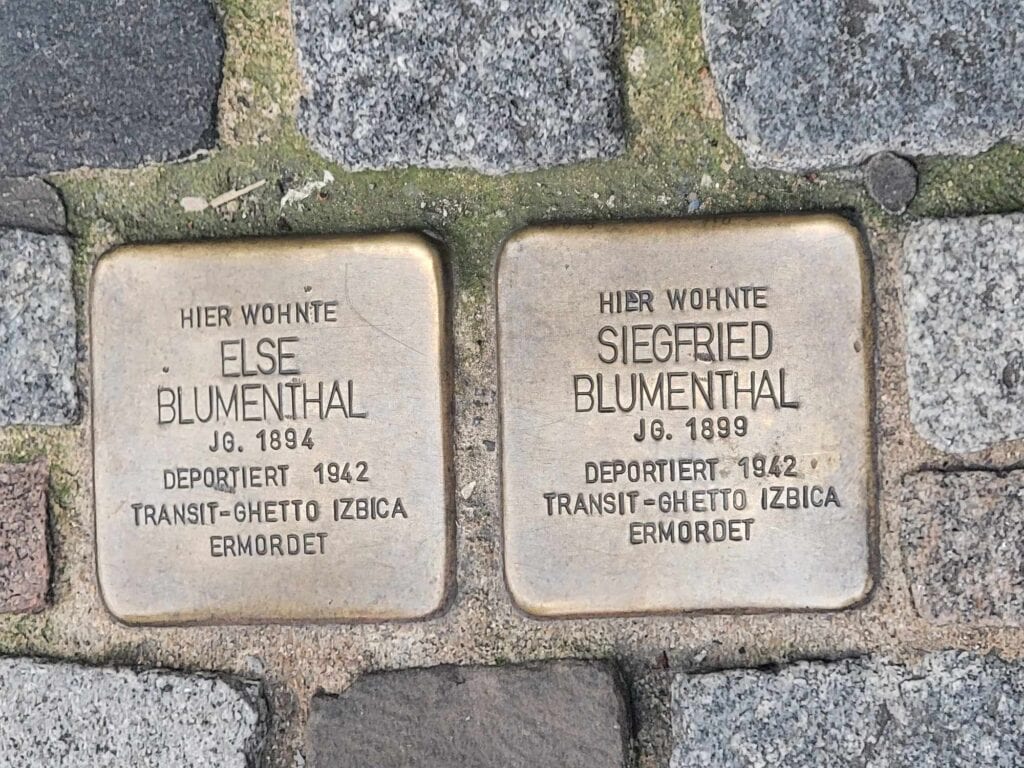
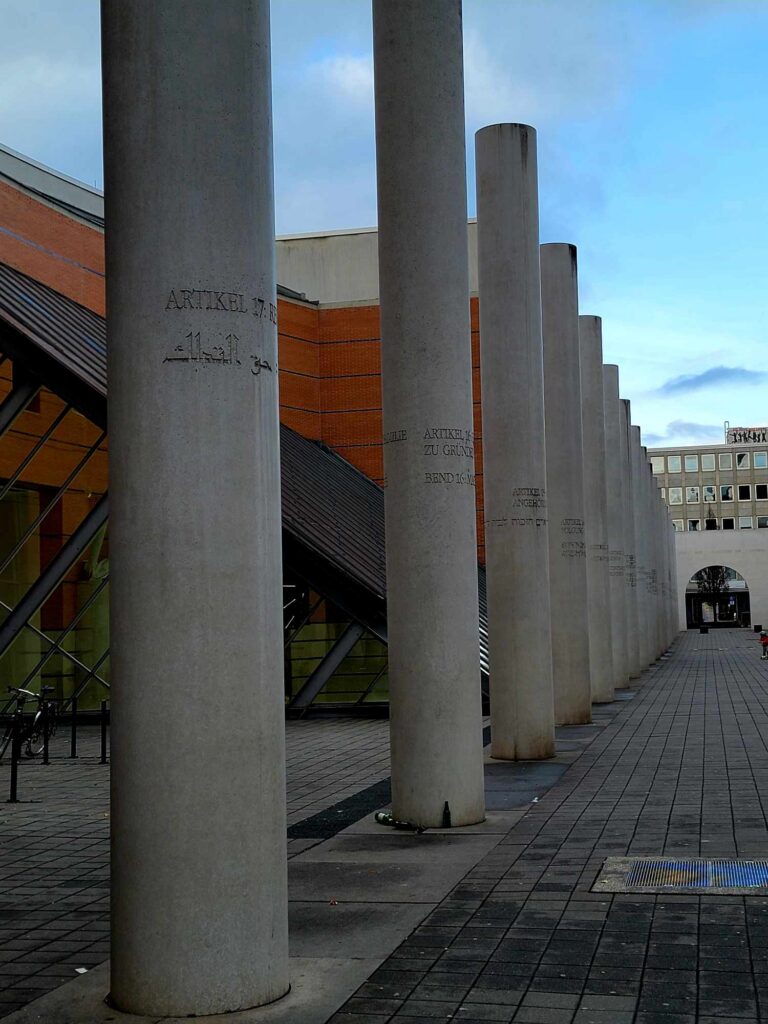
Nuremberg built the Way of Human Rights as a tribute to international justice, preserved the Stolpersteine markers to commemorate and memorialize those kidnapped to concentration camps throughout ordinary residential streets, and turned Courtroom 600 into the place where the beginning of modern accountability for war crimes is explained in detail. You can choose how deep to go. You can focus only on the medieval history, or you could do a full day working through the WWII sites, but the option to engage seriously with that history is part of what sets Nuremberg apart from a city that only offers medieval charm.
Who Nuremberg Might Not Be For
If your idea of a great trip is beaches, nightlife, or a fast-paced modern city, Nuremberg may not be the place for you. The beach is medieval buildings by the river; the nightlife is a liter of beer and boar stew in a candlelit tavern; and the pace of the city feels like 1500.
It’s a history and culture destination first, with a compact, walkable Old Town built around churches, museums, and medieval streets rather than clubs or shopping districts. That makes it perfect for history and art nerds, those who love the atmospheric vibe of the middle ages, those curious to learn, and people who like traveling at a slower pace.
How Long Do You Need in Nuremberg?
Two to three days covers the highlights comfortably: the castle, Old Town, Dürer sites, and at least one of the WWII sites. If you want to add day trips to Rothenburg or Bamberg, budget an extra day per trip. A single day is workable if you’re tight on time, but you’ll be picking and choosing rather than seeing it properly. And honestly I stayed longer than three days each time, and still want to go back for more!
FAQs About Whether Nuremberg Is Worth Visiting
Is Nuremberg worth visiting for history lovers specifically?
Yes, more than almost any other German city. Few places combine medieval, Renaissance, and WWII history as directly and as honestly as Nuremberg does within a single walkable Old Town.
Is Nuremberg worth visiting if I only have one day?
It’s workable but pretty tight. One day gets you the castle, a walk through the Old Town, and maybe one WWII site, or a couple churches, or the Dürer House. Two to three days lets you actually absorb it instead of rushing.
Is Nuremberg worth visiting outside of Christmas market season?
Absolutely, and in some ways it’s a better experience. Outside the Christkindlesmarkt window, you get the same historic Old Town with a fraction of the crowds and lower lodging prices.
Is Nuremberg worth visiting with kids?
It depends on their ages. The castle with it’s tall tower and deep well, the Old Town, and the Toy Museum work well for families. The Documentation Center isn’t recommended for children under 14, and the medieval dungeons don’t admit anyone under 10, so plan around those restrictions if you’re traveling with younger kids.
Final Verdict: Is Nuremberg Worth Visiting?
Yes and yes! Nuremberg does something almost no other German city manages: it holds its full history, Empire, medieval wealth, Renaissance art, and 20th-century darkness and redeption, in the same walkable space, without smoothing any of it over. You reallly don’t want to miss a chance to dig in and uncover all Nuremberg has to offer. You can learn more about Nuremberg by reading our guides below or visiting the official Nuremberg Tourism Office site.
Check Out Our Other Nuremberg Guides
The 25 Best Things to Do in Nuremberg
