
We went to the Ghent Christmas market because we found ourselves with no guests in town, no obligations, no plans at all. We thought: why not spend the Christmas holiday exploring somewhere completely new? So we found a place where the festivities didn’t end on December 23rd, but carried on every day into January including on Christmas Eve and Christmas Day!
I did not expect to fall head over heels in love with Ghent, Belgium in the process, but here we happily are.
The famous medieval town of Bruges tends to steal the spotlight in western Belgium, and it deserves its accolades. But Ghent is something else that the guidebooks haven’t quite caught up with yet. Wide canals, jaw-dropping architecture across every era from medieval to Art Nouveau, and a Christmas market that runs through the whole historic center. Everyone seemed genuinely happy to be there, and that happiness was contagious. I felt actually jolly from head to toe from the moment we arrived.
So, if you only go to Bruges, you’re missing half of Belgium’s best Christmas market weekend.
Ghent Christmas Market Information
📅 2026 Dates: December 3, 2026 – January 3, 2027
🕐 Hours: Mon-Thu noon-midnight | Fri noon-1am | Sat-Sun 11am-1am/midnight
🎄 Christmas Day: 2pm-midnight (yes, it’s open!)
🎆 New Year’s Eve: 11am-5pm
📍 Location: Sint-Baafsplein, Botermarkt, Klein Turkije, Korenmarkt
🎡 Ferris wheel: Grand Soleil at Sint-Baafsplein
⛸️ Ice skating: Stadshal (City Pavilion), December 4-31
🏰 Don’t miss: Gravensteen Castle Winter Wonderland — *book tickets in advance
⭐ Also don’t miss: The Ghent Altarpiece — *book tickets in advance
🚗 Drivers note: Ghent has a low emission zone covering the historic center. Check your vehicle’s eligibility and register it before driving in.
The Whole City is the Christmas Market
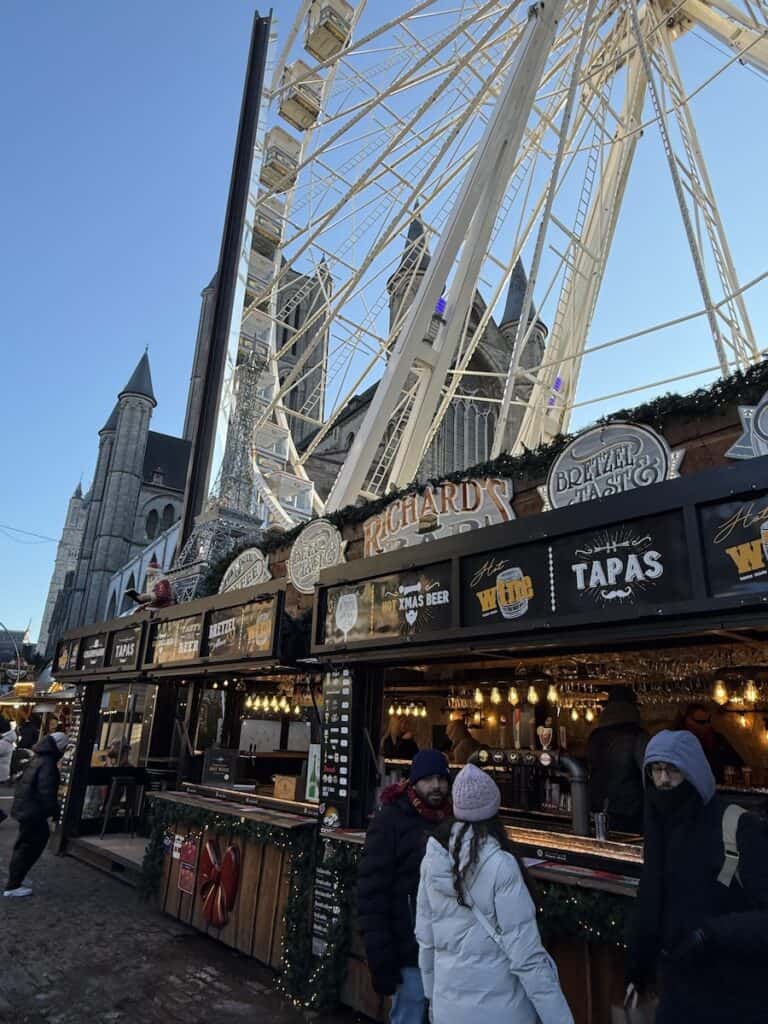
Like Bruges, you don’t just visit the Ghent Christmas market. You visit Ghent at Christmastime. The official Gentse Winterfeesten spreads across more than 150 wooden chalets winding through the historic center from Sint-Baafsplein past the Belfry and Sint-Niklaaskerk all the way to Korenmarkt. The whole neighborhood decorates, and the streets between the squares are as festive as the squares themselves.
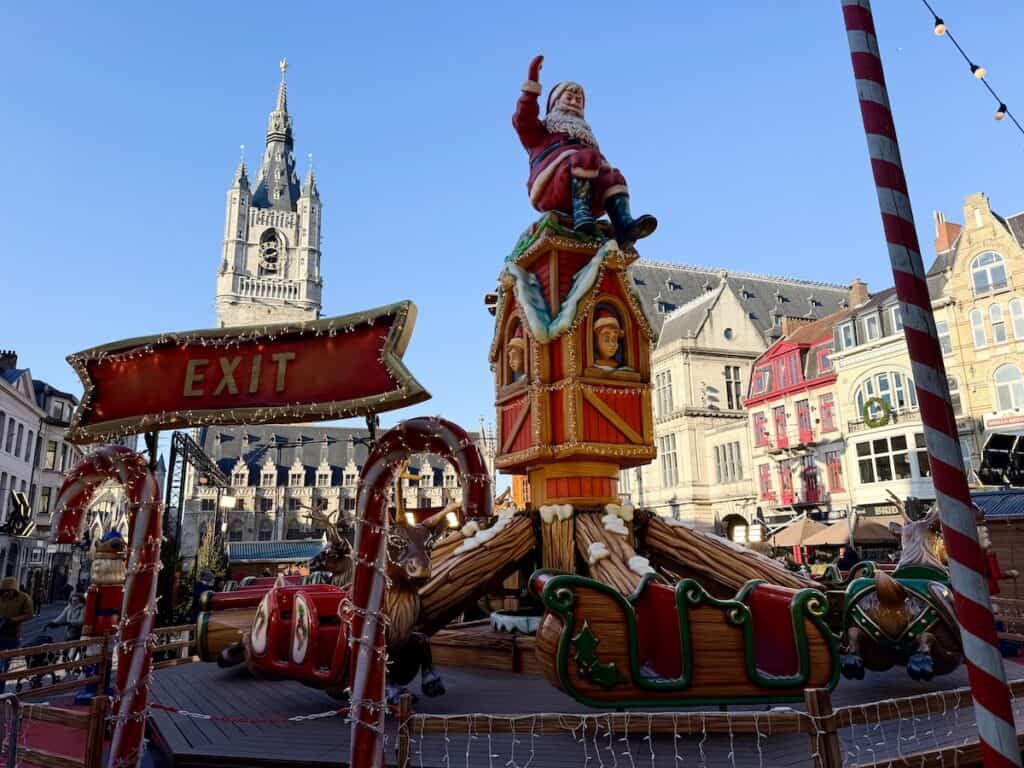
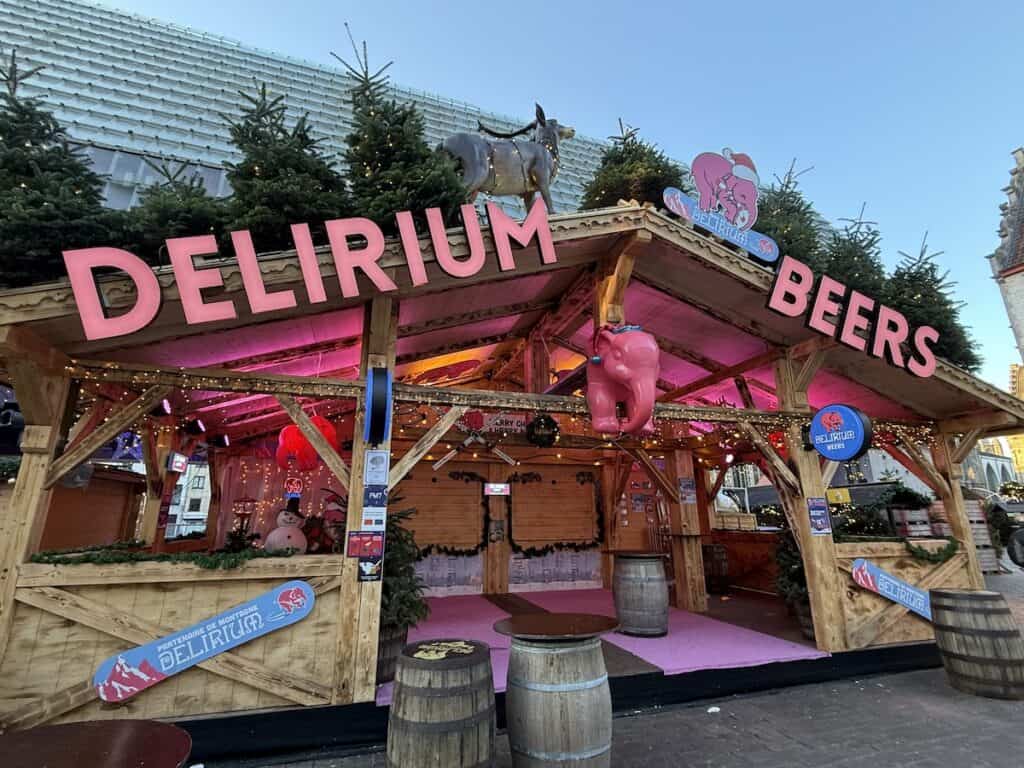
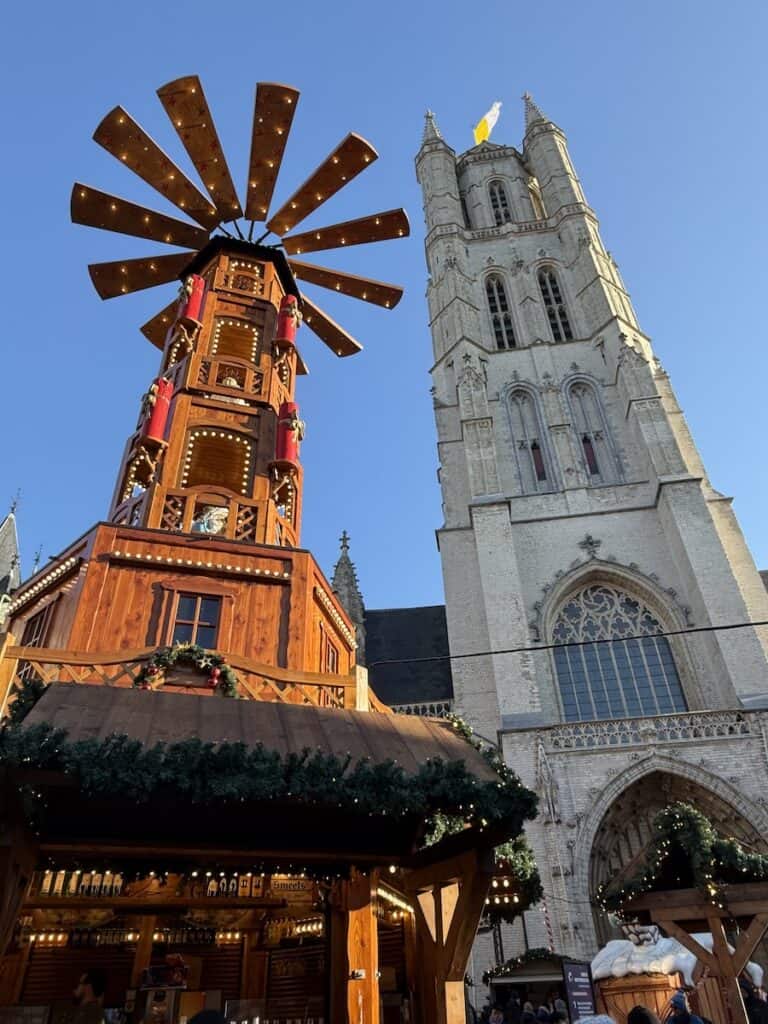
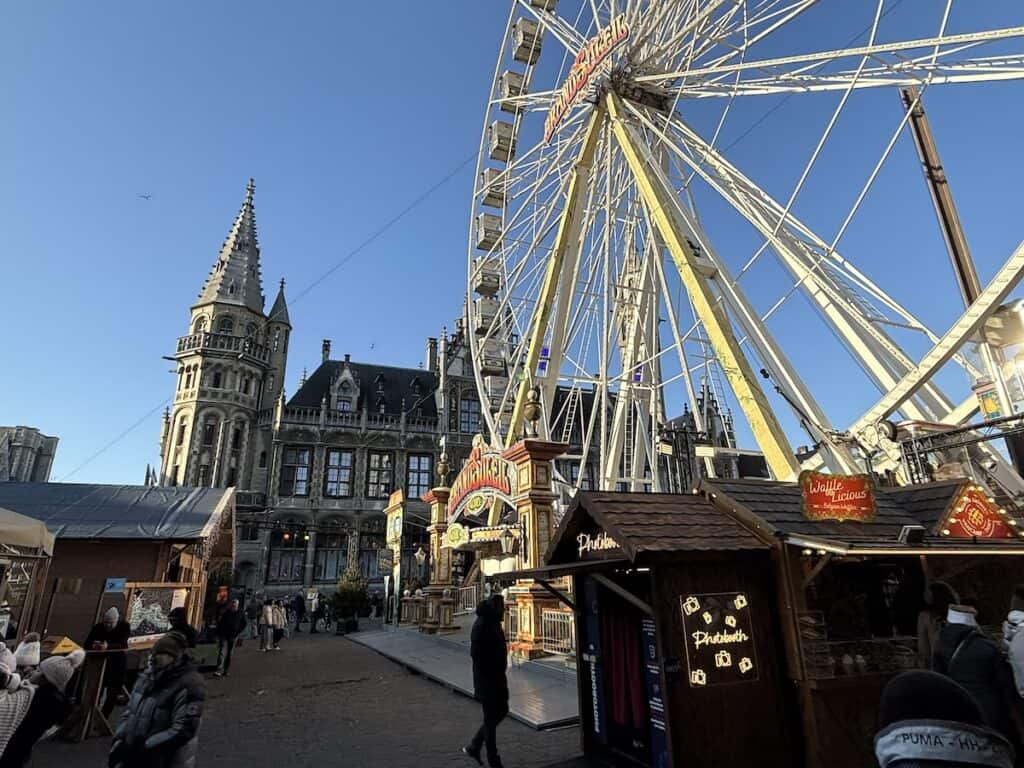
A large whirling Christmas pyramid and giant nutcrackers stood in front of the cathedral when we arrived. There’s a Ferris wheel, a skating rink, a photo booth, rides for small children, and musical performances can be heard in the centrally located Moose Bar that gets very lively in the evenings. The market has a large student population keeping it energetic late into the night, particularly on weekends.
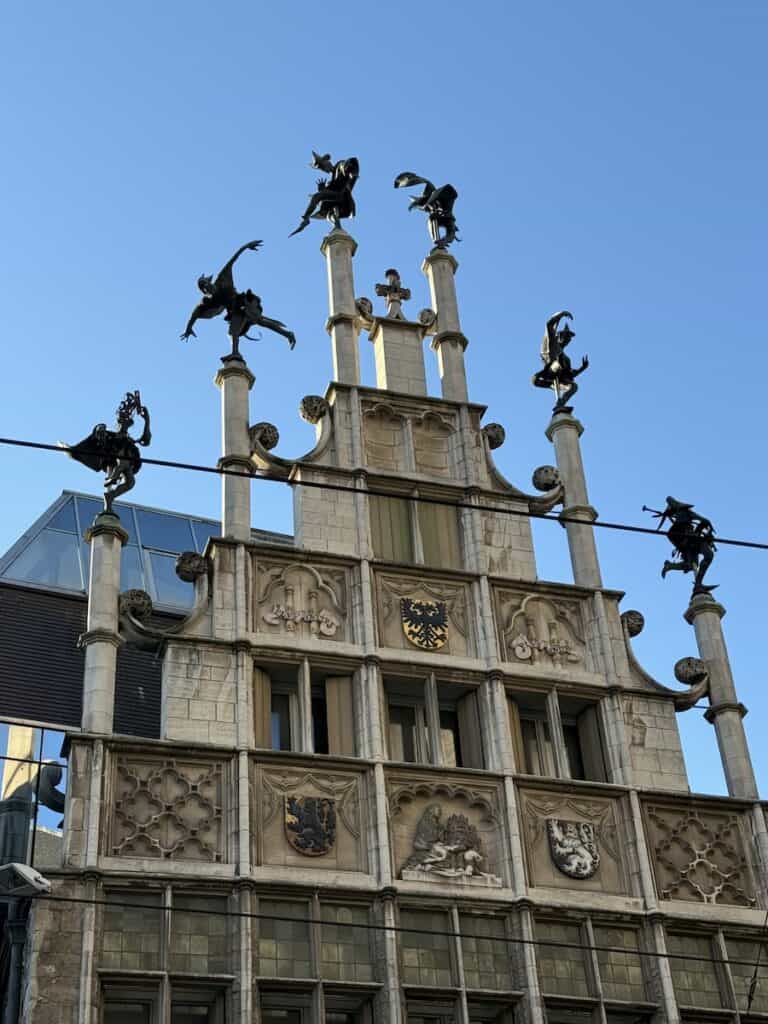
The architecture of Ghent spans every era from medieval to the 20th century, and all of it is on display. I loved the traditional Belgian stepped rooftops with their angles and curves.
Sint-Baafskathedraal and the Ghent Altarpiece
This is the reason to go to Ghent, even if it isn’t Christmas market season.
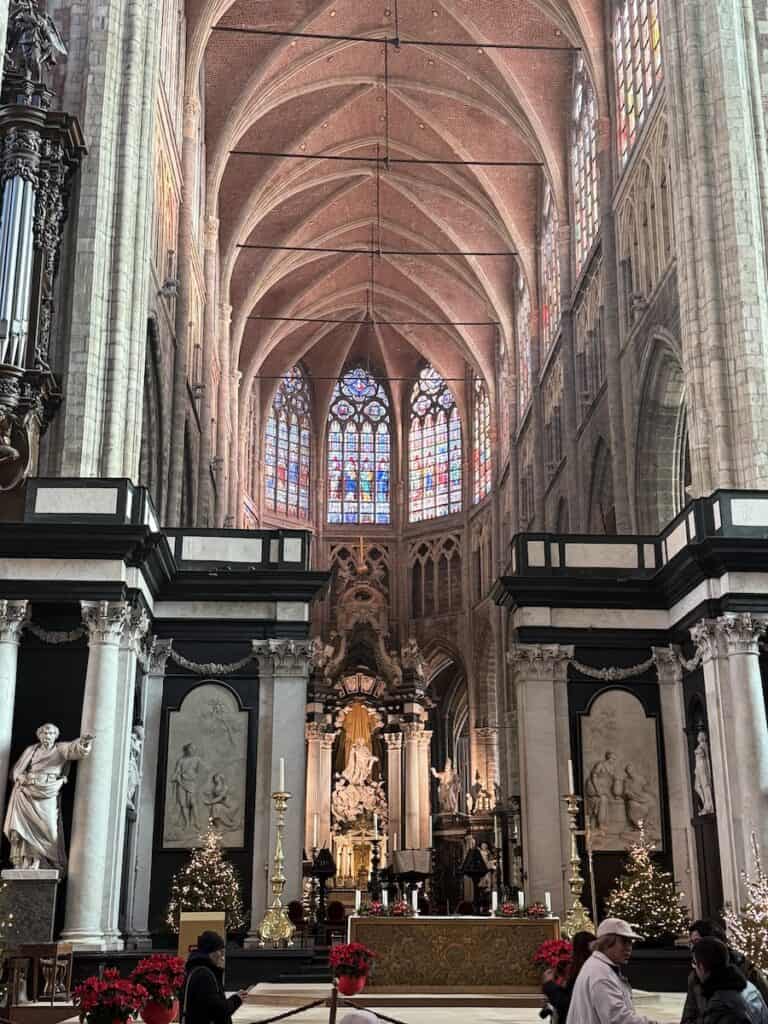
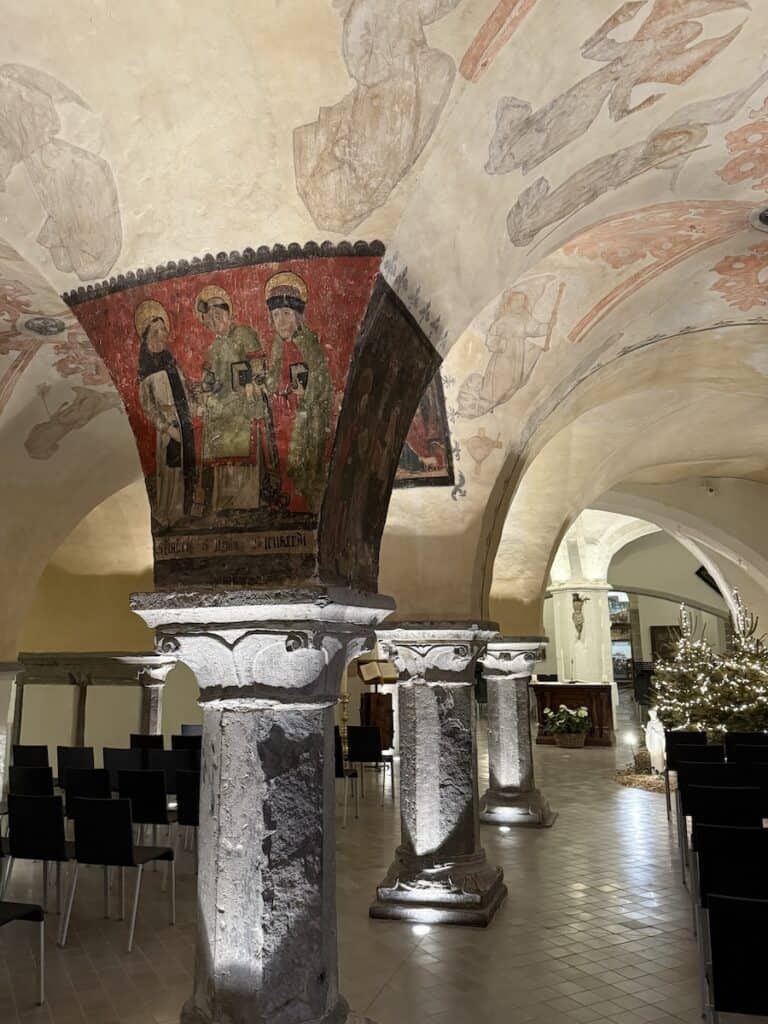
Sint-Baafskathedraal (St. Bavo’s Cathedral) is a towering Gothic building begun in the 13th century, built atop an older Romanesque structure from the 12th century whose crypt you can still visit. The construction took centuries and incorporated Gothic, Baroque, and Rococo elements as each era added its layer. The result is mix-and-match extraordinary: soaring ceilings, a gorgeous black and white marble floor, sculpture, paintings, and stained glass competing for your attention at every turn. We went back a second day just to absorb more of it.
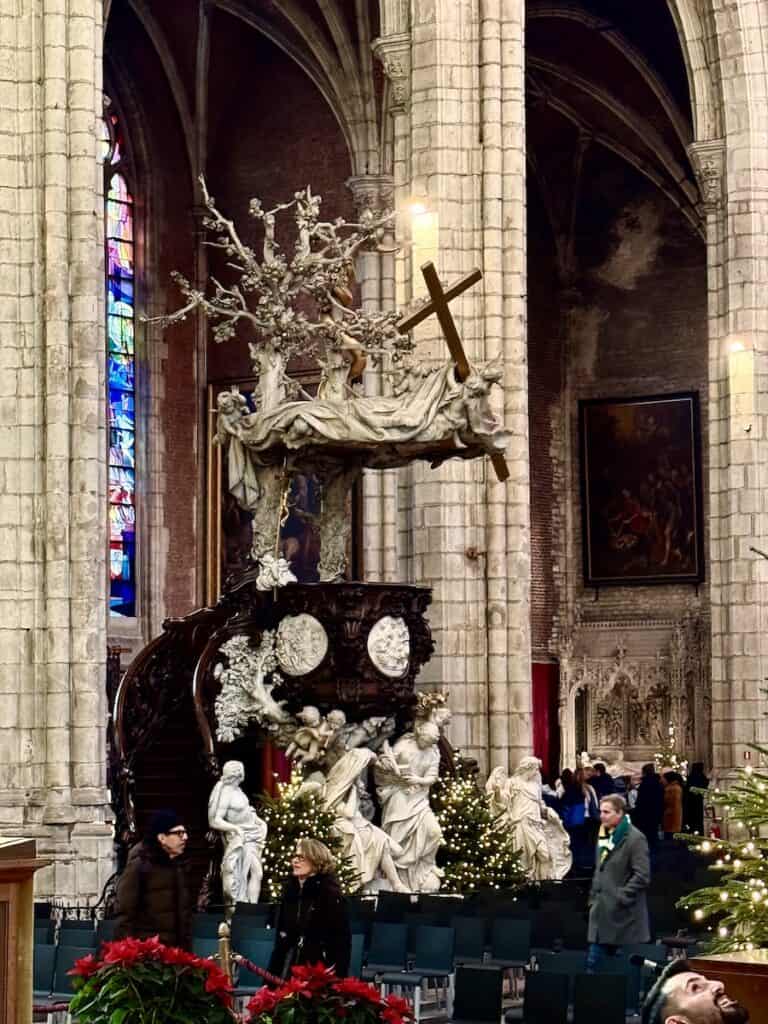
The pulpit alone would justify a visit, to be honest. It was created between 1741 and 1745 by sculptor Laurent Delvaux in oak, gilded wood, and white and black marble. It has all the intricacy and drama of a Bernini, and I’m not exaggerating.
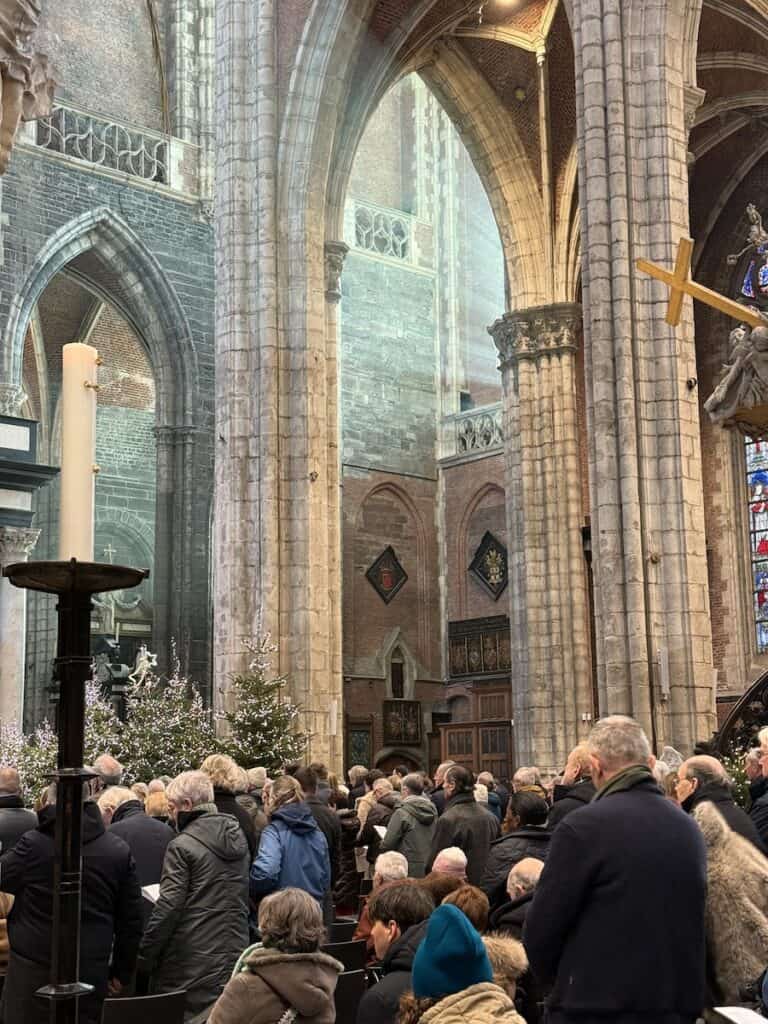
And then there’s the Ghent Altarpiece. *swoon*
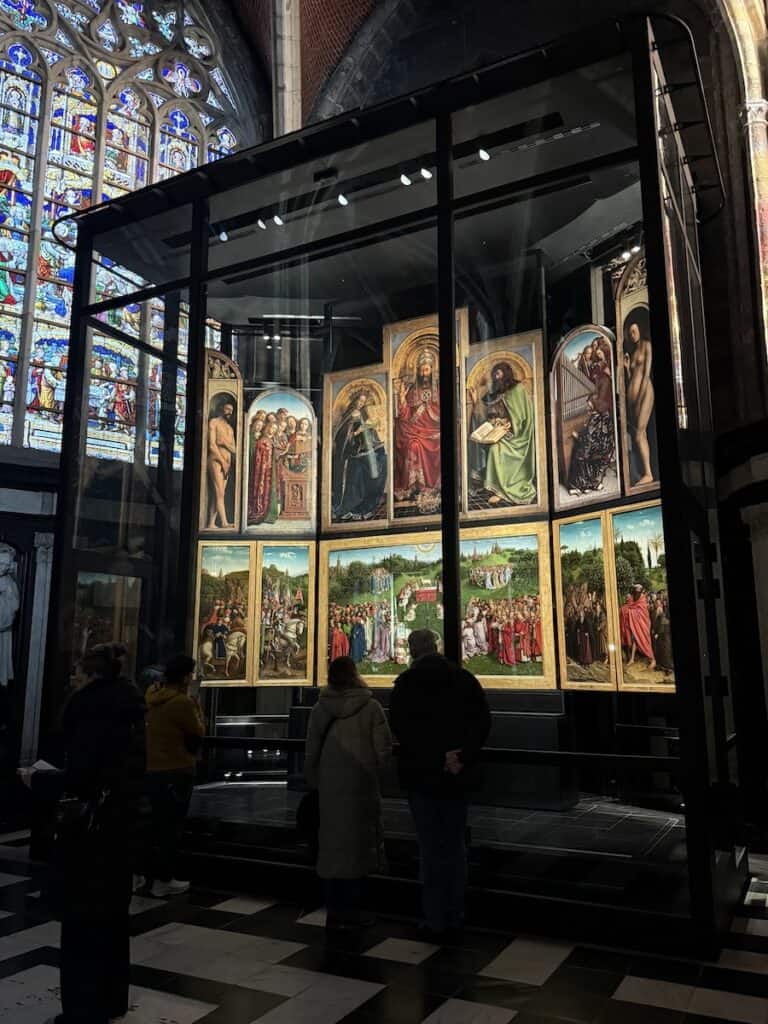
The Adoration of the Mystic Lamb, painted by brothers Hubert and Jan van Eyck around 1432, is one of the most important artworks in the world. You need a ticket for this one, but the cathedral is full of other extraordinary works – a Rubens, a Justus van Gent triptych, the tomb of Bishop Antonius Triest – that you can see for free.
When you enter the Altarpiece exhibition you receive an audio guide with VR goggles so you can explore the history leading up to its creation. I admit I was skeptical, but it was actually genuinely well done. You wind through several rooms of artifacts and artworks, past the grave of Hubert van Eyck himself, before arriving at the altarpiece. We spent a good 20 minutes just looking at all the incredible details, panel by panel, front and back. Book your tickets online before you go. They will sell out during popular times.
Also of note: one panel of the altarpiece is missing. The panel with the painting of the Just Judges was stolen in 1934 and has never been recovered. The current panel is a facsimile. The original is presumably still out there somewhere, and knowing that has been haunting me since I left.
Gravensteen Castle and the Winter Wonderland
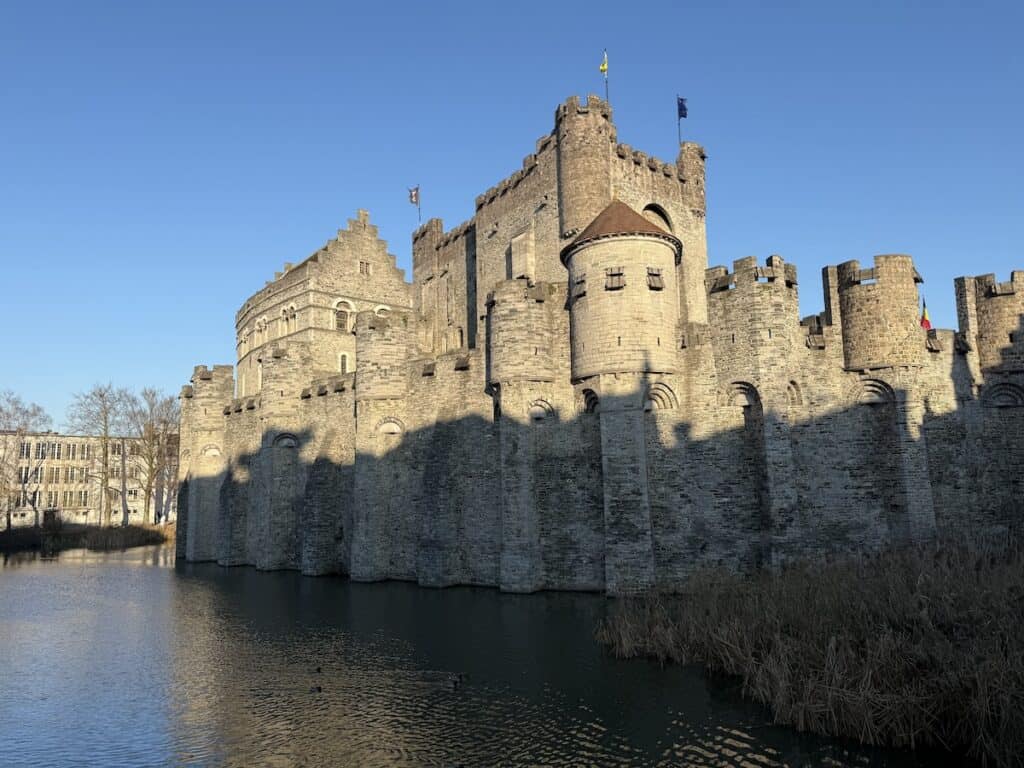
Gravensteen Castle has a real, genuine, actual wet moat. I cannot overstate how rare and wonderful this is. I have been disappointed by many a moat that turned out to be just a grassy ditch. This one is as close as you’ll get to that childhood fantasy of a castle surrounded by a real water moat. No alligators though.
During the Christmas market season Gravensteen operates as the Winter Wonderland Castle with special Christmas decorations and activities. Book your timed tickets to Gravensteen’s Winter Wonderland in advance. It will sell out during peak times. The castle closes on December 24, 25, 31, and January 1, even though the market is open, so plan around those dates.
The castle itself has extraordinary history. It was the seat of the Counts of Flanders in the 12th century, later became a prison, then a cotton mill during the Industrial Revolution, and was eventually rescued and restored in the late 19th century. The torture chamber is still there, but you can decide whether that’s something you want to seek out.
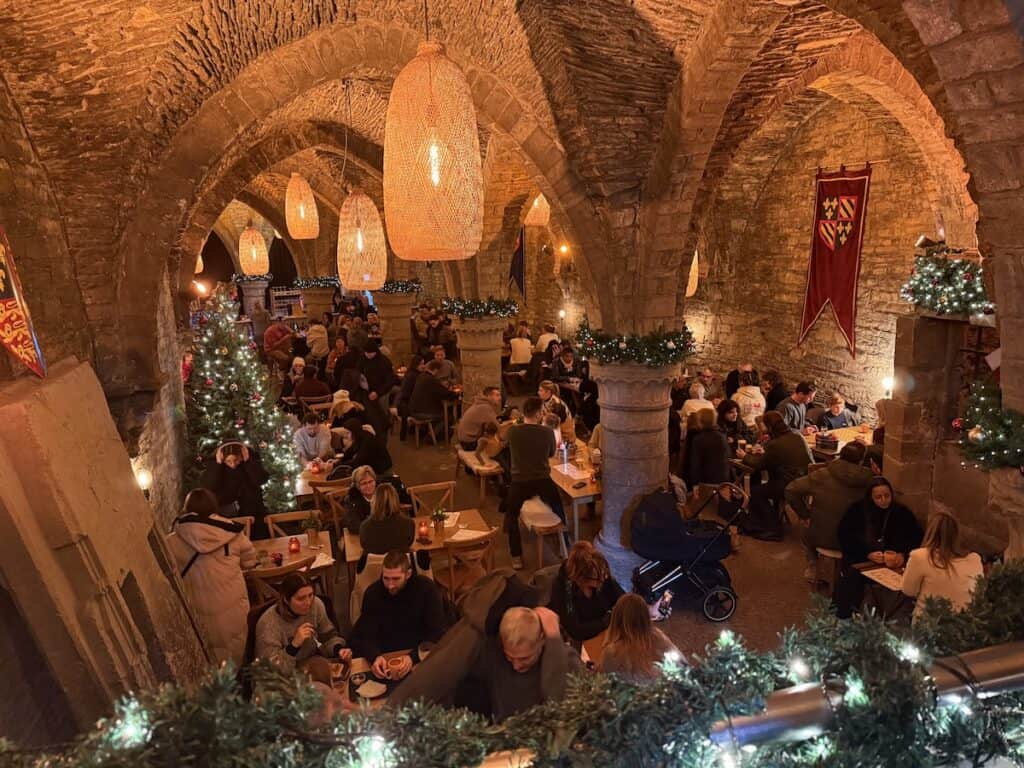
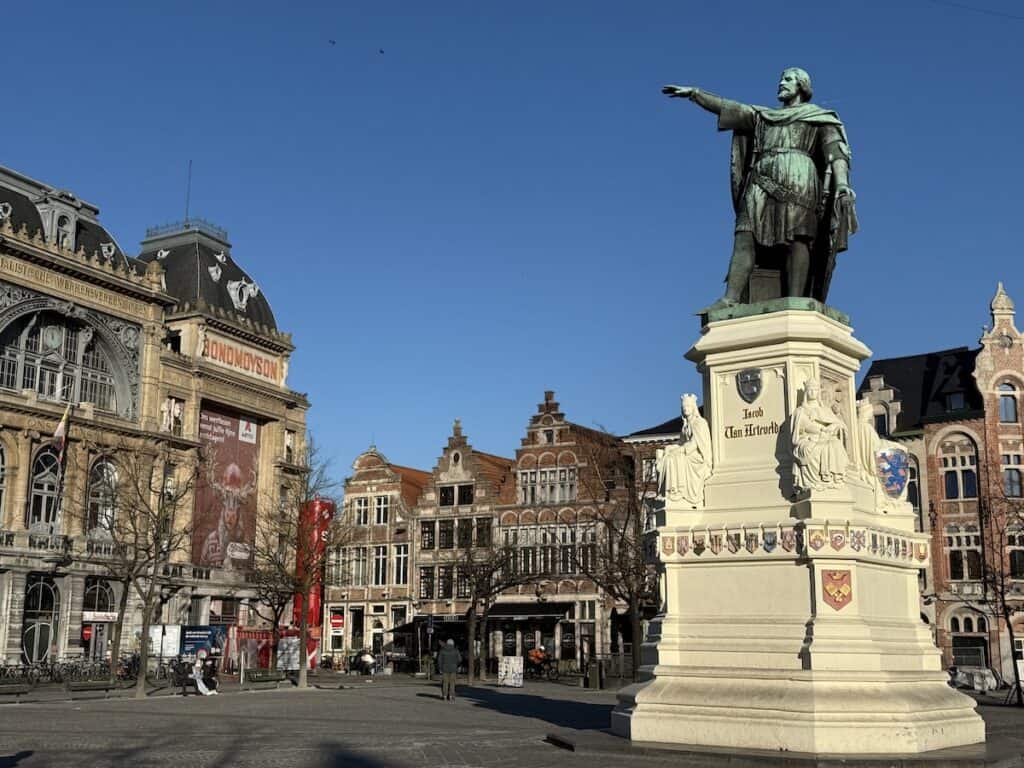
Two Statues – Two Good Stories
Ghent puts its history on pedestals and you’ll find impressive monuments to historical figures everywhere. The stories behind these two statues are fascinating, and both involve relations with England, for good or bad.
Jacob Van Artevelde stands in the Vrijdagmarkt, arm outstretched, pointing permanently toward England. Van Artevelde was a 14th century Ghent merchant who became the de facto ruler of the city during the Hundred Years War between England and France. When the Count of Flanders sided with France, the English wool trade that kept Ghent’s textile industry alive was cut off.
Van Artevelde defied the French-aligned count, restored the wool trade, and effectively saved Ghent’s economy from ruin. This did not save him from being murdered in a popular uprising in 1345. The statue has been pointing toward England ever since 1863.
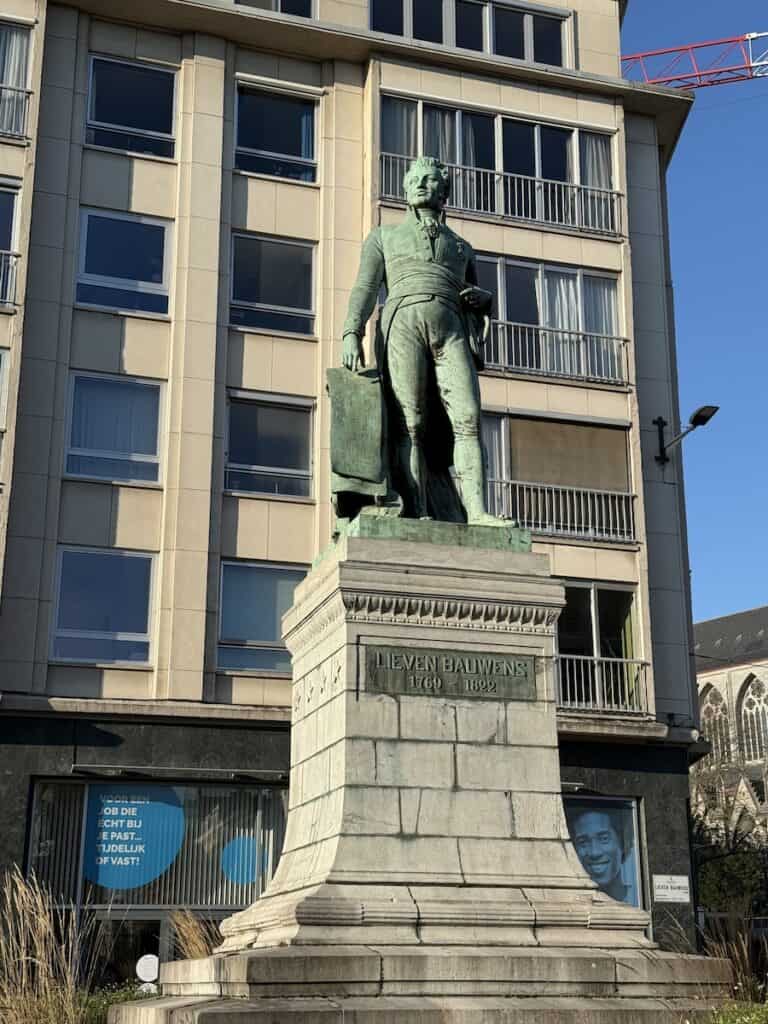
Lieven Bauwens stands near St. Bavo’s Cathedral, honored for doing something the British government considered so serious they sentenced him to death: industrial espionage. In the late 18th century, Britain closely guarded the secrets of its mechanized textile industry. Bauwens managed to smuggle a spinning mule machine (its parts hidden in sugar and coffee crates), from England to Belgium on 32 separate voyages. He planned big.
He established the first mechanized cotton mill on continental Europe in Ghent in 1799, effectively bringing the Industrial Revolution to Belgium. Napoleon visited him in Ghent in 1810 and offered him the title of Count, which he declined. The spinning mule he smuggled is still in the Museum of Industry in Ghent.
The Food at the Ghent Christmas Market
Ghent at Christmas is a food destination. Go hungry.
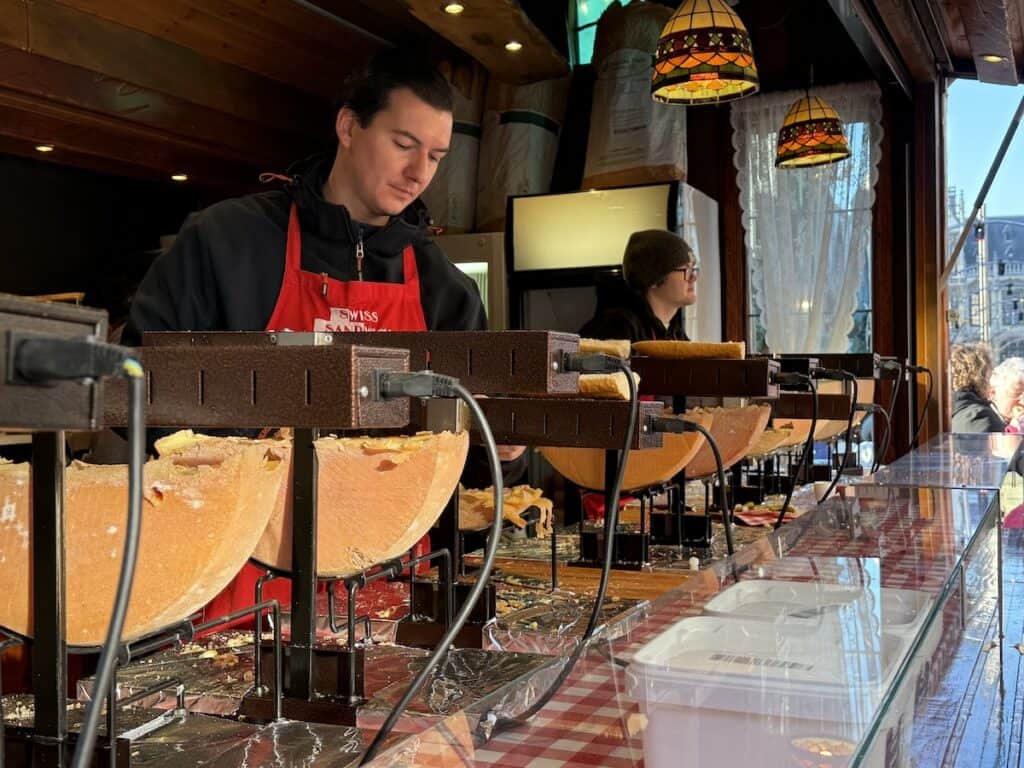
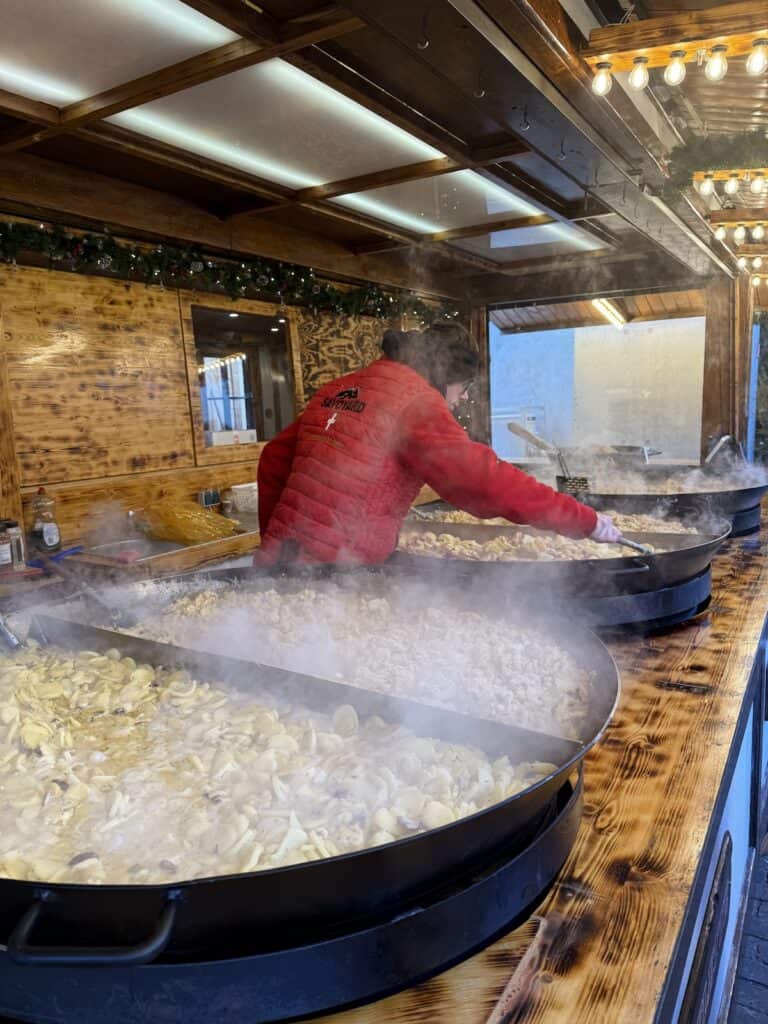
There were beer booths, champagne bars, enormous frying pans filled with tartiflette, spaetzle, and sizzling sausages. Waffles with every topping imaginable, from bananas to crushed Oreos to caramel and chocolate sauce. Chocolate fondue with marshmallows, gooey raclette on fresh bread, a fresh oyster bar, sparkling cava, burgers and brats. And fries.
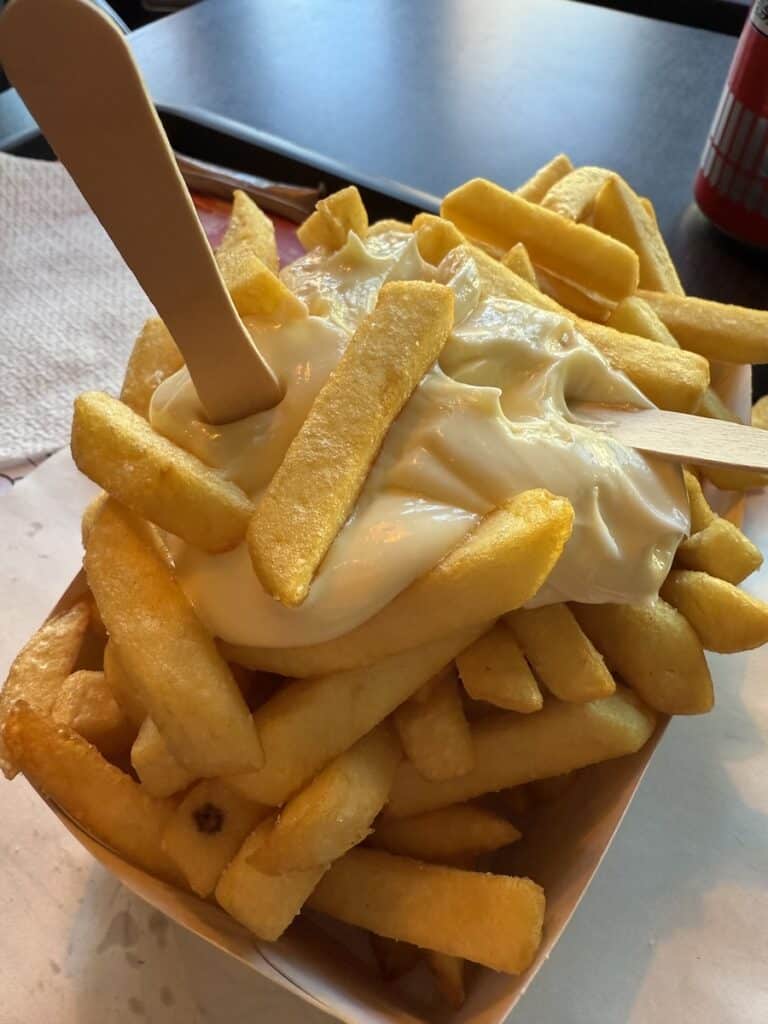
A word about the fries. Most people think french fries were invented in France. They weren’t. Belgium claims that honor, and they have perfected the art over several centuries. Get a basket of piping hot fries with a side of mayo. This is mandatory. When in Belgium…
Local specialties worth seeking out: Gentse waterzooi, a creamy chicken or fish stew that’s the city’s signature dish; cuberdons, cone-shaped raspberry and violet sweets known locally as neuzekes or “little noses”; and Tierenteyn mustard from the 19th century mustard shop on Groentenmarkt that still makes it the traditional way.
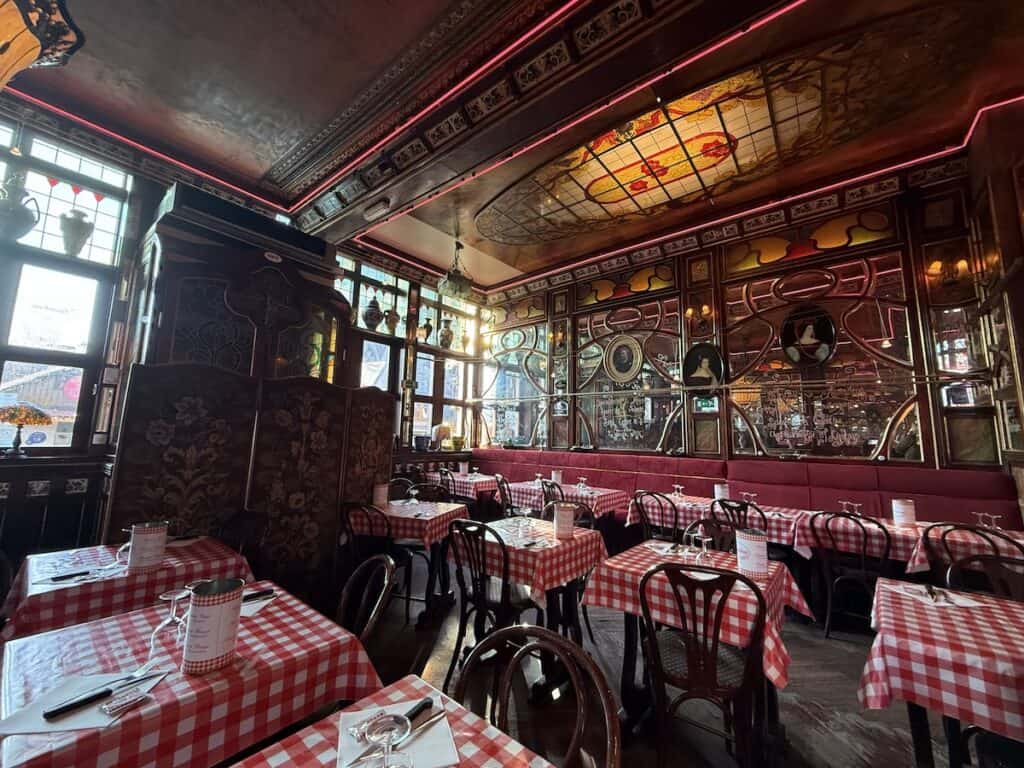
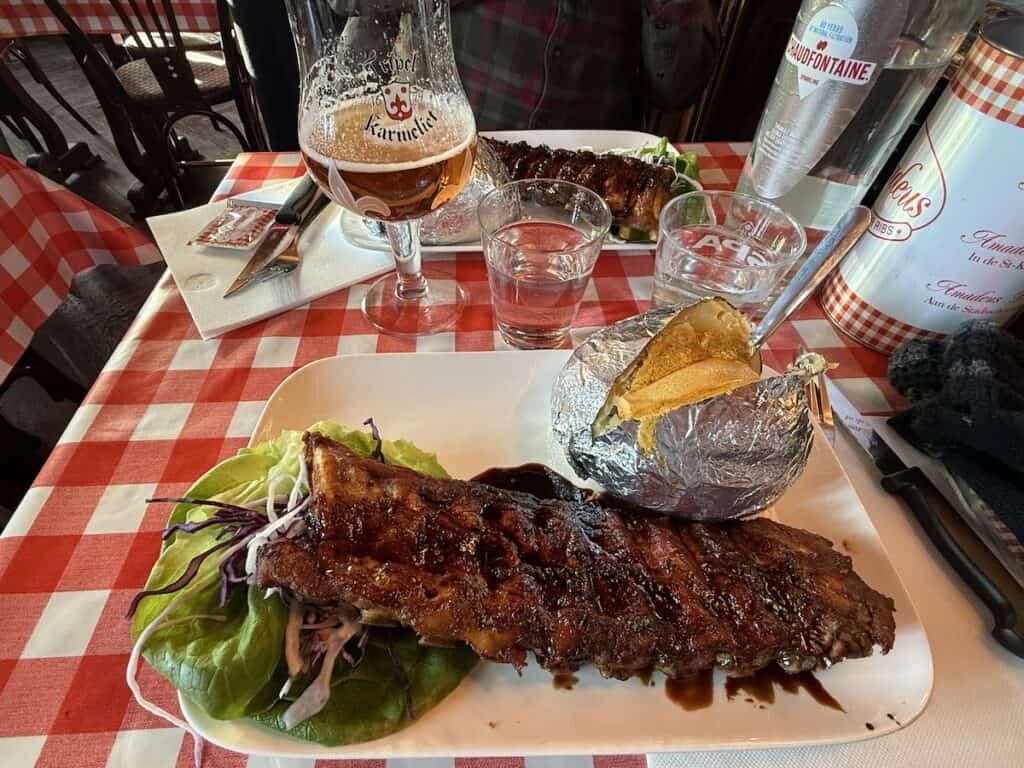
And if you need a reason to get out of the cold for a sit-down meal, go to Amadeus. It’s a preserved Art Nouveau dining room, visually extraordinary, and it serves all-you-can-eat ribs. We had to read that again too. We were game to try, and it was amazing. Sticky ribs and Belgian beer to celebrate a new favorite city felt perfect.
I also got a coconut macaroon (not a macaron) and it was superb.
The Canal Boats in Ghent
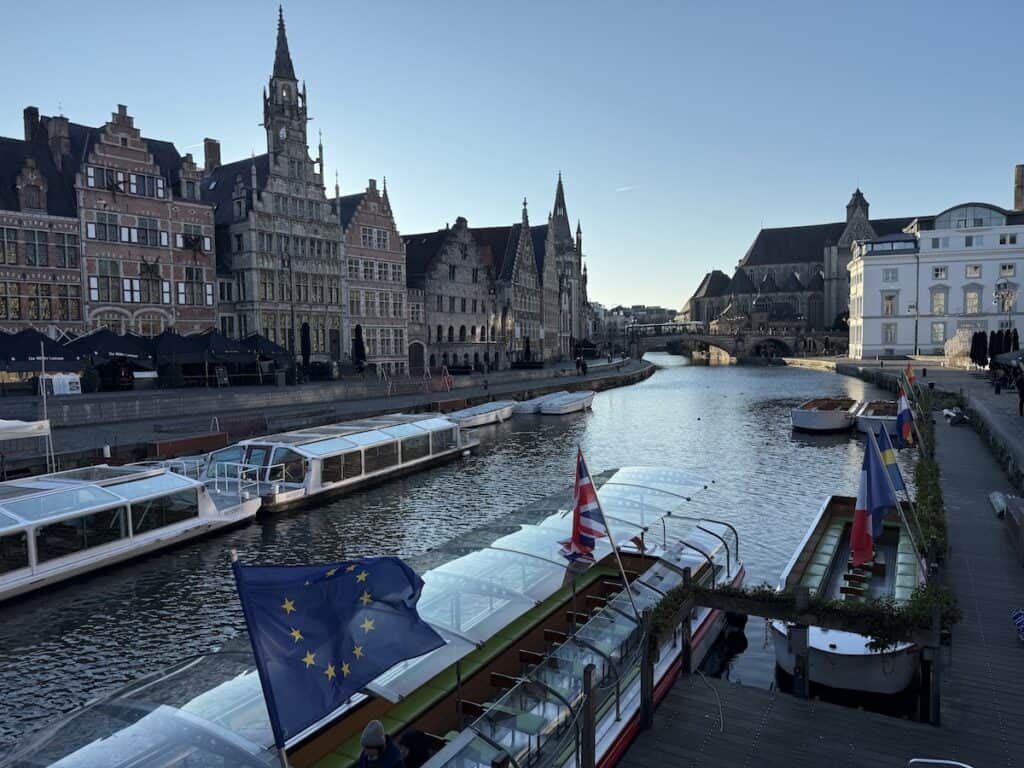
Canal boat rides are available in Ghent, even in the winter, and they’re worth doing. One important distinction from Bruges: the Ghent boats have covers. On a cold December day that matters considerably. The rides are 40 minutes long, €10 for adults and €6.50 for children aged 3 to 11. Beer, cava, and soft drinks are also available on board for an additional charge.
The canals are how Ghent functioned for centuries. Riding them is the best way to see firsthand how trade and transportation worked in this ancient city. The views of Ghent’s main attractions from the water are completely different from the views on foot. You can buy tickets dockside, or book your Ghent canal boat tour ahead of time to guarantee a spot.
The City Museum
If you love museums, don’t skip the City Museum of Ghent. It’s a bit of a walk from the historical center where the Christmas market is, but absolutely worth it. We walked there and Ubered back.
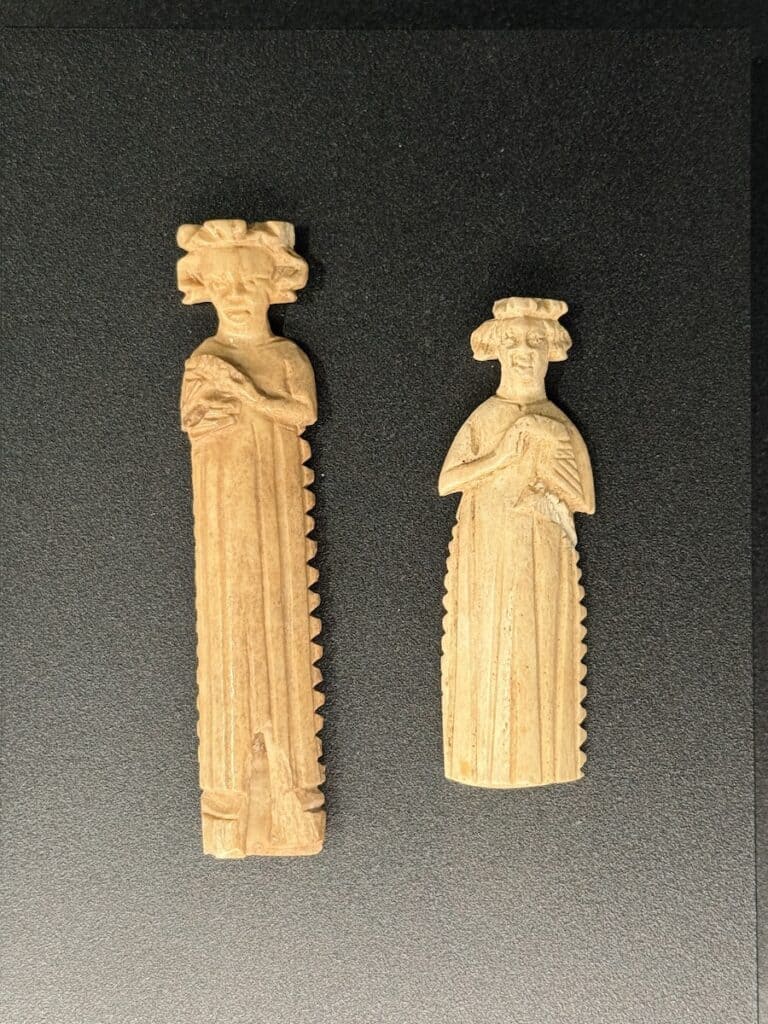
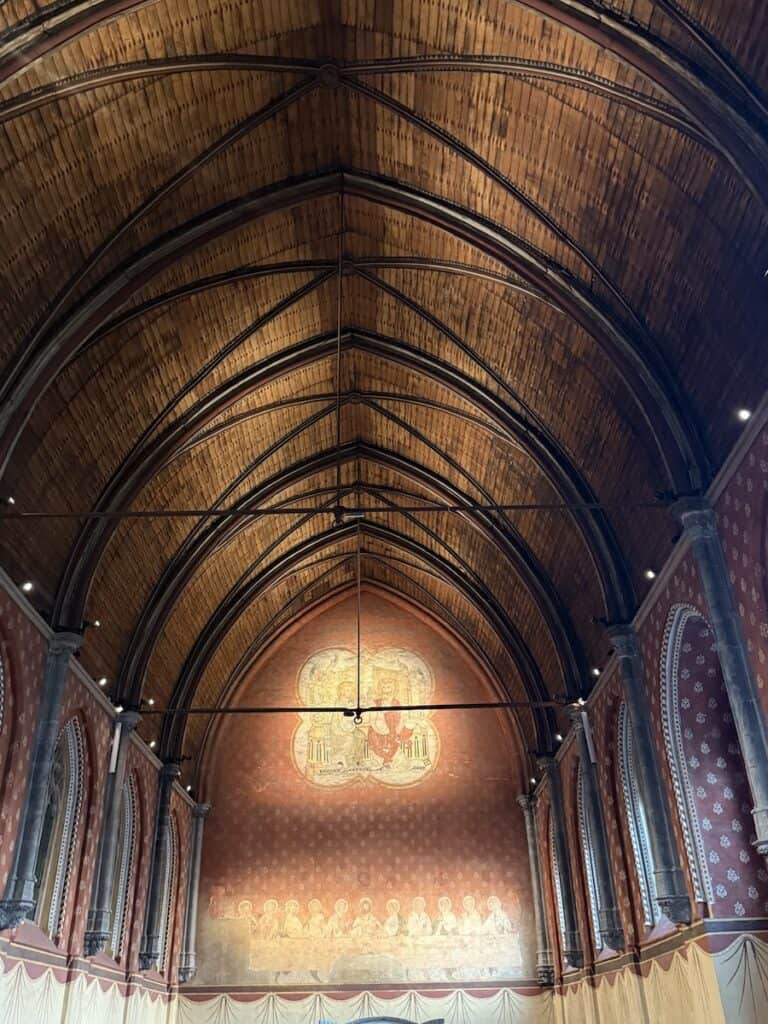
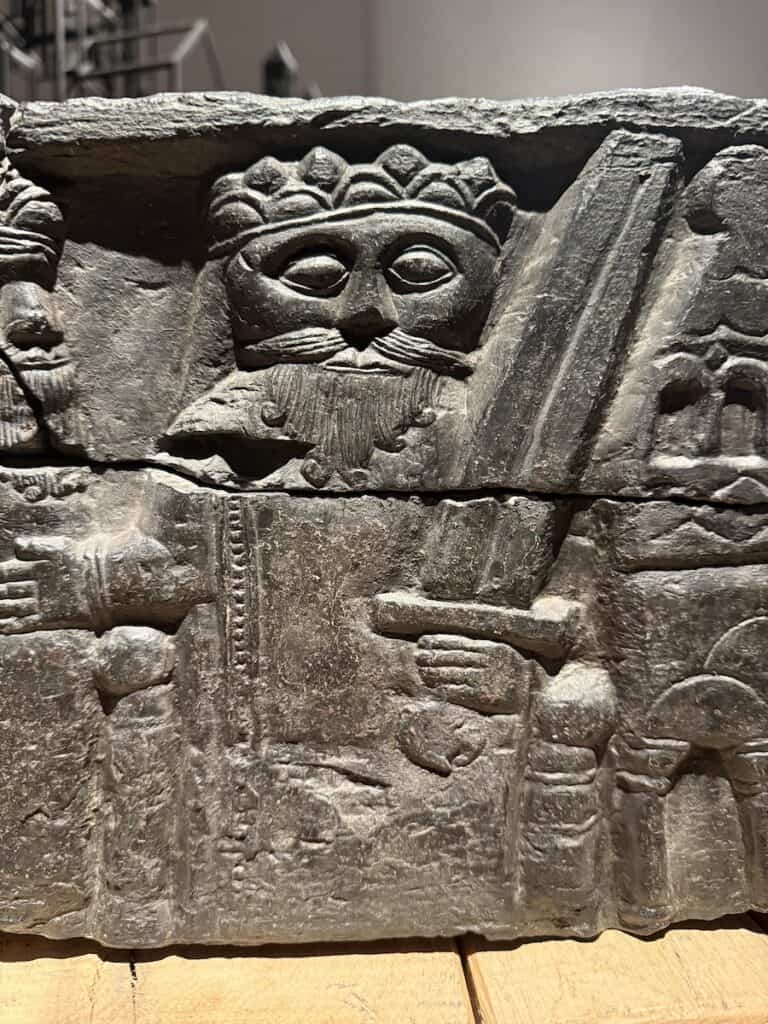
The permanent collection covers Ghent from the Iron Age through the Roman era and into the Middle Ages. Personal highlights for me: a tree trunk well made from a large felled oak from 876 AD, preserved for more than a thousand years in oxygen-poor soil; the medieval refectory of Bijloke Abbey, a preserved 14th century hall with murals still intact dating to 1350; and more artifacts than you’ll have time to properly absorb.
Give yourself at least two hours if you have the time.
The Van der Valk Hotel in Ghent – Review
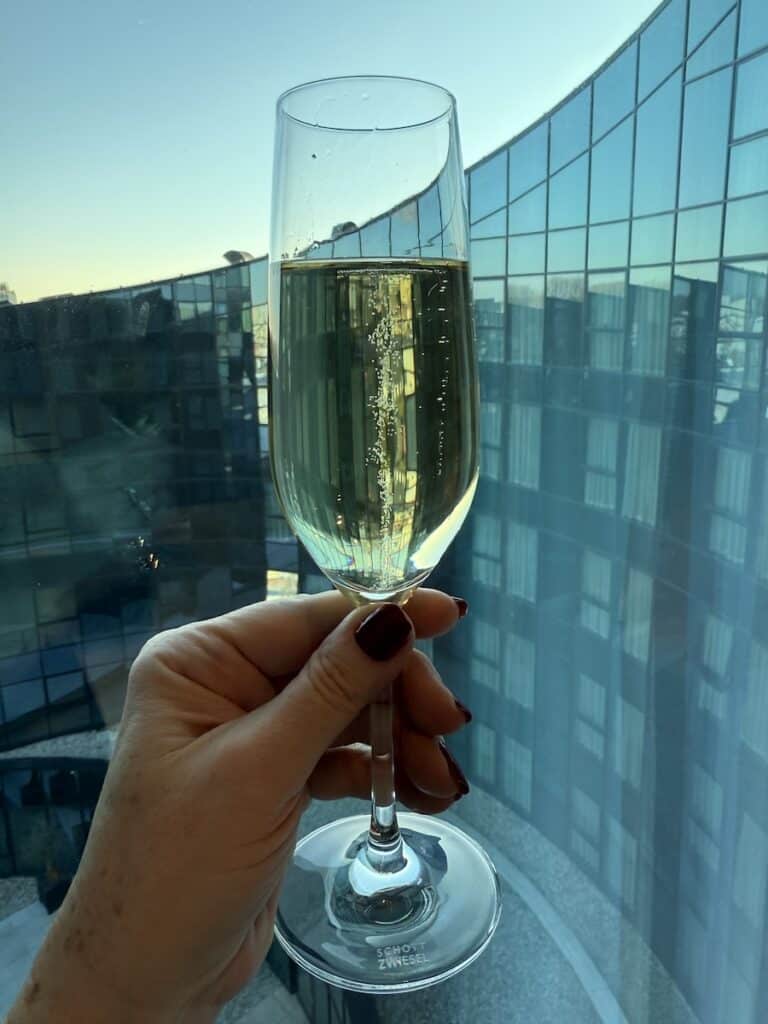
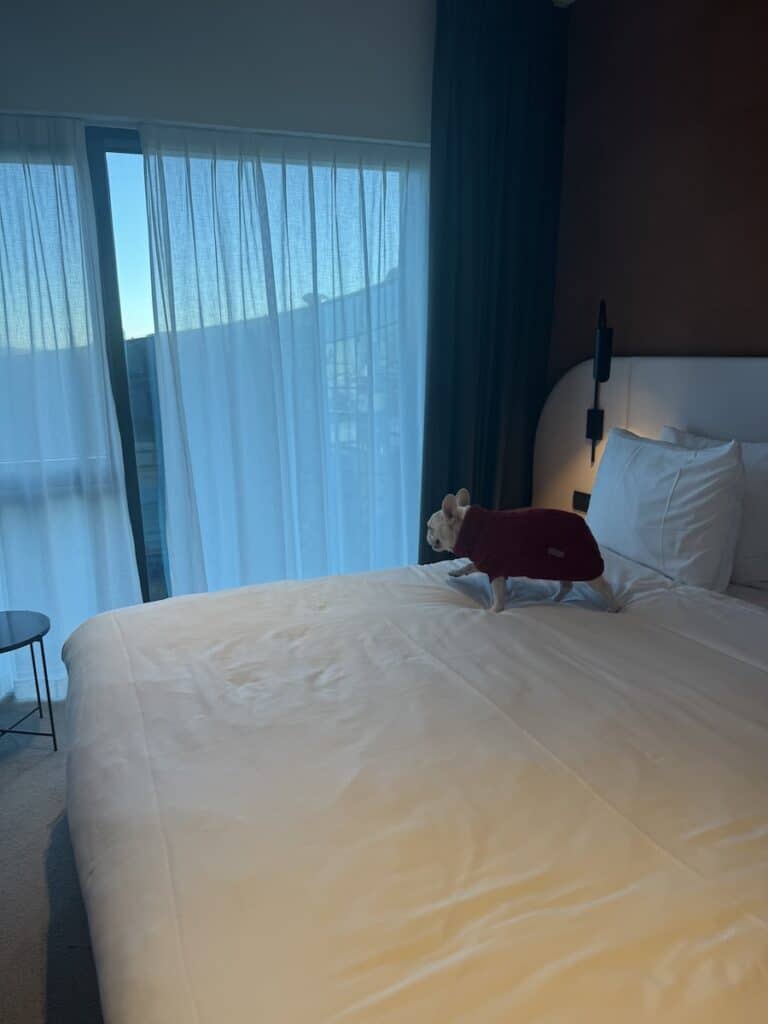
We stayed at the Van der Valk Hotel (a regional chain where we’ve always had luck), slightly outside the historic center. Even more than proximity to the market, we’d heard raves about their Christmas dinner, enough that we planned our reservation around it. We ordered champagne for the room because… Christmas. It was waiting when we arrived after a long drive.
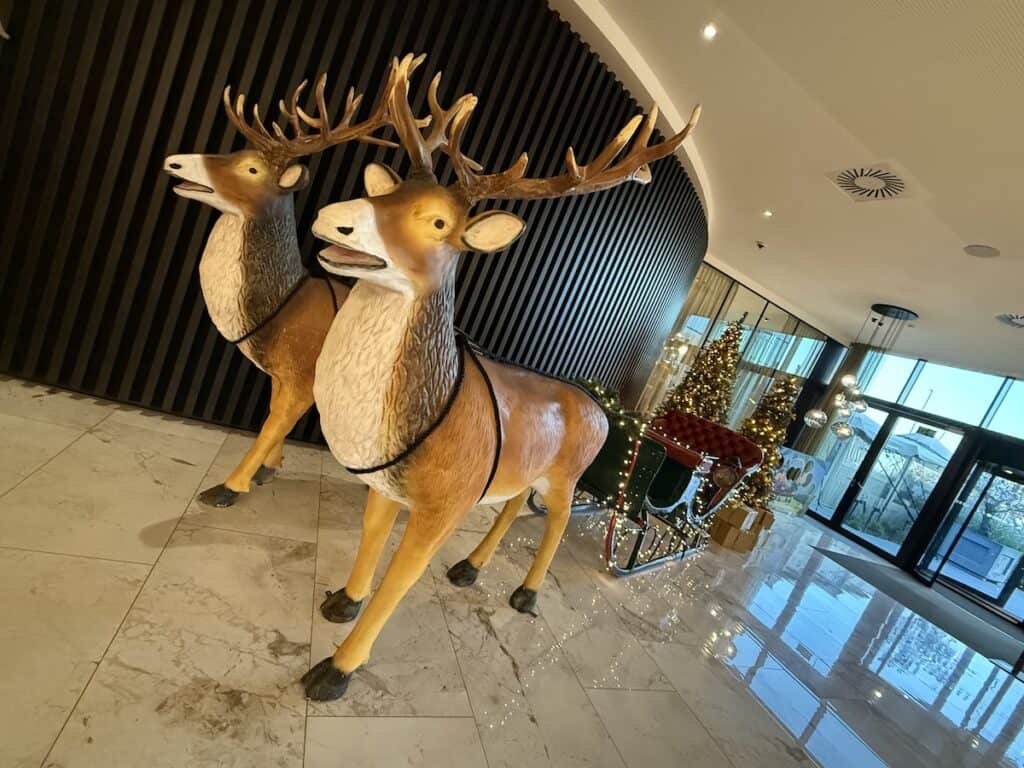
The hotel was decorated beautifully for the season, Christmas trees with white lights, evergreen boughs, and even a giant sleigh with reindeer you could climb into for a photo. Their spectacular Christmas dinner books up early, so if you’re like us, reserve well in advance if you want it. A second, less formal restaurant (Italian) is also on site and very good. We ate in both.
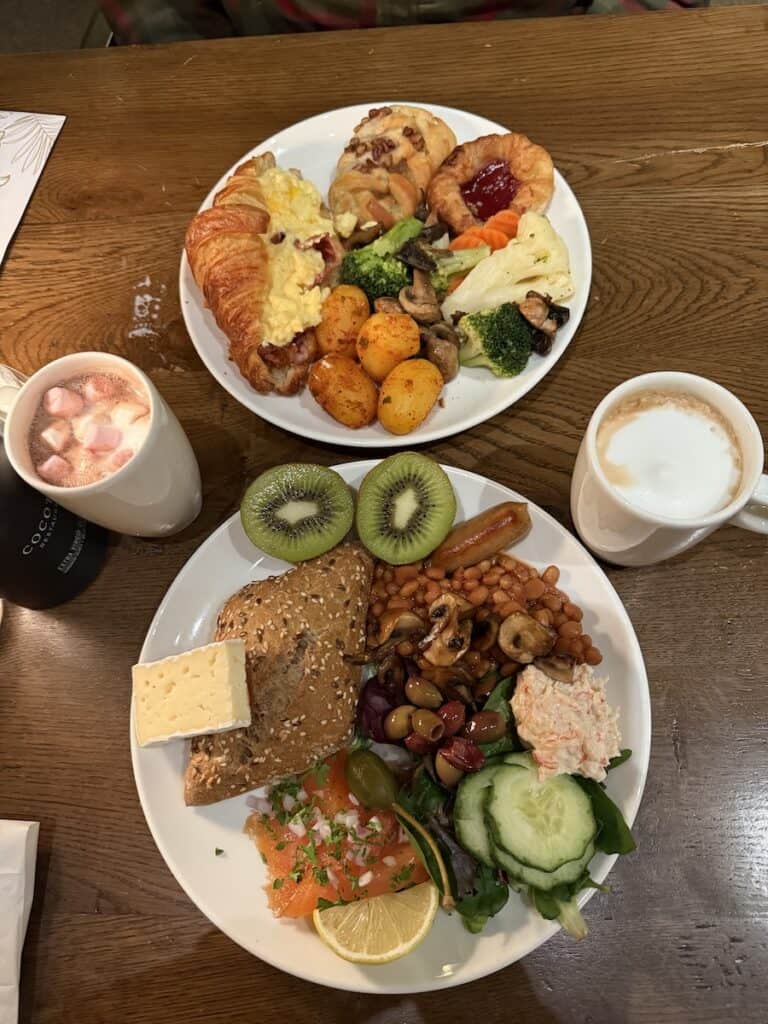
And the breakfast buffet went on for miles…
For the hotel itself and the Christmas atmosphere, absolutely worth it. We Ubered to the market and back, which was easy. If you want to be walking distance from everything, stay closer to Sint-Baafsplein, just remember it will be more boistrous. But for an elegant and serene holiday stay with real Christmas magic Van der Valk delivers. And dogs are welcome!
There are all kinds of great places to stay in Ghent. Use this map to check out accommodations across the city center and beyond.
Christmas Day at the Ghent Christmas Market
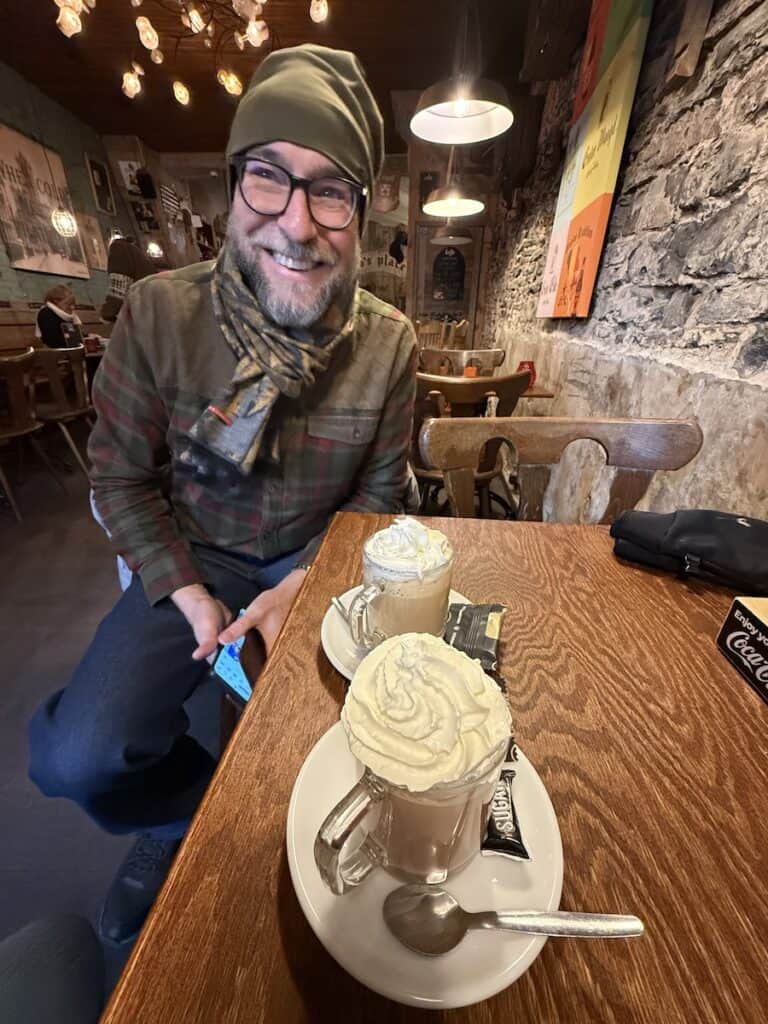
We arrived before the market opened on Christmas day, so we stopped at a little café for Belgian hot chocolate which was luxurious. It was basically the final scene of A Christmas Carol with everyone rosy-cheeked, coming in from the cold, laughing, full of cheer. The city was open, alive, festive, and genuinely happy.
If you find yourself without plans on Christmas Day, Ghent is where you want to be.
Practical Tips for Visiting the Ghent Christmas Market
Book the Altarpiece and Gravensteen Castle in advance. Both sell out, especially during the holiday season.
The vehicle low emission zone covers the historic center. Most modern vehicles are fine, but check before you drive in. Polluting vehicles pay a fee. Non-Belgian and non-Dutch plates always need to register. You can easily register your car for Ghent’s low-emission zone online.
The market stays open late. Unlike most Christmas markets that close at 8 or 9pm, Ghent runs until midnight on weekdays and 1am on weekends. They just want to keep going, so plan your evening accordingly.
Wear warm clothes and bring good boots. We were done after five or six hours in the cold. Cobblestones and freezing temperatures require proper preparation. Dress for the weather plus some.
The market is open on Christmas Day and New Year’s Day, which makes it genuinely unusual. Plan around the reduced hours on those days, but this is a great market if you want something open when others are not.
Go for the food as much as the market. The stalls are nice, but not exceptional on crafts. The food and drink, the restaurants, (did I mention the fries?) and the city itself are the real draw.
Ghent Christmas Market vs. Bruges Christmas Market
The Ghent Christmas market is slightly larger, more architecturally varied, and felt more like a living city – ferris wheel, carousel, photo booth, night life. Bruges was more purely medieval and more concentrated. A time capsule of the middle ages that felt like walking through an open air museum. Both have canals, both are extraordinary and unforgettable in different ways.
If you’re choosing between them: don’t. They’re about an hour apart. Do both. You won’t regret it. And if you really only have time for one, let what matters to you decide: purely medieval magic and a smaller market, go to Bruges; extraordinary art, a castle with a real moat, crazy good food, and a city that feels fully alive, go to Ghent.
If you’re planning a Christmas market itinerary across the region, our Regional Planning Guide has everything in one place.
Explore More Christmas Markets:
👉 Christmas Markets in Western Germany & Alsace
