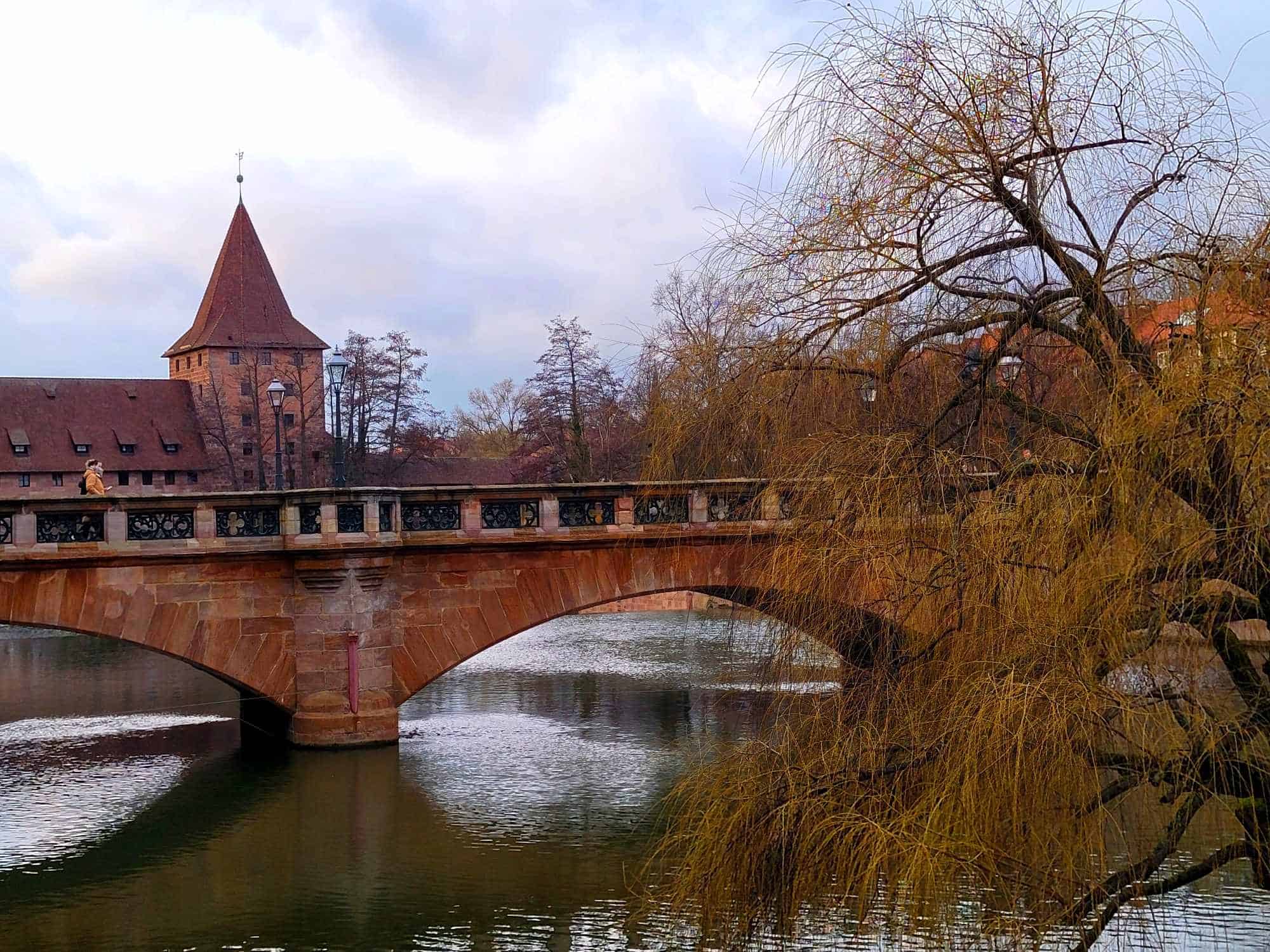
Every time I visit Nuremberg it still surprises me.
What surprises me most isn’t the medieval churches or the castle on the hill, impressive as they are. It’s how much of the original city actually survived, and how faithfully what was lost has been rebuilt. Walking through the Old Town, you have to remind yourself that Allied bombing reduced much of this to rubble in January 1945. The cobblestones, the half-timbered facades, the Gothic spires — so much of it was salvaged, reconstructed, and pieced back together with a level of care and craftsmanship that borders on the obsessive. Nuremberg is a preserver of its own history, and it has a lot of history.
Over the centuries this city has worn more hats than almost anywhere else in Germany. It was one of the most powerful cities of the Holy Roman Empire – wealthy, artistically brilliant, home to Albrecht Dürer and a tradition of craftsmanship that shaped European culture for centuries. It was the city that gave the world the Nuremberg Chronicle, one of the first illustrated books ever printed. It was where the Imperial Regalia – the crown jewels of the Holy Roman Empire – were stored for safekeeping. And then, in the 20th century, it became something far darker: the symbolic heart of Nazi propaganda, the city Hitler chose for his most spectacular and terrifying rallies.
And then, most importantly, it became the city where those responsible for the atrocities of that war were put on trial.
Each of those chapters left something behind. A church. A memorial. A courtroom. A set of tunnels carved beneath the city to hide priceless art from the bombs. Nuremberg holds all of it, side by side, without pretending any chapter didn’t happen. That’s what keeps bringing me back. It’s one of the most complex, most honest, and most underrated cities in Germany, and this guide covers the 25 best things to do here, from the unmissable landmarks to some hidden gems most visitors walk right past.
Best Things to Do in Nuremberg
If you’re planning a trip, here are the absolute best things to do in Nuremberg—from iconic landmarks to hidden gems. 💎
1) Explore the Nuremberg Castle Complex (Kaiserburg Nürnberg) — The City’s Most Important Landmark
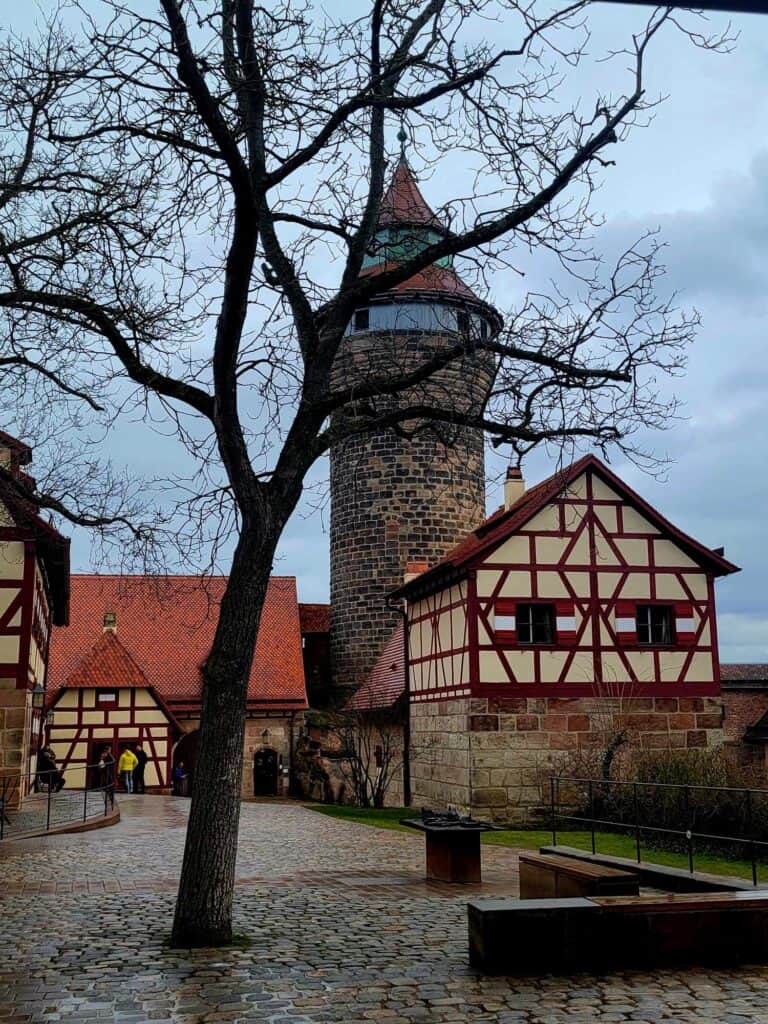
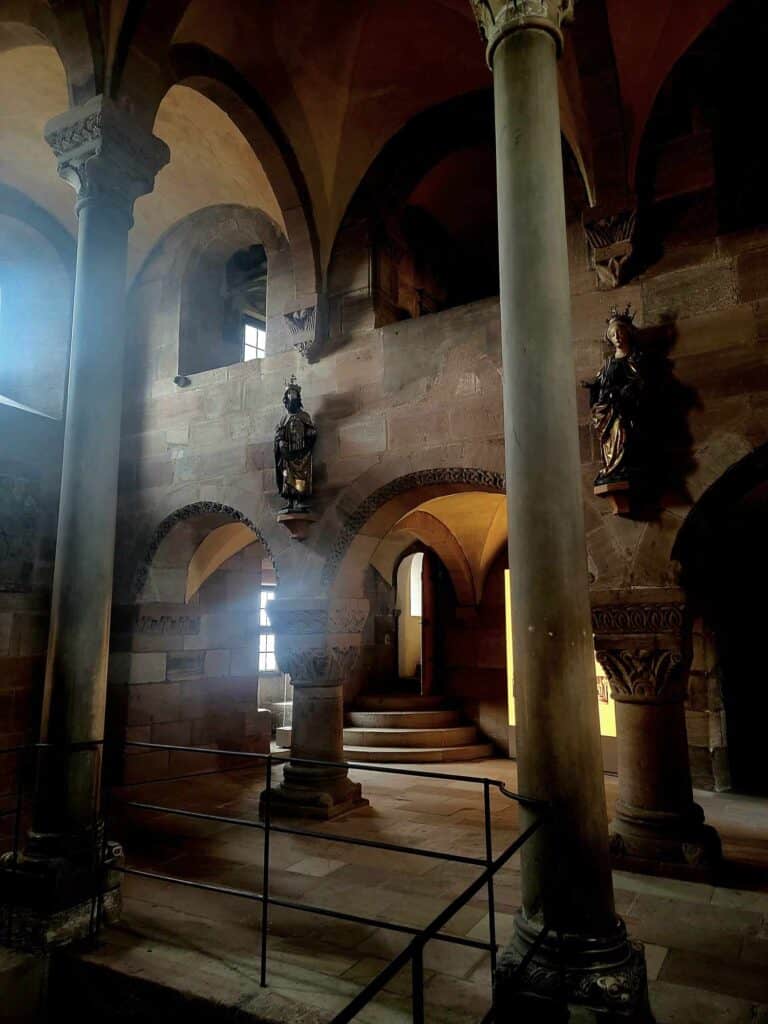
The Nuremberg Castle Complex (Kaiserburg) is the most important historic site in the city and one of the most significant imperial castles in Germany. Once home to Holy Roman Emperors, it dominates the skyline and still preserves over 900 years of history through its towers, courtyards, and underground structures.
What You’ll Find in the Nuremberg Castle Complex
🛡️ The Kaiserburg Museum
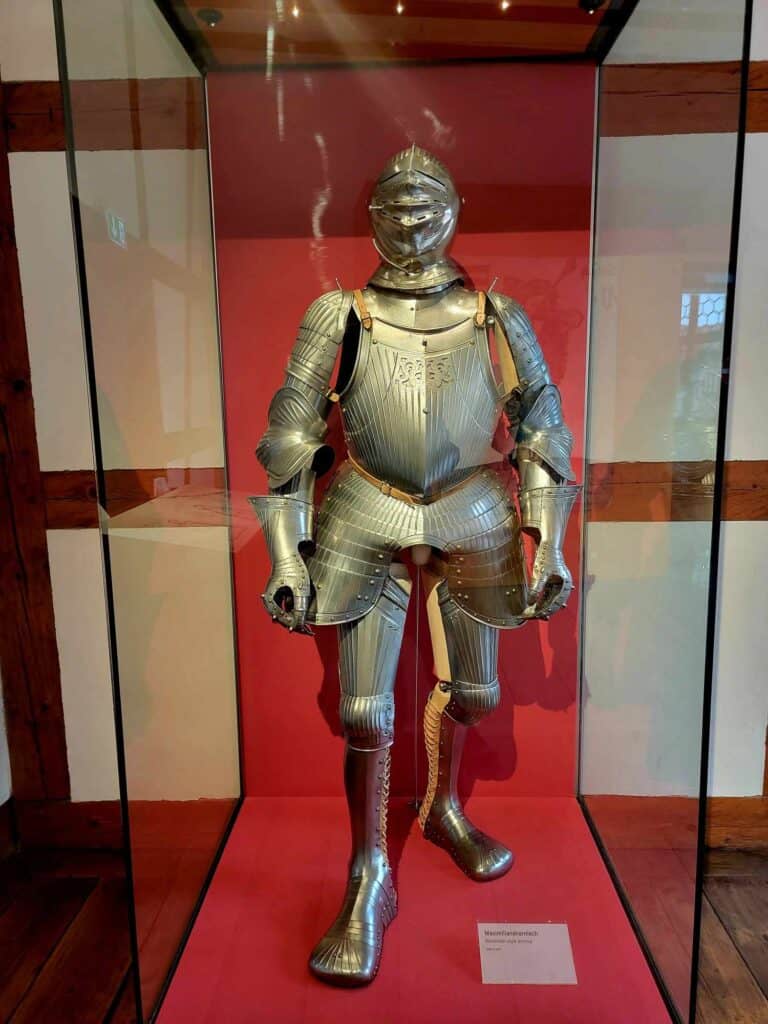
The Kaiserburg Museum is housed in the castle itself, and gives a great overview of medieval life, the Holy Roman Empire, and Nuremberg’s historical importance.
If you want a deeper breakdown of the castle’s history, architecture, and visitor tips, you can read my full guide here: Your Ultimate Guide for Visiting Nuremberg Castle: History, Tips, and Must-Sees
Most notable are an impressive collection of armor and weapons, globes and scientific instruments, and castle artifacts including a fabulous oak door from the 16th century. You’ll also be able to see the parts of the original castle that survived the bombing.
This is the best place to understand how Nuremberg connected to the Holy Roman Empire and why the castle was so strategically important.
💧 The Deep Well (Tiefe Brunnen)
This 14th century well provided the water supply for the castle when it was under seige and has a fascinating history. You can learn about it from an English-speaking guide and see a couple interesting demonstrations of its depth. Guided tours are the only way to include access and explanations of the Deep Well, and are really worth doing. Your guide is included in your ticket.
🏰 Sinwell Tower (Sinwellturm)
This former observation and defensive tower is a bit of a climb, but when I got to the top I couldn’t believe the view. It really gave me a whoe new perspective of the city, and there was a great historical display with before and after photos of the war damage so you can compare what your are seeing now with how it looked then.
The climb is short but steep, and the panoramic view makes it one of the best photo spots in the entire Old Town. Definitely worth it!
Nuremberg Castle Visiting Information
🕒 Opening Hours
- April–September: 9 AM – 6 PM, and October–March: 10 AM – 4 PM
- Closed on: December 24th and 31st
🎟️ Ticket Prices
- Castle + Museum + Tower: €7.00
- Reduced (students, seniors): €6.00
- Family Ticket: €15.00
♿ Accessibility
Not all areas are wheelchair accessible, but the official website of the castle has a great page explaining accessibility to all areas of the castle complex.
Explore the Secret Underground Tunnels of Nuremberg Castle (Guided Tour Required)
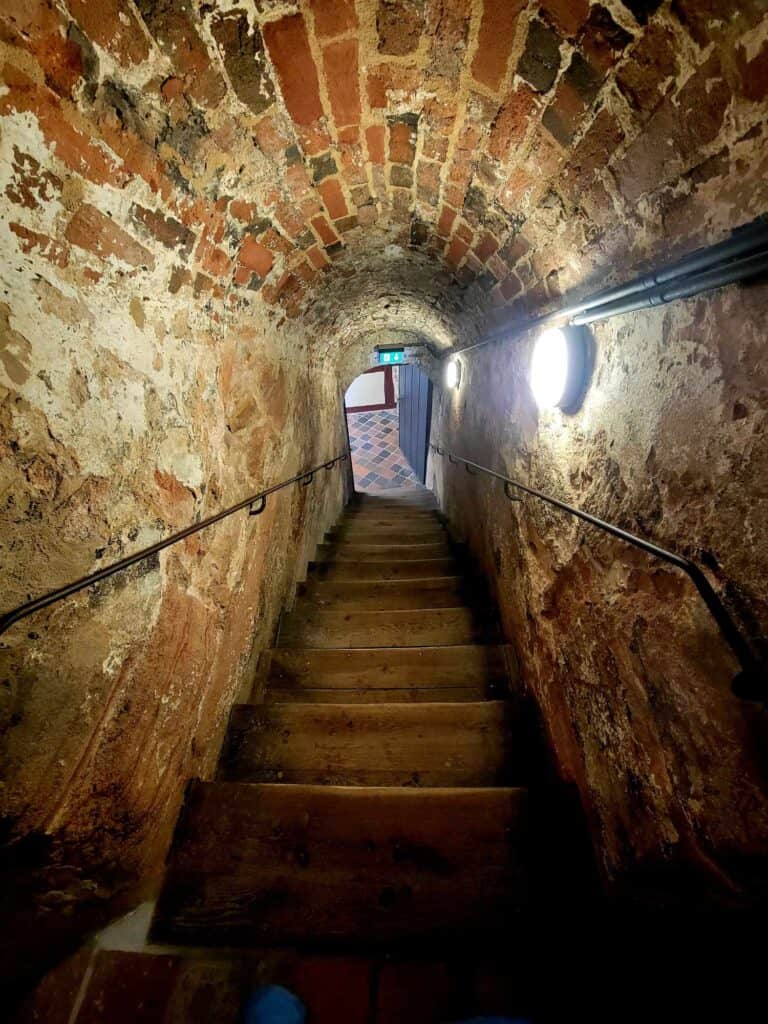
Beneath the Nuremberg Castle Complex lies one of the most fascinating parts of the entire site, the underground casemates and tunnel system carved directly into the rock. These passages were used for defense, storage, and protection during sieges, and are only accessible on a guided tour.
Tunnels and Secret Passages Tour Information (German & English)
🕰️ Duration: About 1 hour
🎟️ Price: €11 per person
📍Meeting place: In front of the entrance of the Historischer Kunstbunker, Obere Schmiedgasse 52. Use this map of the tour location to find the meeting point.
💡 Pro Tip: The English-language tours often sell out in advance, especially in peak season, so it’s worth booking ahead if this is on your must-see list. Get your Tunnels & Secret Passages English tour tickets in advance!
2) Visit the Albrecht Dürer House Museum (Albrecht-Dürer-Haus) – Home of Germany’s Most Famous Renaissance Artist
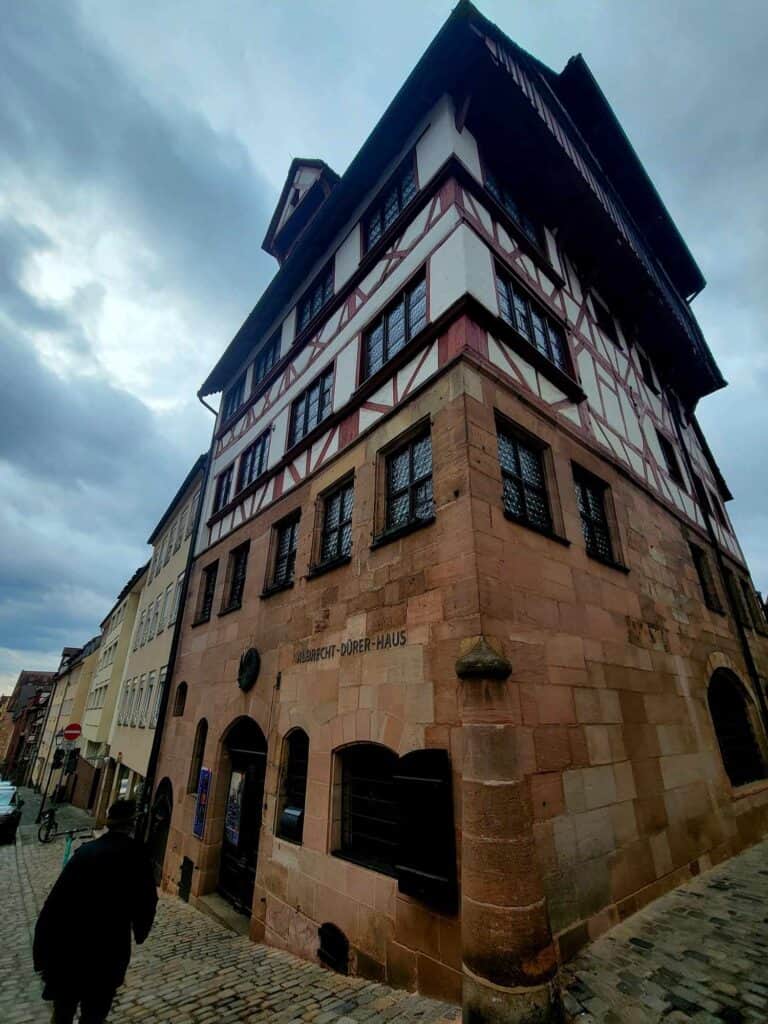
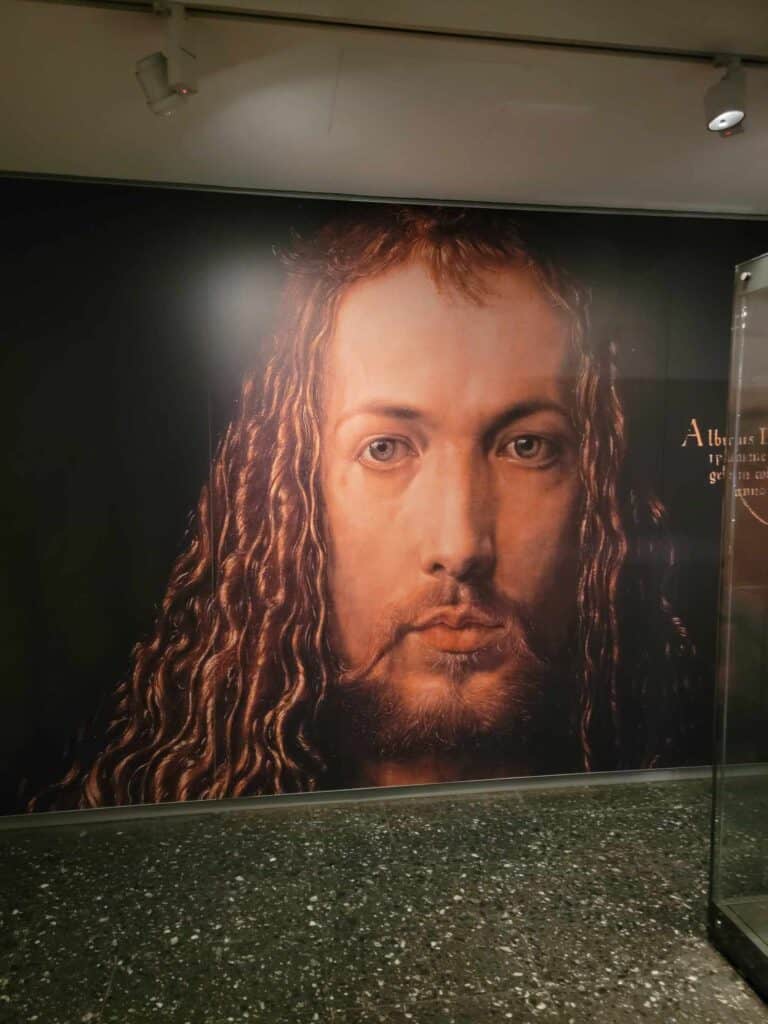
The Albrecht Dürer House Museum is one of the most important cultural sites in Nuremberg. This half-timbered home was where Renaissance artist Albrecht Dürer lived and worked from 1509 until his death in 1528, and it remains one of the best-preserved artist homes in Europe.
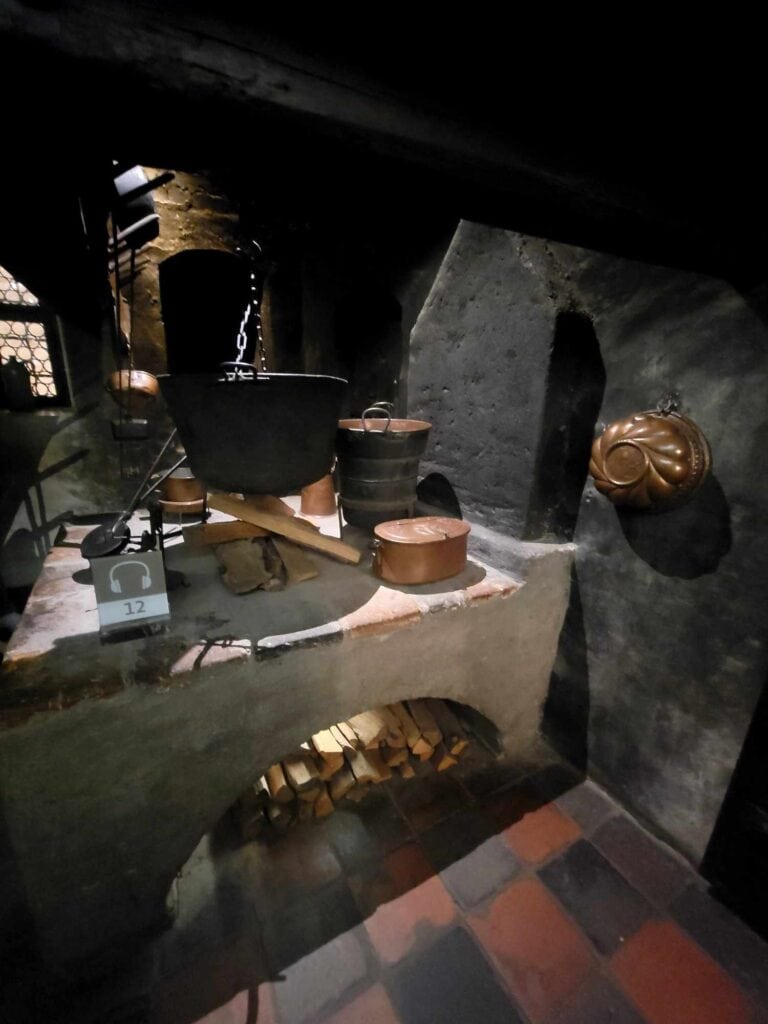
History and Significance
If you’re interested in Renaissance art or European cultural history, the Albrecht Dürer House Museum is an essential stop. It offers a rare glimpse into the life of one of Germany’s most influential artists. And the fact that Albrecht Dürer’s house was one of the very few buildings in Nuremberg’s Old Town to have survived the devastating bombing raids virtually unharmed is such an extraordinary piece of luck!
Albrecht Dürer worked and lived in this very house with his wife Agnes, and his mother Barbara, from 1509 until his death in 1528.
When I came to Nuremberg, I looked for a tour that would take me to all of the Albrecht Dürer sites in the city, but there was nothing!
So, I made one myself. If you want to explore more of his life and legacy across the city including his birthplace, artworks, and burial site, I put together a self-guided walking route here: 10 Best Albrecht Dürer Sites in Nuremberg: A Guide to His Legacy
Some walking tours of Nuremberg also include stops at the Dürer House and nearby Old Town landmarks, which is a great way to understand the full historical context if you’re short on time.
Visiting Information for Albrecht Dürer House Museum
Opening Hours:
- Tuesday to Friday: 10:00 AM – 5:00 PM
- Saturday and Sunday: 10:00 AM – 6:00 PM
- July through September and during the Christmas Market in December, the museum is also open on Monday 10:00 AM – 5:00 PM
Admission Prices (including an audioguide):
- Adults (18+): €7.50
- 4-18 years old, students: €2.50
- With Nuremberg Pass: €2.00
3) St. Sebaldus Church (Sebalduskirche) – Nuremberg’s Oldest Parish Church and Gothic Landmark
Winklerstraße 26, 90403 Nürnberg
St. Sebaldus Church is one of the most important religious and architectural landmarks in Nuremberg’s Old Town. Built in the 13th century, it is closely connected to the city’s patron saint, medieval history, and Renaissance art – including works associated with Albrecht Dürer.
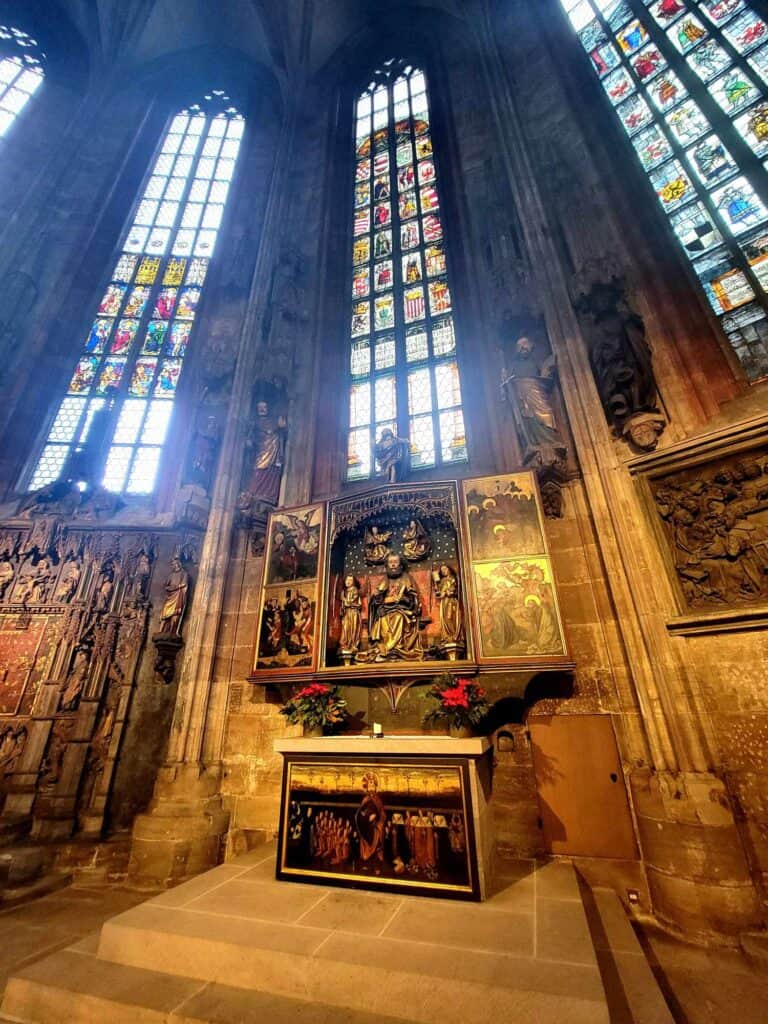
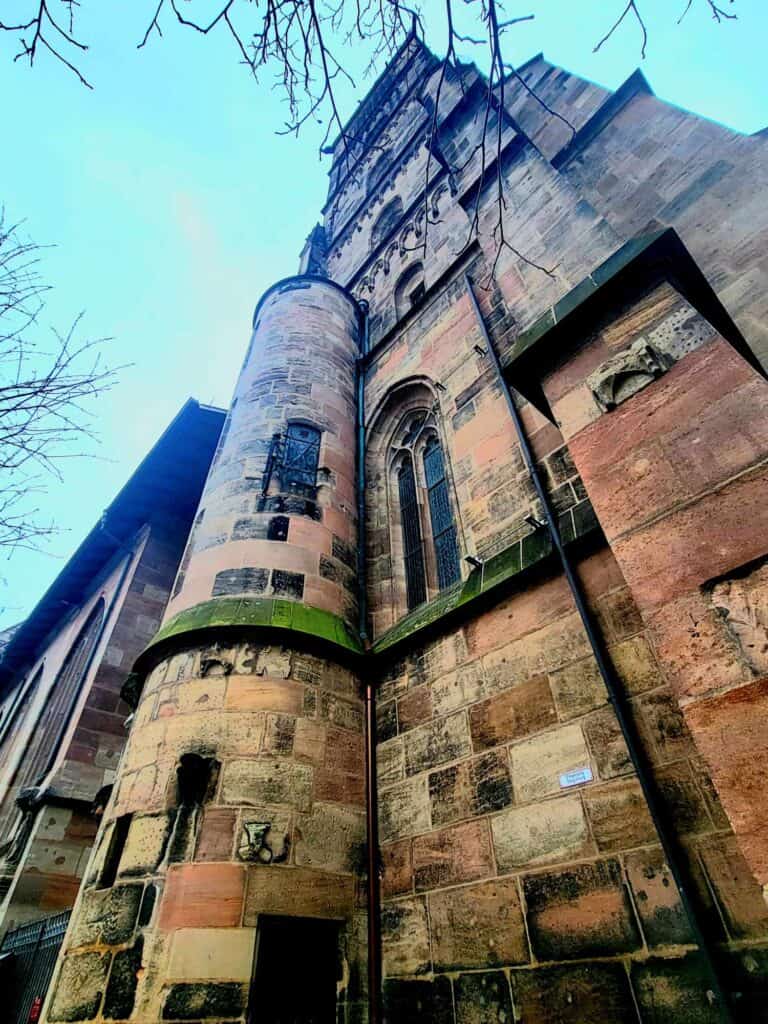
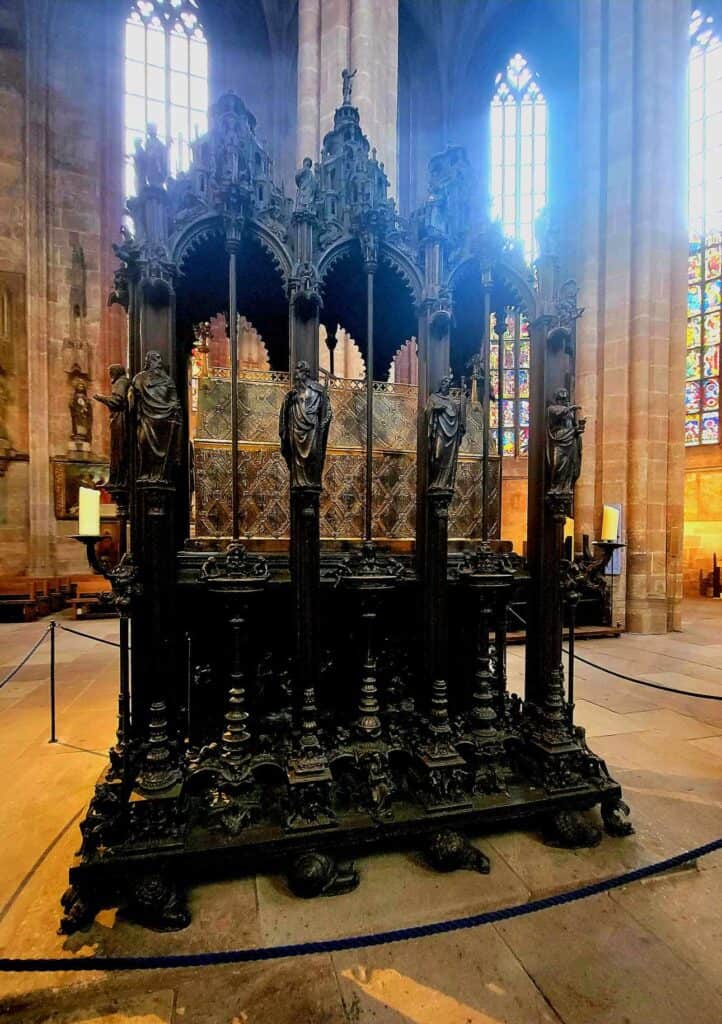
St. Sebaldus Church sits right in the heart of Nuremberg’s Old Town, and is one of the oldest and most significant churches in the city. Founded in the 13th century, it was named after St. Sebald, the city’s patron saint.
It was my first stop on my first trip to Nuremberg, and I will always have a soft spot for it because I wasn’t expecting there would be so much history, and connections with a world-renowned artist, and composer!
🏛️ Protestant Church with a Medieval Interior
During the Reformation, when Martin Luther separated from the Catholic church, St. Sebaldus became a Protestant church. You wouldn’t know it to look at the inside because most of the ornate medieval Catholic art and iconography is still there! Nuremberg was more moderate in its views during the Reformation, and refused to destroy its religious art, as often happened in other areas of Germany where Protestant churches reflected simplicity and lack of adornment.
This is good news for us because the interior is truly lovely, filled with breathtaking medieval art!
🐌 The Famous Snail Sculptures on the Shrine
The shrine to St. Sebaldus, a magnificent bronze tomb from the early 16th century remains intact as well. One of the more unusual and frankly adorable elements in the church are the bronze snail sculptures that act as feet, holding up the shrine. I may or may not have said, “Snails!” louder than I should have.
Snails aren’t very common in religious architecture, but they are believed to represent patience, and the slow steady journey of faith. Whatever the reason, they are now a beloved curiosity and unofficial mascots of the church, even represented in its logo!
🎨 The Albrecht Dürer Windows
The thing you will probably notice first are its stained-glass windows, some of which were designed by Albrecht Dürer, whose work you can also explore across the city in my guide to the 10 Best Albrecht Dürer Sites in Nuremberg. You’ll find the windows in the east choir (back left as you enter).
Though some of the original medieval windows were damaged or destroyed, many have been preserved, and others carefully reconstructed.
🎼 Pachelbel and the Church’s Musical Legacy
St. Sebaldus has another famous figure of the arts associated with it, the Baroque composer Johann Pachelbel, best known for his composition Canon in D. Chances are if you’ve attended a wedding or two, you’ll know this piece (even if you don’t know it by name).
Pachelbel was born in Nuremberg in 1653 and was actually the church’s organist from 1695 to 1706! The church’s grand organ was rebuilt after WWII, carrying on its musical tradition and history. Here’s a link to Pachelbel’s Canon in D played on instruments that would have been used at the time it was written.
💣 World War II Damage and Reconstruction

Like much of Nuremberg, St. Sebaldus (you can see its two ruined towers in the distance on the right in the photo above) was heavily damaged during Allied bombings in 1943–1945. The roof collapsed, and much of its medieval structure suffered severe destruction. After the war, meticulous reconstruction took place between 1945 and 1957, using original stones wherever possible. You’d never know to look at it today.
Today, St. Sebaldus stands as one of the best-preserved examples of how Nuremberg rebuilt and preserved its medieval heritage after the destruction of World War II.
Visiting Information for St. Sebaldus Church:
🕒 The church is open Monday – Saturday 9:30am-4:00pm, and Sunday from 11am-4:00pm
🪙 Donations are requested, but not mandatory.
💡 Pro Tip: After your visit to this historical church, pop across the street where you’ll find several amazing antique shops to browse!
4) Moritzkapelle (St. Maurice Chapel) – The Lost Medieval Chapel Hidden in Plain Sight
The Moritzkapelle (St. Maurice Chapel) was once part of the St. Sebaldus Monastery complex in Nuremberg’s Old Town. Although it was destroyed during World War II and never rebuilt, its location is still visible today as a subtle outline in the cobblestones.
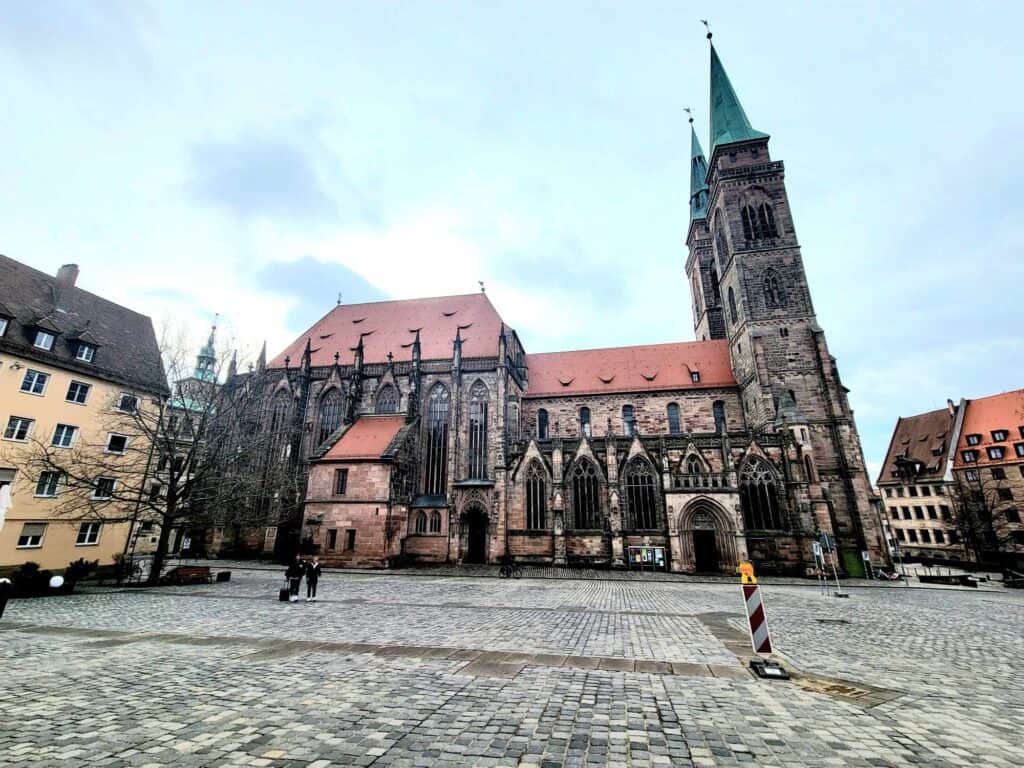
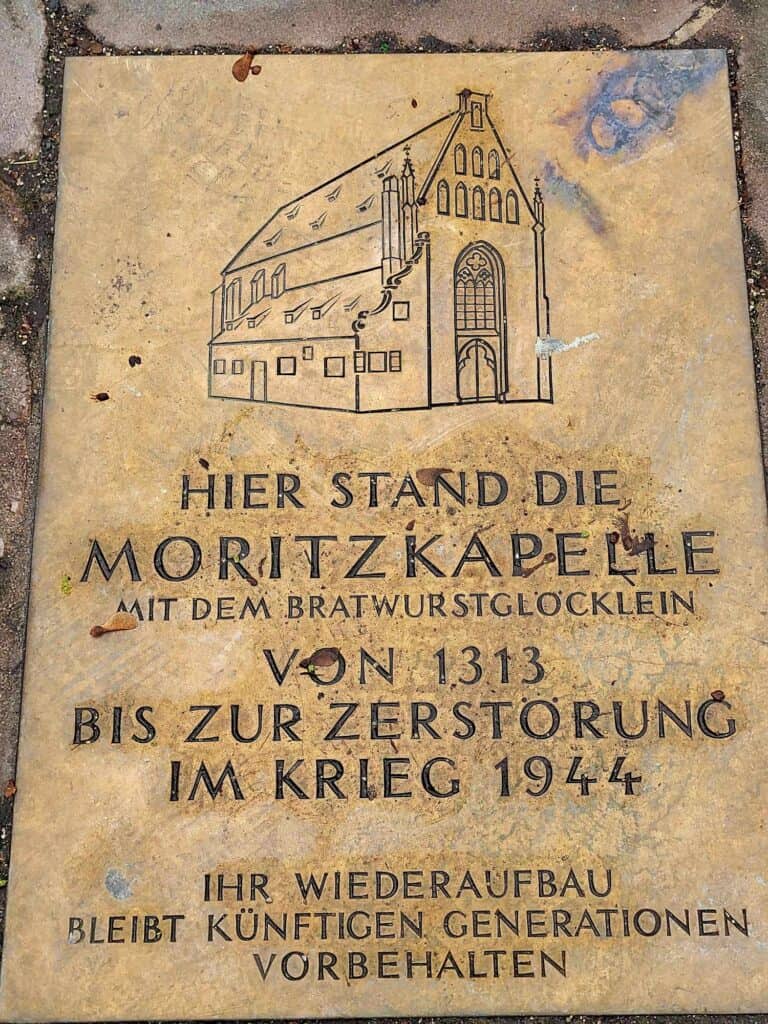
Unfortunately, despite Nuremberg’s diligent efforts to reconstruct the Old Town after the war, there were still casualties that were never reconstructed. One of these is the Moritzkapelle which used to stand right next to St. Sebaldus Church, one of Nuremberg’s most important medieval landmarks.
Today, nothing of the chapel remains above ground, but if you don’t know where to look, you might walk right over it without ever realizing it was there.
🏗️ Construction and Medieval Origins
The Moritzkapelle, or St. Maurice Chapel, was built in 1313 and was originally part of the St. Sebaldus Monastery complex. The chapel was dedicated to St. Maurice, the patron saint of soldiers.
💣 Destruction During World War II
The Moritzkapelle was unfortunately caught in the bombing raids that targeted infrastructure in the city and was reduced to ruins. The huge reconstruction projects and the economic hardship that Nuremberg faced after the war, and the decision of the urban planners to leave the square next to Sebaldus open meant that Moritzkapelle had met its end.
👁️ Hiding in Plain Sight Today
The chapel may be gone, but its ghostly outline still remains in the cobblestones if you know where to look. I almost missed it but sure enough after looking around a little bit, there it was!
You can still see the outline where it stood, laid out in dark cobblestones in the square, so you can imagine what it must have been like. There is also a small plaque commemorating the site, explaining about this bit of hidden history.
It made me a little sad, and I tried to picture from the image on the plaque what it must have looked like, and about the difficult decision to let it remain a phantom.
5) Explore Nuremberg’s Medieval Dungeons: A Dark History Below Town Hall (Lochgefängnisse)
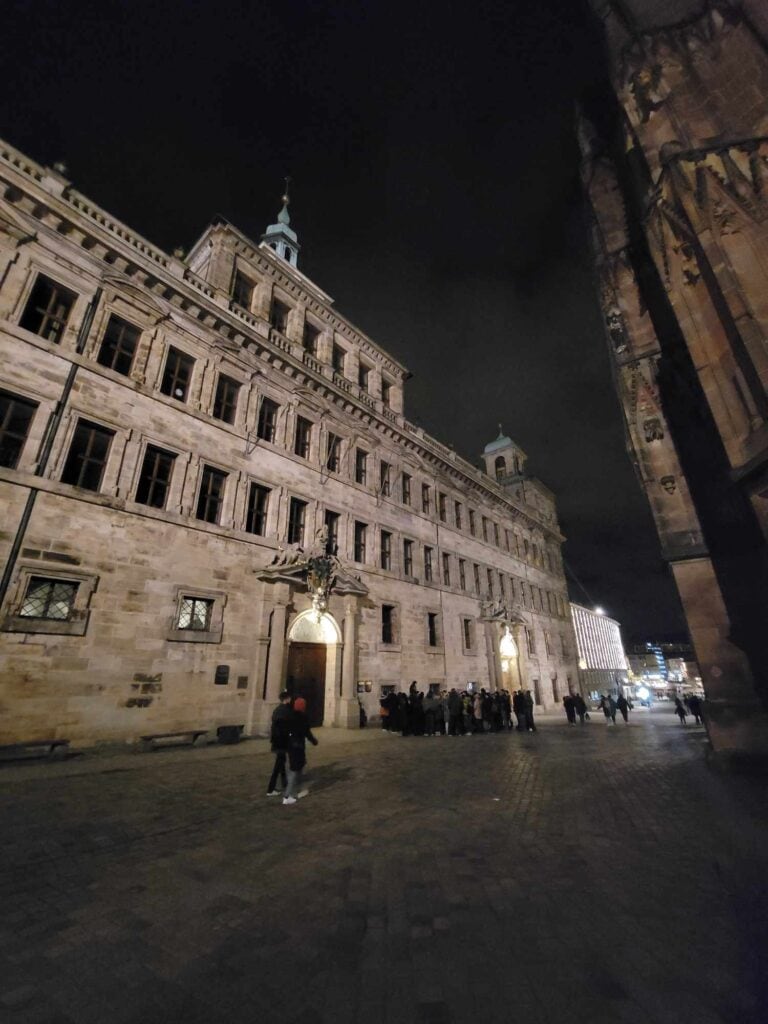
Located in the vaulted cellars underneath the Historic City Hall, you’ll find the medieval dungeons once used for housing prisoners from the time of their arrest, until their sentences were carried out. These dungeons are creepy and feature torture devices, and a guide to explain it all.
These dungeons are particularly horrifying when you find out that the prisoners had to spend their entire time until sentencing in complete darkness.
Torture was common as a means of extracting information, and wasn’t outlawed until 1814! To add insult to injury, prisoners had to pay for their own “room and board,” with wealthier prisoners being able to afford slightly better conditions.
If you’re looking for a spine-chilling immersion into the dark side of criminal justice in the middle ages, this one is for you! Children under 10 are not permitted on the tour.
Beneath Nuremberg’s Historic City Hall lies a place that most visitors would never guess is there at all – the medieval dungeons known as the Lochgefängnisse. Carved into the stone cellar vaults, these small, heavy rooms once formed part of the city’s justice system, holding prisoners between arrest and sentencing.
What makes this space so striking isn’t just that it exists underground, but how ordinary it once was within civic life. This wasn’t a hidden punishment system on the margins of society, it was built directly into the functioning of the city itself. Business as usual.
Prisoners were held in near-total darkness, often in isolation, waiting for interrogation or judgment. Conditions were deliberately harsh, and interrogations in this period could involve torture, which wasn’t outlawed in the Holy Roman Empire until much later, in the early 19th century. Even the idea of confinement carried a financial burden. Prisoners were expected to pay for their own “room and board,” meaning treatment could vary depending on wealth or status.
Walking through the preserved cells today is enough to make it very easy to imagine how disorienting and frightening this system would have been. Heads up that these dungeons are creepy and feature torture devices.
The dungeon visit is only possible as part of a guided tour, which actually enhances the experience because the historical context is explained as you move through each space, rather than being left to interpretation.
If you’re following Nuremberg’s darker historical thread, this stop connects naturally with the Hangman’s Bridge and Hangman’s House nearby, which show what happened above ground once sentencing was carried out.
Visiting Information for the Medieval Dungeons
🚧 Visitation is permitted only with a guided tour, and no one under the age of 10 will be admitted
🇩🇪 Guided German Tours: daily, every hour from 11 am to 6 pm
🇬🇧 Guided English Tours: daily 3.15 pm, 4.15 pm, 5.15 pm
💶 Adults €10.00, Adults with Nürnberg Card €5.00, Students €8.00
💡 Pro-Tip: After your tour, visit the Hangman’s Bridge and the Hangman’s House (next) to learn about the executioners who enforced these punishments.
6) Cross the Hangman’s Bridge (Henkerbrücke): A Bridge with a Dark Past
Trödelmarkt 58, 90403 Nürnberg
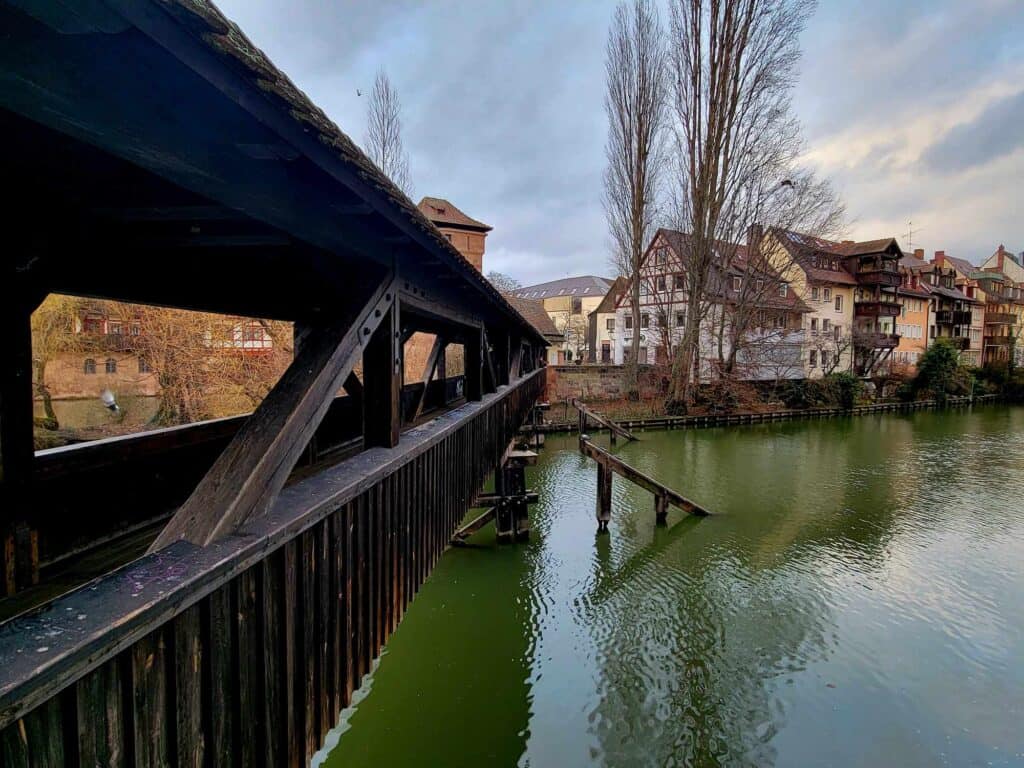
History & Significance
My husband and I crossed this pretty wooden bridge and thought, “How romantic!” Then we discovered its history!
The Hangman’s Bridge (Henkerbrücke) wasn’t just a picturesque crossing over the River Pegnitz. It played a very practical role in Nuremberg’s medieval justice system. Executioners lived in the nearby Hangman’s House, and the bridge provided direct access between their home and the areas where punishments were carried out outside the city walls.
The current structure dates back to after the flood of 1595, which destroyed the original bridge, and it was later restored following damage during World War II. Like so much of Nuremberg, what you see today is a rebuilding of something much older.
What makes this spot so memorable is the contrast. Today it feels peaceful and almost hidden, tucked into one of the prettiest river views in the city. But historically, it sat within a system where justice, punishment, and daily civic life were closely intertwined.
It’s also one of the easiest places to walk straight into the next part of that story – the Hangman’s House, just a few steps away.
7) Check out the Hangman’s House (Henkerhaus)
Trödelmarkt 58, 90403 Nürnberg
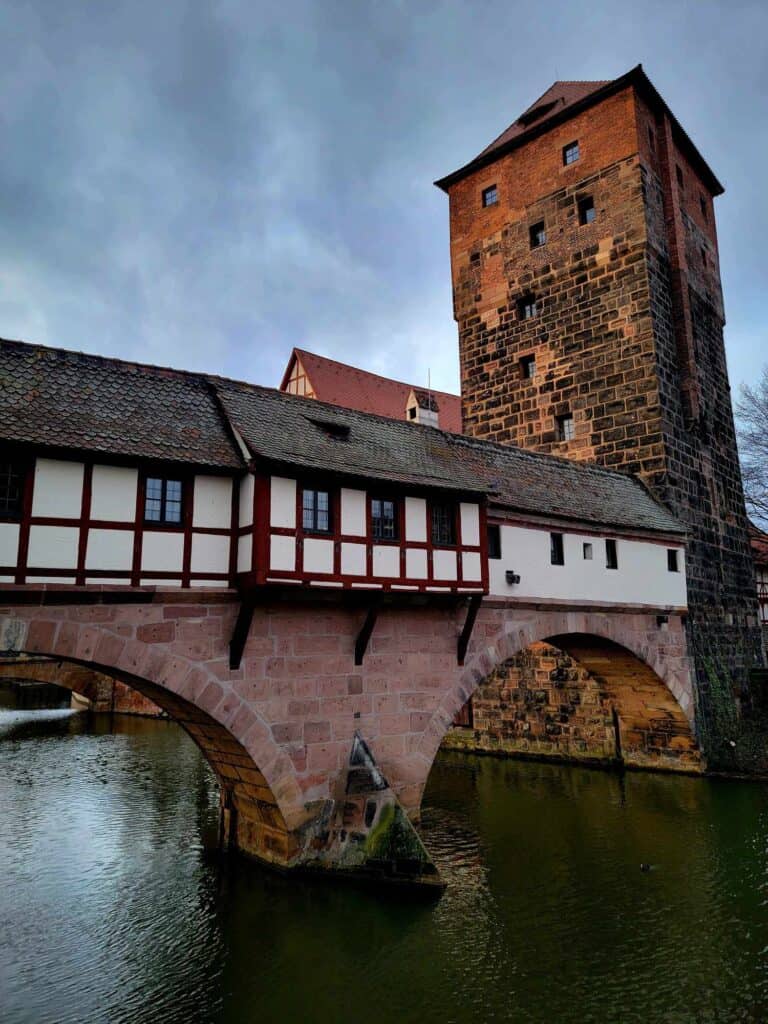
The 500-year old Hangman’s House right next to the Hangman’s Bridge served as the residence of Nuremberg’s executioners and their families for centuries. Today it’s right in the center of Nuremberg’s prettiest postcard photo of the river, but its past is definitely darker.
For centuries, this was the official residence of Nuremberg’s executioners and their families. While their role was essential to the city’s justice system, they lived on the margins of society, socially separated from most other residents due to the nature of their work.
Inside the house today, you’ll find a small museum focused on medieval criminal justice. The exhibits explore how the system worked, how punishments were carried out, and how executioners were both necessary and excluded figures in civic life.
While the role of the executioner was clearly necessary in a society that incorporated executions into their criminal justice system, the executioners themselves were shunned and separated from normal life in the city.
All of the information panels are in German and English.
You won’t find any instruments of execution or other grisly artifacts here, but it is a fascinating learning experience. The house itself is actually really beautiful and built right over the river, so you can get some nice photos out the windows. I guess after a hard day’s work the executioners needed a nice relaxing space to decompress…
Visiting Information for the Hangman’s House
🕒 Museum Hours
The Hangman’s House is closed from January to March, and opens again on April 1.
Hours of operation are Tuesday – Sunday, 12:00PM-5:00PM, closed on Mondays.
🎟️ Admission
Adults €3, 14-18 years old €2, and children under 14 are free.
8) Spend Some Time at the Germanisches National Museum
Kartäusergasse 1, 90402 Nürnberg
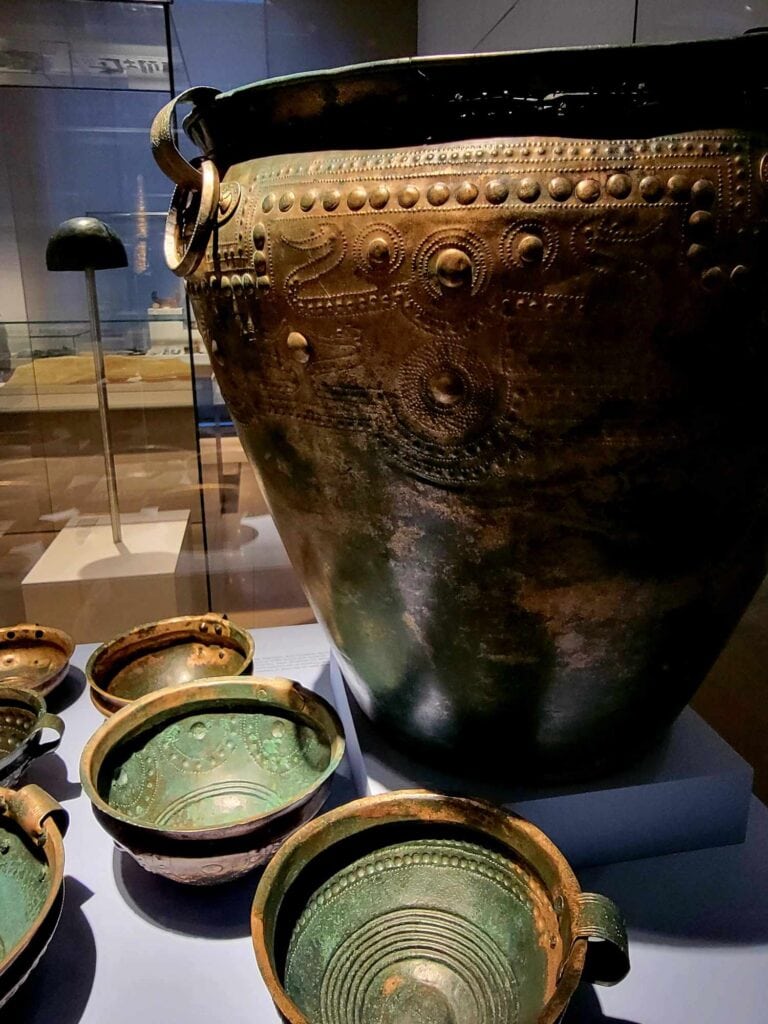
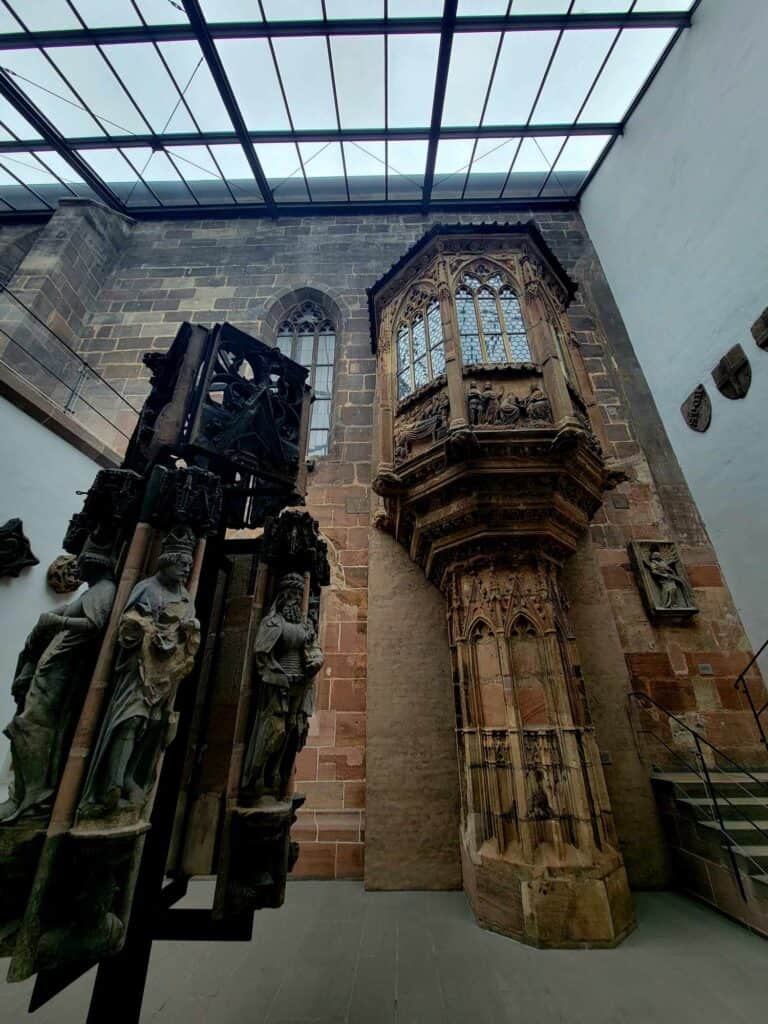
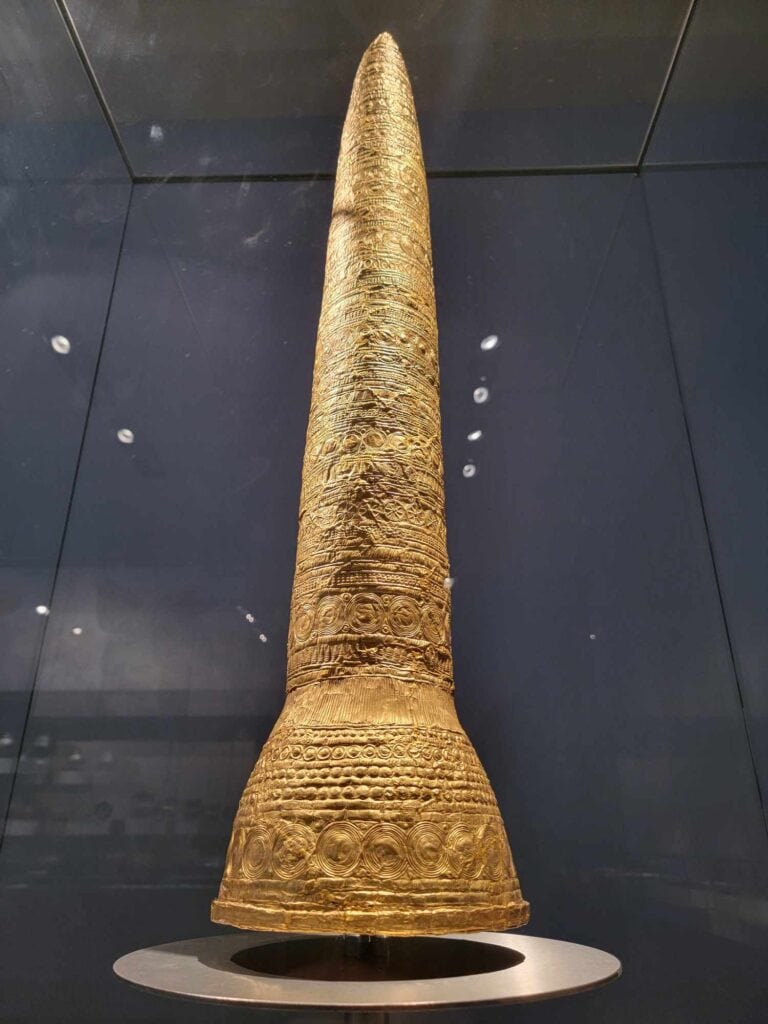
If you’re even slightly interested in art, history, or material culture, the Germanisches National Museum is the kind of place you could lose an entire day in without realizing it. It’s the largest museum of German cultural history, and its collection spans everything from prehistoric artifacts to Renaissance masterpieces and modern works.
What makes it especially fitting in Nuremberg is how closely the museum’s own story is tied to the city’s history. During World War II, many of its most valuable objects were moved into underground tunnels and beer cellars across the city to protect them from bombing raids. That effort is a big reason so much of what defines Nuremberg’s cultural heritage still exists today.
The building itself adds another layer to the experience. Housed in a former Carthusian monastery, parts of the medieval cloister are still intact, so you’re walking through centuries of architectural history even before you reach the exhibits.
If your time is limited, it helps to focus rather than try to see everything. The most memorable sections tend to be the medieval collection in the cloister areas, the European paintings (including works by Dürer and Rembrandt), and the objects that sit somewhere between art and archaeology, like the famous Behaim Globe and the striking golden hat.
What stands out most, though, is the scale of it all. This isn’t a museum you “finish.” Even after multiple visits, there’s always more to see, and that’s part of what makes it so memorable.
Visiting Information for the Germanisches National Museum
🕒 Hours: Tuesday–Sunday, 10:00 AM – 6:00 PM (Wednesdays open until 8:30 PM)
🎟️ Admission: €8 for adults, free on Wednesdays after 6:00 PM
If you love historical artifacts, consider pairing this with a visit to the Imperial Castle’s museum.
9) Discover Weißgerbergasse: Nuremberg’s Most Beautiful Medieval Street
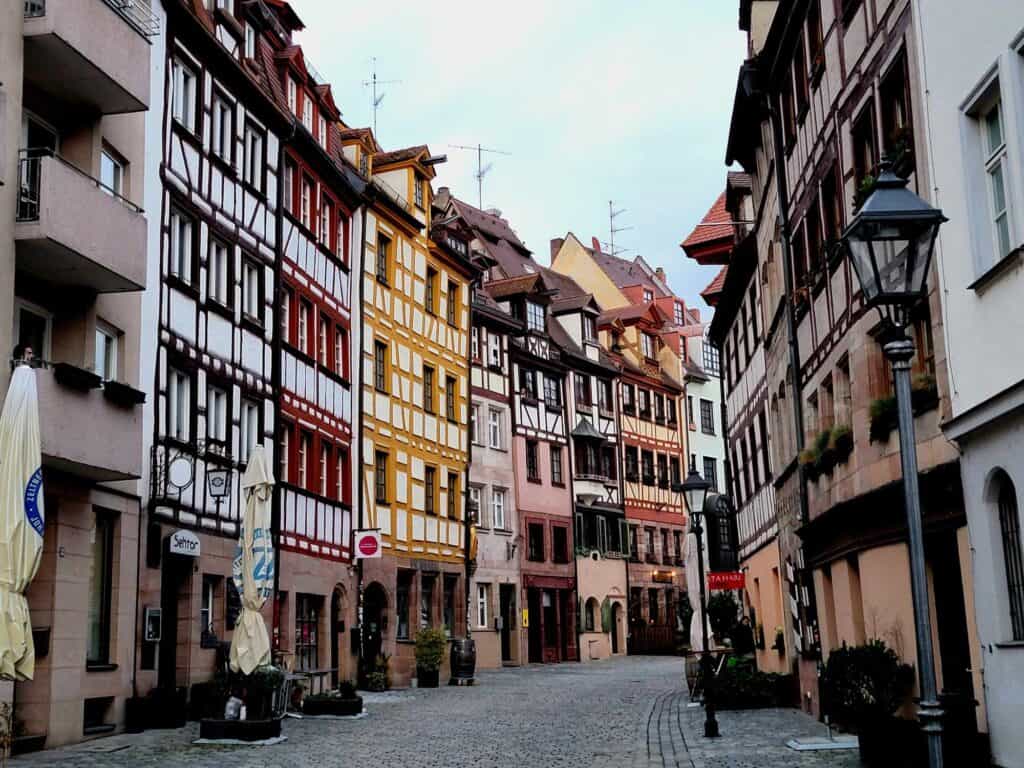
For photographers, this is one of the best places in Nuremberg for pictures!
Despite massive bombardment during WWII, pockets of Old Nuremberg managed to survive, and Weißgerbergasse (VICE-gerber-gassa / White Tanners Lane) is one of them. Lined with charming half-timbered houses, this cobbled lane will absolutely transport you back in time and give you a tantalizing glimpse of what the city looked like before World War II.
My jaw literally dropped when I looked up this street as we passed. I wasn’t expecting it, and it felt like an absolute postcard come to life!
Historically, this was the street of the tanners—craftspeople who worked with leather using the alum-tanning process, which produced the lighter “white” leather that gave the street its name. Unlike many medieval trades, tanning was relatively lucrative, and that’s reflected in the size of the buildings. Many of the houses here are tall, narrow, and built over multiple floors, with workshops at street level and living spaces above.
What makes Weißgerbergasse especially special today is that it doesn’t feel staged. Many of the buildings are still privately owned, and while there are cafés and small shops tucked into the ground floors, it still feels lived-in rather than purely touristic.
It’s also one of the most photogenic spots in the city. Whether you’re stopping for a coffee, browsing a small boutique, or just standing in the middle of the street looking up, it’s the kind of place that naturally slows you down.
10) Turn the Ring on the Schöner Brunnen for Luck!
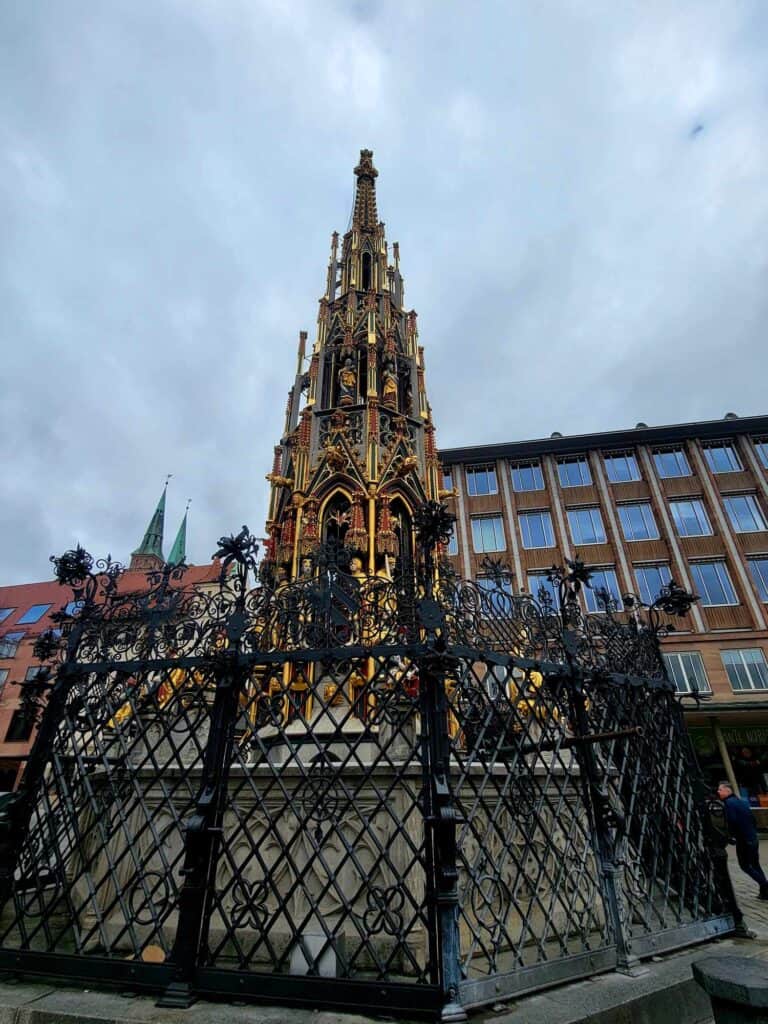
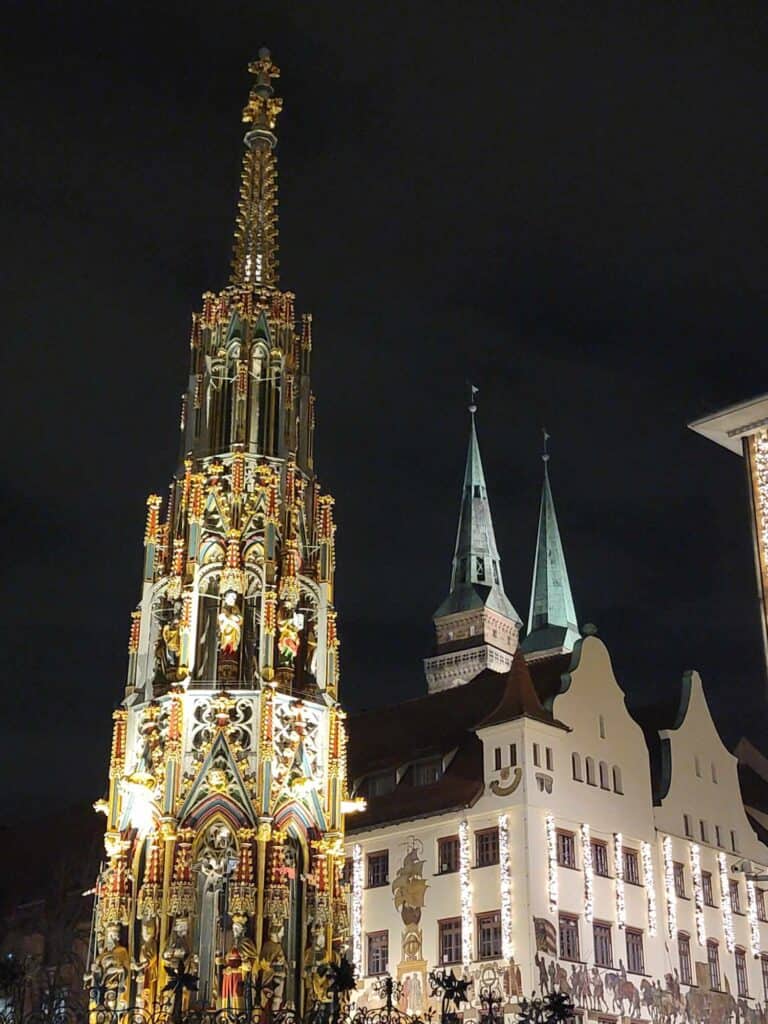
Here’s the quintessential hidden gem in Nuremberg’s Old Town, and you might walk right past it.
The Schöner Brunnen (“Beautiful Fountain”) looks like a towering gothic spire frozen in stone, rising from the middle of the Hauptmarkt. Built between 1385 and 1396, it was originally intended to be part of a church design, but the city decided it was too striking to place high out of sight. So instead, it became the centerpiece of the main square, and later a working fountain for the city.
When you stand in front of it, it’s almost overwhelming how dense the detail is. The structure is packed with 40 carved figures, representing medieval ideas of religion, philosophy, and imperial power. You’ll spot figures like Aristotle, Moses, and the seven electors of the Holy Roman Empire all built into the stone like a 3D textbook of the medieval worldview.
The lucky brass ring
Tucked into the iron fence is a small brass ring that you could miss entirely unless someone points it out. Local legend says if you turn it three times while making a wish, you’ll be the recipient of good luck. Can’t hurt, right?
11) St. Lorenz Church (Lorenzkirche): The Gothic Masterpiece That Survived Everything
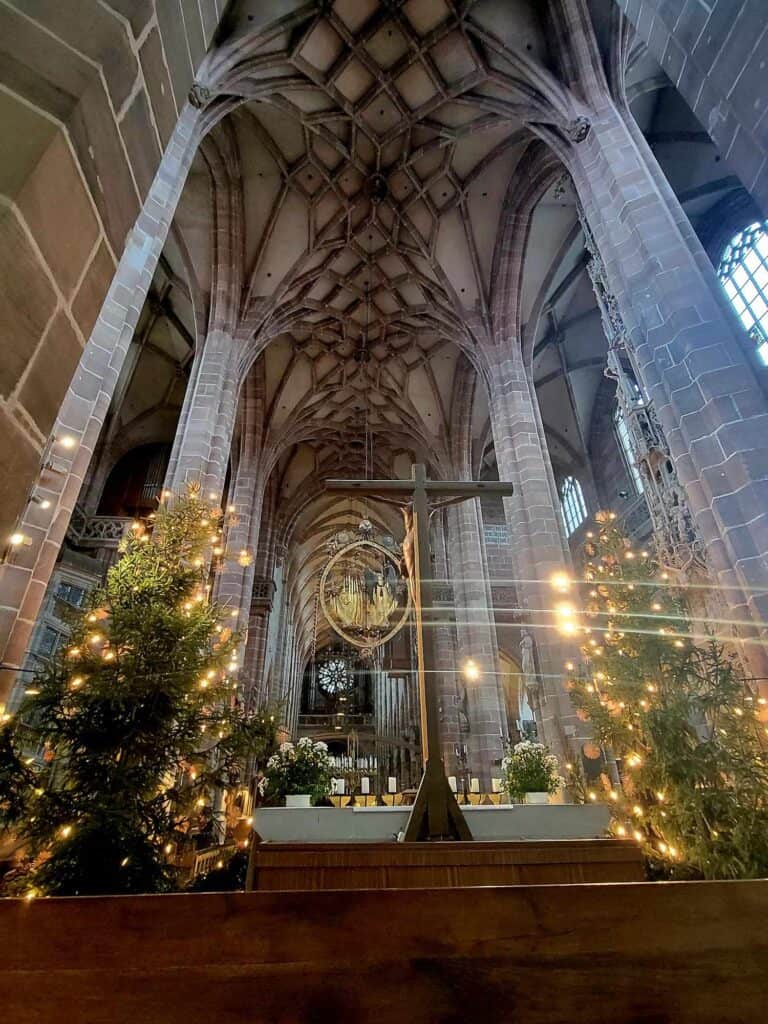
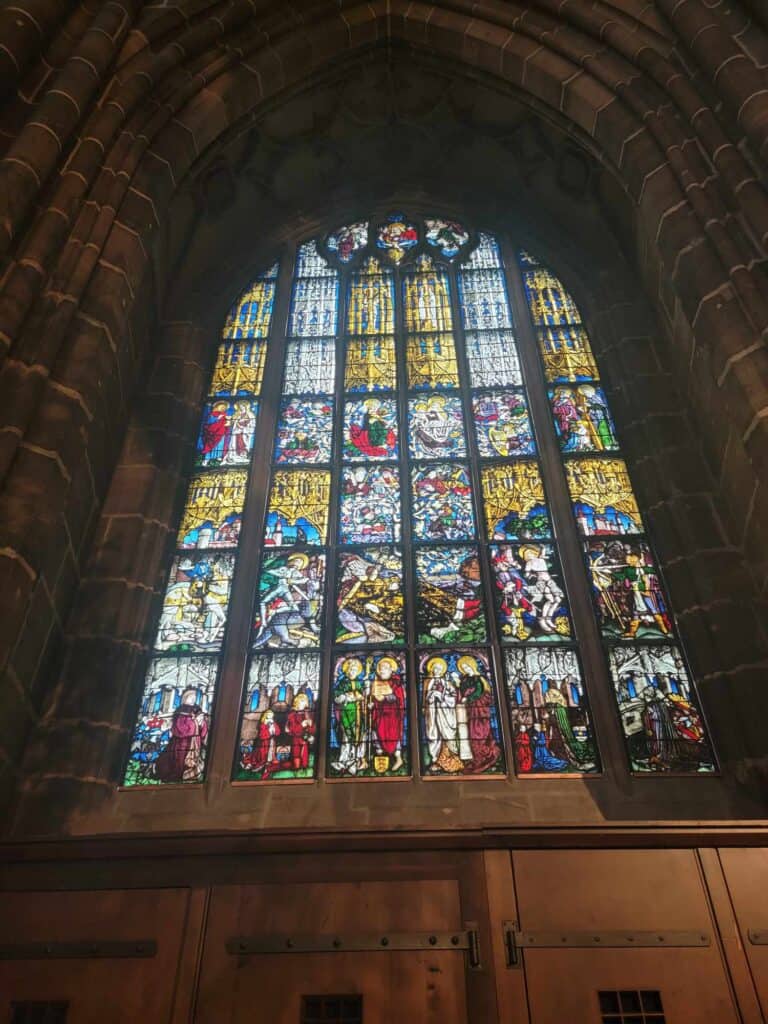
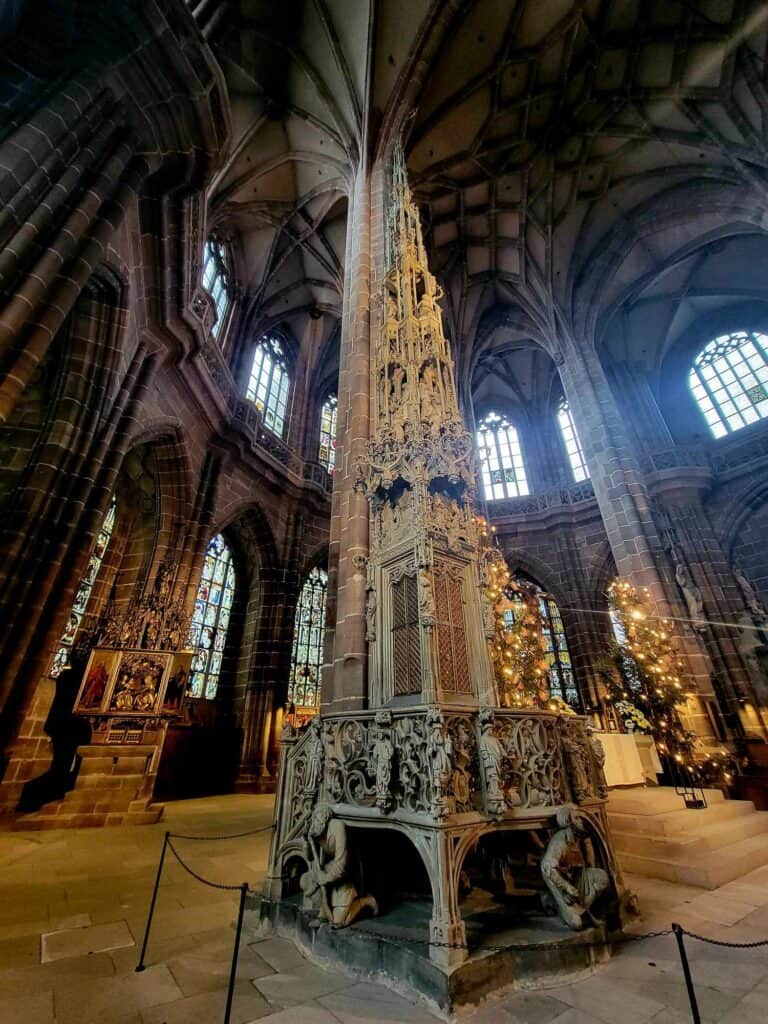
The twin towers of St. Lorenz dominate the skyline the moment you step into the Old Town, and once you know what those towers survived, they hit differently.
Built between 1250 and 1477, this is one of Nuremberg’s great Gothic churches. Standing beneath those towers, which rise about 80 meters overhead, you feel the weight of a city that once commanded enormous power and wealth. But what makes Lorenzkirche genuinely extraordinary isn’t its enormous scale. It’s what’s still standing inside it.
During WWII, much of the city around this church was reduced to rubble. But before the bombing intensified, key works inside were carefully removed and hidden in tunnels beneath the city. What couldn’t be moved, including the monumental Tabernacle by Adam Kraft, was protected in place with hundreds of sandbags and careful reinforcement.
The Tabernacle survived the bombing, and the collapse of the roof.
When you step inside today, that unlikely survival is what hits you first. The Tabernacle rises like a carved stone spine in the center of the nave – intricate, almost impossibly delicate, standing exactly where Adam Kraft placed it in 1493.
You’ll also find medieval stained glass (some original, some painstakingly restored), a massive pipe organ with over 12,000 pipes, and Nuremberg’s oldest bell on display. It’s a quiet and beautiful interior, and one of those rare places where you feel the full weight of what was almost lost.
💡 Good to know: Entry is free, but donations help maintain restoration work still ongoing.
12) The Handwerkerhof: The Medieval Village That Isn’t — And Works Anyway
Königstraße 82, 90402 Nürnberg
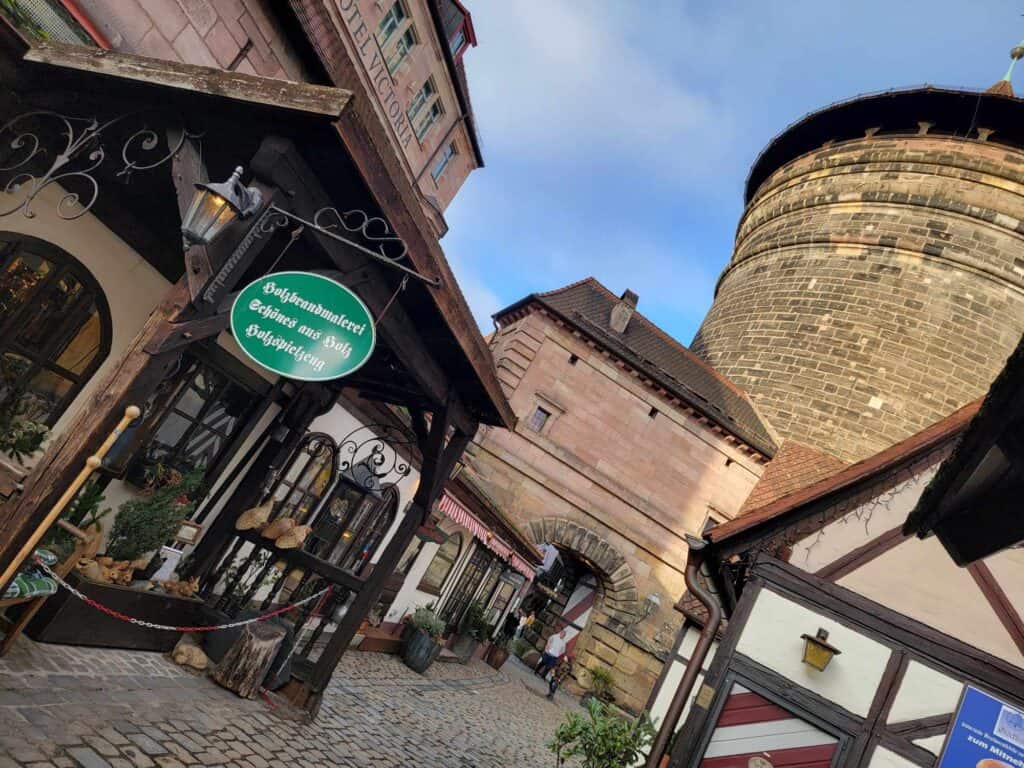
Right next to the busy train station, there’s a place that feels like it belongs to an entirely different century. Timber-framed buildings, narrow cobbled paths, small workshops selling handmade goods give it the feel of a tucked-away medieval village you stumbled into by accident.
Here’s the twist: it was built in 1971!
The Handwerkerhof was designed after WWII to recreate the feeling of traditional Nuremberg craftsmanship, specifically the workshops and artisan culture that were lost during the war. It’s not original medieval architecture. It’s a careful reconstruction of something the city genuinely loved and lost. And somehow, it works.
Walking through it, you still get that sense of intimate scale that Nuremberg is known for. Tour groups pass through quickly, but it’s a great spot to slow down and browse leather goods, woodwork, and glass, or stop for a piece of Lebkuchen (gingerbread) made from recipes that predate the buildings by several centuries.
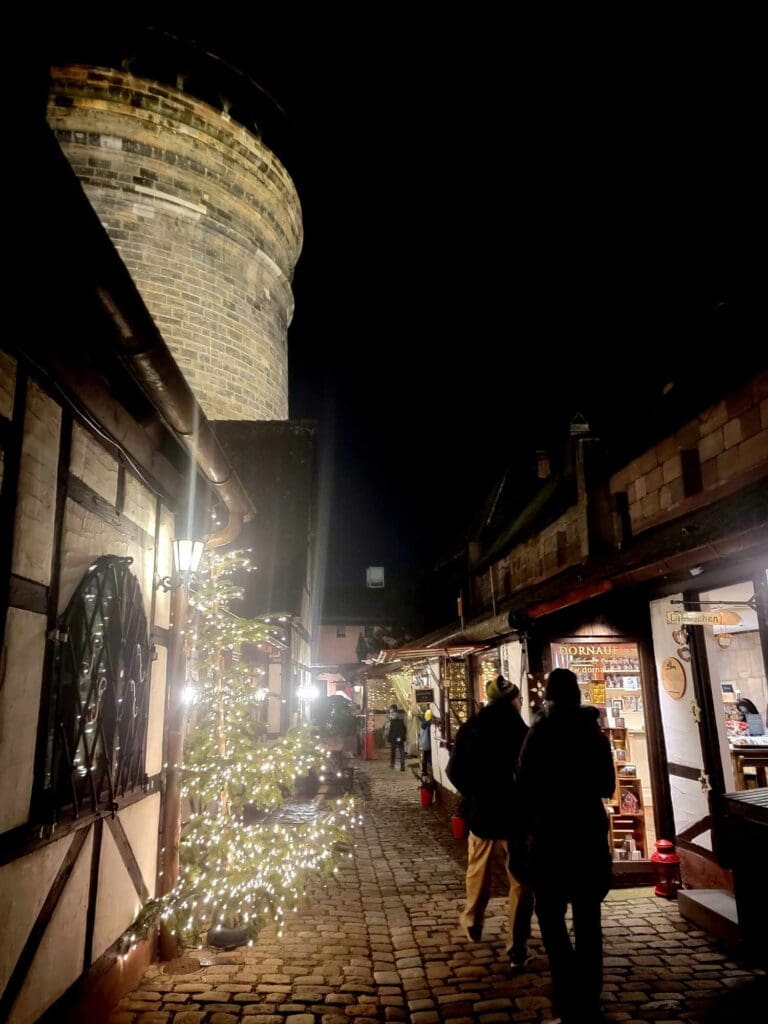
In winter, the Handwerkerhof transforms into something even more magical. The lights, the wooden stalls, and the smell of mulled wine make it feel like a smaller, quieter extension of the Christkindlesmarkt, Nuremberg’s famous Christmas market, and a place to catch your breath and remember why you came to Nuremberg in the first place.
13) Frauenkirche: The Church That Comes Alive at Noon
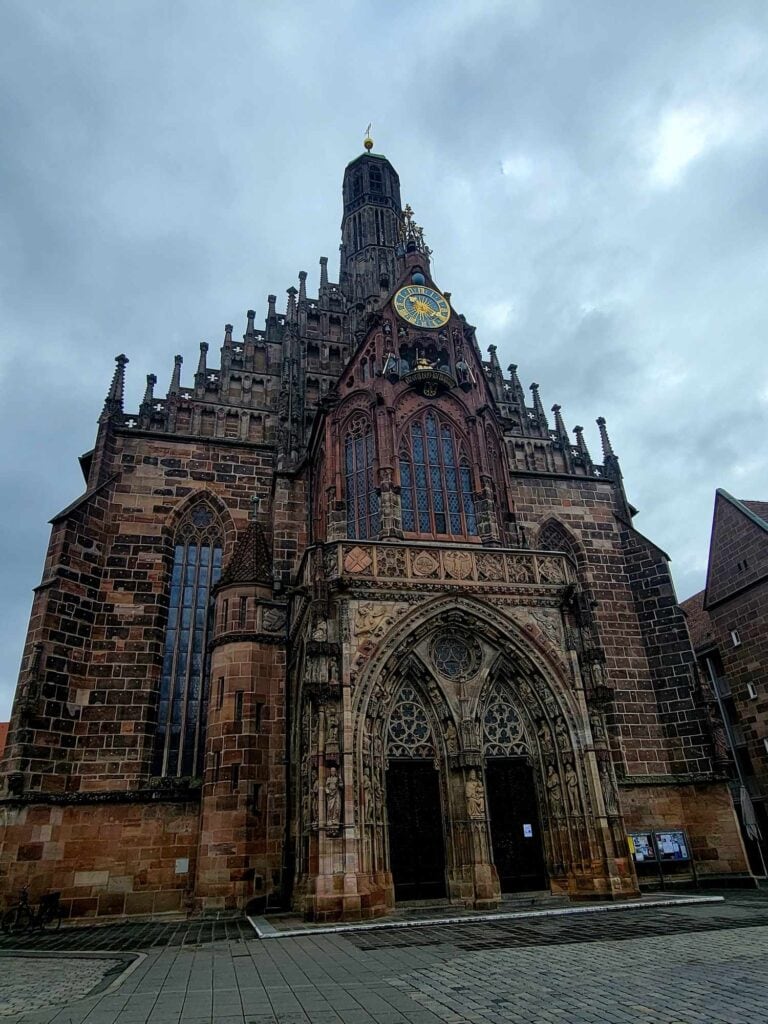
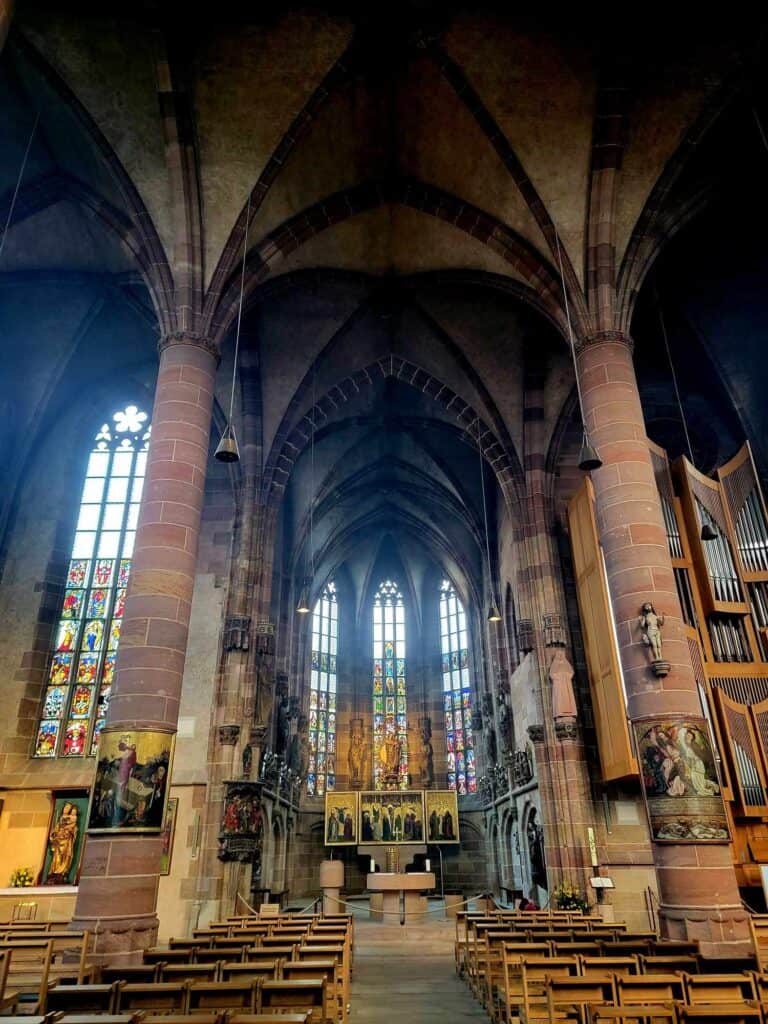
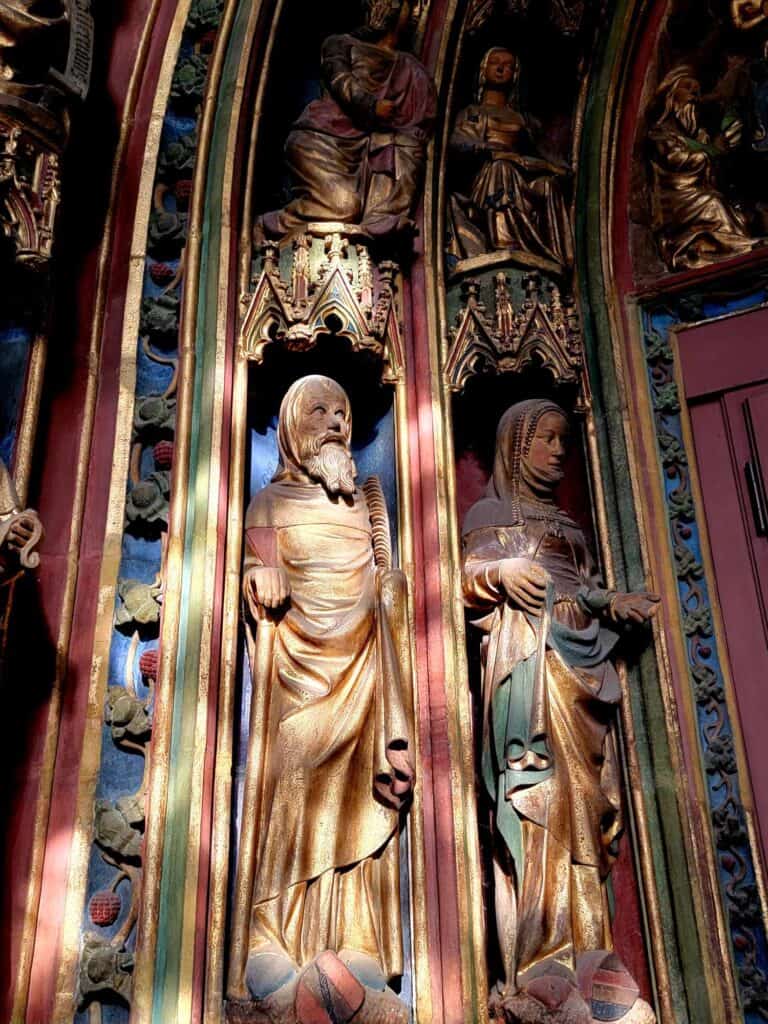
Right in the middle of the Hauptmarkt, surrounded by cafés, market stalls, and the general organized chaos of the main square, the Frauenkirche doesn’t sit quietly in the background. Every day at noon, it puts on a fabulous medieval show.
But first, the history, because this site carries a lot.
Built between 1352 and 1362 under Emperor Charles IV, the Frauenkirche stands on the location of a former Jewish synagogue destroyed during the pogrom of 1349. That history is part of what makes Nuremberg so complicated – beauty built literally on top of some of its darkest chapters. The church itself was heavily damaged during WWII and later reconstructed from its own rubble. What you see today is a careful blend of original fragments and restoration, most visibly in the medieval stained glass and carved altarpieces that were painstakingly reassembled.
Look closely at the interior walls and the facade to see original stonework from the 1300s still in place.
And then there’s the clock! Just before noon, crowds start forming in the square facing the facade. The ornate Männleinlaufen clock above the entrance comes to life, displaying a mechanical procession from 1506 with seven prince-electors circling Emperor Charles IV in a loop that lasts only a few minutes. Everything in the square stops. Everyone watches the same thing at the same time. It’s one of those small, free, entirely unexpected moments that makes you glad you were in the right place at the right time.
Inside, don’t miss the Tucher Altar, surviving medieval stained glass fragments, and the reconstructed Gothic interior where war damage remnants are still deliberately visible.
💡 Pro tip: Even if you’re not going inside, time your visit for noon because this is one of the easiest free experiences in the city.
Visiting Information for Frauenkirche
🕒 Hours: Monday–Saturday: 10:00 AM – 6:00 PM, Sunday: Closed except for services
🎟️ Admission: Free, but donations are welcome
14) Heilig-Geist-Spital: The Medieval Hospital That Also Held the Crown Jewels
Spitalgasse 16, 90403 Nürnberg
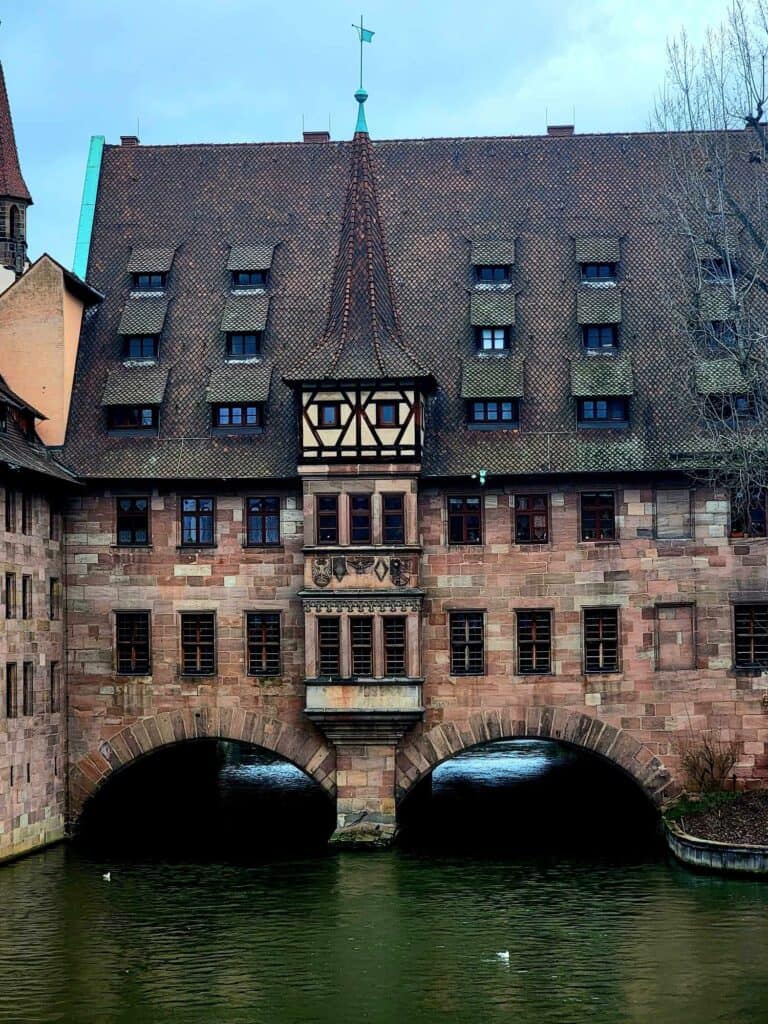
You’ll find at least one moment, mid-walk through Nuremberg’s Old Town, when you round a corner and stop because the view in front of you seems almost too cinematic to be real. For me, that moment was the Heilig-Geist-Spital.
The Holy Spirit Hospital stretches directly across the Pegnitz River with timber framing, red rooflines, and its own reflection shimmering in the water below. It looks like something from a medieval painting, which is appropriate, because it essentially is.
Founded in 1332, it was once one of the largest hospitals in the Holy Roman Empire, caring for the sick, elderly, and vulnerable with a level of organization that was extremely advanced for its time. But its history doesn’t stop at healthcare. For centuries, this building also held one of the most important collections of objects in Europe: the actual Imperial Regalia of the Holy Roman Empire, including the crown jewels and ceremonial artifacts of the emperor which were stored here between 1424 and 1796.
A medieval care facility and an imperial vault, in the same building, on the same river.
Part of the building now operates as a restaurant which is one of the most atmospheric dining spots in Nuremberg, especially if you get a table by the windows overlooking the water. Even if you’re not eating, this is really a beautiful place to slow down. The uneven medieval timber architecture, a small chapel tucked inside, the river running directly beneath your feet. It’s unforgettable.
15) Walk the Nuremberg City Walls and Towers
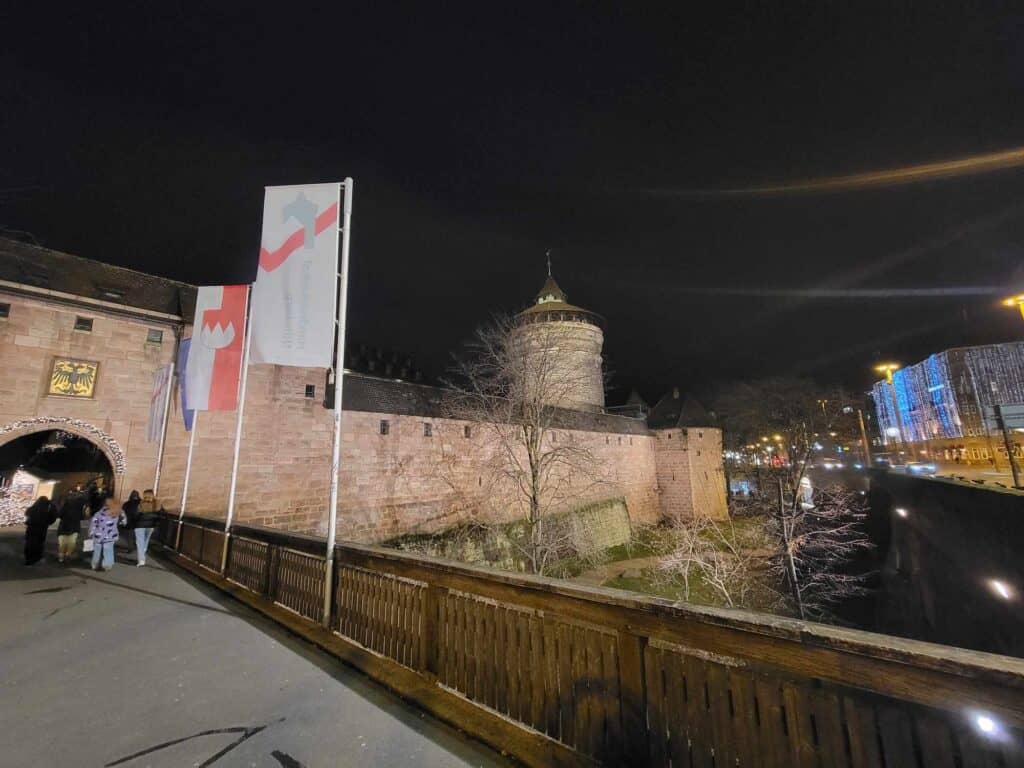
Unlike most European cities that demolished their fortifications to make room for expansion, Nuremberg kept its walls. Long stretches of medieval defenses including towers, gates, and walkable ramparts still wrap around parts of the Old Town, and walking them gives you something increasingly rare in Europe: a genuine sense of how a medieval city once protected itself.
As you move along the walls you’ll pass watchtowers that once monitored approaching armies, historic gates, and quiet elevated paths overlooking rooftops and church spires. It’s some of the best photography in the city, especially in the early morning before the crowds arrive.
A good starting point is near the Albrecht-Dürer-Haus, where you can look out over the same walls the great Renaissance master would have seen from his studio window. That overlap of daily life and historic preservation, unchanged across five centuries, is really extraordinary.
💡Pro tip: Go early morning or late afternoon for the best light and the quietest sections of wall. It’s also one of the best places in the city for photography, especially where the stone walls frame narrow streets and church spires in the distance.
A City of Two Faces
This is where Nuremberg’s story becomes more complicated, and more important.
Sometimes you forget as you admire the Gothic churches, the fountain with the lucky brass ring, the stunning artworks, and the medieval craftsmen’s courtyard.
But Nuremberg also gave the world something else entirely. This was the city Hitler chose as the symbolic heart of the Nazi movement. The rallies held here drew millions of people. The propaganda generated here shaped a generation. The laws stripping Jewish people of their citizenship – the Nuremberg Laws – were announced here in 1935.
What I find remarkable, and what keeps bringing me back to this city, is how Nuremberg has chosen to reckon with that history rather than bury it. The trials that established international law happened here. The memorials to the persecuted are embedded in the streets. The documentation centers don’t minimize or sanitize – they explain, in uncomfortable detail, exactly how it happened.
There’s no way to undo what this city was part of. But acknowledgment, education, and genuine respect for what was lost are the closest thing we have to prevention. Nuremberg, to its credit, seems to understand that.
The next few sites are part of that reckoning.
16) Tour the Historic Art Bunker (Kunstbunker), Nuremberg’s Underground WWII Treasure Vault
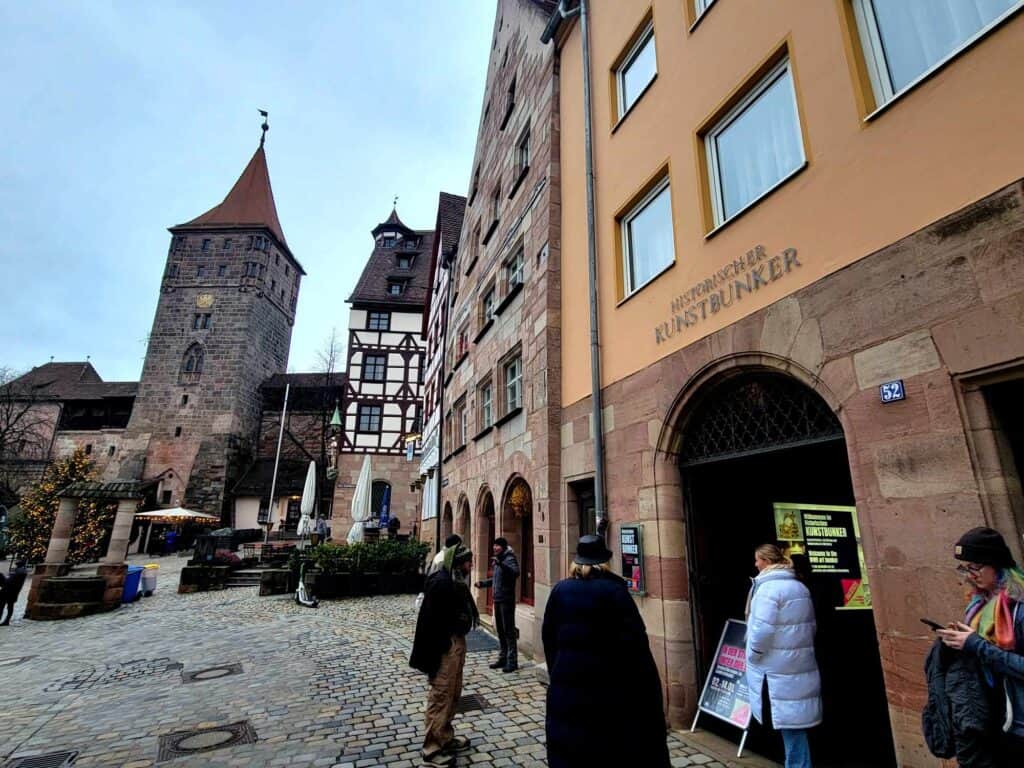
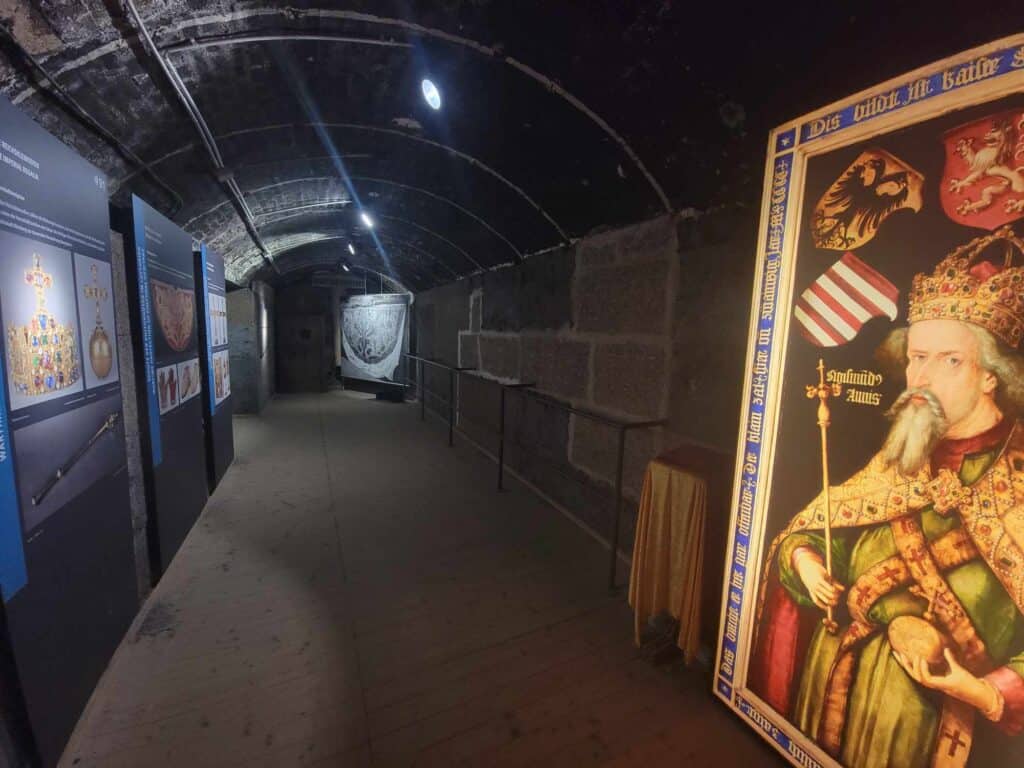
This is one of the most underrated historical experiences in Nuremberg, and one of the most genuinely unforgettable. I know this because I missed it on my first trip. I assumed I could just show up and buy a ticket at the door. Then I couldn’t get in, and spent the rest of that visit slightly annoyed at myself. When I finally took the tour, I was riveted for every minute of it.
The Kunstbunker sits beneath the city, carved into medieval beer storage tunnels that were repurposed during WWII to protect priceless art and cultural artifacts from Allied air raids. Not just Nuremberg’s own treasures – the tunnels also held masses of artworks stolen by the Nazis from across occupied Europe, stashed underground to preserve them until after the war.
Through those narrow carved-rock tunnels passed stained glass windows, religious sculptures, gold and metalwork, wooden carvings, Imperial regalia, and the Krakow altarpiece.
On the tour you move through the original storage areas, past the massive blast-proof iron doors that still hang on their hinges, through ventilation systems designed to keep centuries-old art preserved underground while the city above was being destroyed.
What strikes you is the human decision-making behind all of it — last-minute, high-stakes choices made by curators and city officials who had no idea whether any of it would work.
Much of it did. And that survival is the story the Art Bunker tells better than anywhere else in Nuremberg.
You cannot enter without a guided tour, so book in advance. I cannot stress this enough.
For more on what’s inside and what to expect: The Nuremberg Art Bunker and its Dark Secrets. →
Visiting Information for the Art Bunker (Kunstbunker)
🇬🇧 Daily guided tours in English can be reserved at 1:15 p.m. and also from April to December – at 5:15 p.m. There are also 🇩🇪 3 daily guided tours in German.
🕒 Duration: approximately 60 minutes
🎧 Audioguides: English, French, Spanish, Italian
📍Meeting point: Historic Art Bunker, Obere Schmiedgasse 52
17) The Documentation Center & Nazi Party Rally Grounds: Architecture Built to Overwhelm
Bayernstraße 110, 90478 Nürnberg
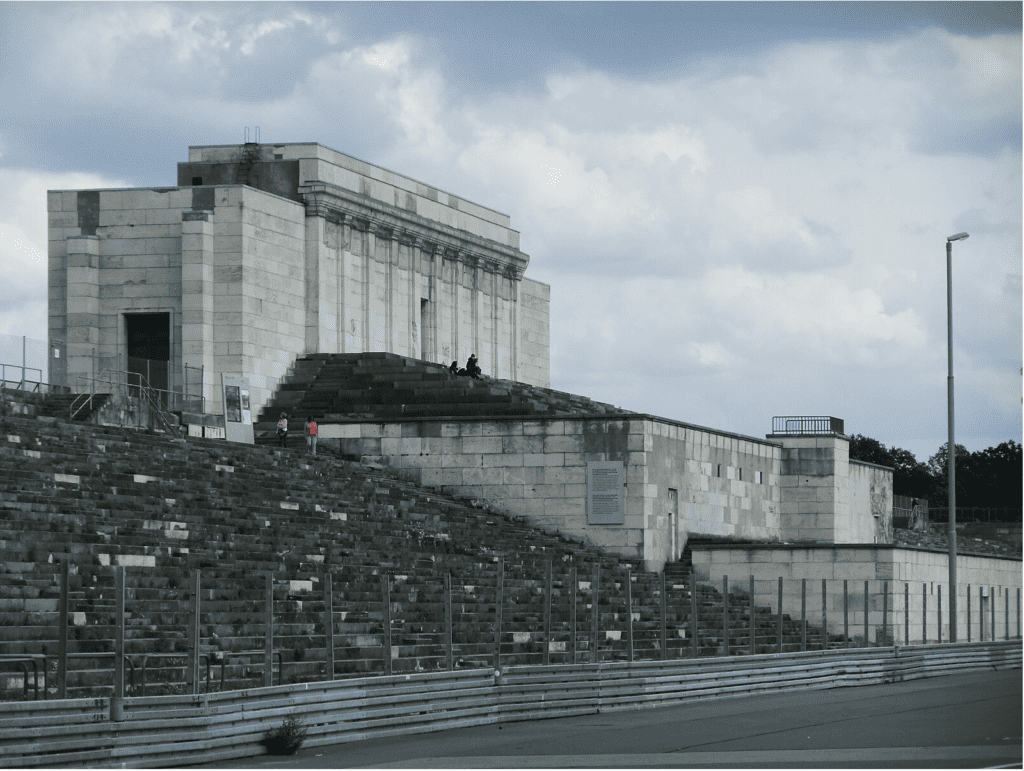
Nothing quite prepares you for the scale of this place.
The Nazi Party Rally Grounds held the massive propaganda spectacles that defined the Third Reich’s public face – annual events drawing hundreds of thousands, engineered down to the last detail to manufacture awe, loyalty, and fear. At the center sits the unfinished Kongresshalle, modeled on Roman architecture and designed to project permanence and power. It was never completed because the war ended first, which gives it a strange, haunting quality today. A monument to ambition that thankfully ran out of time.
Inside the Kongresshalle now is the Documentation Center, which does exactly what its name suggests: it documents how the propaganda was constructed, how architecture was weaponized for psychological effect, and how mass spectacle was staged and what emotions it was designed to evoke in the people who witnessed it.
The most powerful moment of a visit here isn’t inside the museum, though. It’s stepping back outside into the empty grounds and suddenly understanding the scale of what once filled this space. The silence where the crowds once stood is its own kind of history.
💡 Good to know: This area is large and spread out so give yourself more time than you think to walk it properly. Check the official Documentation Center website to find the status of construction projects and how they may affect your visit.
Visitor Information for the Documentation Center & Nazi Rally Grounds
🕒 Museum Hours
Daily from 10:00 AM – 6:00 PM, though hours may vary, so check the museum website for up-to-date information.
🎟️ Admission
€6 for adults, with discounts available for students, seniors, and groups.
🚧 From the museum website:
“The exhibition at the Documentation Center Nazi Party Rally Grounds is not suitable for children under the age of 14.”
18) Nuremberg Trials Memorial (Courtroom 600): Where Modern Justice Was Redefined
Fürther Str. 110, 90429 Nürnberg

This is one of the most significant rooms in modern legal history, and it doesn’t look like it at first glance. Wooden benches, neutral architecture… it might be a courtroom anywhere.
But this is Courtroom 600, inside the Nuremberg Palace of Justice, where former Nazi leaders were tried between 1945 and 1949 in proceedings that established the foundation of international law as we know it today, including how the world defines crimes against humanity, genocide, and war crimes.
The figures who stood in this room like Hermann Göring, and other senior Nazi officials, were prosecuted by the Allied forces in trials that were legally unprecedented. There was no established framework for what was being attempted here. The prosecutors were writing the rules as they went, and what they wrote became the basis for international human rights law, the Geneva Conventions’ modern form, and eventually the International Criminal Court.
Standing in that room, it’s hard not to feel the weight of what happened here. There’s no dramatization or reconstruction – just the room, the documentation, and the context provided by the attached memorial exhibition.
This is the point in Nuremberg where history stops being about the past and starts being about the present. The medieval churches and Gothic fountains are extraordinary. But this room is where Nuremberg’s story connects directly to how the modern world attempts to hold power accountable.
Visiting Information for the Nuremberg Trials Memorial & Courthouse
🕒 Opening Hours
The Nuremberg Trials Memorial is open to the public daily, typically from 9:00 AM to 6:00 PM, but hours may vary, so it’s a good idea to check ahead.
🎟️ Admission: Entrance to the documentation center and museum is usually €5 for adults. There are discounts available for students, seniors, and groups.
🔸 Best Time to Visit: If you’re hoping to see Courtroom 600 when you visit, it’s best to check the court’s schedule, as it is sometimes closed for legal proceedings.
💡Pro-tip
There are one hour long public tours of the Trials Memorial on a first-come first-served basis every Saturday at 2pm, but the slots fill up quickly. If you want to make sure you get the whole experience with a trained guide, you can retrace the WWII history of Nuremberg on this highly-rated walking tour with hotel pickup and drop-off. It will include the courtroom, courthouse, memorial, and other WWII sites like the Nazi Rally Grounds.
19) Walk Through the Way of Human Rights, Nuremberg’s Powerful Symbol of Change
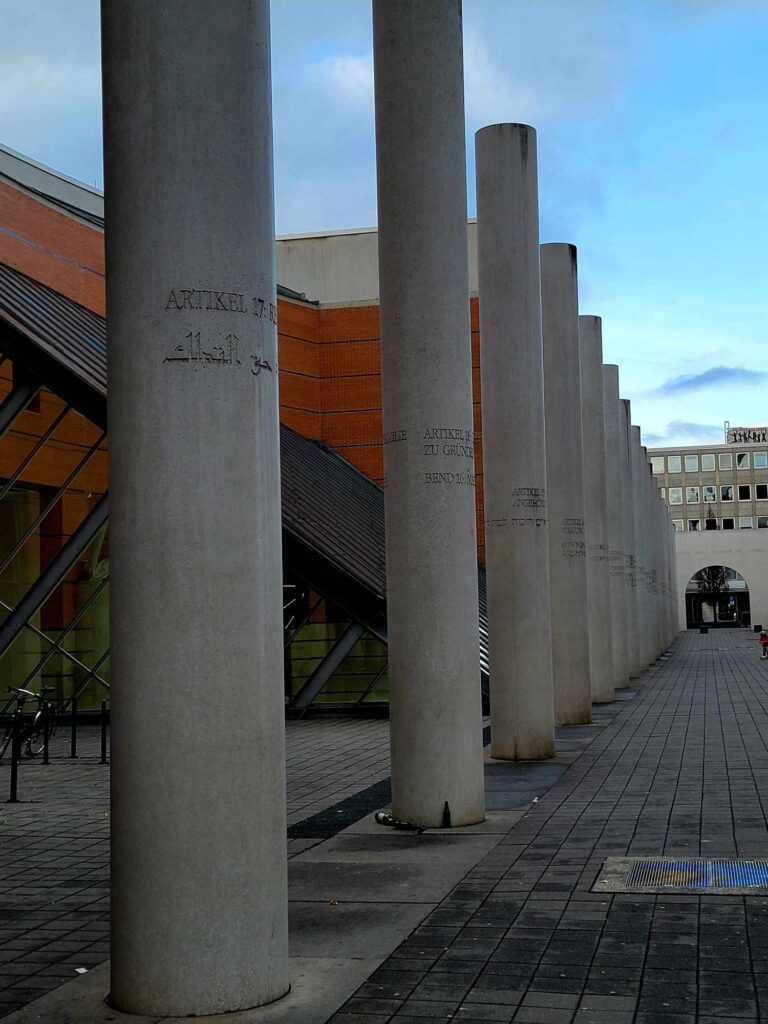
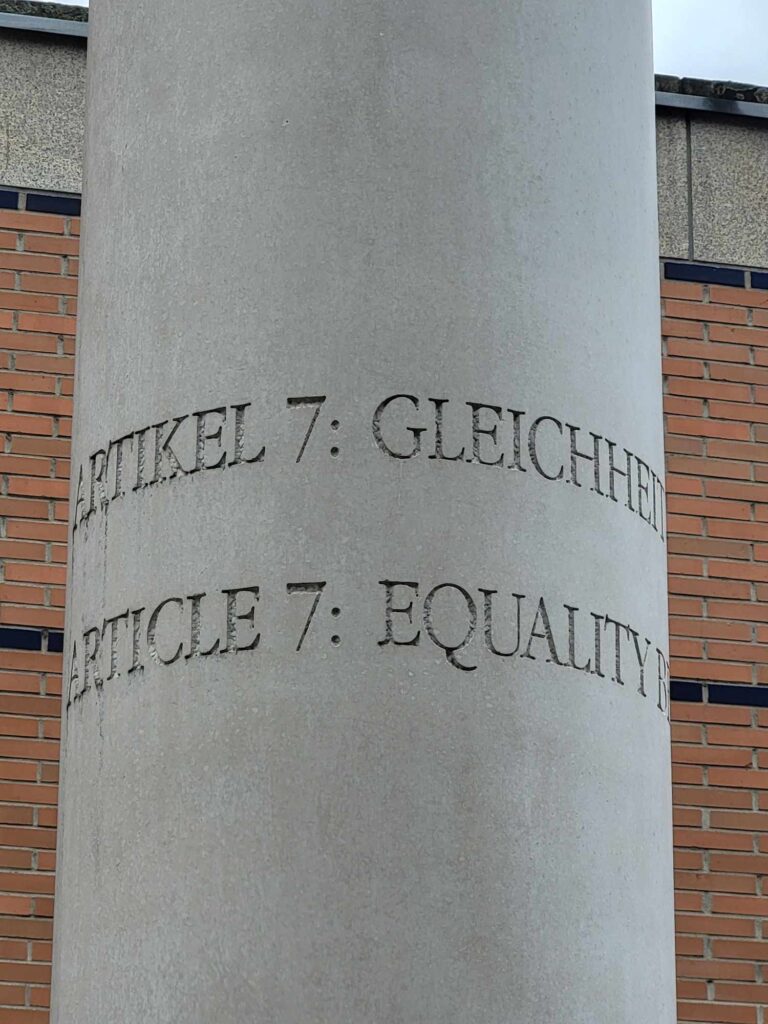
This is one of the simplest sites in Nuremberg and one of the most affecting.
Twenty-seven tall concrete pillars, each inscribed with an article from the Universal Declaration of Human Rights in multiple languages. One pillar is left intentionally blank, representing the idea that human rights are not finished or settled, and still being written and still being challenged.
You walk between them and the city noise fades as you move through it, reading as you go, passing through written rights: dignity, freedom, and equality.
That it exists in Nuremberg is not accidental. From the rally grounds built for the worst propaganda in modern history, to the courtroom where the perpetrators were held accountable, to this – a space built for reflection on what we owe each other.
💡 Good to know: This is a quick stop, but it’s worth sitting with for a few minutes. It deserves a little contemplation. It’s located right outside of the National Museum entrance.
20) Pay Respects at the Stolpersteine Markers Nuremberg’s Subtle Yet Powerful Holocaust Memorials
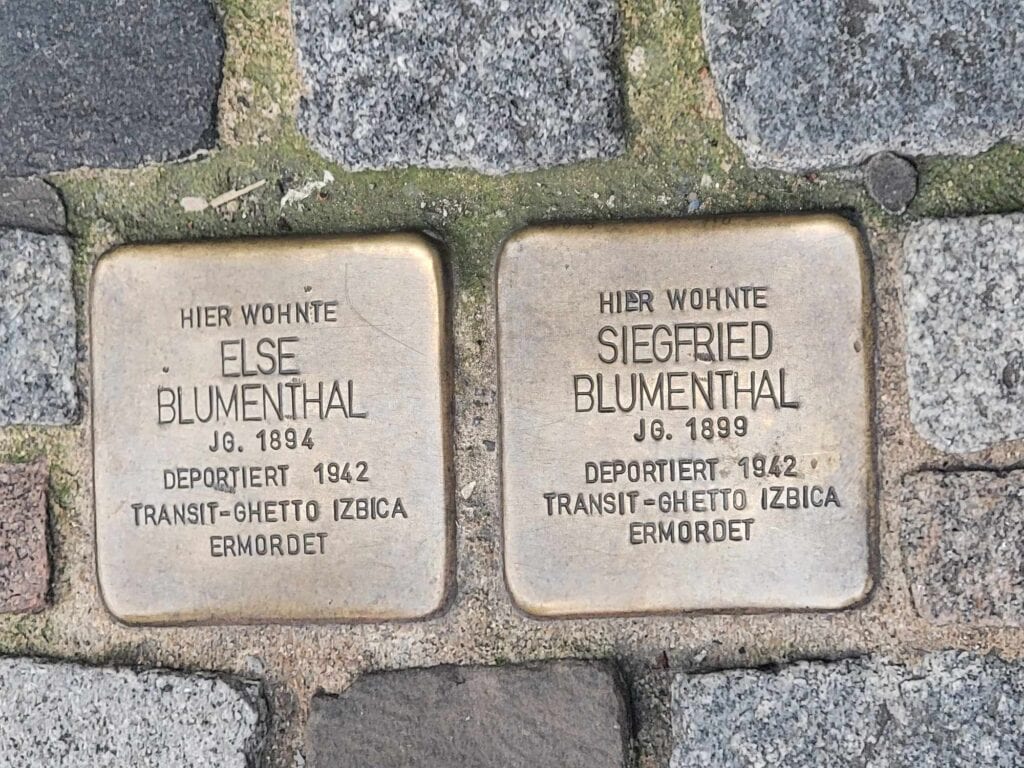
The Stolpersteine (stumbling stones) will find you on your travels.
Small brass plaques set into the pavement outside ordinary buildings that are now cafés, shops, and apartments – each one bearing a name, a birth year, and a fate. Here lived Else Blumenthal, born 1894, deported 1942 to Izbica Ghetto, murdered. Here lived her husband Siegfried. There lived their neighbors.
The power of the Stolpersteine is that they don’t gather history into a museum or a huge designated memorial space. They put it exactly where it happened – on the streets, in front of the houses, embedded in the daily life of the city. You stumble across them when you’re not looking, and suddenly Nuremberg stops being a tourist destination and becomes something else: a memory, and an archive of real human lives.
Slow down in the Old Town. Walk the older residential streets. You’ll start seeing them everywhere.
You can search the locations of all Stolpersteine in Nuremberg using this list →
If this history resonates, consider a visit to the Jewish Museum of Franconia in the neighboring town of Fürth.
21) Find the Pink Triangle Monument Honoring LGBTQ+ Victims of Nazi Persecution
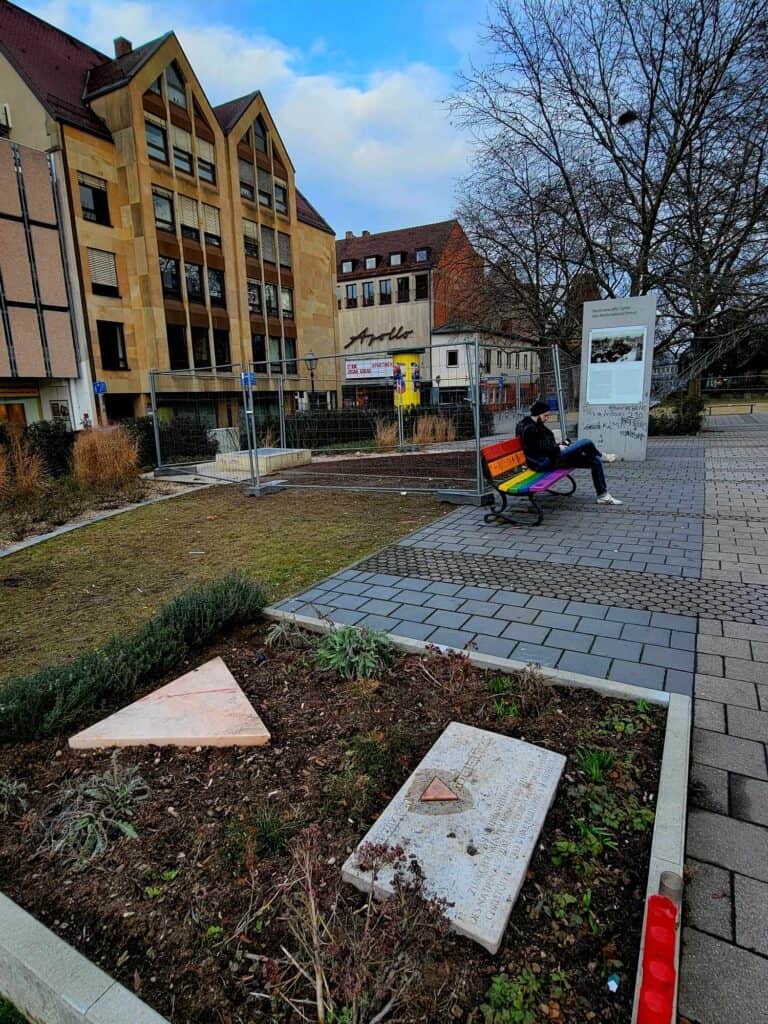
This small memorial consists of a pink triangle, a modest garden, a plaque, and a rainbow bench. It marks one of the areas in Nuremberg where gay men once gathered in the years before and during the Nazi period, when their existence was criminalized and their lives were at risk.
The pink triangle was the symbol used to identify gay men in concentration camps. More than 50,000 homosexual men were sentenced under Nazi law, imprisoned, sent to so-called sanatoriums, or sent to camps. At least half did not survive. Women were not explicitly criminalized under the same statutes, but could be prosecuted under charges of prostitution or being “antisocial elements.”
This memorial was dedicated in 2013. It’s not large, it’s not famous, and you won’t find it by accident — you have to look for it. I think that’s worth doing.
22) Nuremberg Toy Museum (Spielzeugmuseum): A Historic Journey Through Childhood Toys
Karlstraße 13-15, 90403 Nürnberg
Full disclosure: I haven’t been here yet. But it’s near the top of my list for my next Nuremberg visit, and here’s why — Nuremberg has been a center of toy production since the Middle Ages, and the Spielzeugmuseum traces that history from medieval dolls through to modern toys in a way that apparently delights adults just as much as children. If you’re traveling with kids, or if you’re an adult with strong opinions about toys (no judgment), this one is worth knowing about.
Here’s all the information to plan your visit to the Toy Museum (Spielzeugmuseum) in Nuremberg!
23) Find the Scales Relief (Waagrelief) and Other Hidden Sculptures
Winklerstraße 29, 90403 Nürnberg
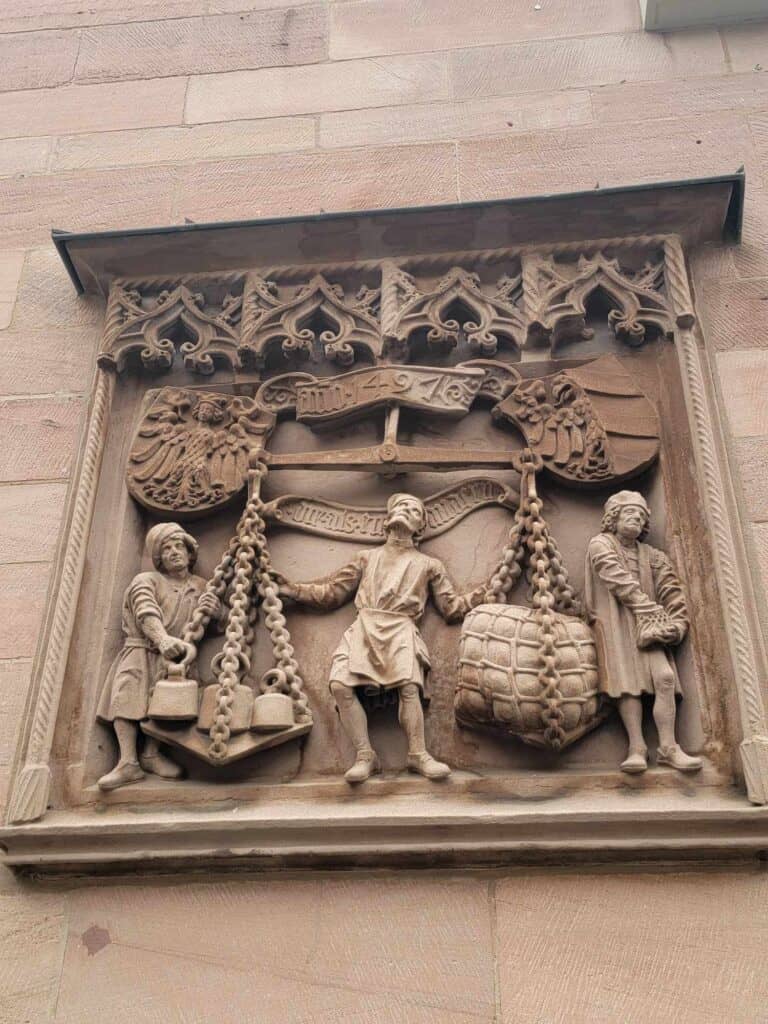
The original relief carving of scales on this building was created in 1497 by Adam Kraft, the same artist responsible for that extraordinary Tabernacle in Lorenzkirche. The scales were an emblem of trade and fair commerce, placed on the Waaggebäude, the public building that housed the city’s official weights and measures. The building didn’t survive the bombing of WWII, but the original relief did, and it’s now in the Germanisches Nationalmuseum.
For anyone who loves art history, Nuremberg’s Old Town is full of these discoveries. Hidden medieval sculptures tucked into corners and facades, some original, some reproductions, each one with a story attached.
24) Buy Amazing Antiques
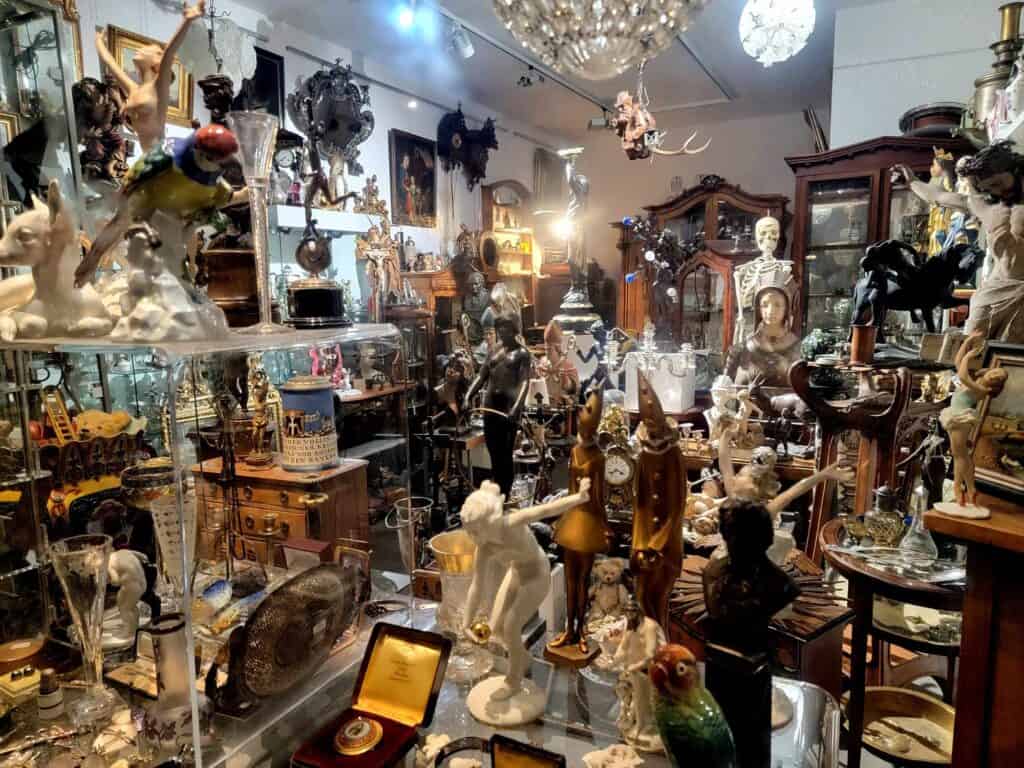
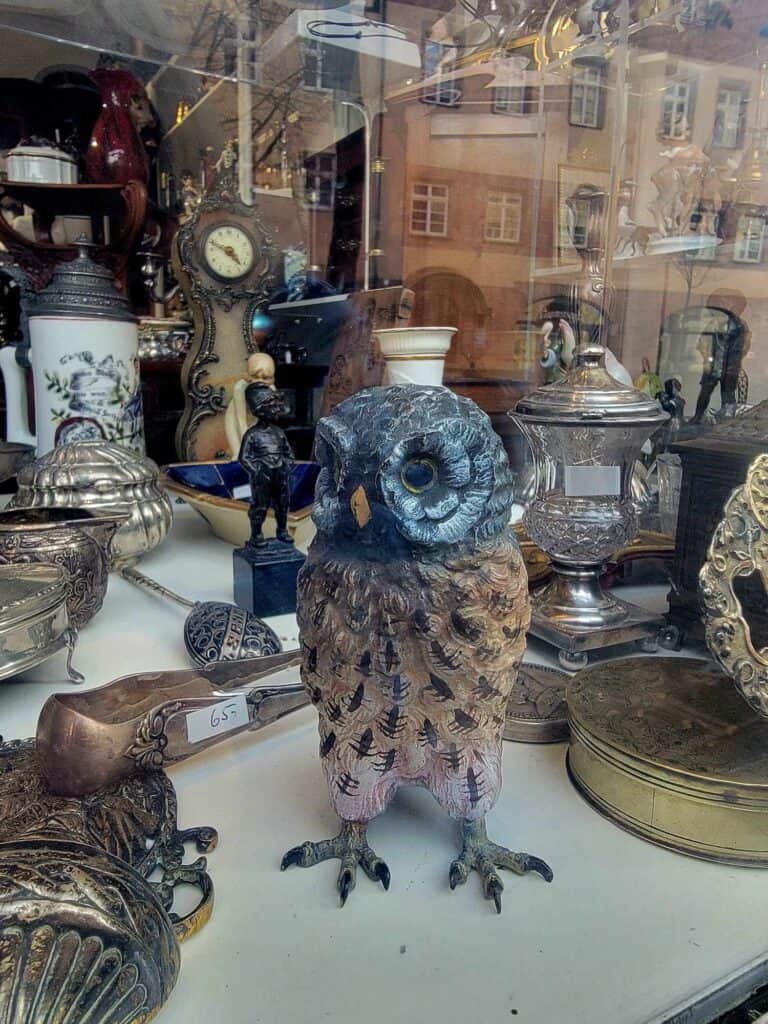
If you love antiques, Nuremberg will test your self-control.
I’ve picked up several things here over the years, and even when I’ve managed not to buy anything, walking through the antique shops and stalls feels like browsing a treasure chest that someone forgot to lock. We were like kids in a candy shop.
Start around St. Sebalduskirche and Albrecht-Dürer-Platz for the best concentration of dealers. And bring cash because most transactions are cash only, and you do not want to miss that thing you weren’t expecting to find because you ran out of euros.
25) Attend the Nuremberg Christkindlesmarkt: Germany’s Most Magical Holiday Tradition
History of the Nuremberg Christmas Market
I’ve saved this for last because if you visit in late November or December, this is the one that will stay with you longest.
Nuremberg’s Christkindlesmarkt is one of the oldest recorded Christmas markets in the world. Local tradition traces it to a medieval Advent market predating its first official mention in 1628. Today it welcomes over two million visitors a year, and yet it manages to feel like something worth protecting rather than something that’s been commercialized into oblivion.
The reason is that Nuremberg takes it seriously. The city enforces strict rules: vendors’ stalls must maintain a traditional, handmade aesthetic. No plastic decorations or commercialized kitsch. No flashing lights or amplified music. What you get instead are wooden stalls, locally handcrafted products, and the absolute best of Franconian food like the city’s prized Lebkuchen with a recipe dating back centuries, famous Nuremberg sausages, Spekulatius almond cookies, and steaming Glühwein in collectible mugs.
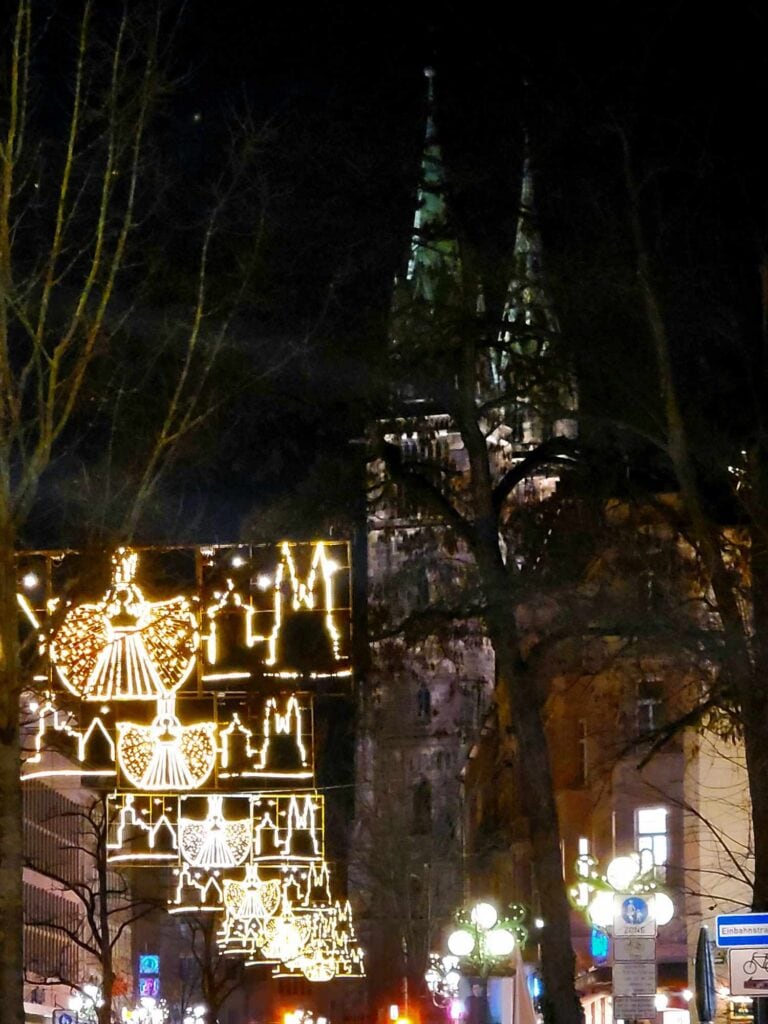
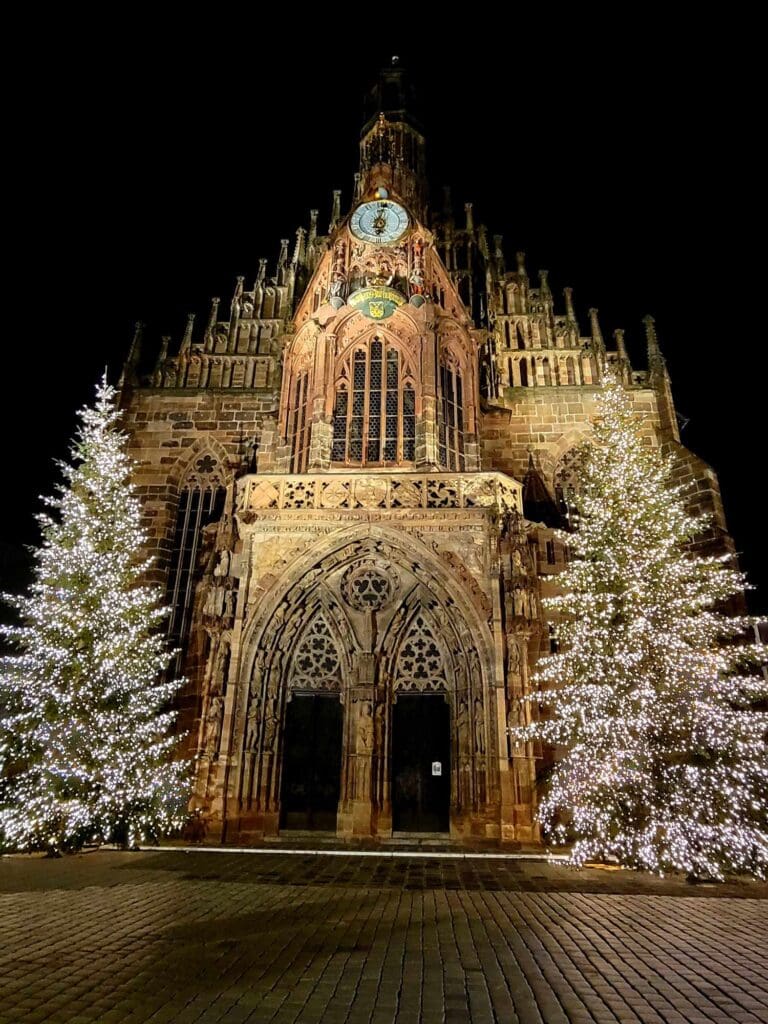
The city itself transforms. Soft white lights, flickering candles, illuminated star lanterns, and landmarks lit to emphasize the architecture without overwhelming it. Even on a crowded evening it manages to feel warm rather than frantic.
💡 Pro-tip: Try to hit the market during the week for fewer crowds and to really enjoy Nuremberg’s ambiance.
How Long Should You Spend in Nuremberg?
Two to three days is ideal. You could spend a full unscheduled day just wandering, eating, and taking photos and not feel like you’d wasted a moment, but with so much history concentrated in a small area, you’ll probably find yourself wanting to dig deeper than a single day allows. Give yourself time to absorb as well as to see. You’ll be glad you did.
See You in Nuremberg!
I hope this has gotten you genuinely excited about a city that I think is one of the most underrated in Germany. It’s a place of extraordinary contrasts Gothic churches and medieval fountains alongside some of the darkest chapters of the 20th century, all of it acknowledged, documented, and presented with a seriousness that earns your respect.
And yes, I could have kept going. But part of the joy of Nuremberg is the things you find on your own, the sculptures you almost walk past, the courtyards you stumble into, the brass ring you almost miss. Go get lost. It’s worth it.
You May Also Like:
Your Ultimate Guide to Nuremberg Castle: History, Tips, and Must-Sees
10 Best Albrecht Dürer Sites in Nuremberg: A Guide to His Legacy
6 Unforgettable Places to Eat in Nuremberg Old Town You Have to Try
The Nuremberg Art Bunker and its Dark Secrets
One Day in Nuremberg: Perfect Walking Tour + Food Stops
Hotel Elch: Best place to stay in Nuremberg with a dog
One Day in Bamberg: Best Guide to Germany’s Medieval Beer Capital
46 Best Things to Do in Rothenburg ob der Tauber
Best Things to Do in Rothenburg
